Althobaiti Yusuf S, Sari Youssef
University of Toledo, College of Pharmacy and Pharmaceutical Sciences, Department of Pharmacology and Experimental Therapeutics, Toledo, OH, USA.
J Addict Res Ther. 2016 Jun;7(3). doi: 10.4172/2155-6105.1000281. Epub 2016 Jun 11.
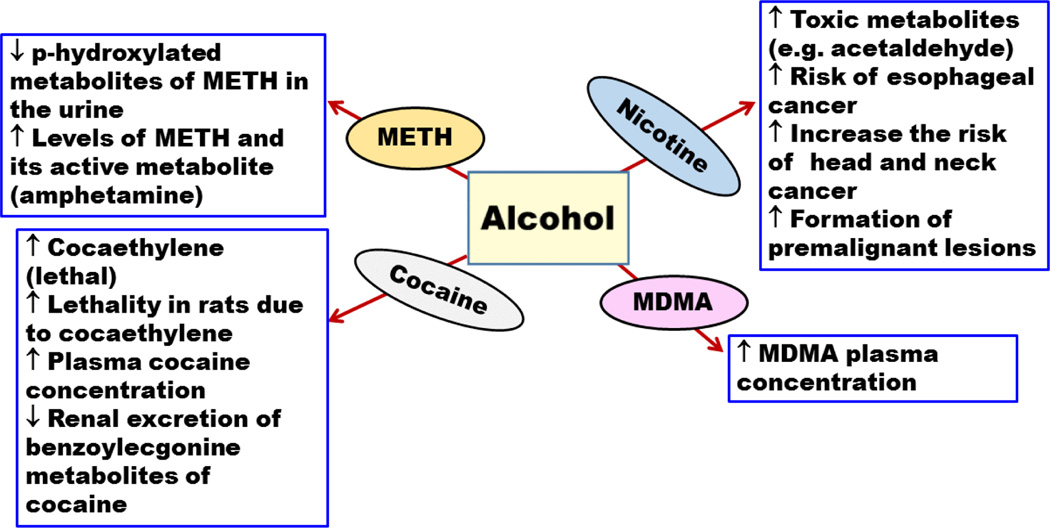
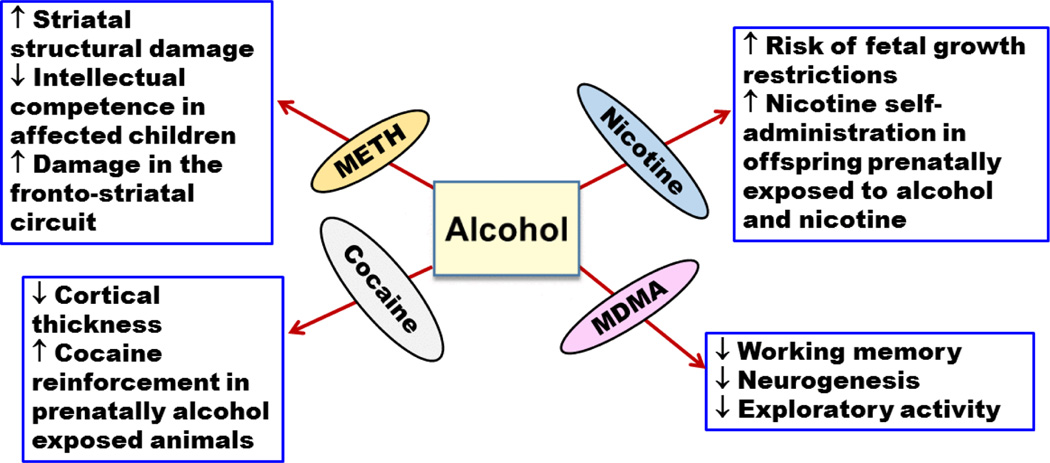
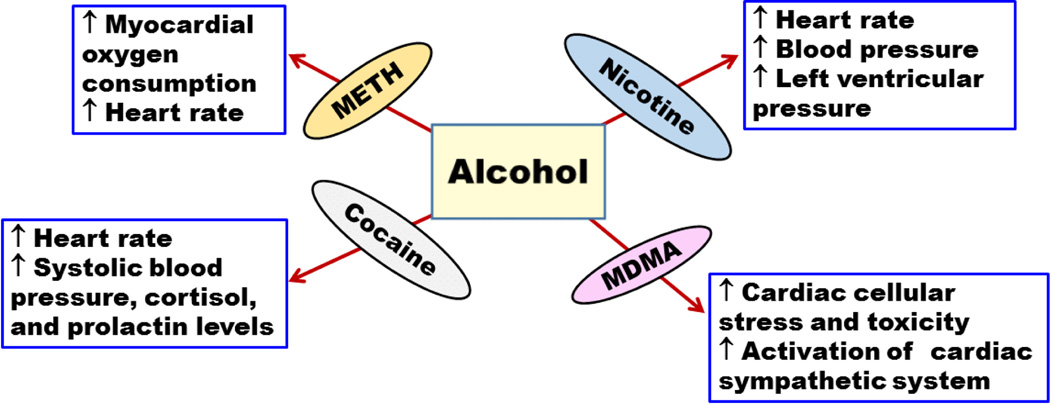
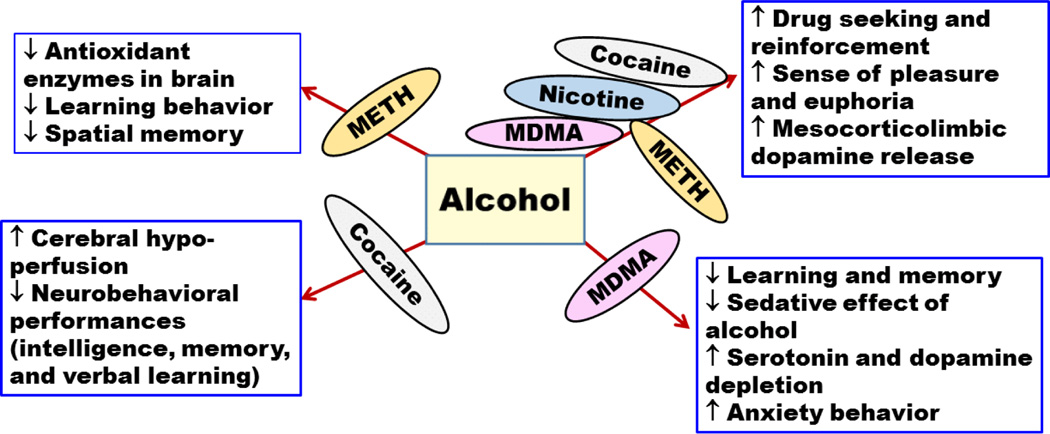
Alcohol consumption with psychostimulants is very common among drug addicts. There is little known about the possible pharmacological interactions between alcohol and psychostimulants. Among most commonly co-abused psychostimulants with alcohol are methamphetamine, cocaine, 3,4-methylenedioxymethamphetaminen, and nicotine. Co-abuse of alcohol with psychostimulants can lead to several neurophysiological dysfunctions such as decrease in brain antioxidant enzymes, disruption of learning and memory processes, cerebral hypo-perfusion, neurotransmitters depletion as well as potentiation of drug seeking behaviour. Moreover, co-abuse of alcohol and psychostimulants can lead to increase in heart rate, blood pressure, myocardial oxygen consumption and cellular stress, and the risk of developing different types of cancer. Co-abuse of alcohol with psychostimulants during pregnancy can lead to fetal brain abnormalities. Further studies are needed to investigate the pharmacokinetics, pharmacodynamics, and neurochemical changes on co-abuse of alcohol and psychostimulants.
在吸毒成瘾者中,酒精与精神兴奋剂同时使用的情况非常普遍。关于酒精与精神兴奋剂之间可能存在的药理相互作用,人们了解甚少。与酒精最常共同滥用的精神兴奋剂包括甲基苯丙胺、可卡因、3,4-亚甲基二氧基甲基苯丙胺和尼古丁。酒精与精神兴奋剂共同滥用会导致多种神经生理功能障碍,如脑抗氧化酶减少、学习和记忆过程中断、脑灌注不足、神经递质耗竭以及药物寻求行为增强。此外,酒精与精神兴奋剂共同滥用会导致心率加快、血压升高、心肌耗氧量增加和细胞应激,以及患不同类型癌症的风险增加。孕期酒精与精神兴奋剂共同滥用会导致胎儿脑部异常。需要进一步研究来调查酒精与精神兴奋剂共同滥用时的药代动力学、药效学和神经化学变化。