Choi Sung-Hwan, Kim Seong-Jin, Lee Kee-Joon, Sung Sang-Jin, Chun Youn-Sic, Hwang Chung-Ju
Department of Orthodontics, The Institute of Cranial-Facial Deformity, College of Dentistry, Yonsei University, Seoul, Korea.
Private Practice, Gwangju, Korea.
Korean J Orthod. 2016 Jul;46(4):189-98. doi: 10.4041/kjod.2016.46.4.189. Epub 2016 Jul 25.
The purpose of this study was to analyze stress distributions in the roots, periodontal ligaments (PDLs), and bones around cylindrical and tapered miniscrews inserted at different angles using a finite element analysis.
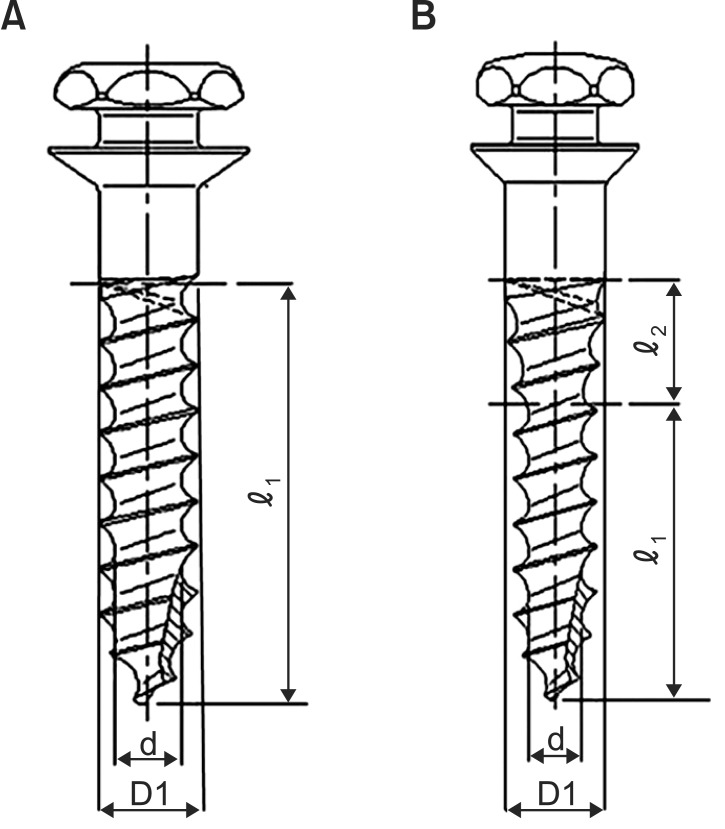
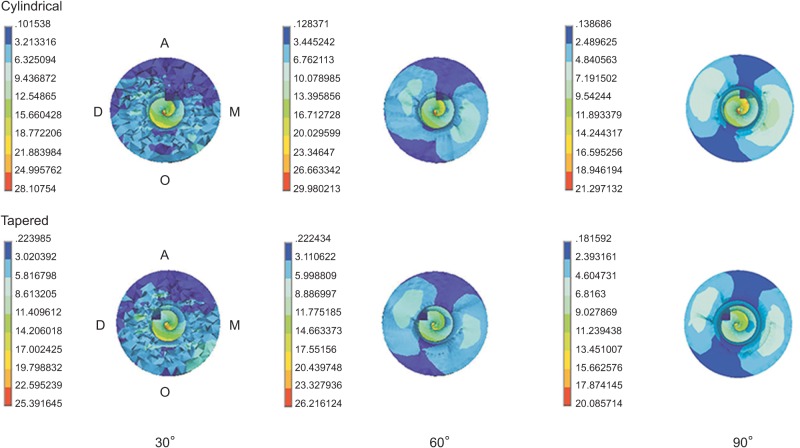
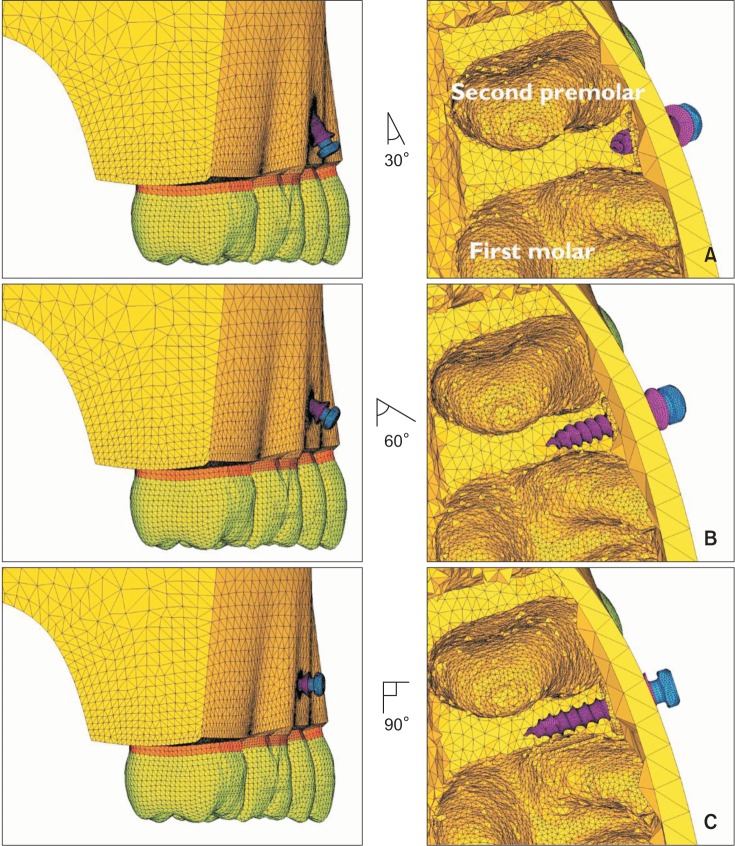
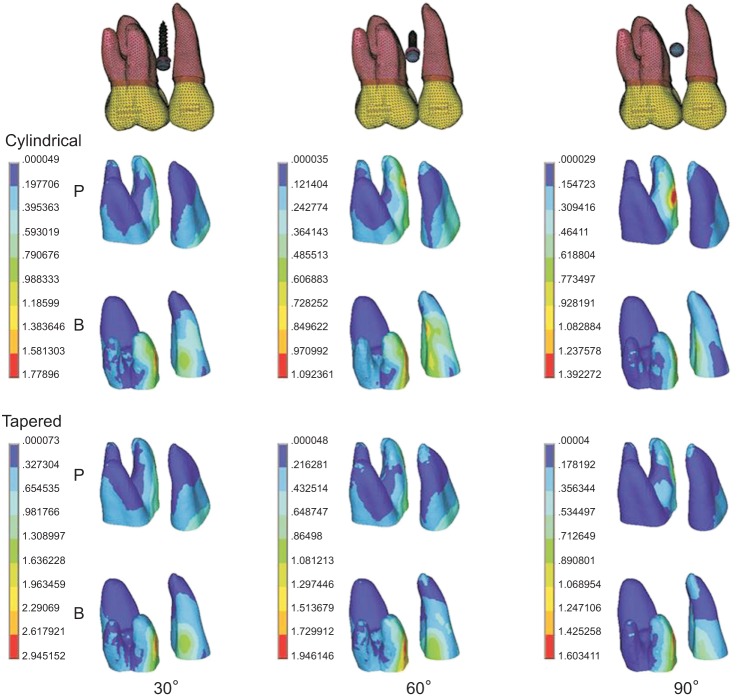
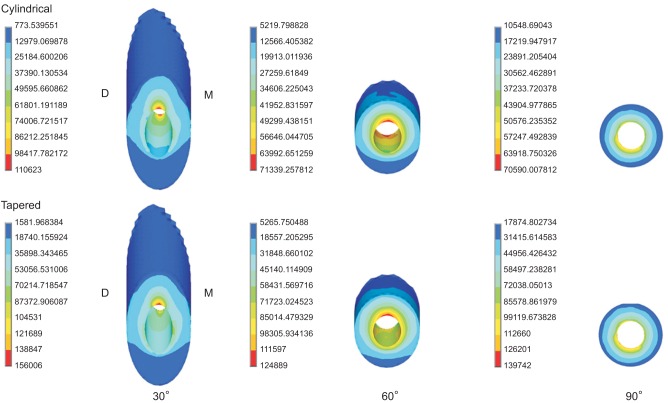
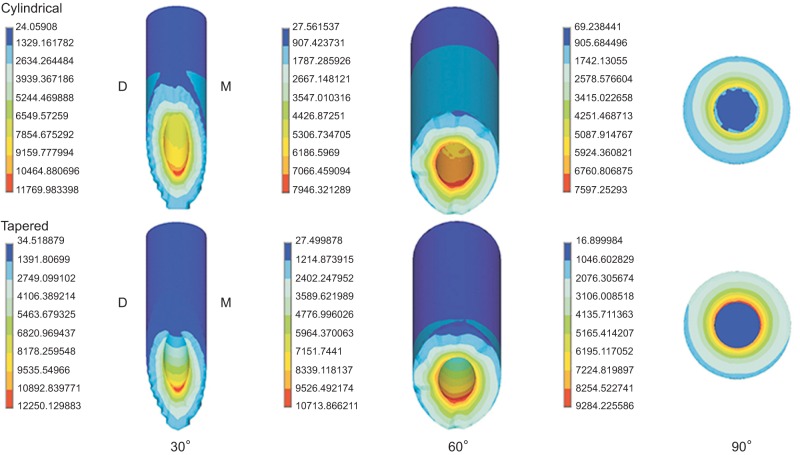
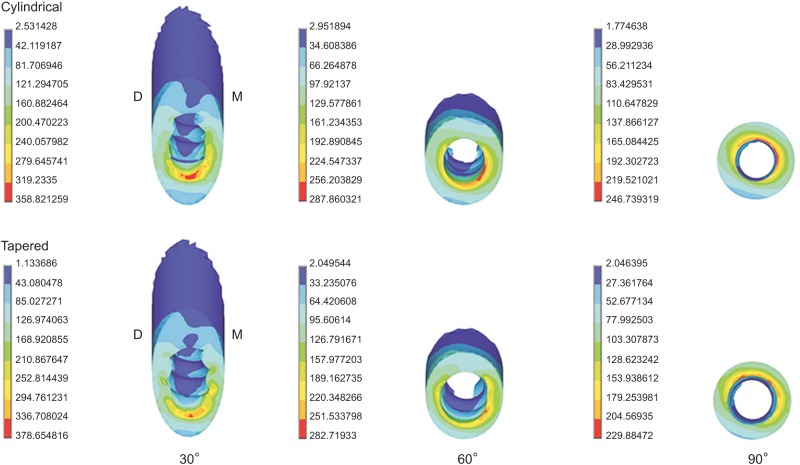
We created a three-dimensional (3D) maxilla model of a dentition with extracted first premolars and used 2 types of miniscrews (tapered and cylindrical) with 1.45-mm diameters and 8-mm lengths. The miniscrews were inserted at 30°, 60°, and 90° angles with respect to the bone surface. A simulated horizontal orthodontic force of 2 N was applied to the miniscrew heads. Then, the stress distributions, magnitudes during miniscrew placement, and force applications were analyzed with a 3D finite element analysis.
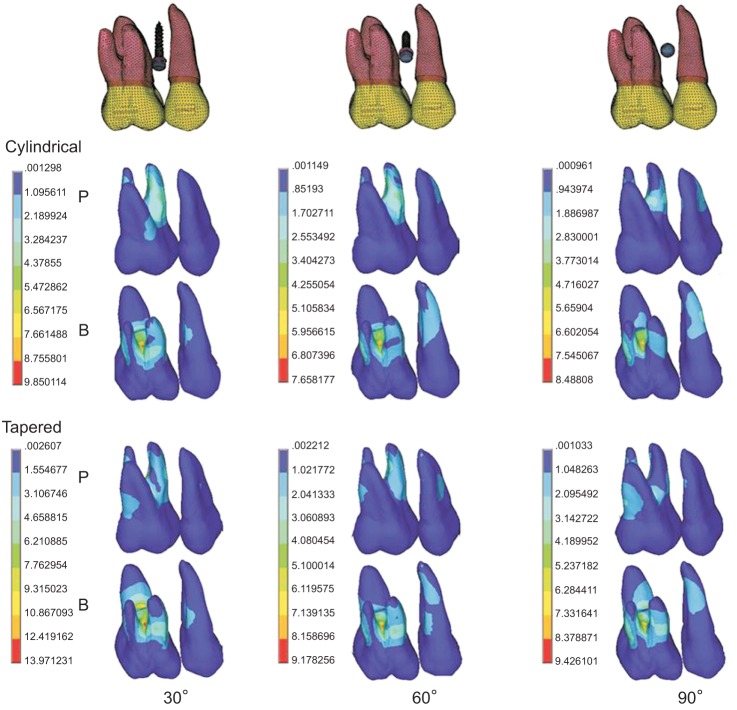
Stresses were primarily absorbed by cortical bone. Moreover, very little stress was transmitted to the roots, PDLs, and cancellous bone. During cylindrical miniscrew insertion, the maximum von Mises stress increased as insertion angle decreased. Tapered miniscrews exhibited greater maximum von Mises stress than cylindrical miniscrews. During force application, maximum von Mises stresses increased in both groups as insertion angles decreased.
For both cylindrical and tapered miniscrew designs, placement as perpendicular to the bone surface as possible is recommended to reduce stress in the surrounding bone.
本研究旨在通过有限元分析,分析以不同角度植入的圆柱形和锥形微螺钉周围的牙根、牙周膜(PDL)及骨组织中的应力分布情况。
我们创建了一个拔除了第一前磨牙的牙列的三维(3D)上颌骨模型,并使用了两种直径为1.45毫米、长度为8毫米的微螺钉(锥形和圆柱形)。微螺钉相对于骨表面以30°、60°和90°的角度植入。在微螺钉头部施加2N的模拟水平正畸力。然后,通过三维有限元分析来分析微螺钉植入过程中和施加力时的应力分布、大小。
应力主要被皮质骨吸收。此外,很少有应力传递到牙根、牙周膜和松质骨。在圆柱形微螺钉植入过程中,最大von Mises应力随着植入角度的减小而增加。锥形微螺钉比圆柱形微螺钉表现出更大的最大von Mises应力。在施加力的过程中,两组的最大von Mises应力均随着植入角度的减小而增加。
对于圆柱形和锥形微螺钉设计,建议尽可能垂直于骨表面植入,以减少周围骨组织中的应力。