Departamento de Fisiopatología Endocrina y del Sistema Nervioso, Instituto de Investigaciones Biomédicas "Alberto Sols", Consejo Superior de Investigaciones Científicas and Universidad Autónoma de Madrid, Madrid, Spain.
Departamento de Anatomía, Histología y Neurociencia, Facultad de Medicina, Universidad Autónoma de Madrid, Madrid, Spain.
Sci Rep. 2016 Aug 3;6:30990. doi: 10.1038/srep30990.
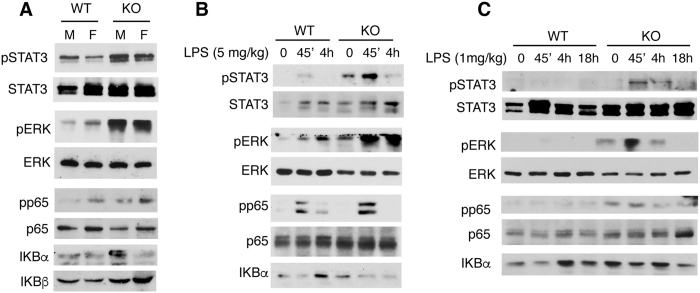
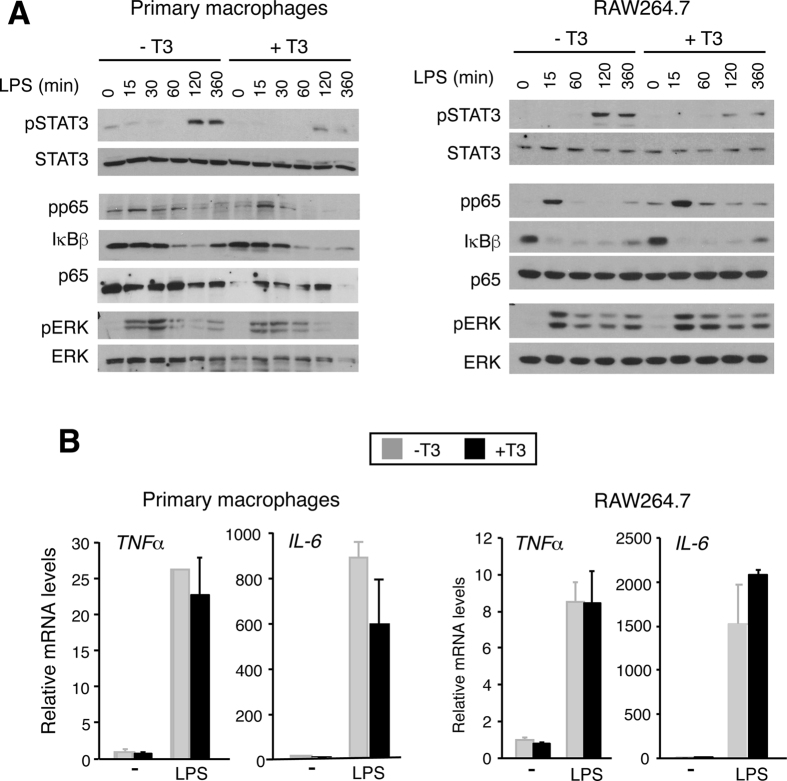
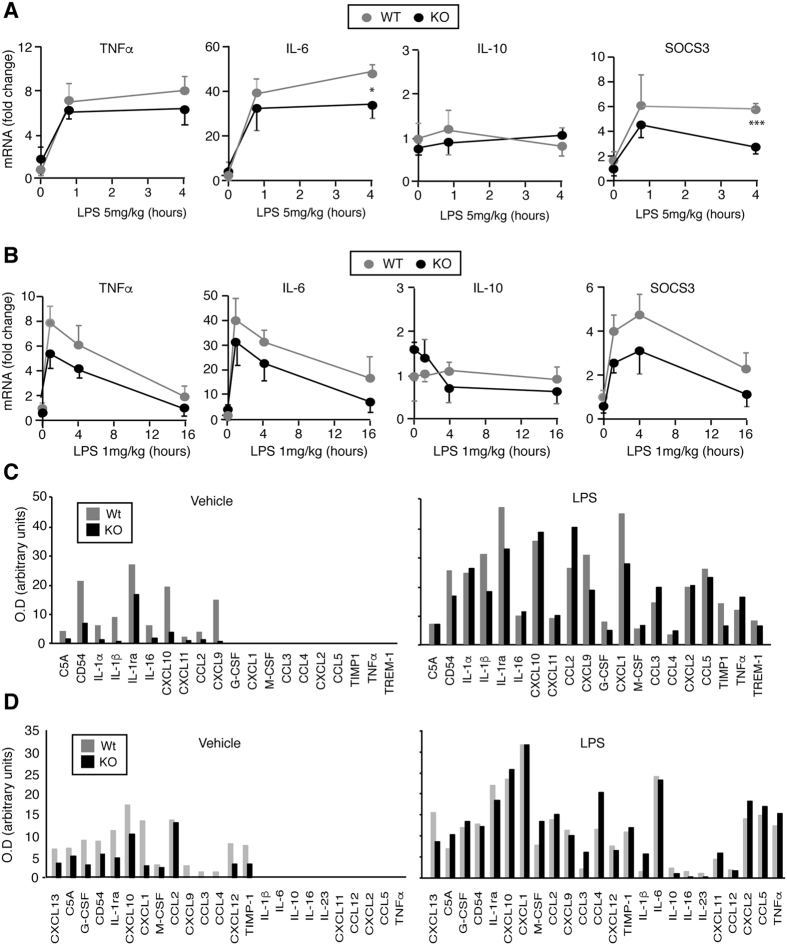
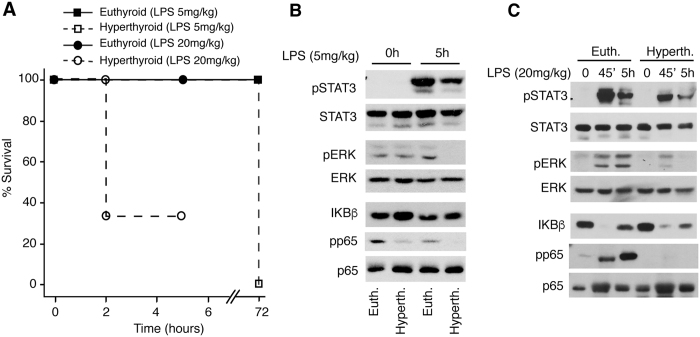
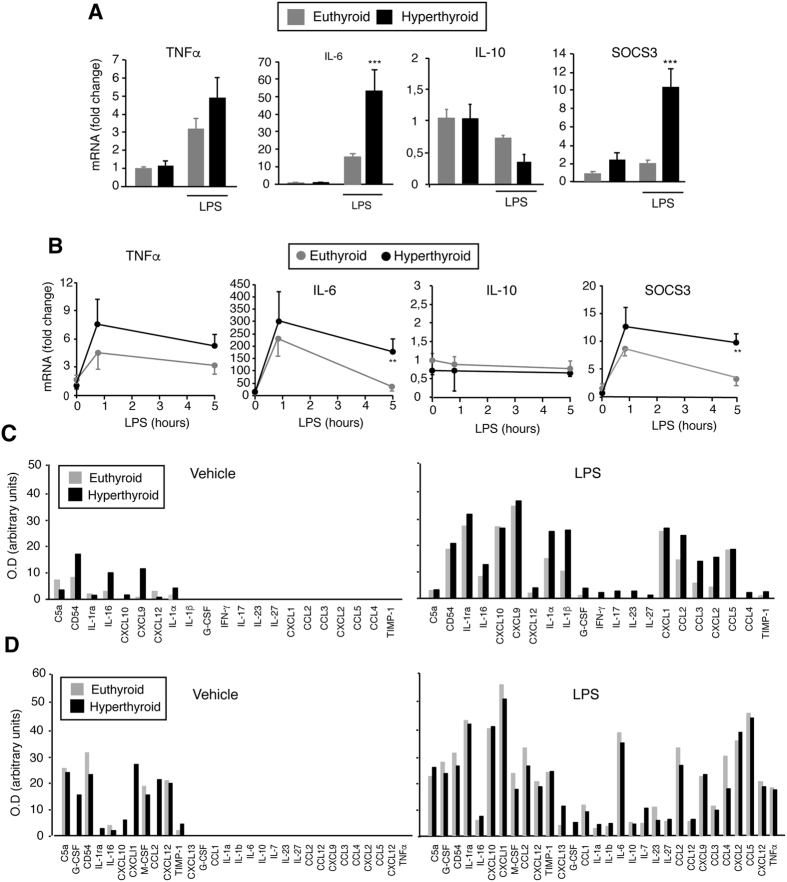
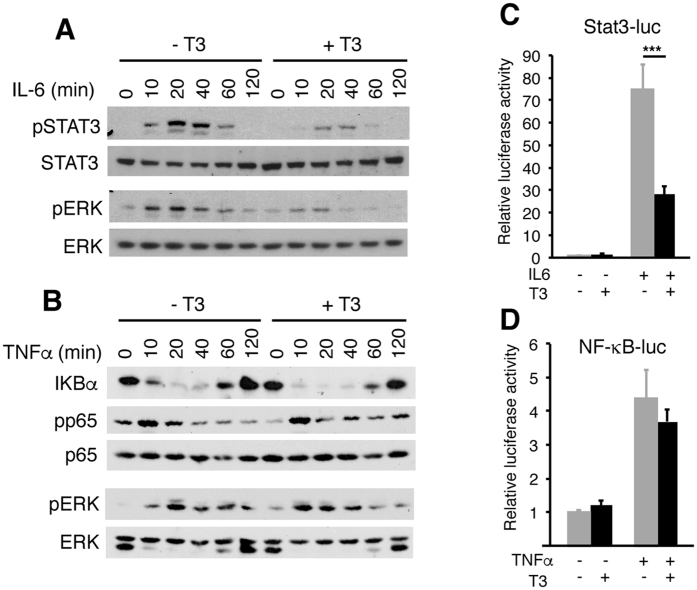
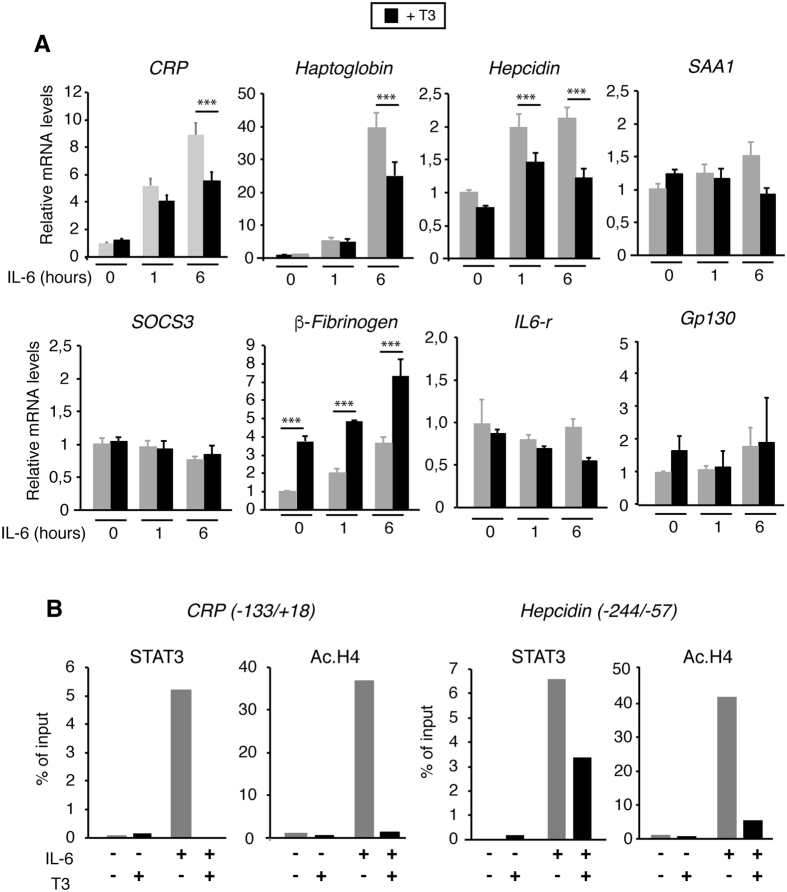
Decreased thyroidal hormone production is found during lipopolysaccharide (LPS)-induced endotoxic shock in animals as well as in critically ill patients. Here we studied the role of the thyroid hormone receptors (TRs) in activation of STAT3, NF-κB and ERK, which play a key role in the response to inflammatory cytokines during sepsis. TR knockout mice showed down-regulation of hepatic inflammatory mediators, including interleukin 6 (IL-6) in response to LPS. Paradoxically, STAT3 and ERK activity were higher, suggesting that TRs could act as endogenous repressors of these pathways. Furthermore, hyperthyroidism increased cytokine production and mortality in response to LPS, despite decreasing hepatic STAT3 and ERK activity. This suggested that TRs could directly repress the response of the cells to inflammatory mediators. Indeed, we found that the thyroid hormone T3 suppresses IL-6 signalling in macrophages and hepatocarcinoma cells, inhibiting STAT3 activation. Consequently, the hormone strongly antagonizes IL-6-stimulated gene transcription, reducing STAT3 recruitment and histone acetylation at IL-6 target promoters. In conclusion, TRs are potent regulators of inflammatory responses and immune homeostasis during sepsis. Reduced responses to IL-6 should serve as a negative feedback mechanism for preventing deleterious effects of excessive hormone signaling during infections.
在脂多糖(LPS)诱导的动物内毒素休克以及危重病患者中,发现甲状腺激素产生减少。在这里,我们研究了甲状腺激素受体(TRs)在 STAT3、NF-κB 和 ERK 激活中的作用,这些通路在脓毒症期间对炎症细胞因子的反应中起关键作用。TR 敲除小鼠对 LPS 的反应表现出肝脏炎症介质(包括白细胞介素 6(IL-6))的下调。矛盾的是,STAT3 和 ERK 活性更高,表明 TRs 可以作为这些通路的内源性抑制剂。此外,尽管甲状腺功能亢进症降低了肝 STAT3 和 ERK 活性,但会增加对 LPS 的细胞因子产生和死亡率。这表明 TRs 可以直接抑制细胞对炎症介质的反应。事实上,我们发现甲状腺激素 T3 抑制巨噬细胞和肝癌细胞中的 IL-6 信号转导,抑制 STAT3 激活。因此,该激素强烈拮抗 IL-6 刺激的基因转录,减少 STAT3 募集和 IL-6 靶启动子处的组蛋白乙酰化。总之,TRs 是脓毒症期间炎症反应和免疫稳态的有力调节剂。对 IL-6 的反应减少应该作为一种负反馈机制,防止感染期间过度激素信号传递产生有害影响。