Capel Elena, Zomer Aldert L, Nussbaumer Thomas, Bole Christine, Izac Brigitte, Frapy Eric, Meyer Julie, Bouzinba-Ségard Haniaa, Bille Emmanuelle, Jamet Anne, Cavau Anne, Letourneur Franck, Bourdoulous Sandrine, Rattei Thomas, Nassif Xavier, Coureuil Mathieu
Institut Necker Enfants-Malades, INSERM U1151, Equipe 11, Paris, France Université Paris Descartes, Sorbonne Paris Cité, Faculté de Médecine, Paris, France.
Department of Infectious Diseases and Immunology, Faculty of Veterinary Medicine, Utrecht University, Utrecht, The Netherlands.
mBio. 2016 Aug 2;7(4):e01173-16. doi: 10.1128/mBio.01173-16.
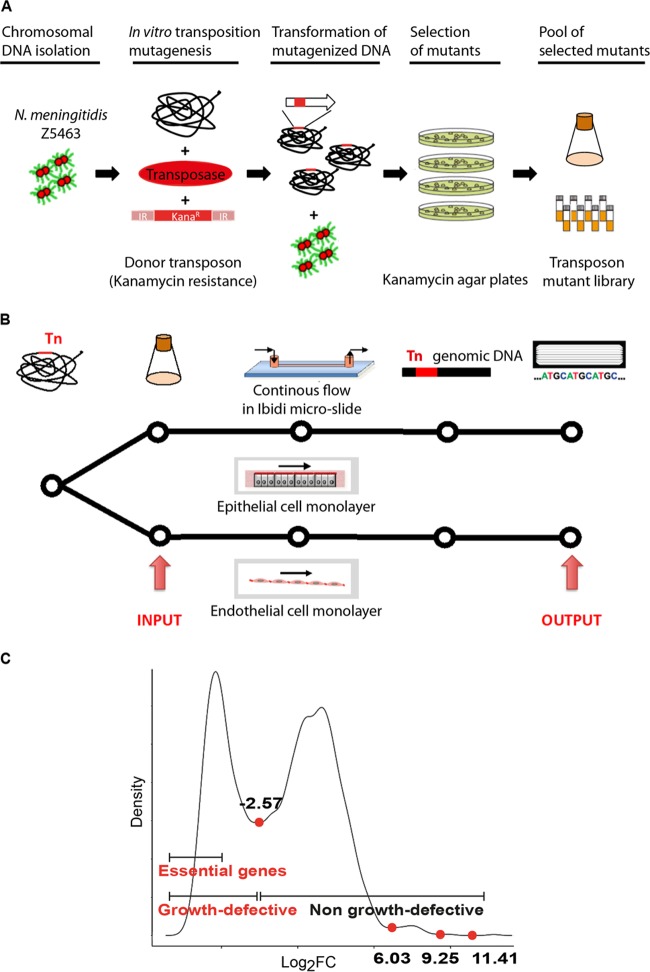
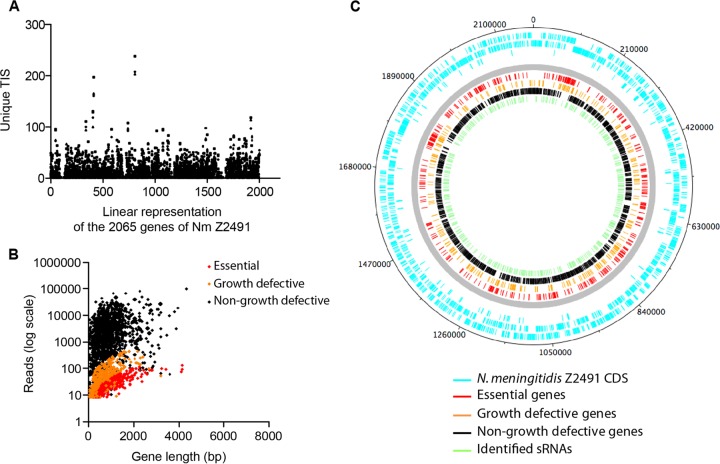
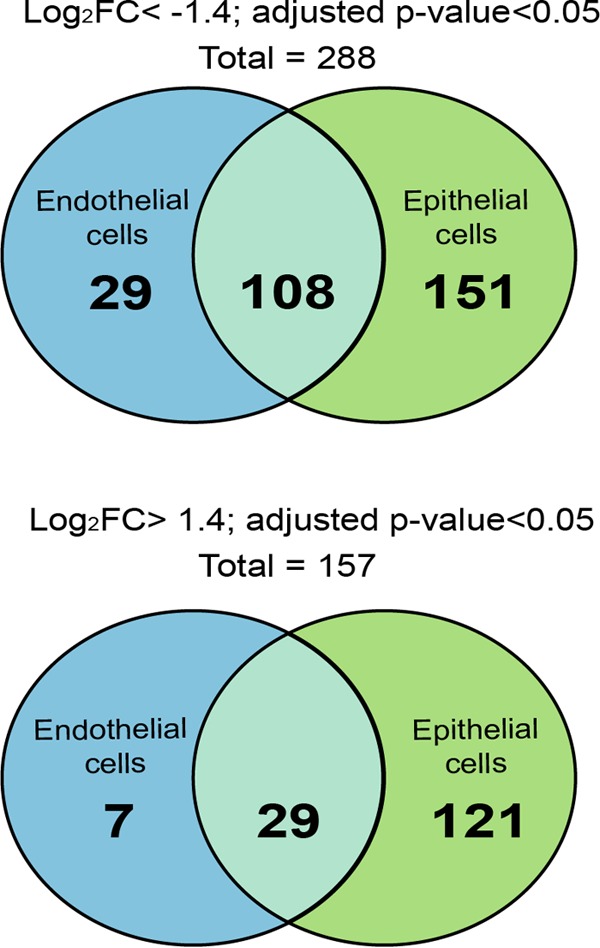
Neisseria meningitidis is a leading cause of bacterial meningitis and septicemia, affecting infants and adults worldwide. N. meningitidis is also a common inhabitant of the human nasopharynx and, as such, is highly adapted to its niche. During bacteremia, N. meningitidis gains access to the blood compartment, where it adheres to endothelial cells of blood vessels and causes dramatic vascular damage. Colonization of the nasopharyngeal niche and communication with the different human cell types is a major issue of the N. meningitidis life cycle that is poorly understood. Here, highly saturated random transposon insertion libraries of N. meningitidis were engineered, and the fitness of mutations during routine growth and that of colonization of endothelial and epithelial cells in a flow device were assessed in a transposon insertion site sequencing (Tn-seq) analysis. This allowed the identification of genes essential for bacterial growth and genes specifically required for host cell colonization. In addition, after having identified the small noncoding RNAs (sRNAs) located in intergenic regions, the phenotypes associated with mutations in those sRNAs were defined. A total of 383 genes and 8 intergenic regions containing sRNA candidates were identified to be essential for growth, while 288 genes and 33 intergenic regions containing sRNA candidates were found to be specifically required for host cell colonization.
Meningococcal meningitis is a common cause of meningitis in infants and adults. Neisseria meningitidis (meningococcus) is also a commensal bacterium of the nasopharynx and is carried by 3 to 30% of healthy humans. Under some unknown circumstances, N. meningitidis is able to invade the bloodstream and cause either meningitis or a fatal septicemia known as purpura fulminans. The onset of symptoms is sudden, and death can follow within hours. Although many meningococcal virulence factors have been identified, the mechanisms that allow the bacterium to switch from the commensal to pathogen state remain unknown. Therefore, we used a Tn-seq strategy coupled to high-throughput DNA sequencing technologies to find genes for proteins used by N. meningitidis to specifically colonize epithelial cells and primary brain endothelial cells. We identified 383 genes and 8 intergenic regions containing sRNAs essential for growth and 288 genes and 33 intergenic regions containing sRNAs required specifically for host cell colonization.
脑膜炎奈瑟菌是细菌性脑膜炎和败血症的主要病因,影响全球的婴儿和成人。脑膜炎奈瑟菌也是人类鼻咽部的常见定植菌,因此高度适应其生态位。在菌血症期间,脑膜炎奈瑟菌进入血液腔室,在那里它粘附于血管内皮细胞并导致严重的血管损伤。脑膜炎奈瑟菌在鼻咽生态位的定植以及与不同人类细胞类型的相互作用是其生命周期中的一个主要问题,目前对此了解甚少。在此,构建了脑膜炎奈瑟菌的高度饱和随机转座子插入文库,并通过转座子插入位点测序(Tn-seq)分析评估了常规生长过程中突变的适应性以及在流动装置中内皮细胞和上皮细胞定植的适应性。这使得能够鉴定出细菌生长所必需的基因以及宿主细胞定植特别需要的基因。此外,在鉴定出位于基因间区域的小非编码RNA(sRNA)后,确定了与这些sRNA突变相关的表型。总共鉴定出383个基因和8个含有sRNA候选物的基因间区域对生长至关重要,而发现288个基因和33个含有sRNA候选物的基因间区域是宿主细胞定植特别需要的。
脑膜炎球菌性脑膜炎是婴儿和成人脑膜炎的常见病因。脑膜炎奈瑟菌(脑膜炎球菌)也是鼻咽部的共生菌,3%至30%的健康人携带该菌。在某些未知情况下,脑膜炎奈瑟菌能够侵入血液并导致脑膜炎或一种称为暴发性紫癜的致命败血症。症状发作突然,数小时内可能死亡。尽管已经鉴定出许多脑膜炎球菌毒力因子,但细菌从共生状态转变为致病状态的机制仍然未知。因此,我们使用Tn-seq策略结合高通量DNA测序技术来寻找脑膜炎奈瑟菌用于特异性定植上皮细胞和原代脑内皮细胞的蛋白质基因。我们鉴定出383个基因和8个含有对生长至关重要的sRNA的基因间区域,以及288个基因和33个含有宿主细胞定植特别需要的sRNA的基因间区域。