Ebersole Jeffrey L, Kirakodu Sreenatha S, Novak M John, Orraca Luis, Martinez Janis Gonzalez, Cunningham Larry L, Thomas Mark V, Stromberg Arnold, Pandruvada Subramanya N, Gonzalez Octavio A
Center for Oral Health Research, College of Dentistry, University of Kentucky, Lexington, KY, USA; Division of Periodontics, College of Dentistry, University of Kentucky, Lexington, KY, USA.
Center for Oral Health Research, College of Dentistry, University of Kentucky , Lexington, KY , USA.
Front Immunol. 2016 Jul 18;7:272. doi: 10.3389/fimmu.2016.00272. eCollection 2016.
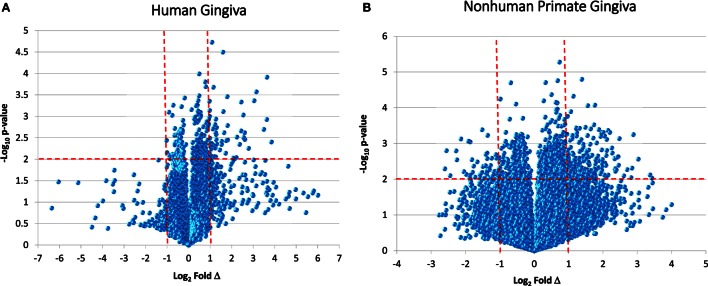
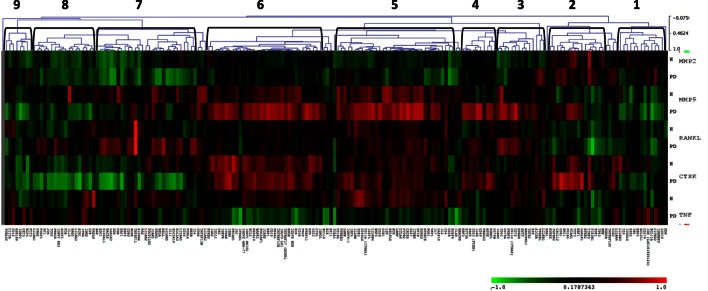
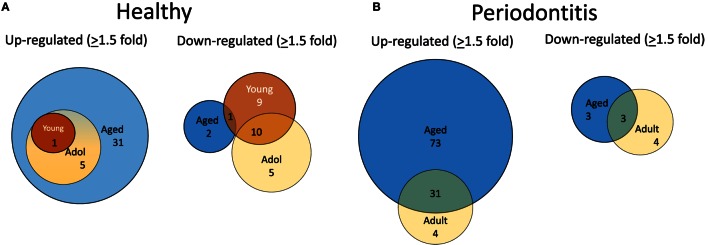
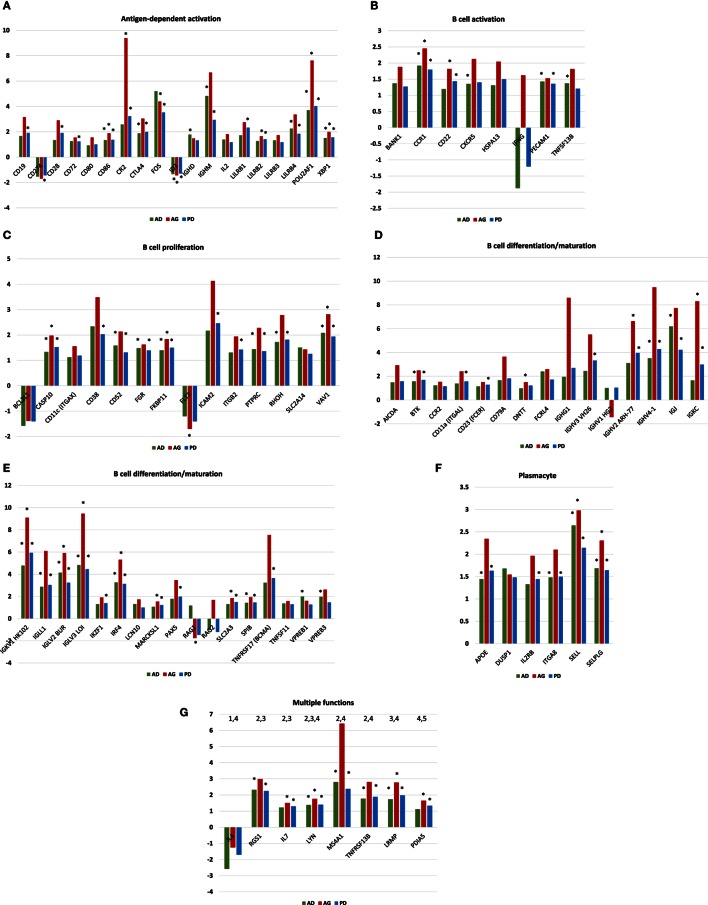
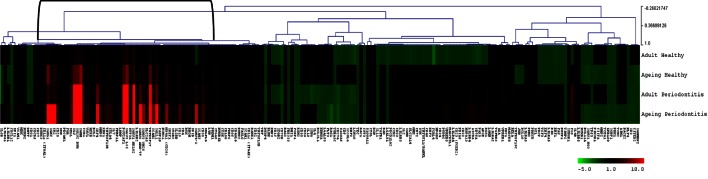
Evidence has shown activation of T and B cells in gingival tissues in experimental models and in humans diagnosed with periodontitis. The results of this adaptive immune response are noted both locally and systemically with antigenic specificity for an array of oral bacteria, including periodontopathic species, e.g., Porphyromonas gingivalis and Aggregatibacter actinomycetemcomitans. It has been recognized through epidemiological studies and clinical observations that the prevalence of periodontitis increases with age. This report describes our studies evaluating gingival tissue transcriptomes in humans and specifically exploiting the use of a non-human primate model of naturally occurring periodontitis to delineate gingival mucosal tissue gene expression profiles focusing on cells/genes critical for the development of humoral adaptive immune responses. Patterns of B cell and plasmacyte genes were altered in aging healthy gingival tissues. Substantial increases in a large number of genes reflecting antigen-dependent activation, B cell activation, B cell proliferation, and B cell differentiation/maturation were observed in periodontitis in adults and aged animals. Finally, evaluation of the relationship of these gene expression patterns with those of various tissue destructive molecules (MMP2, MMP9, CTSK, TNFα, and RANKL) showed a greater frequency of positive correlations in healthy tissues versus periodontitis tissues, with only MMP9 correlations similar between the two tissue types. These results are consistent with B cell response activities in healthy tissues potentially contributing to muting the effects of the tissue destructive biomolecules, whereas with periodontitis this relationship is adversely affected and enabling a progression of tissue destructive events.
有证据表明,在实验模型以及被诊断为牙周炎的人类牙龈组织中,T细胞和B细胞被激活。这种适应性免疫反应的结果在局部和全身都有体现,对一系列口腔细菌具有抗原特异性,包括牙周病原菌,如牙龈卟啉单胞菌和伴放线聚集杆菌。通过流行病学研究和临床观察已经认识到,牙周炎的患病率随年龄增长而增加。本报告描述了我们的研究,评估人类牙龈组织转录组,并特别利用自然发生牙周炎的非人灵长类动物模型,来描绘牙龈黏膜组织基因表达谱,重点关注对体液适应性免疫反应发展至关重要的细胞/基因。在健康的老龄牙龈组织中,B细胞和浆细胞基因的模式发生了改变。在成人和老龄动物的牙周炎中,观察到大量反映抗原依赖性激活、B细胞激活、B细胞增殖以及B细胞分化/成熟的基因大幅增加。最后,评估这些基因表达模式与各种组织破坏分子(MMP2、MMP9、CTSK、TNFα和RANKL)的基因表达模式之间的关系,结果显示健康组织与牙周炎组织相比,正相关的频率更高,两种组织类型之间只有MMP9的相关性相似。这些结果与健康组织中B细胞反应活动可能有助于减轻组织破坏生物分子的影响一致,而在牙周炎中,这种关系受到不利影响,从而使组织破坏事件得以进展。