Saxton Robert A, Chantranupong Lynne, Knockenhauer Kevin E, Schwartz Thomas U, Sabatini David M
Nature. 2016 Aug 11;536(7615):229-33. doi: 10.1038/nature19079. Epub 2016 Aug 3.
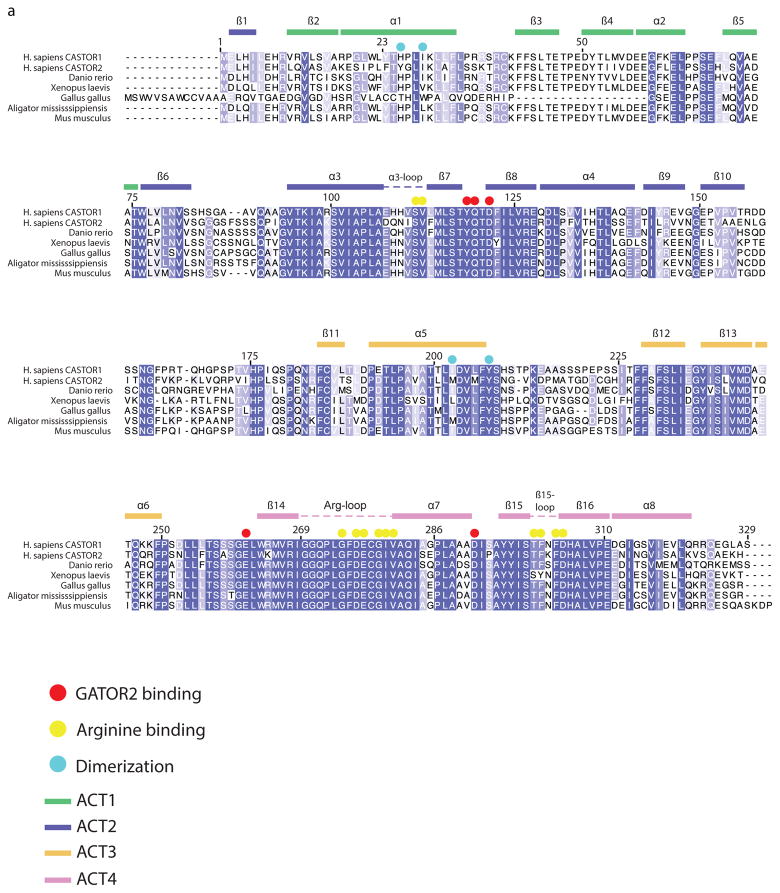
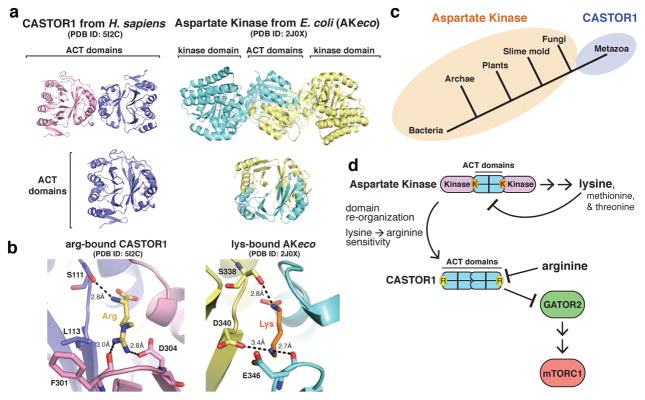
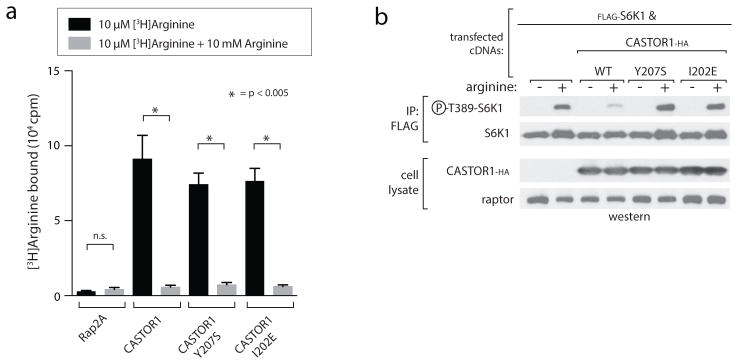
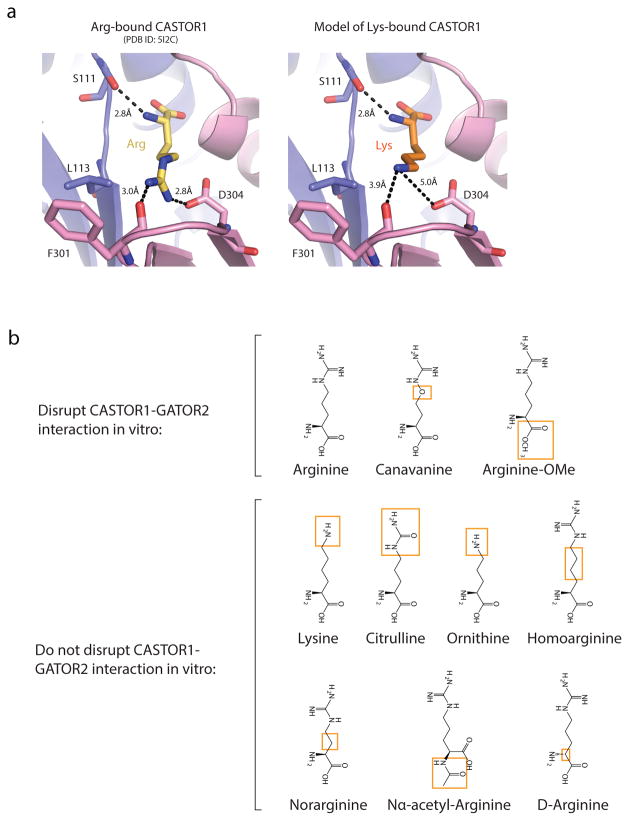
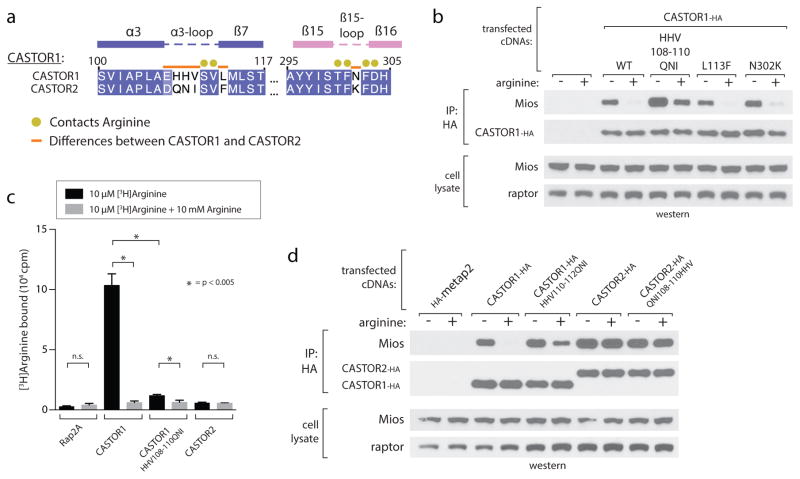
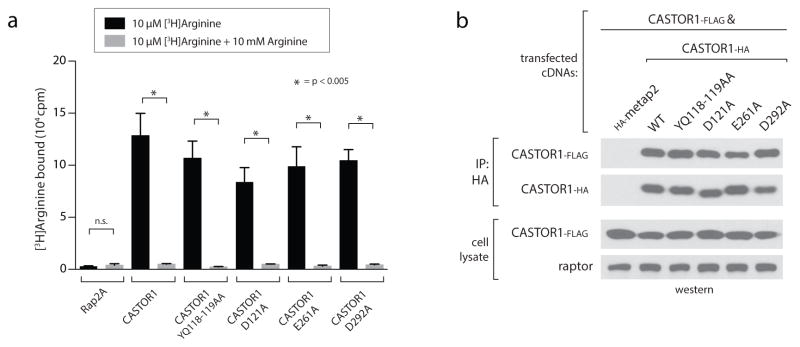
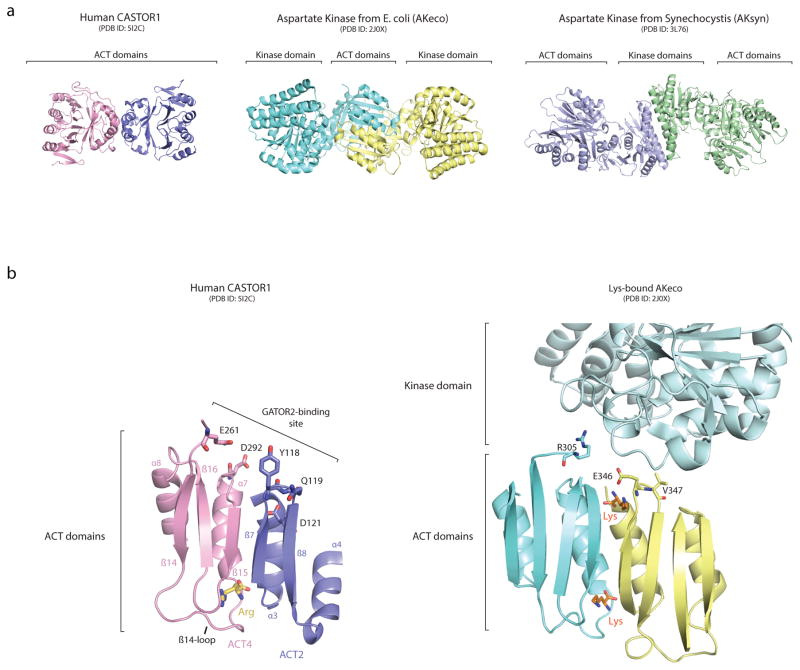
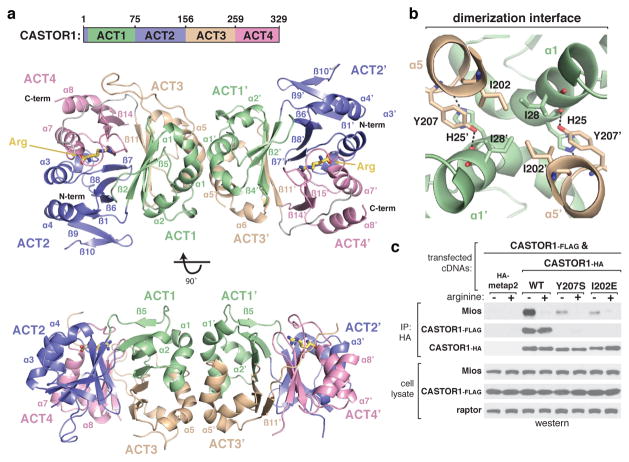
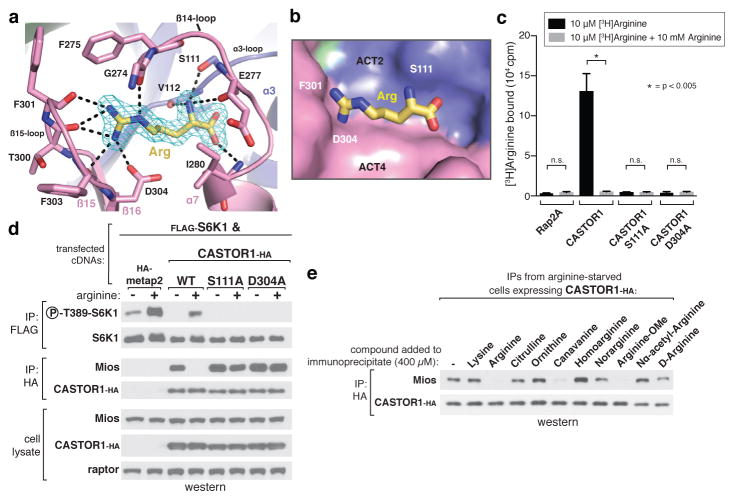
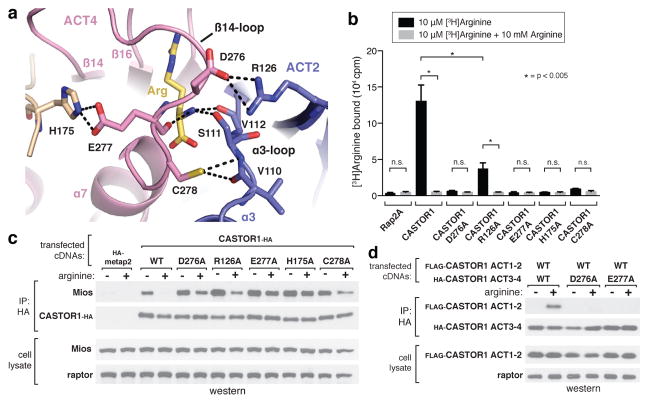
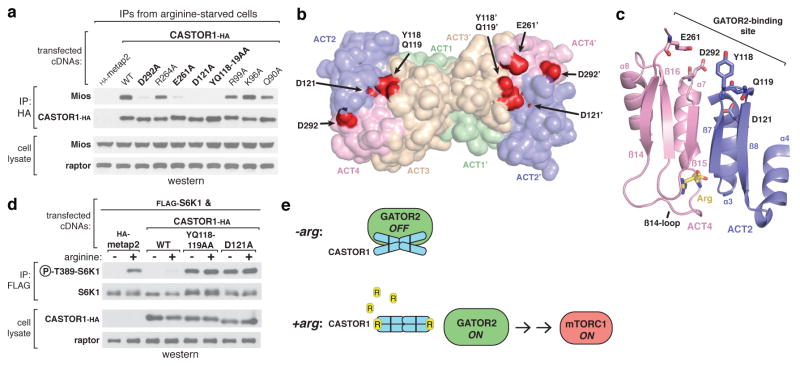
The mechanistic Target of Rapamycin Complex 1 (mTORC1) is a major regulator of eukaryotic growth that coordinates anabolic and catabolic cellular processes with inputs such as growth factors and nutrients, including amino acids. In mammals arginine is particularly important, promoting diverse physiological effects such as immune cell activation, insulin secretion, and muscle growth, largely mediated through activation of mTORC1 (refs 4, 5, 6, 7). Arginine activates mTORC1 upstream of the Rag family of GTPases, through either the lysosomal amino acid transporter SLC38A9 or the GATOR2-interacting Cellular Arginine Sensor for mTORC1 (CASTOR1). However, the mechanism by which the mTORC1 pathway detects and transmits this arginine signal has been elusive. Here, we present the 1.8 Å crystal structure of arginine-bound CASTOR1. Homodimeric CASTOR1 binds arginine at the interface of two Aspartate kinase, Chorismate mutase, TyrA (ACT) domains, enabling allosteric control of the adjacent GATOR2-binding site to trigger dissociation from GATOR2 and downstream activation of mTORC1. Our data reveal that CASTOR1 shares substantial structural homology with the lysine-binding regulatory domain of prokaryotic aspartate kinases, suggesting that the mTORC1 pathway exploited an ancient, amino-acid-dependent allosteric mechanism to acquire arginine sensitivity. Together, these results establish a structural basis for arginine sensing by the mTORC1 pathway and provide insights into the evolution of a mammalian nutrient sensor.
雷帕霉素复合物1的机制性靶点(mTORC1)是真核生物生长的主要调节因子,它通过生长因子和营养物质(包括氨基酸)等输入信号来协调细胞的合成代谢和分解代谢过程。在哺乳动物中,精氨酸尤为重要,它能促进多种生理效应,如免疫细胞激活、胰岛素分泌和肌肉生长,这些效应主要通过激活mTORC1介导(参考文献4、5、6、7)。精氨酸通过溶酶体氨基酸转运体SLC38A9或与GATOR2相互作用的mTORC1细胞精氨酸传感器(CASTOR1),在Rag家族GTP酶的上游激活mTORC1。然而,mTORC1途径检测和传递这种精氨酸信号的机制一直难以捉摸。在此,我们展示了结合精氨酸的CASTOR1的1.8埃晶体结构。同二聚体CASTOR1在两个天冬氨酸激酶、分支酸变位酶、酪氨酸A(ACT)结构域的界面结合精氨酸,从而对相邻的GATOR2结合位点进行变构控制,以触发其与GATOR2解离并下游激活mTORC1。我们的数据表明,CASTOR1与原核天冬氨酸激酶的赖氨酸结合调节结构域具有大量结构同源性,这表明mTORC1途径利用了一种古老的、依赖氨基酸的变构机制来获得对精氨酸的敏感性。总之,这些结果为mTORC1途径感知精氨酸建立了结构基础,并为哺乳动物营养传感器的进化提供了见解。