University College London Genetics Institute, University College London, London, England.
Farr Institute at University College London, London, England3Department of Medicine, Imperial College London, London, England.
JAMA Cardiol. 2016 Sep 1;1(6):692-9. doi: 10.1001/jamacardio.2016.1884.
Low-density lipoprotein cholesterol (LDL-C) is causally related to coronary artery disease (CAD), but the relevance of high-density lipoprotein cholesterol (HDL-C) and triglycerides (TGs) is uncertain. Lowering of LDL-C levels by statin therapy modestly increases the risk of type 2 diabetes, but it is unknown whether this effect is specific to statins.
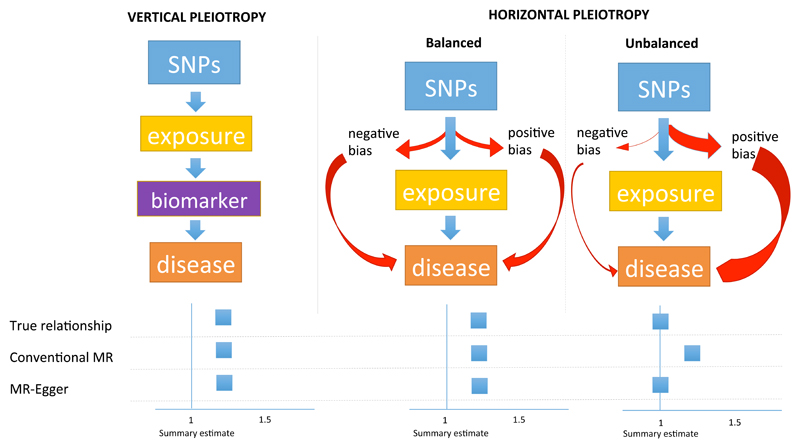
To investigate the associations of 3 routinely measured lipid fractions with CAD and diabetes through mendelian randomization (MR) using conventional MR and making use of newer approaches, such as multivariate MR and MR-Egger, that address the pleiotropy of genetic instruments where relevant.
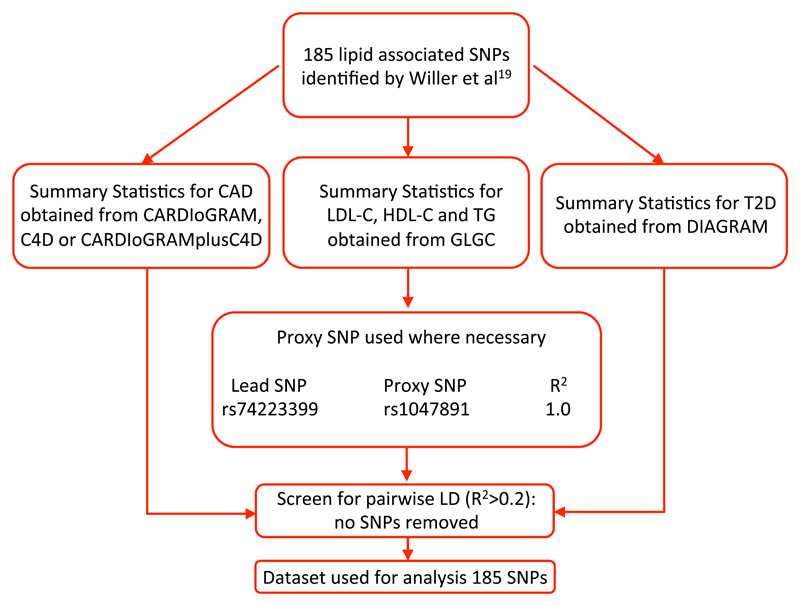
DESIGN, SETTING, AND PARTICIPANTS: Published data from genome-wide association studies were used to construct genetic instruments and then applied to investigate associations between lipid fractions and the risk of CAD and diabetes using MR approaches that took into account pleiotropy of genetic instruments. The study was conducted from March 12 to December 31, 2015.
Coronary artery disease and diabetes.
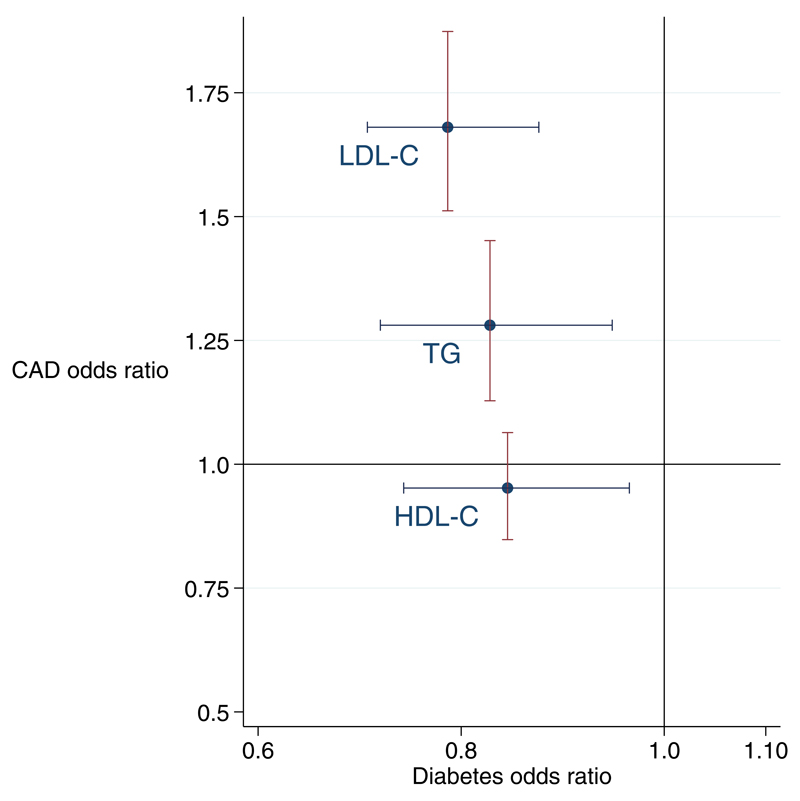
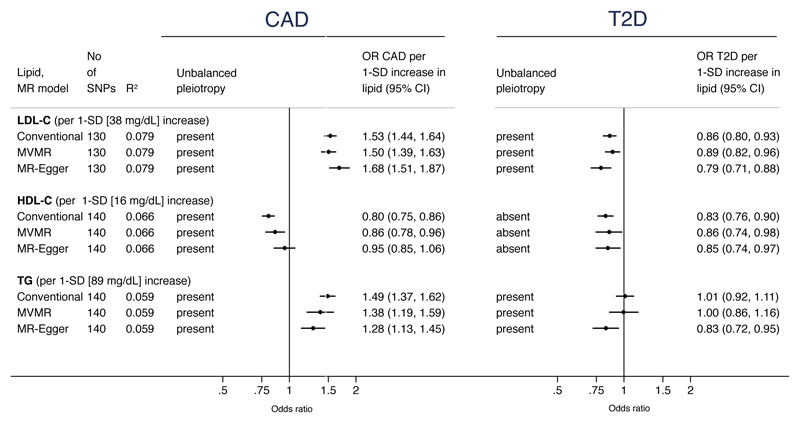
Genetic instruments composed of 130 single-nucleotide polymorphisms (SNPs) were used for LDL-C (explaining 7.9% of its variance), 140 SNPs for HDL-C (6.6% of variance), and 140 SNPs for TGs (5.9% of variance). A 1-SD genetically instrumented elevation in LDL-C levels (equivalent to 38 mg/dL) and TG levels (equivalent to 89 mg/dL) was associated with higher CAD risk; odds ratios (ORs) were 1.68 (95% CI, 1.51-1.87) for LDL-C and 1.28 (95% CI, 1.13-1.45) for TGs. The corresponding OR for HDL-C (equivalent to a 16-mg/dL increase) was 0.95 (95% CI, 0.85-1.06). All 3 lipid traits were associated with a lower risk of type 2 diabetes. The ORs were 0.79 (95% CI, 0.71-0.88) for LDL-C and 0.83 (95% CI, 0.76-0.90) for HDL-C per 1-SD elevation. For TG, the MR estimates for diabetes were inconsistent, with MR-Egger giving an OR of 0.83 (95%CI, 0.72-0.95) per 1-SD elevation.
Routinely measured lipid fractions exhibit contrasting associations with the risk of CAD and diabetes. Increased LDL-C, HDL-C, and possibly TG levels are associated with a lower risk of diabetes. This information will be relevant to the design of clinical trials of lipid-modifying agents, which should carefully monitor participants for dysglycemia and the incidence of diabetes.
低密度脂蛋白胆固醇(LDL-C)与冠状动脉疾病(CAD)有因果关系,但高密度脂蛋白胆固醇(HDL-C)和甘油三酯(TGs)的相关性尚不确定。他汀类药物治疗降低 LDL-C 水平适度增加 2 型糖尿病的风险,但尚不清楚这种影响是否特定于他汀类药物。
通过孟德尔随机化(MR),利用常规 MR 并利用新的方法(如多变量 MR 和 MR-Egger)来解决遗传工具的多效性(如果相关),调查 3 种常规测量的脂质分数与 CAD 和糖尿病的相关性。
设计、地点和参与者:使用全基因组关联研究发表的数据来构建遗传工具,然后应用于通过 MR 方法调查脂质分数与 CAD 和糖尿病风险之间的关联,这些方法考虑了遗传工具的多效性。该研究于 2015 年 3 月 12 日至 12 月 31 日进行。
冠状动脉疾病和糖尿病。
由 130 个单核苷酸多态性(SNPs)组成的遗传工具用于 LDL-C(解释其方差的 7.9%),140 个 SNPs 用于 HDL-C(解释其方差的 6.6%),和 140 个 SNPs 用于 TGs(解释其方差的 5.9%)。LDL-C 水平升高 1-SD(相当于 38mg/dL)和 TG 水平升高 1-SD(相当于 89mg/dL)与 CAD 风险增加相关;OR 分别为 1.68(95%CI,1.51-1.87)和 1.28(95%CI,1.13-1.45)。HDL-C(相当于增加 16mg/dL)的相应 OR 为 0.95(95%CI,0.85-1.06)。所有 3 种脂质特征均与 2 型糖尿病风险降低相关。OR 分别为 LDL-C 升高 1-SD(相当于 79mg/dL)为 0.79(95%CI,0.71-0.88)和 HDL-C 升高 1-SD(相当于 83mg/dL)为 0.83(95%CI,0.76-0.90)。对于 TG,糖尿病的 MR 估计值不一致,MR-Egger 给出的 OR 为 1-SD 升高时为 0.83(95%CI,0.72-0.95)。
常规测量的脂质分数与 CAD 和糖尿病的风险呈相反的相关性。LDL-C、HDL-C 和可能的 TG 水平升高与糖尿病风险降低相关。这些信息将与脂质修饰剂临床试验的设计相关,临床试验应仔细监测参与者的血糖水平和糖尿病的发生率。