Parissis H, Graham V, Lampridis S, Lau M, Hooks G, Mhandu P C
Cardiothoracics Department, Royal Victoria Hospital, Belfast, Northern Ireland.
J Cardiothorac Surg. 2016 Aug 4;11(1):122. doi: 10.1186/s13019-016-0513-0.
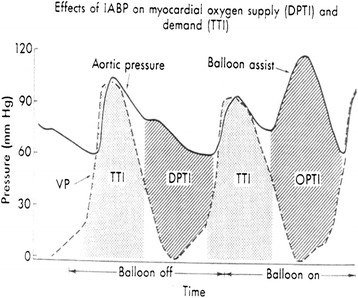
Treatment with the intraaortic balloon pump (IABP) is the most common form of mechanical support for the failing heart. Augmentation of diastolic pressure during balloon inflation contributes to the coronary circulation and the presystolic deflation of the balloon reduces the resistance to systolic output. Consequently, the myocardial work is reduced. The overall effect of the IABP therapy is an increase in the myocardial oxygen supply/demand ratio and thus in endocardial viability.This is an overall synopsis of what we need to know regarding IABP. Furthermore, this review article attempts to systematically delineate the pathophysiology linked with the hemodynamic consequences of IABP therapy. The authors also look at the future of the use of the balloon pump and conclude that the positive multi-systemic hemodynamic regulation during IABP treatment should further justify its use.
主动脉内球囊反搏泵(IABP)治疗是对衰竭心脏进行机械支持的最常见形式。球囊充气时舒张压的升高有助于冠状动脉循环,而球囊在收缩前期的放气则降低了心脏收缩输出的阻力。因此,心肌做功减少。IABP治疗的总体效果是心肌氧供/需比增加,从而提高心内膜活力。这是我们需要了解的关于IABP的总体概述。此外,这篇综述文章试图系统地阐述与IABP治疗的血流动力学后果相关的病理生理学。作者还展望了球囊泵的使用前景,并得出结论,IABP治疗期间积极的多系统血流动力学调节应进一步证明其使用的合理性。