Saul Louise, Besusso Dario, Mellanby Richard J
1 Medical Research Council/University of Edinburgh Centre for Inflammation Research and Centre for Multiple Sclerosis Research, Queen's Medical Research Institute, Edinburgh, UK.
2 Royal (Dick) School of Veterinary Studies and The Roslin Institute, Division of Veterinary Clinical Studies, The University of Edinburgh, Hospital for Small Animals, Easter Bush Veterinary Centre, Roslin, Midlothian, UK.
Lab Anim. 2017 Jun;51(3):292-300. doi: 10.1177/0023677216663584. Epub 2016 Aug 3.
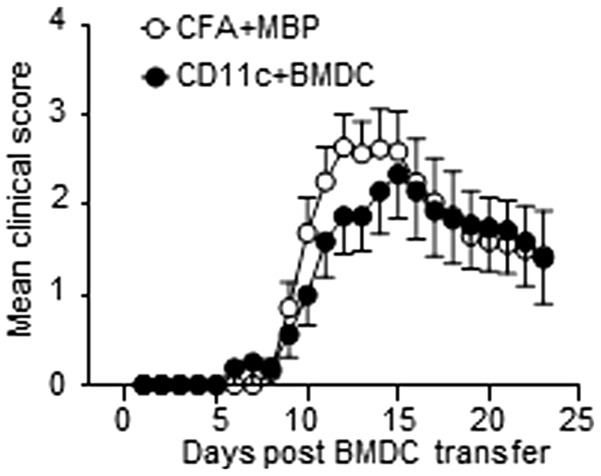
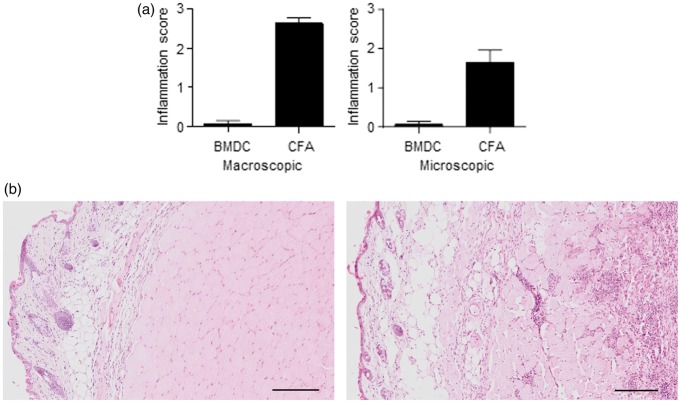
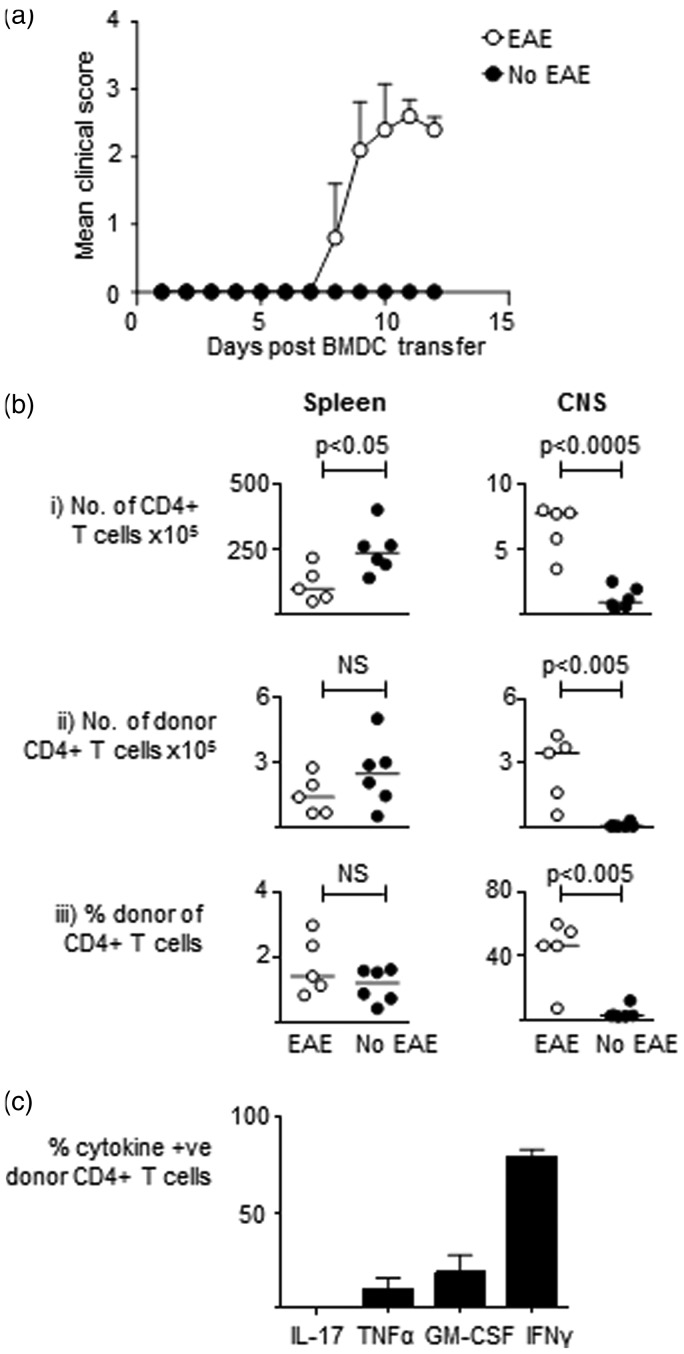
The pathogenesis of human autoimmune disorders is incompletely understood. This has led to the development of numerous murine models in which the pathogenesis of autoimmunity can be probed and the efficacy of novel therapies can be tested. One of the most widely-used murine models of autoimmunity is experimental autoimmune encephalomyelitis (EAE). To induce autoimmune pathology, mice are often immunized with an autoantigen alongside an adjuvant, typically complete Freund's adjuvant (CFA). Unfortunately, CFA causes significant inflammation at the site of administration. Despite the well-recognized complication of injection site inflammation, CFA with autoantigen immunization is widely used to induce central nervous system autoimmunity. We performed a literature review which allowed us to estimate that over 10,000 mice were immunized with CFA in published EAE studies in 2013. In this study, we demonstrated that subcutaneously administered myelin basic protein (MBP)-pulsed CD11c+ bone marrow-derived dendritic cells (BMDC) were as effective at inducing EAE as subcutaneously administered MBP plus CFA. Importantly, we also discovered that the CD11c+ BMDC caused significantly less injection site inflammation than MBP plus CFA immunization. This study demonstrated that the use of CD11c+ BMDC can enable the development of autopathogenic T-cells to be studied in vivo without the unwanted side-effects of long-lasting injection site inflammation. This model represents a significant refinement to existing EAE models and may lead to the improvement of the welfare of experimental mice used to study the development of autoimmunity in vivo.
人类自身免疫性疾病的发病机制尚未完全明确。这促使人们开发了众多小鼠模型,用于探究自身免疫性疾病的发病机制并测试新型疗法的疗效。实验性自身免疫性脑脊髓炎(EAE)是最广泛使用的自身免疫性小鼠模型之一。为诱导自身免疫病理,常将自身抗原与佐剂一起免疫小鼠,典型的佐剂是完全弗氏佐剂(CFA)。不幸的是,CFA会在给药部位引起严重炎症。尽管注射部位炎症这一并发症广为人知,但CFA联合自身抗原免疫仍被广泛用于诱导中枢神经系统自身免疫。我们进行了一项文献综述,据此估计在2013年已发表的EAE研究中,超过10,000只小鼠接受了CFA免疫。在本研究中,我们证明皮下注射髓鞘碱性蛋白(MBP)脉冲处理的CD11c⁺骨髓来源树突状细胞(BMDC)在诱导EAE方面与皮下注射MBP加CFA一样有效。重要的是,我们还发现CD11c⁺BMDC引起的注射部位炎症明显少于MBP加CFA免疫。这项研究表明,使用CD11c⁺BMDC能够在体内研究自身致病性T细胞的发育,而不会产生长期注射部位炎症这一不良副作用。该模型是对现有EAE模型的重大改进,可能会改善用于体内研究自身免疫性疾病发生发展的实验小鼠的福利。