Cordova J Scott, Gurbani Saumya S, Olson Jeffrey J, Liang Zhongxing, Cooper Lee A D, Shu Hui-Kuo G, Schreibmann Eduard, Neill Stewart G, Hadjipanayis Constantinos G, Holder Chad A, Shim Hyunsuk
Department of Radiology and Imaging Sciences, Emory University School of Medicine, Atlanta, GA.
Department of Radiology and Imaging Sciences, Emory University School of Medicine, Atlanta, GA; Department of Biomedical Engineering, Georgia Institute of Technology, Atlanta, GA.
Tomography. 2016 Jun;2(2):106-116. doi: 10.18383/j.tom.2016.00136.
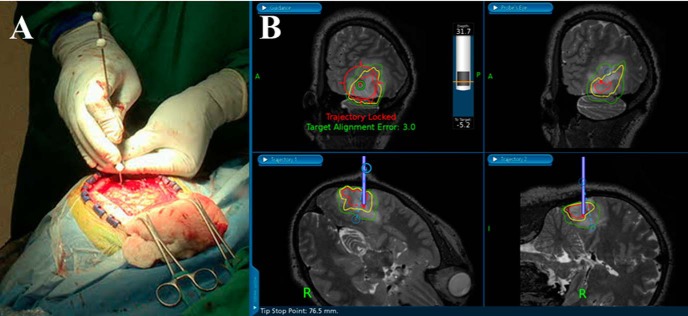
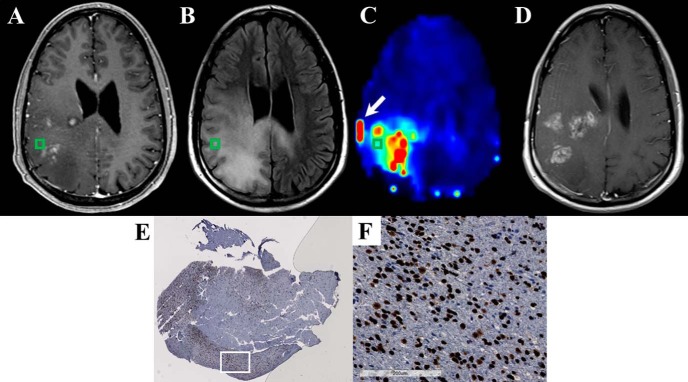
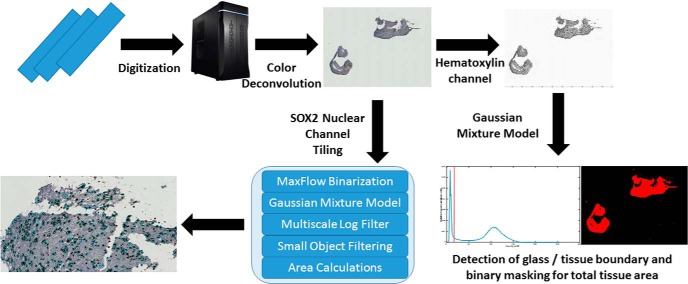
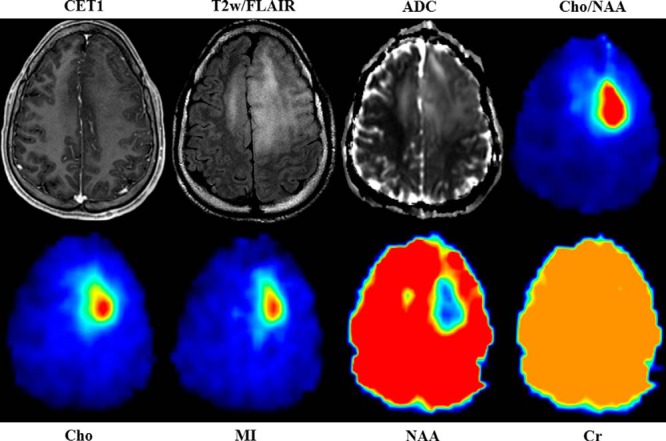
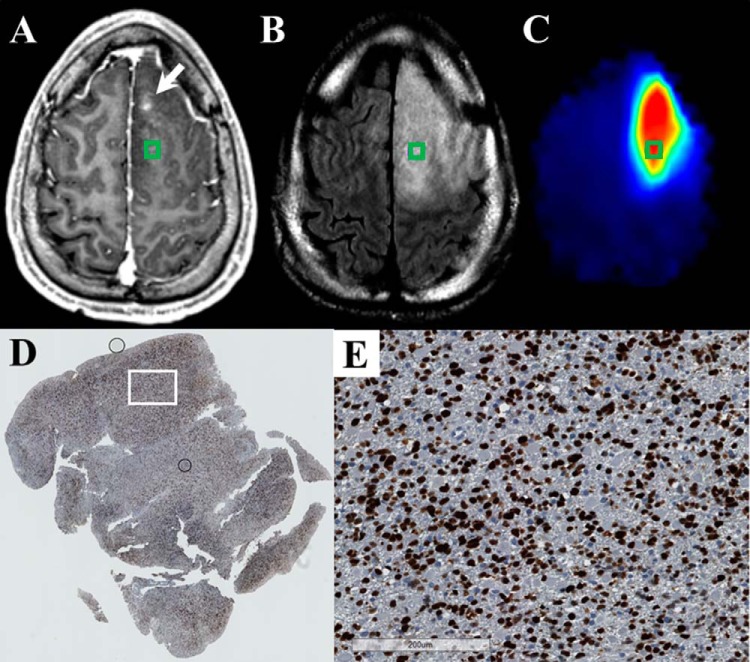
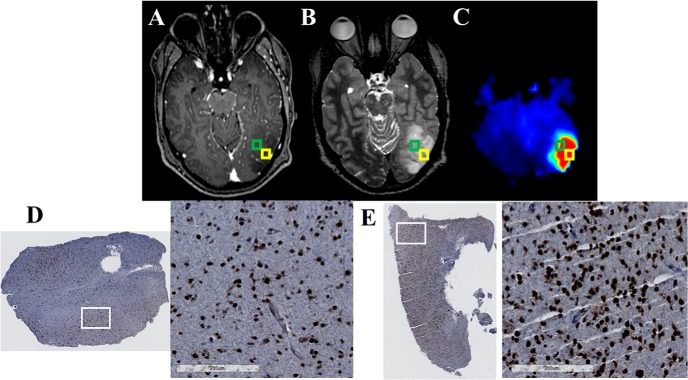
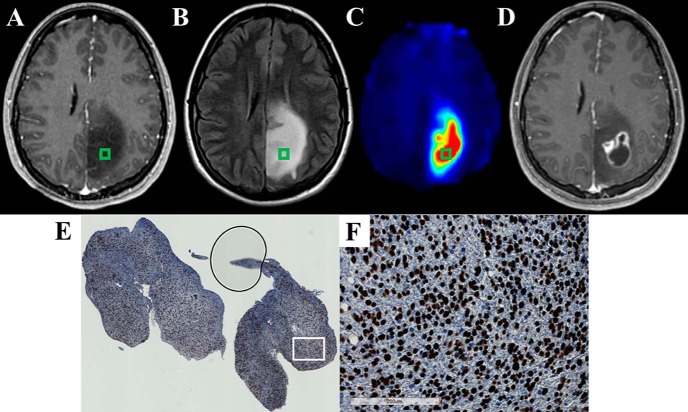
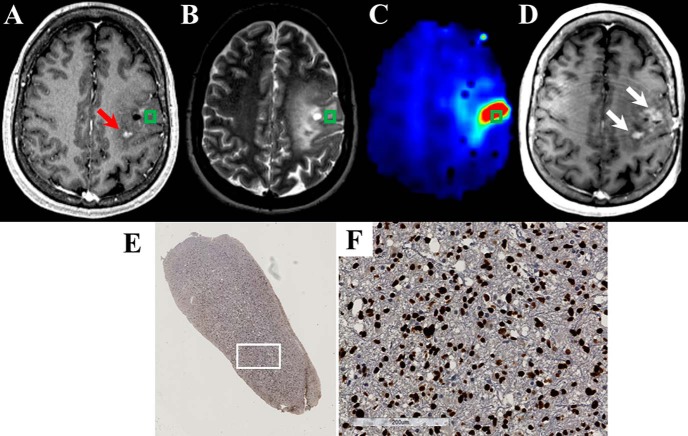
The diagnosis, prognosis, and management of patients with gliomas are largely dictated by the pathological analysis of tissue biopsied from a selected region within the lesion. However, due to the heterogeneous and infiltrative nature of gliomas, identifying the optimal region for biopsy with conventional magnetic resonance imaging (MRI) can be quite difficult. This is especially true for low grade gliomas, which often are non-enhancing tumors. To improve the management of patients with these tumors, the field of neuro-oncology requires an imaging modality that can specifically identify a tumor's most anaplastic/aggressive region(s) for biopsy targeting. The addition of metabolic mapping using spectroscopic MRI (sMRI) to supplement conventional MRI could improve biopsy targeting and, ultimately, diagnostic accuracy. Here, we describe a pipeline for the integration of state-of-the-art, high-resolution whole-brain 3D sMRI maps into a stereotactic neuronavigation system for guiding biopsies in gliomas with nonenhancing components. We also outline a machine-learning method for automated histology analysis that generates normalized, quantitative metrics describing tumor infiltration in immunohistochemically-stained tissue specimens. As a proof of concept, we describe the combination of these two techniques in a small cohort of grade III glioma patients. In this work, we aim to set forth a systematic pipeline to stimulate histopathology-image validation of advanced MRI techniques, such as sMRI.
胶质瘤患者的诊断、预后及治疗很大程度上取决于对病变内选定区域活检组织的病理分析。然而,由于胶质瘤具有异质性和浸润性,利用传统磁共振成像(MRI)确定活检的最佳区域可能相当困难。对于低级别胶质瘤尤其如此,这类肿瘤通常不强化。为改善这类肿瘤患者的治疗,神经肿瘤学领域需要一种成像方式,能够特异性地识别肿瘤最间变/侵袭性的区域以进行活检定位。添加使用磁共振波谱成像(sMRI)的代谢图谱以补充传统MRI,可改善活检定位,并最终提高诊断准确性。在此,我们描述了一种流程,用于将先进的高分辨率全脑三维sMRI图谱整合到立体定向神经导航系统中,以指导对含有非强化成分的胶质瘤进行活检。我们还概述了一种用于自动组织学分析的机器学习方法,该方法可生成描述免疫组织化学染色组织标本中肿瘤浸润情况的标准化定量指标。作为概念验证,我们在一小群III级胶质瘤患者中描述了这两种技术的结合。在这项工作中,我们旨在提出一个系统流程,以推动对诸如sMRI等先进MRI技术进行组织病理学图像验证。