Sousa Lara L, López-Castejón Francisco, Gilabert Javier, Relvas Paulo, Couto Ana, Queiroz Nuno, Caldas Renato, Dias Paulo Sousa, Dias Hugo, Faria Margarida, Ferreira Filipe, Ferreira António Sérgio, Fortuna João, Gomes Ricardo Joel, Loureiro Bruno, Martins Ricardo, Madureira Luis, Neiva Jorge, Oliveira Marina, Pereira João, Pinto José, Py Frederic, Queirós Hugo, Silva Daniel, Sujit P B, Zolich Artur, Johansen Tor Arne, de Sousa João Borges, Rajan Kanna
CIBIO-InBIO, Centro de Investigação em Biodiversidade e Recursos Genéticos, Campus Agrário de Vairão, Universidade do Porto, 4485-661 Vairão, Portugal.
Marine Biological Association of the United Kingdom, The Laboratory, Citadel Hill, Plymouth PL1 2PB, United Kingdom.
PLoS One. 2016 Aug 5;11(8):e0160404. doi: 10.1371/journal.pone.0160404. eCollection 2016.
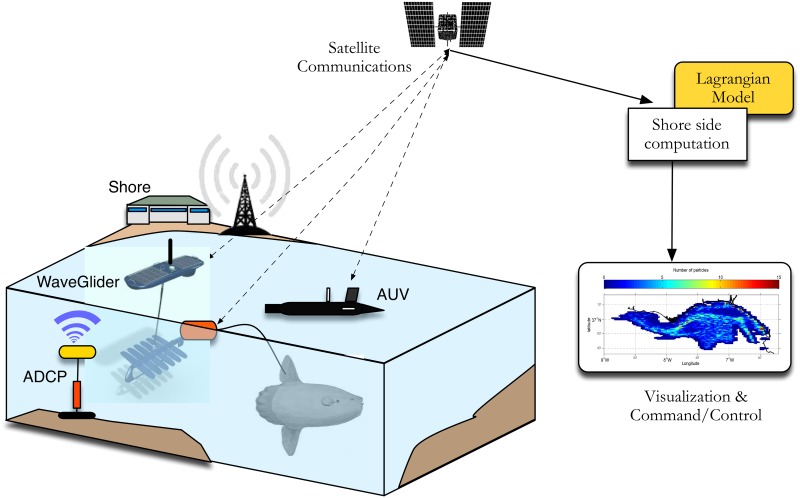
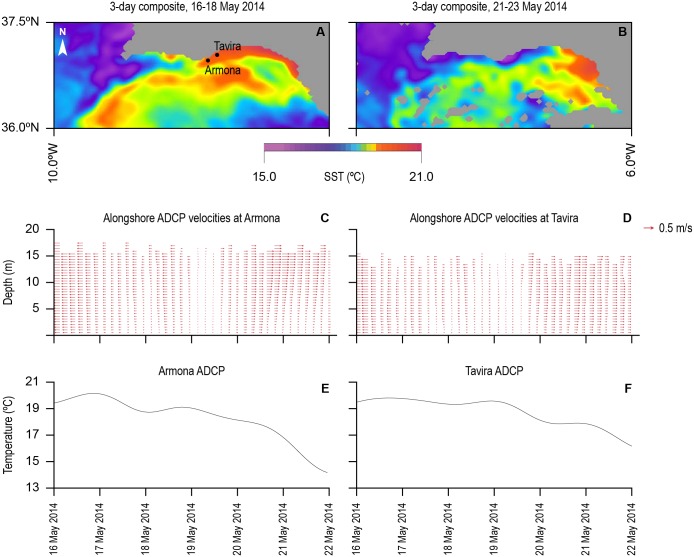
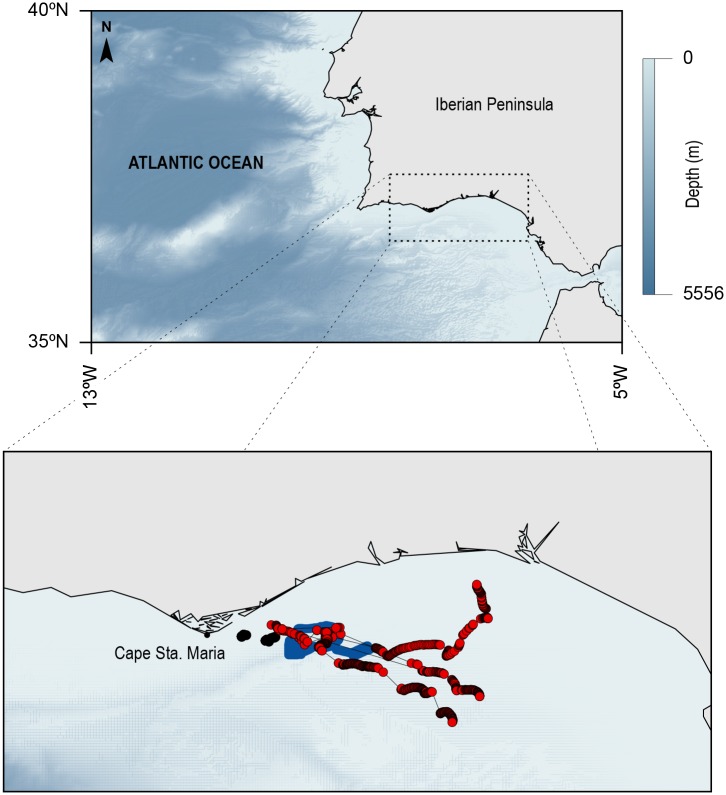
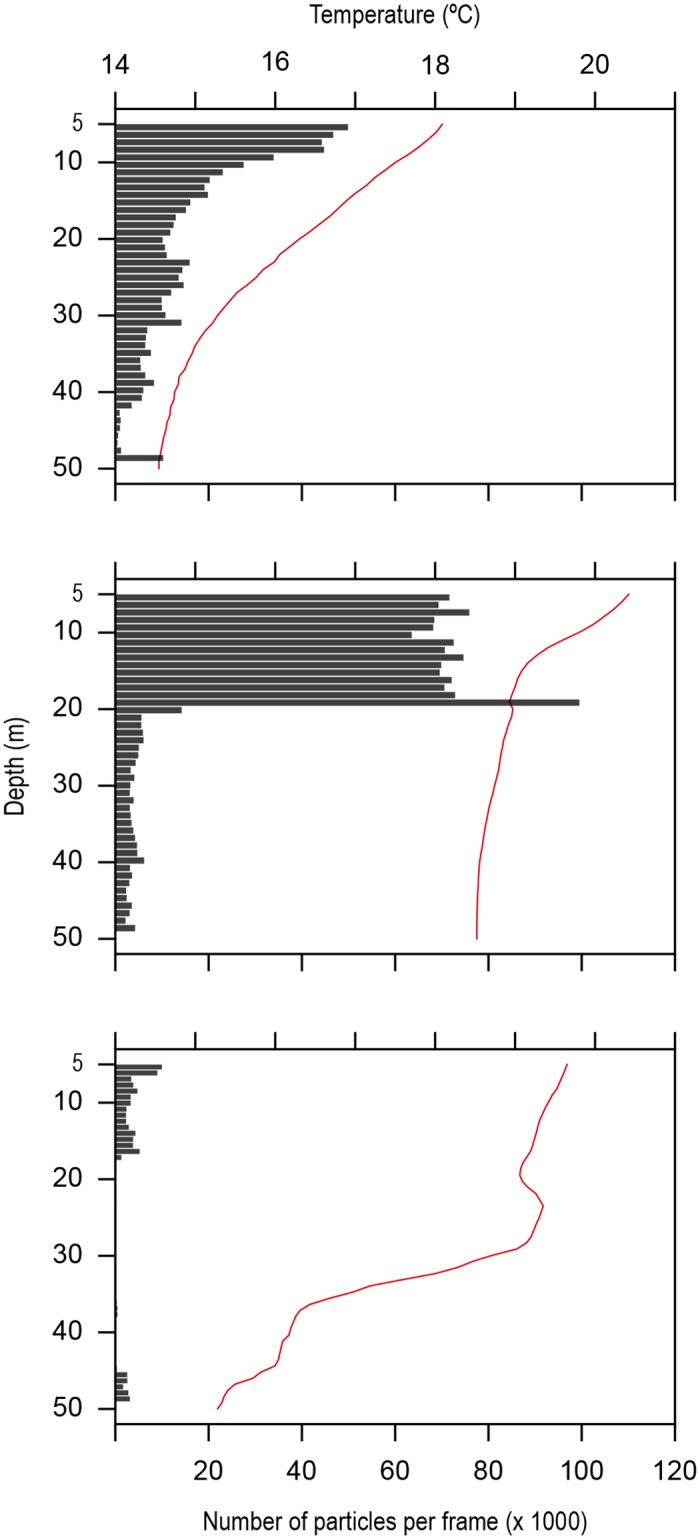
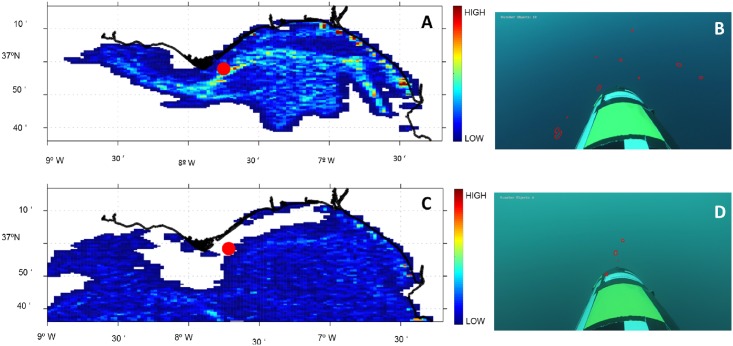
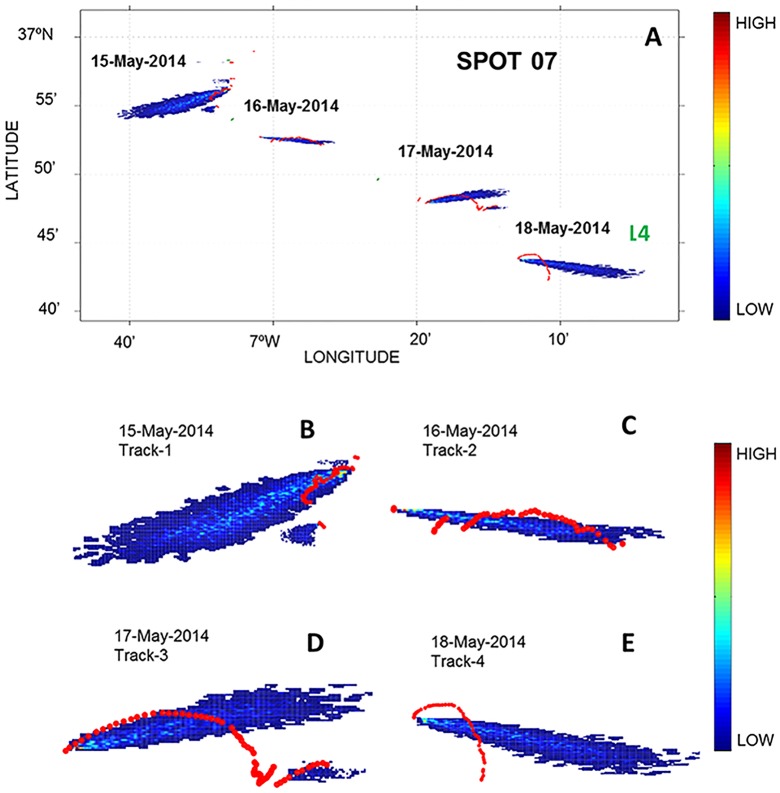
Over the last decade, ocean sunfish movements have been monitored worldwide using various satellite tracking methods. This study reports the near-real time monitoring of fine-scale (< 10 m) behaviour of sunfish. The study was conducted in southern Portugal in May 2014 and involved satellite tags and underwater and surface robotic vehicles to measure both the movements and the contextual environment of the fish. A total of four individuals were tracked using custom-made GPS satellite tags providing geolocation estimates of fine-scale resolution. These accurate positions further informed sunfish areas of restricted search (ARS), which were directly correlated to steep thermal frontal zones. Simultaneously, and for two different occasions, an Autonomous Underwater Vehicle (AUV) video-recorded the path of the tracked fish and detected buoyant particles in the water column. Importantly, the densities of these particles were also directly correlated to steep thermal gradients. Thus, both sunfish foraging behaviour (ARS) and possibly prey densities, were found to be influenced by analogous environmental conditions. In addition, the dynamic structure of the water transited by the tracked individuals was described by a Lagrangian modelling approach. The model informed the distribution of zooplankton in the region, both horizontally and in the water column, and the resultant simulated densities positively correlated with sunfish ARS behaviour estimator (rs = 0.184, p<0.001). The model also revealed that tracked fish opportunistically displace with respect to subsurface current flow. Thus, we show how physical forcing and current structure provide a rationale for a predator's fine-scale behaviour observed over a two weeks in May 2014.
在过去十年间,全球利用各种卫星追踪方法对翻车鱼的活动进行了监测。本研究报告了对翻车鱼精细尺度(<10米)行为的近实时监测情况。该研究于2014年5月在葡萄牙南部开展,使用了卫星标签以及水下和水面机器人车辆来测量翻车鱼的活动和周围环境。使用定制的GPS卫星标签对总共四条翻车鱼进行了追踪,这些标签提供了精细尺度分辨率的地理位置估计。这些精确位置进一步明确了翻车鱼的受限搜索区域(ARS),该区域与陡峭的热锋区直接相关。同时,在两个不同的时段,一辆自主水下航行器(AUV)对被追踪翻车鱼的路径进行了视频记录,并检测了水柱中的漂浮颗粒。重要的是,这些颗粒的密度也与陡峭的热梯度直接相关。因此,发现翻车鱼的觅食行为(ARS)以及可能的猎物密度都受到类似环境条件的影响。此外,通过拉格朗日建模方法描述了被追踪个体所经过水体的动态结构。该模型给出了该区域浮游动物在水平方向和水柱中的分布情况,模拟得出的密度与翻车鱼ARS行为估计值呈正相关(rs = 0.184,p<0.001)。该模型还显示,被追踪的翻车鱼会根据次表层水流进行机会性移动。因此,我们展示了物理强迫和水流结构如何为2014年5月观察到的一种捕食者的精细尺度行为提供了一种解释。