Michelmann Sebastian, Bowman Howard, Hanslmayr Simon
School of Psychology, University of Birmingham, Birmingham, United Kingdom.
School of Computing, University of Kent, Canterbury, United Kingdom.
PLoS Biol. 2016 Aug 5;14(8):e1002528. doi: 10.1371/journal.pbio.1002528. eCollection 2016 Aug.
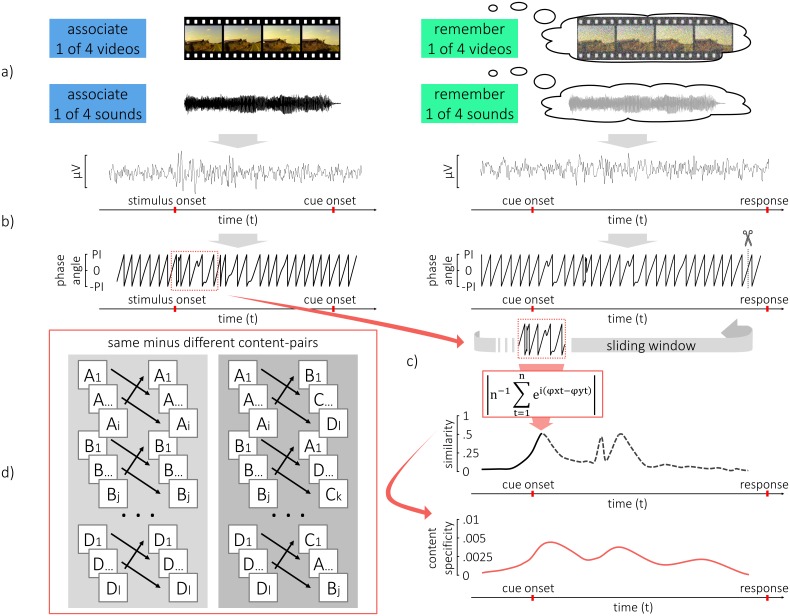
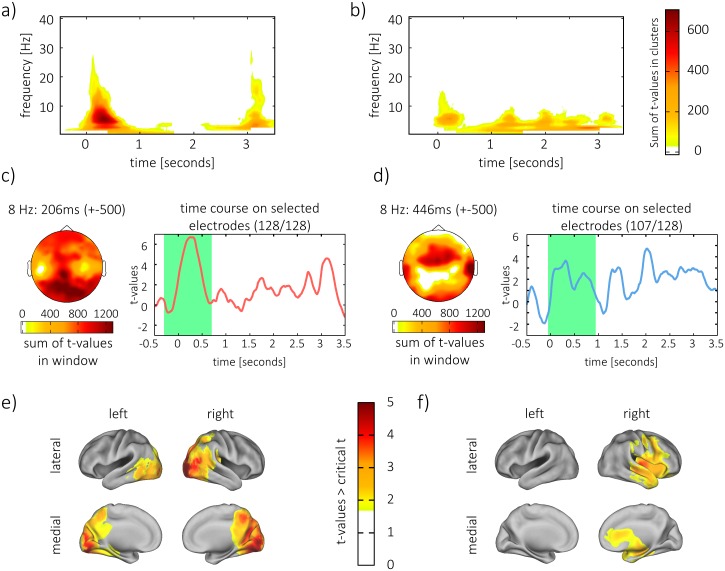
Reinstatement of dynamic memories requires the replay of neural patterns that unfold over time in a similar manner as during perception. However, little is known about the mechanisms that guide such a temporally structured replay in humans, because previous studies used either unsuitable methods or paradigms to address this question. Here, we overcome these limitations by developing a new analysis method to detect the replay of temporal patterns in a paradigm that requires participants to mentally replay short sound or video clips. We show that memory reinstatement is accompanied by a decrease of low-frequency (8 Hz) power, which carries a temporal phase signature of the replayed stimulus. These replay effects were evident in the visual as well as in the auditory domain and were localized to sensory-specific regions. These results suggest low-frequency phase to be a domain-general mechanism that orchestrates dynamic memory replay in humans.
动态记忆的恢复需要重现神经模式,这些模式随着时间的推移以与感知过程中相似的方式展开。然而,对于指导人类这种具有时间结构的重现的机制,我们所知甚少,因为之前的研究要么使用了不合适的方法,要么采用了不恰当的范式来解决这个问题。在这里,我们开发了一种新的分析方法来检测时间模式的重现,该方法应用于一个要求参与者在脑海中重现短声音或视频片段的范式中,从而克服了这些限制。我们发现,记忆恢复伴随着低频(8赫兹)功率的降低,而低频功率携带了重现刺激的时间相位特征。这些重现效应在视觉和听觉领域都很明显,并且定位在特定感觉区域。这些结果表明,低频相位是一种通用机制,它协调人类的动态记忆重现。