Pawar Rajendra C, Kang Suhee, Park Jung Hyun, Kim Jong-Ho, Ahn Sunghoon, Lee Caroline S
Department of Materials Engineering,Hanyang University, 426-791, South Korea.
Department of Chemical Engineering, Hanyang University, 426-791, South Korea.
Sci Rep. 2016 Aug 8;6:31147. doi: 10.1038/srep31147.
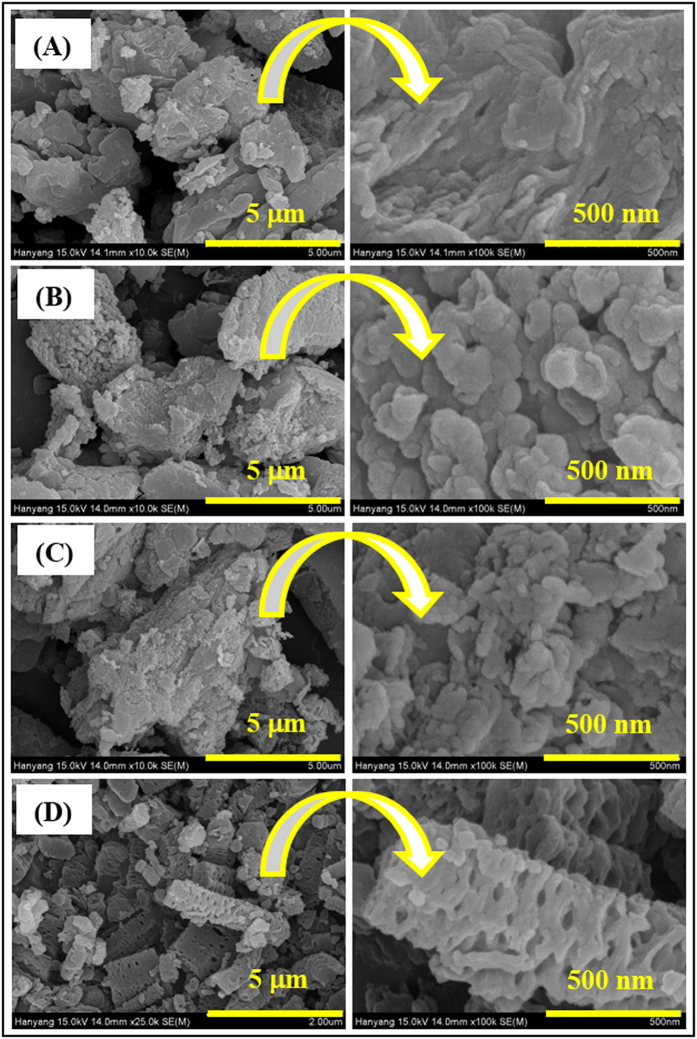
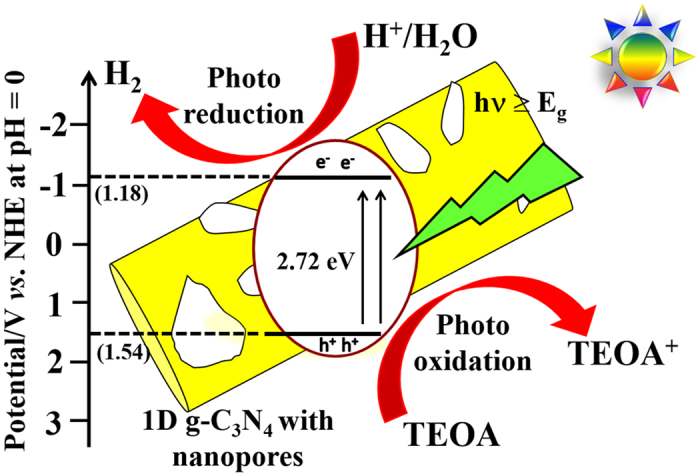
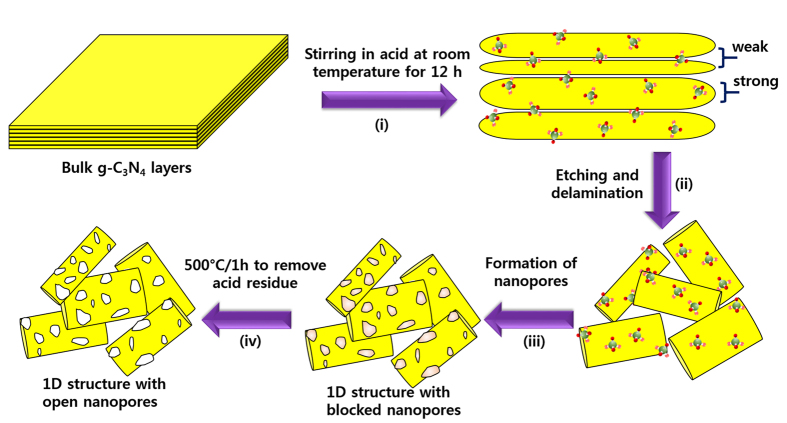
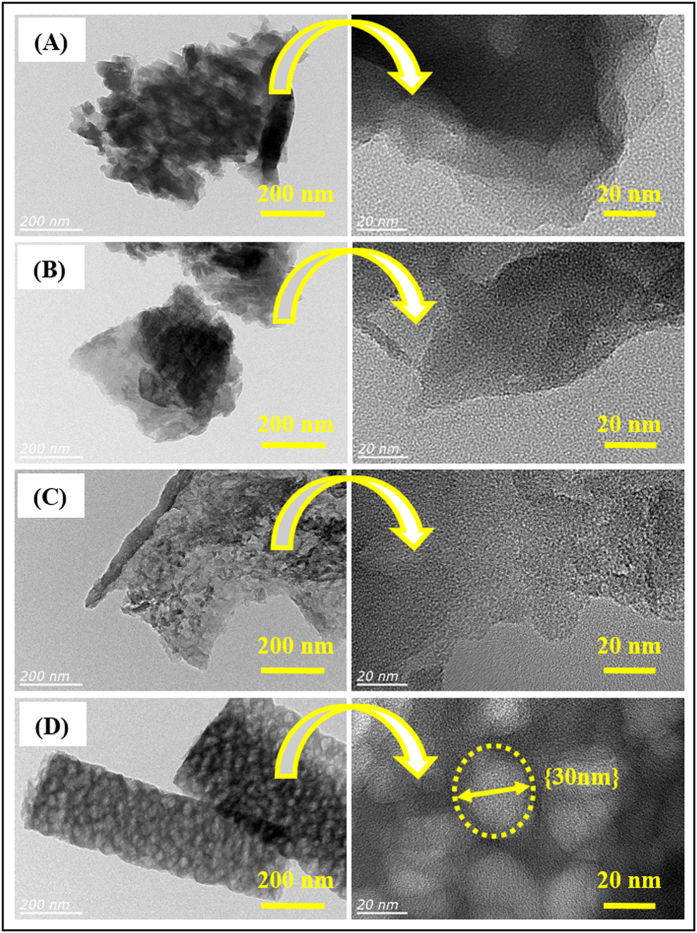
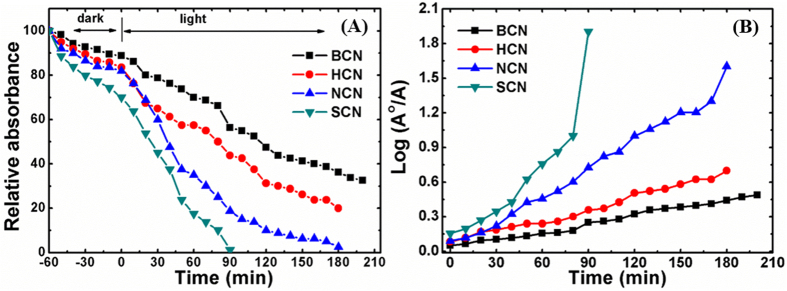
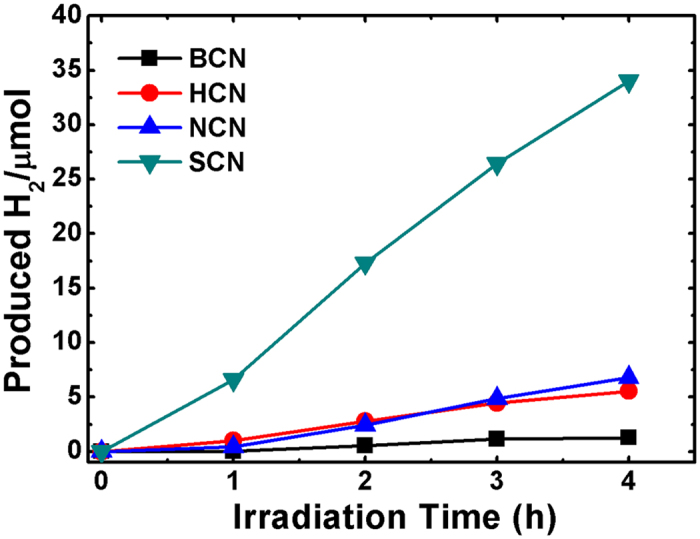
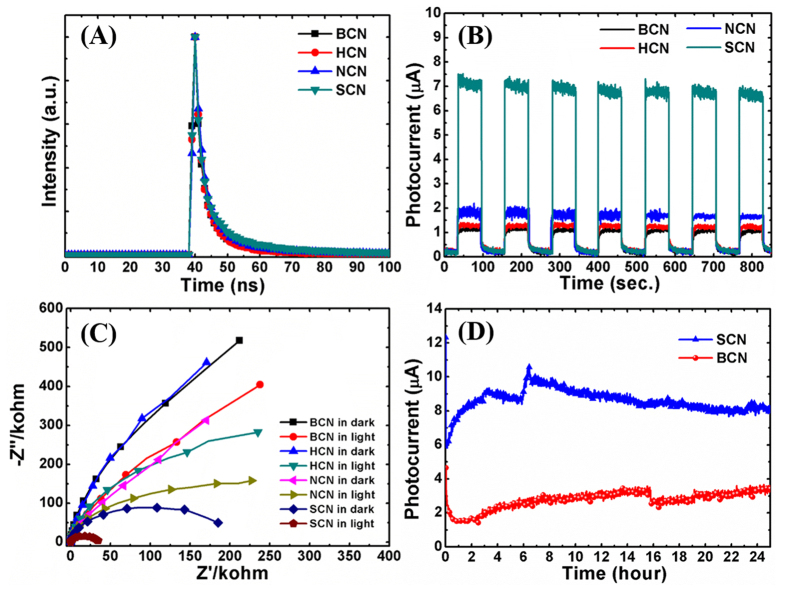
A one-dimensional (1D) nanostructure having a porous network is an exceptional photocatalytic material to generate hydrogen (H2) and decontaminate wastewater using solar energy. In this report, we synthesized nanoporous 1D microrods of graphitic carbon nitride (g-C3N4) via a facile and template-free chemical approach at room temperature. The use of concentrated acids induced etching and lift-off because of strong oxidation and protonation. Compared with the bulk g-C3N4, the porous 1D microrod structure showed five times higher photocatalytic degradation performance toward methylene blue dye (MB) under visible light irradiation. The photocatalytic H2 evolution of the 1D nanostructure (34 μmol g(-1)) was almost 26 times higher than that of the bulk g-C3N4 structure (1.26 μmol g(-1)). Additionally, the photocurrent stability of this nanoporous 1D morphology over 24 h indicated remarkable photocorrosion resistance. The improved photocatalytic activities were attributed to prolonged carrier lifetime because of its quantum confinement effect, effective separation and transport of charge carriers, and increased number of active sites from interconnected nanopores throughout the microrods. The present 1D nanostructure would be highly suited for photocatalytic water purification as well as water splitting devices. Finally, this facile and room temperature strategy to fabricate the nanostructures is very cost-effective.
具有多孔网络的一维(1D)纳米结构是一种卓越的光催化材料,可利用太阳能产生氢气(H2)并净化废水。在本报告中,我们通过一种简便的无模板化学方法在室温下合成了石墨相氮化碳(g-C3N4)的纳米多孔一维微棒。浓酸的使用由于强烈的氧化和质子化作用而导致蚀刻和剥离。与块状g-C3N4相比,多孔一维微棒结构在可见光照射下对亚甲基蓝染料(MB)的光催化降解性能高出五倍。一维纳米结构的光催化析氢量(34 μmol g(-1))几乎是块状g-C3N4结构(1.26 μmol g(-1))的26倍。此外,这种纳米多孔一维形态在24小时内的光电流稳定性表明其具有显著的抗光腐蚀性能。光催化活性的提高归因于其量子限制效应延长了载流子寿命、电荷载流子的有效分离和传输,以及贯穿微棒的相互连接的纳米孔增加了活性位点的数量。目前的一维纳米结构非常适合用于光催化水净化以及水分解装置。最后,这种制备纳米结构的简便室温策略具有很高的成本效益。