
蝙蝠中病毒感应Toll样受体8的适应性进化。
Adaptive evolution of virus-sensing toll-like receptor 8 in bats.
作者信息
Schad Julia, Voigt Christian C
机构信息
Department of Evolutionary Ecology, Leibniz Institute for Zoo and Wildlife Research, Alfred-Kowalke-Str. 17, 10315, Berlin, Germany.
出版信息
Immunogenetics. 2016 Nov;68(10):783-795. doi: 10.1007/s00251-016-0940-z. Epub 2016 Aug 9.
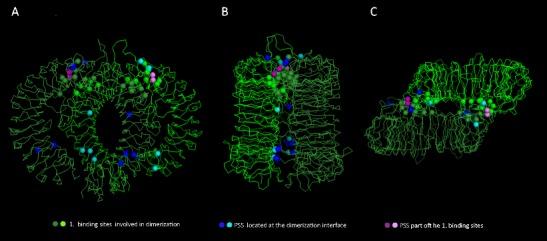
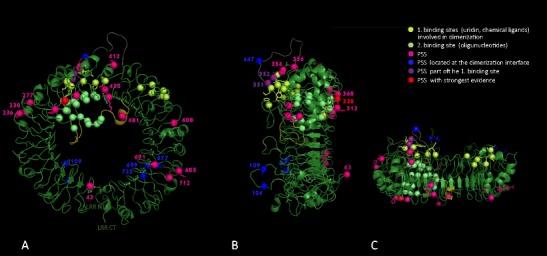
Recently, bats have gained attention as potential reservoir hosts for emerging zoonotic single-stranded (ssRNA) viruses that may prove fatal for humans and other mammals. It has been hypothesized that some features of their innate immune system may enable bats to trigger an efficient early immune response. Toll-like receptors (TLRs) represent a first line defense within the innate immune system and lie directly at the host-pathogen interface in targeting specific microbe-molecular patterns. However, the direction and strength of selection acting on TLRs are largely unknown for bats. Here, we studied the selection on viral ssRNA sensing TLR8 based on sequence data of 21 bat species. The major part (63 %) of the TLR8 gene evolved under purifying selection, likely due to functional constraints. We also found evidence for persistent positive selection acting on specific amino acid sites (7 %), especially when compared to viral TLR evolution of other mammals. All of these putatively positively selected codons were located in the ligand-binding ectodomain, some coincidenced or were in close proximity to functional sites, as suggested by the crystallographic structure of the human TLR8. This might contribute to the inter-species variation in the ability to recognize molecular patterns of viruses. TLR8 evolution within bats revealed that branches leading to ancestral and recent lineages evolved under episodic positive selection, indicating selective selection pressures in restricted bat lineages. Altogether, we found that the TLR8 displays extensive sequence variation within bats and that unique features separate them from humans and other mammals.
最近,蝙蝠作为新兴人畜共患单链(ssRNA)病毒的潜在宿主受到关注,这些病毒可能对人类和其他哺乳动物致命。据推测,它们先天免疫系统的某些特征可能使蝙蝠能够触发有效的早期免疫反应。Toll样受体(TLR)是先天免疫系统的第一道防线,直接处于宿主-病原体界面,靶向特定的微生物分子模式。然而,蝙蝠TLR上选择作用的方向和强度在很大程度上尚不清楚。在这里,我们基于21种蝙蝠的序列数据研究了对病毒ssRNA感应TLR8的选择。TLR8基因的主要部分(63%)在纯化选择下进化,可能是由于功能限制。我们还发现有证据表明特定氨基酸位点(7%)存在持续的正选择,特别是与其他哺乳动物的病毒TLR进化相比。所有这些推定的正选择密码子都位于配体结合胞外域,如人TLR8的晶体结构所示,一些与功能位点重合或紧邻功能位点。这可能导致物种间识别病毒分子模式能力的差异。蝙蝠体内TLR8的进化表明,导致祖先和近期谱系的分支在间歇性正选择下进化,表明在有限的蝙蝠谱系中存在选择性压力。总之,我们发现TLR8在蝙蝠体内表现出广泛的序列变异,其独特特征将它们与人类和其他哺乳动物区分开来。


 Zotero 插件