Khalil Ahmed A, Hohenhaus Marc, Kunze Claudia, Schmidt Wolf, Brunecker Peter, Villringer Kersten, Merboldt Klaus-Dietmar, Frahm Jens, Fiebach Jochen B
Center for Stroke Research Berlin, Charité - Universitätsmedizin Berlin, Berlin, Germany.
NeuroCure Cluster of Excellence, Charité - Universitätsmedizin Berlin, Berlin, Germany.
PLoS One. 2016 Aug 16;11(8):e0161416. doi: 10.1371/journal.pone.0161416. eCollection 2016.
To assess the sensitivity of stimulated echo acquisition mode diffusion weighted imaging (STEAM-DWI) to ischemic stroke in comparison to echo-planar imaging diffusion weighted imaging (EPI-DWI) in the infratentorial compartment.
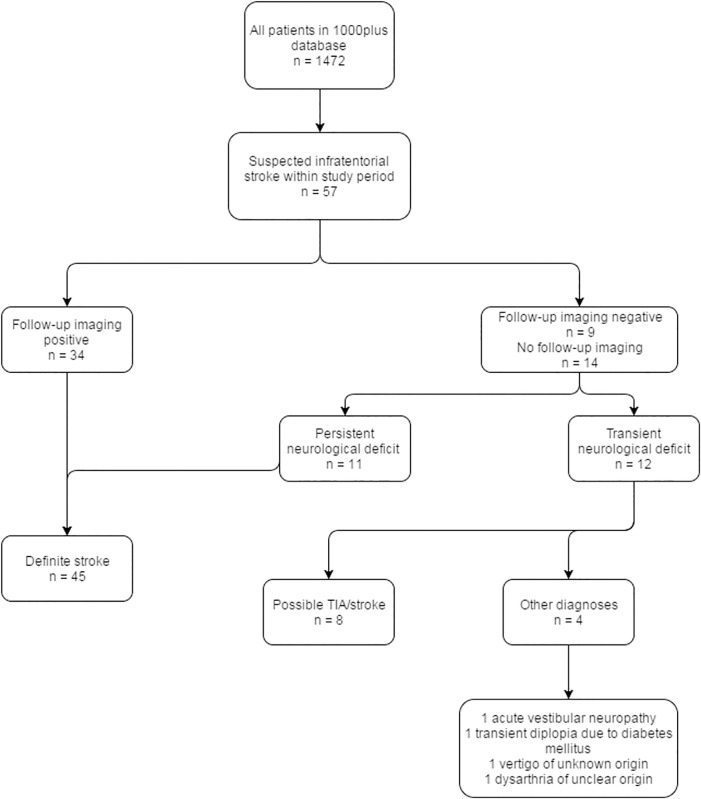
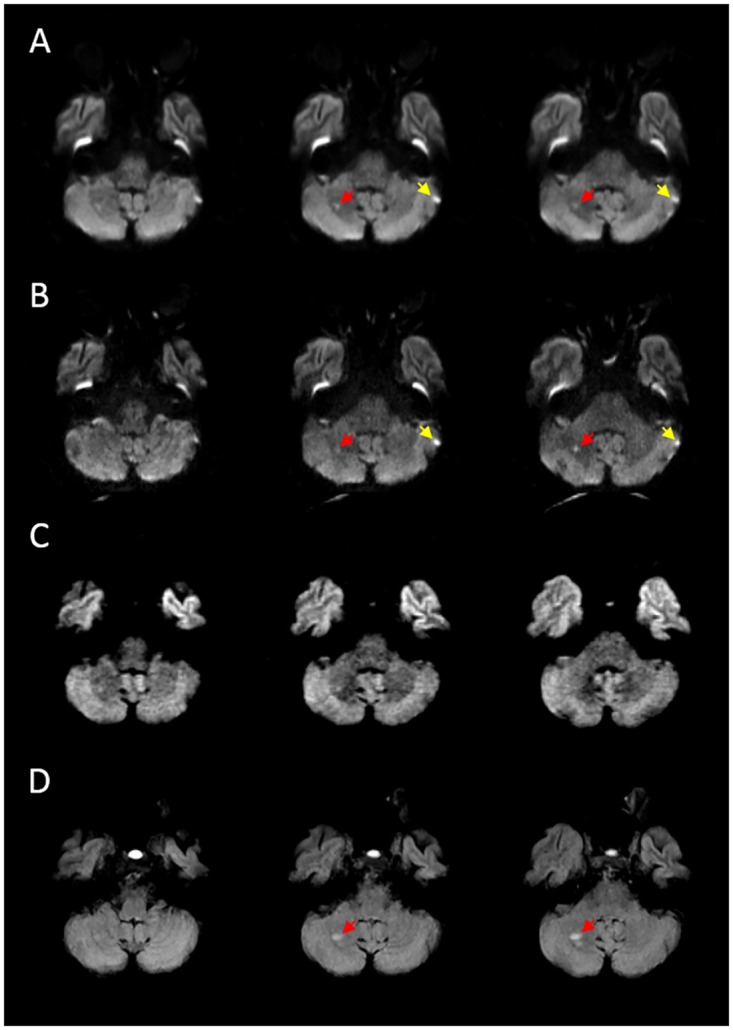
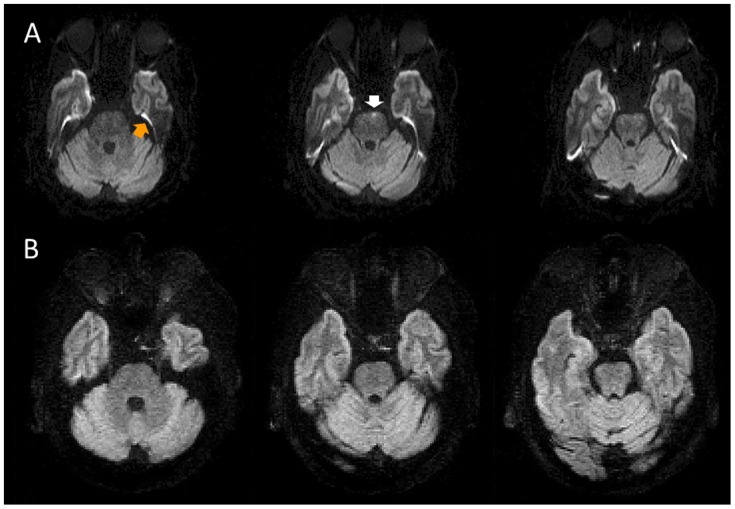
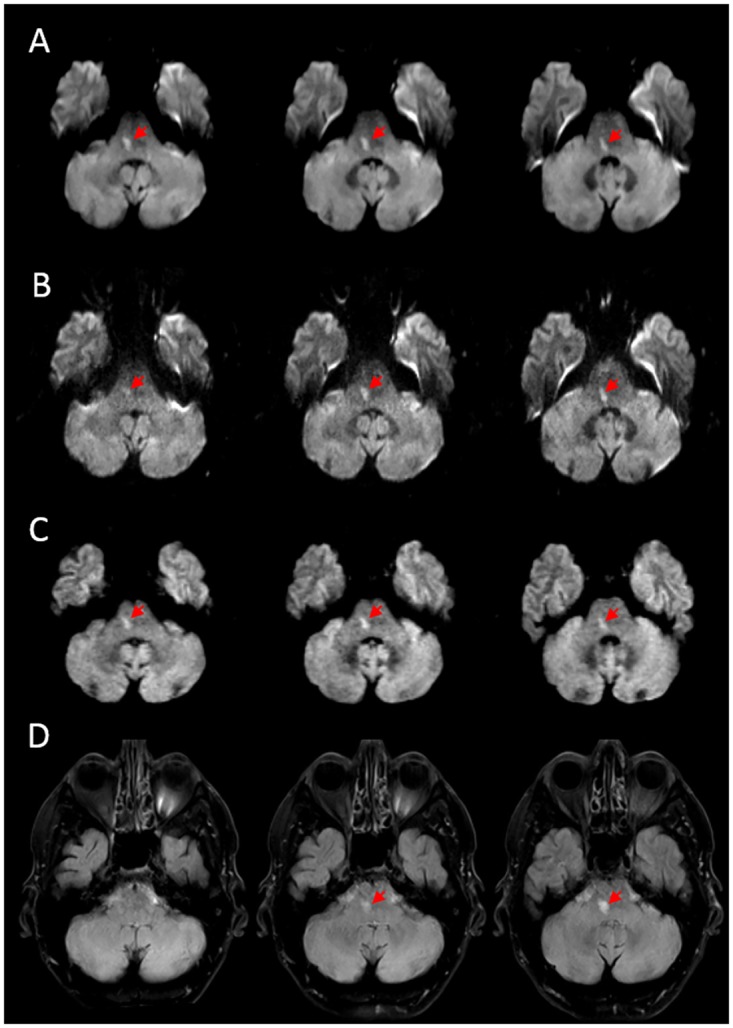
Fifty-seven patients presenting with clinical features of infratentorial stroke underwent STEAM-DWI, high-resolution EPI-DWI (HR-DWI, 2.5 mm slice thickness) and low-resolution EPI-DWI (LR-DWI, 5 mm slice thickness). Four readers assessed the presence of ischemic lesions and artifacts. Agreement between sequences and interobserver agreement on the presence of ischemia were calculated. The sensitivities of the DWI sequences were calculated in 45 patients with a confirmed diagnosis of infratentorial stroke.
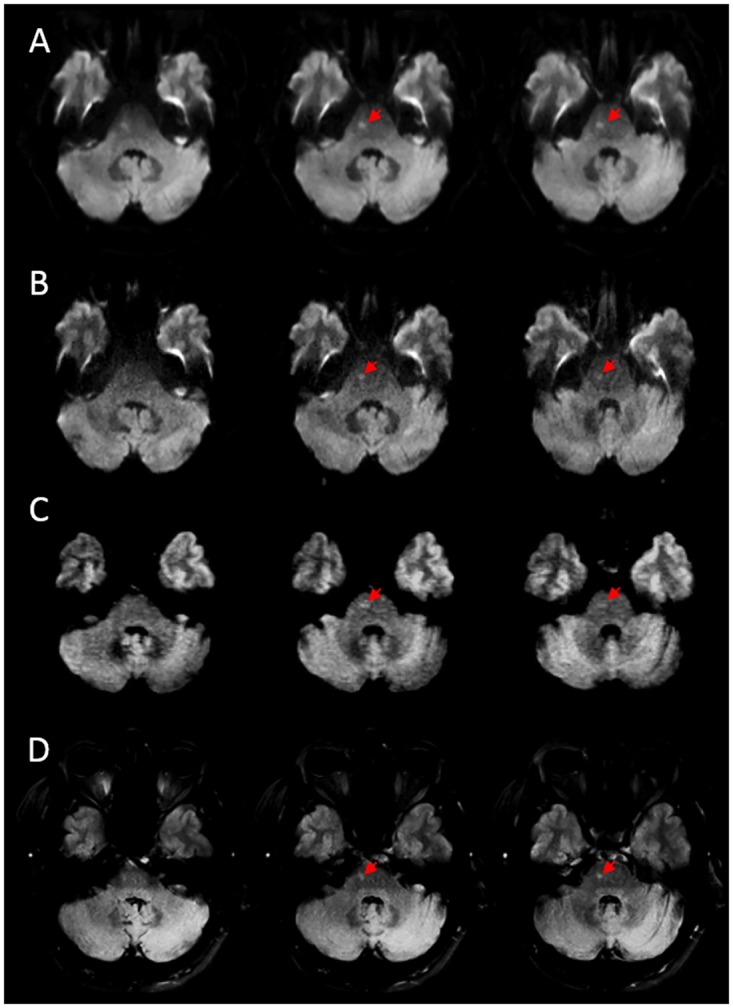
Median time from symptom onset to imaging was 24 hours. STEAM-DWI agreed with LR-DWI in 89.5% of cases (kappa = 0.72, p<0.0001) and with HR-DWI in 89.5% of cases (kappa = 0.68, p<0.0001). STEAM-DWI showed fewer intraparenchymal artifacts (1/57) than HR-DWI (44/57) and LR-DWI (41/57). Ischemia was visible in 87% of cases for LR-DWI, 93% of cases for HR-DWI, and 89% of cases for STEAM-DWI. Interobserver agreement was good for STEAM-DWI (kappa = 0.62, p<0.0001).
Compared to the best currently available MR sequence for detecting ischemia (HR-DWI), STEAM-DWI shows fewer artifacts and a similar sensitivity to infratentorial stroke.
与平面回波成像扩散加权成像(EPI-DWI)相比,评估刺激回波采集模式扩散加权成像(STEAM-DWI)对幕下腔隙缺血性卒中的敏感性。
57例具有幕下卒中临床特征的患者接受了STEAM-DWI、高分辨率EPI-DWI(HR-DWI,层厚2.5mm)和低分辨率EPI-DWI(LR-DWI,层厚5mm)检查。4名阅片者评估缺血性病变和伪影的存在情况。计算序列间的一致性以及观察者间对缺血存在情况的一致性。在45例确诊为幕下卒中的患者中计算DWI序列的敏感性。
从症状发作到成像的中位时间为24小时。STEAM-DWI与LR-DWI在89.5%的病例中结果一致(kappa = 0.72,p<0.0001),与HR-DWI在89.5%的病例中结果一致(kappa = 0.68,p<0.0001)。STEAM-DWI显示的脑实质内伪影(1/57)少于HR-DWI(44/57)和LR-DWI(41/57)。LR-DWI在87%的病例中可见缺血,HR-DWI在93%的病例中可见缺血,STEAM-DWI在89%的病例中可见缺血。观察者间对STEAM-DWI的一致性良好(kappa = 0.62,p<0.0001)。
与目前用于检测缺血的最佳MR序列(HR-DWI)相比,STEAM-DWI显示的伪影更少,对幕下卒中的敏感性相似。