Kalinovich A V, Mattsson C L, Youssef M R, Petrovic N, Ost M, Skulachev V P, Shabalina I G
Department of Molecular Biosciences, The Wenner-Gren Institute, Stockholm University, Stockholm, Sweden.
The Belozersky Institute of Physico-Chemical Biology, Lomonosov Moscow State University, Moscow, Russian Federation.
Int J Obes (Lond). 2016 Dec;40(12):1864-1874. doi: 10.1038/ijo.2016.146. Epub 2016 Aug 18.
A membrane-penetrating cation, dodecyltriphenylphosphonium (CTPP), facilitates the recycling of fatty acids in the artificial lipid membrane and mitochondria. CTPP can dissipate mitochondrial membrane potential and may affect total energy expenditure and body weight in animals and humans.
We investigated the metabolic effects of CTPP in isolated brown-fat mitochondria, brown adipocyte cultures and mice in vivo. Experimental approaches included the measurement of oxygen consumption, carbon dioxide production, western blotting, magnetic resonance imaging and bomb calorimetry.
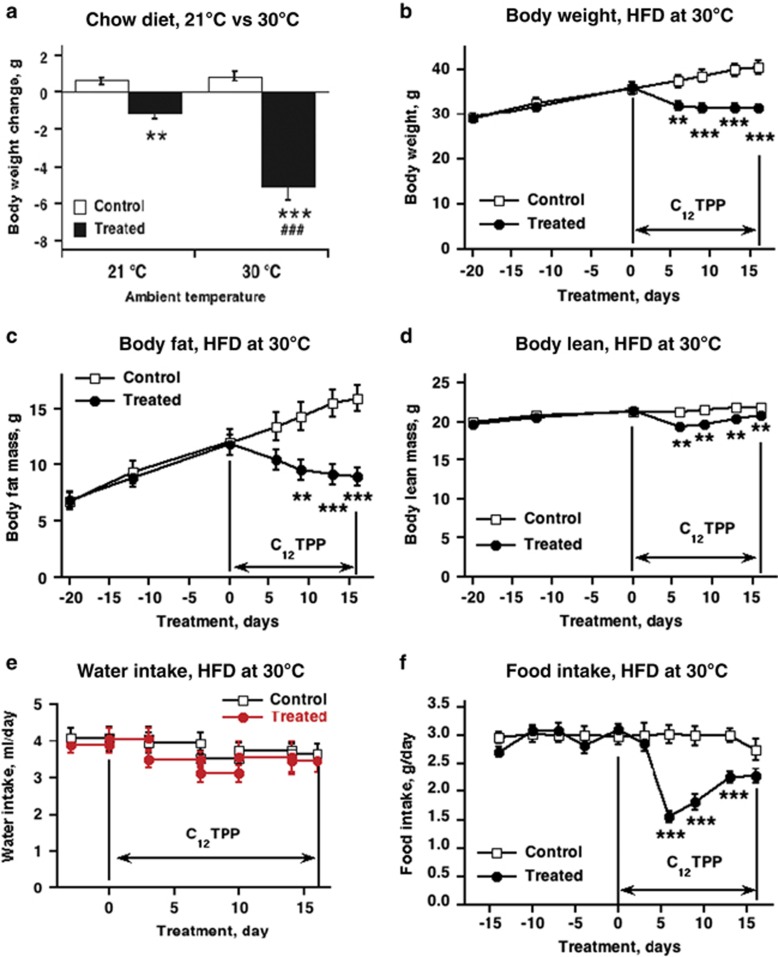
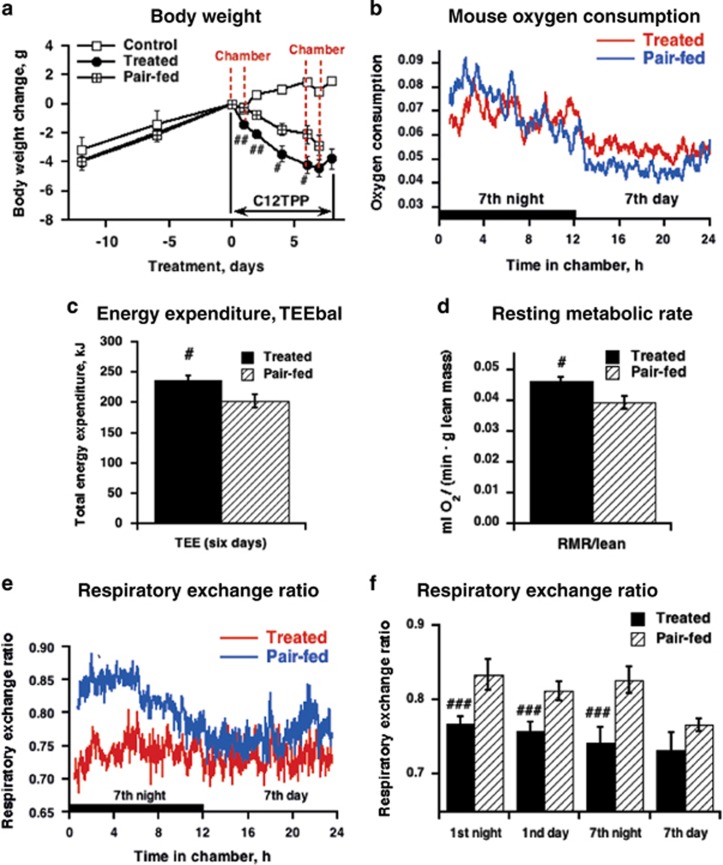
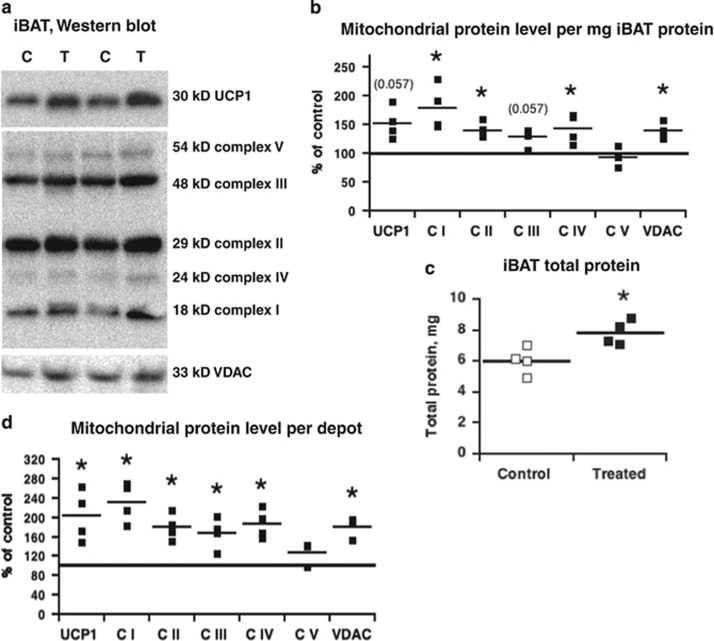
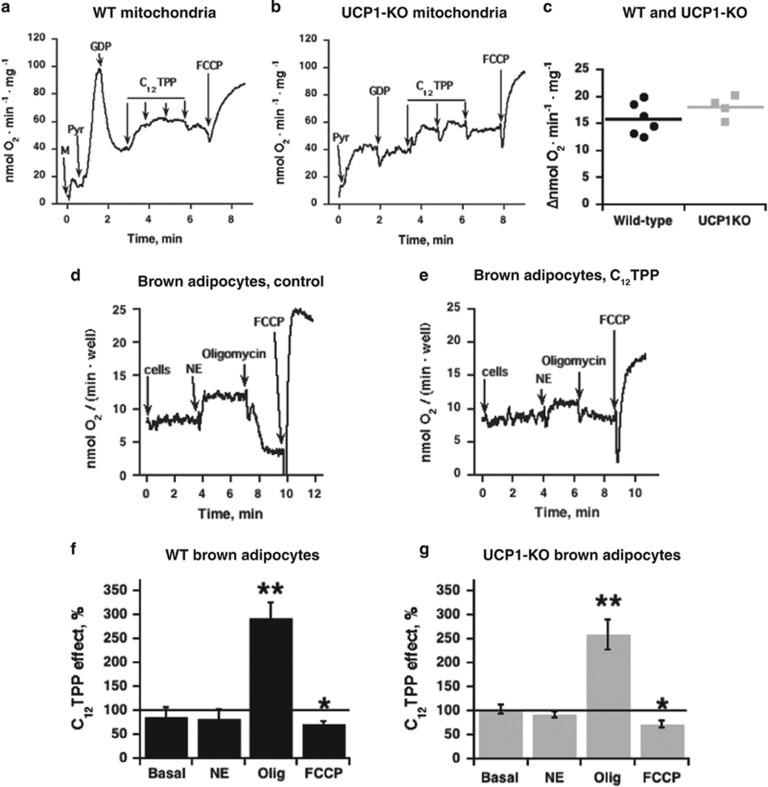
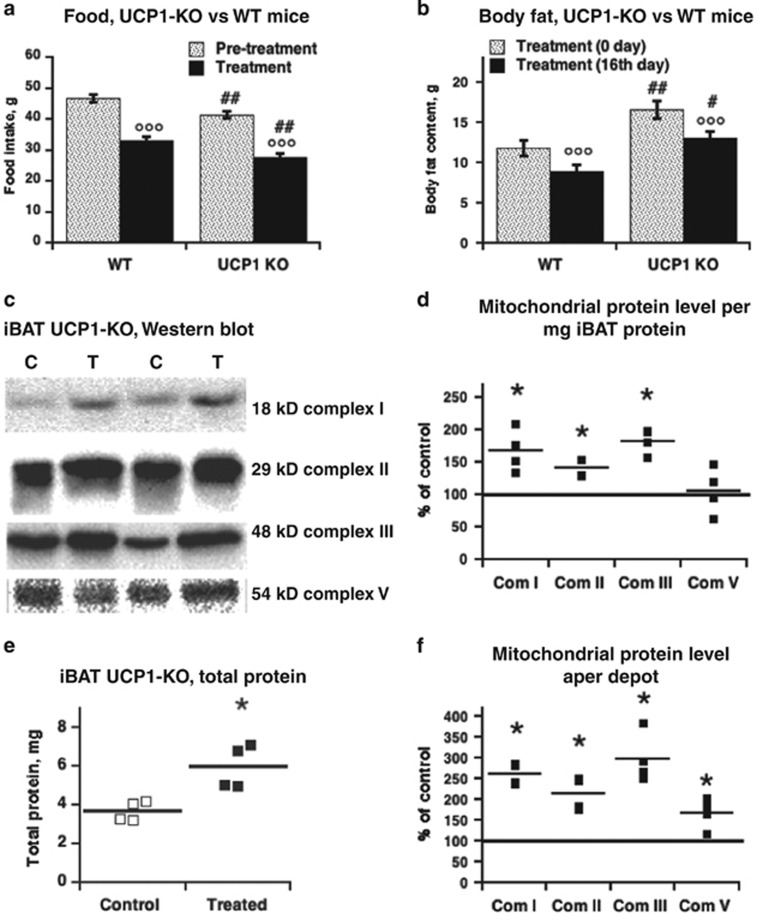
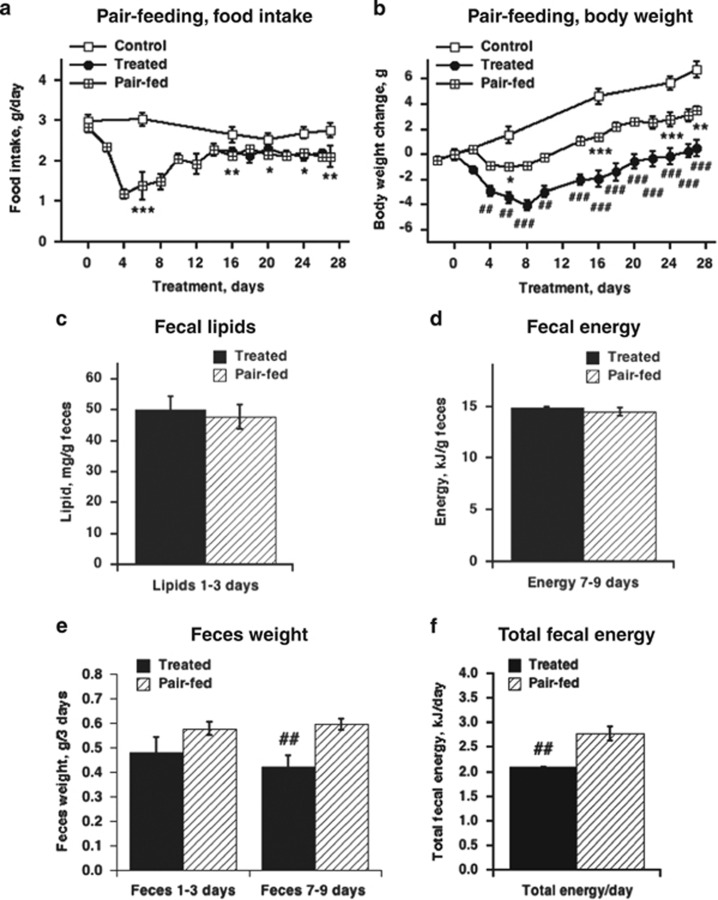
In mice, CTPP (50 μmol per (day•kg body weight)) in the drinking water significantly reduced body weight (12%, P<0.001) and body fat mass (24%, P<0.001) during the first 7 days of treatment. CTPP did not affect water palatability and intake or the energy and lipid content in feces. The addition of CTPP to isolated brown-fat mitochondria resulted in increased oxygen consumption. Three hours of pretreatment with CTPP also increased oligomycin-insensitive oxygen consumption in brown adipocyte cultures (P<0.01). The effects of CTPP on mitochondria, cells and mice were independent of uncoupling protein 1 (UCP1). However, CTPP treatment increased the mitochondrial protein levels in the brown adipose tissue of both wild-type and UCP1-knockout mice. Pair-feeding revealed that one-third of the body weight loss in CTPP-treated mice was due to reduced food intake. CTPP treatment elevated the resting metabolic rate (RMR) by up to 18% (P<0.05) compared with pair-fed animals. CTPP reduced the respiratory exchange ratio, indicating enhanced fatty acid oxidation in mice.
CTPP combats diet-induced obesity by reducing food intake, increasing the RMR and enhancing fatty acid oxidation.
一种膜穿透性阳离子,十二烷基三苯基鏻(CTPP),可促进人工脂质膜和线粒体中脂肪酸的循环利用。CTPP 可耗散线粒体膜电位,并可能影响动物和人类的总能量消耗及体重。
我们在分离的棕色脂肪线粒体、棕色脂肪细胞培养物及活体小鼠中研究了 CTPP 的代谢作用。实验方法包括测量氧气消耗、二氧化碳产生、蛋白质免疫印迹法、磁共振成像及弹式量热法。
在小鼠中,饮用水中添加 CTPP(50 μmol/(天•千克体重))在治疗的前 7 天显著降低了体重(12%,P<0.001)和体脂肪量(24%,P<0.001)。CTPP 不影响水的适口性和摄入量,也不影响粪便中的能量和脂质含量。向分离的棕色脂肪线粒体中添加 CTPP 导致氧气消耗增加。用 CTPP 预处理 3 小时也增加了棕色脂肪细胞培养物中对寡霉素不敏感的氧气消耗(P<0.01)。CTPP 对线粒体、细胞和小鼠的作用与解偶联蛋白 1(UCP1)无关。然而,CTPP 处理增加了野生型和 UCP1 基因敲除小鼠棕色脂肪组织中的线粒体蛋白水平。配对喂养显示,CTPP 处理的小鼠体重减轻的三分之一是由于食物摄入量减少。与配对喂养的动物相比,CTPP 处理使静息代谢率(RMR)提高了高达 18%(P<0.05)。CTPP 降低了呼吸交换率,表明小鼠体内脂肪酸氧化增强。
CTPP 通过减少食物摄入量、增加 RMR 和增强脂肪酸氧化来对抗饮食诱导的肥胖。