Svedenkrans Jenny, Kowalski Jan, Norman Mikael, Bohlin Kajsa
Division of Pediatrics, Department of Clinical Science, Intervention and Technology, Karolinska Institutet, Stockholm, Sweden.
Department of Neonatology, Karolinska University Hospital, Stockholm, Sweden.
PLoS One. 2016 Aug 22;11(8):e0161314. doi: 10.1371/journal.pone.0161314. eCollection 2016.
Preterm birth is a risk factor for decreased exercise capacity and impaired cognitive functions in later life. The objective of this study was to disentangle the associations between preterm birth, physical fitness and cognitive performance in young adulthood.
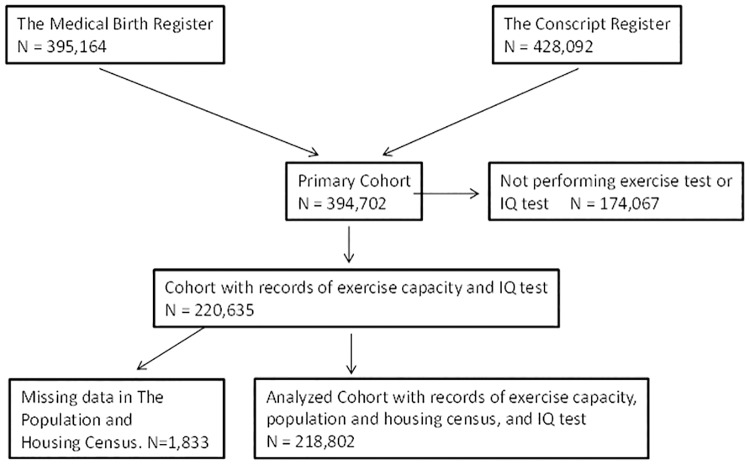
This population-based cohort study included 218,802 young men born in Sweden 1973-1983. Data on birth characteristics was obtained from the Medical Birth Register and linked to exercise capacity assessed by ergometer cycling and cognitive tests performed at conscription for military service in 1993-2001. Cognitive performance was assessed using stanine (STAndard NINE) scores. The results were adjusted for socioeconomic factors.
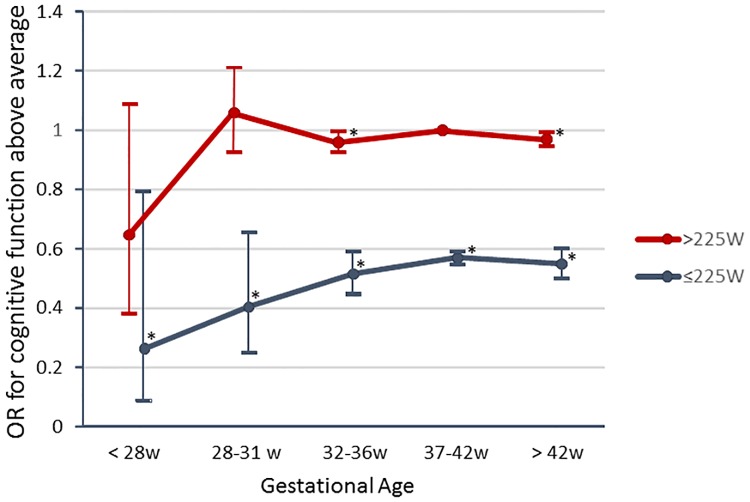
Exercise capacity was positively associated with cognitive performance across all gestational ages. The sub-group of men who were born extremely preterm (gestational age <28 weeks) and had low exercise capacity exhibited the lowest odds ratio (OR = 0.26, 95%CI:0.09-0.82) of having a cognitive function above the mean stanine score (2.9) for men born at term with normal birth weight. Men born extremely preterm with a high exercise capacity had similar or even higher ORs for cognitive function (OR = 0.59; 95% CI:0.35-0.99) than men born at term with low Wmax (OR = 0.57; 95% CI:0.55-0.59).
Physical fitness is associated with higher cognitive function at all gestational ages, also in young men born extremely preterm. Targeting early physical exercise may be a possible intervention to enhance cognitive performance and educational achievements in populations at risk, such as childhood and adult survivors of preterm birth.
早产是日后运动能力下降和认知功能受损的一个风险因素。本研究的目的是理清早产、体能与青年期认知表现之间的关联。
这项基于人群的队列研究纳入了1973年至1983年在瑞典出生的218,802名青年男性。出生特征数据取自医学出生登记册,并与通过测力计骑行评估的运动能力以及1993年至2001年征兵时进行的认知测试相联系。认知表现使用标准九分制(STAndard NINE)分数进行评估。结果针对社会经济因素进行了调整。
在所有孕周中,运动能力与认知表现呈正相关。极早产(孕周<28周)且运动能力低的男性亚组,其认知功能高于足月出生且出生体重正常男性的平均标准九分制分数(2.9)的比值比(OR = 0.26,95%置信区间:0.09 - 0.82)最低。极早产且运动能力高的男性在认知功能方面的OR值(OR = 0.59;95%置信区间:0.35 - 0.99)与Wmax低的足月出生男性(OR = 0.57;95%置信区间:0.55 - 0.59)相似甚至更高。
在所有孕周中,体能都与较高的认知功能相关,对于极早产的青年男性也是如此。针对早期体育锻炼可能是一种可行的干预措施,以提高高危人群(如早产儿童和成年幸存者)的认知表现和学业成就。