Linköping University, Linköping, Sweden; University of Granada, Granada, Spain; and Karolinska Institutet, Stockholm, Sweden (P.H.).
University of Granada, Granada, Spain, and Linköping University, Linköping, Sweden (H.H.).
Ann Intern Med. 2019 Feb 19;170(4):230-239. doi: 10.7326/M18-1861. Epub 2019 Feb 12.
Low physical fitness, obesity, and the combination of the two in adolescence may be related to risk for disability in adulthood, but this has rarely been studied.
To examine individual and combined associations of cardiorespiratory fitness and obesity in male adolescents with later receipt of a disability pension due to all and specific causes.
Population-based cohort study.
Sweden.
1 079 128 Swedish adolescents aged 16 to 19 years who were conscripted into the military between 1972 and 1994.
Cardiorespiratory fitness and body mass index (BMI) were measured at conscription and were related to information on later receipt of a disability pension obtained from the Social Insurance Agency.
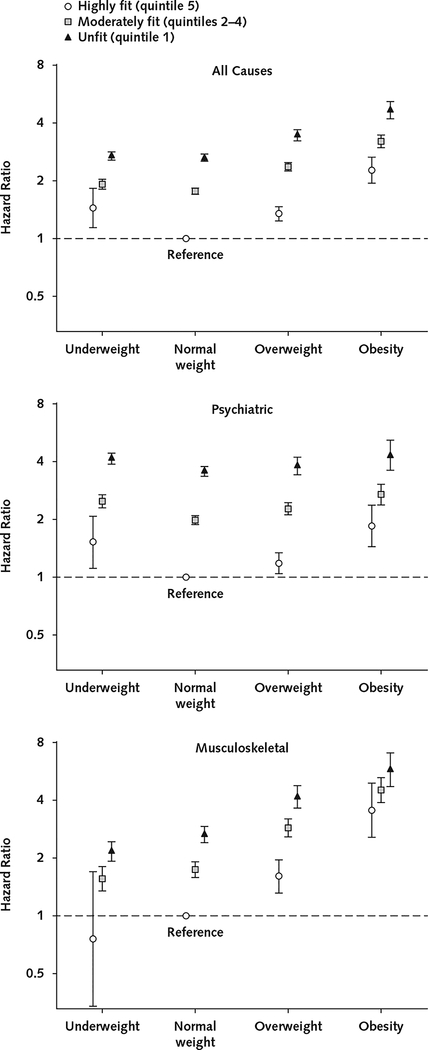
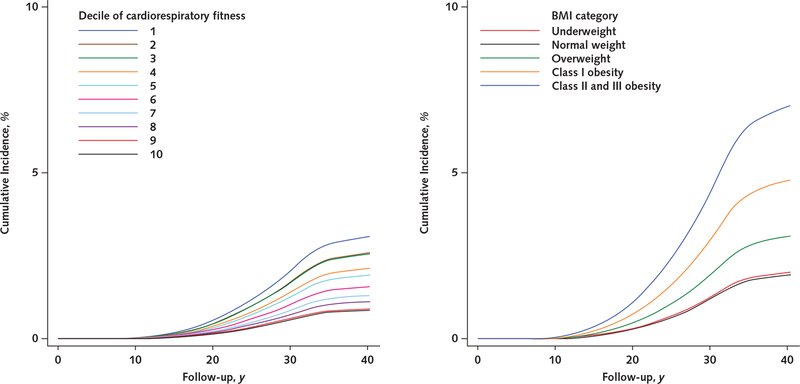
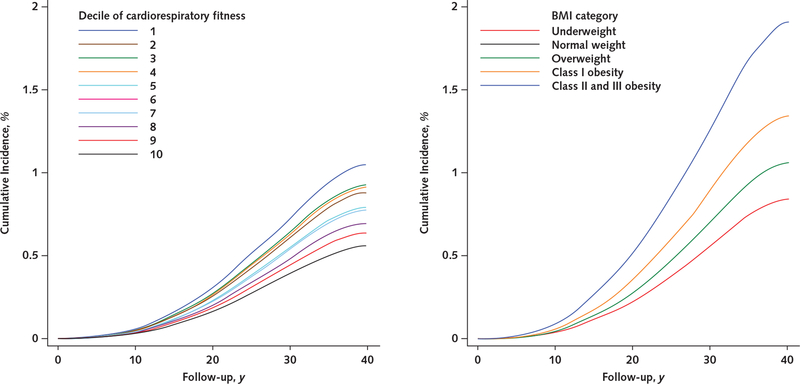
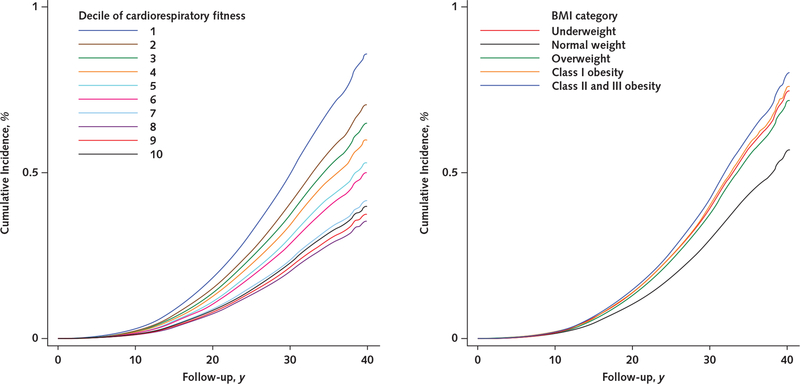
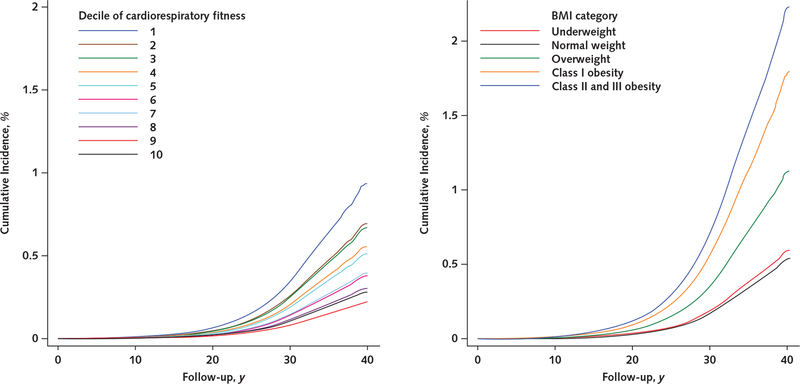
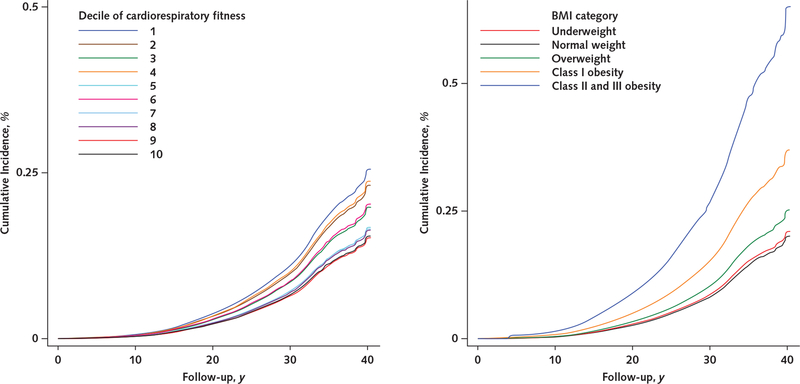
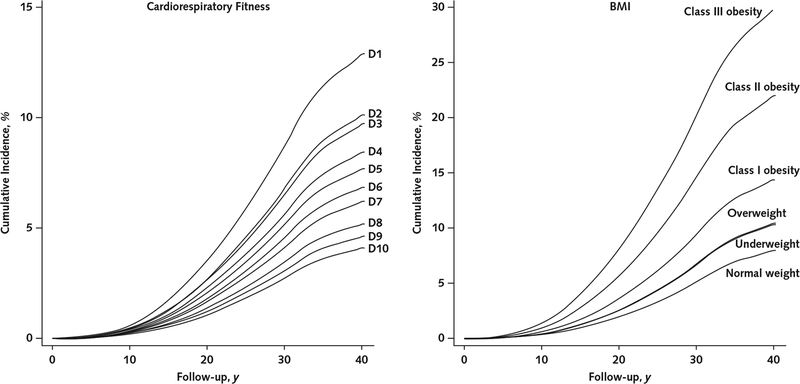
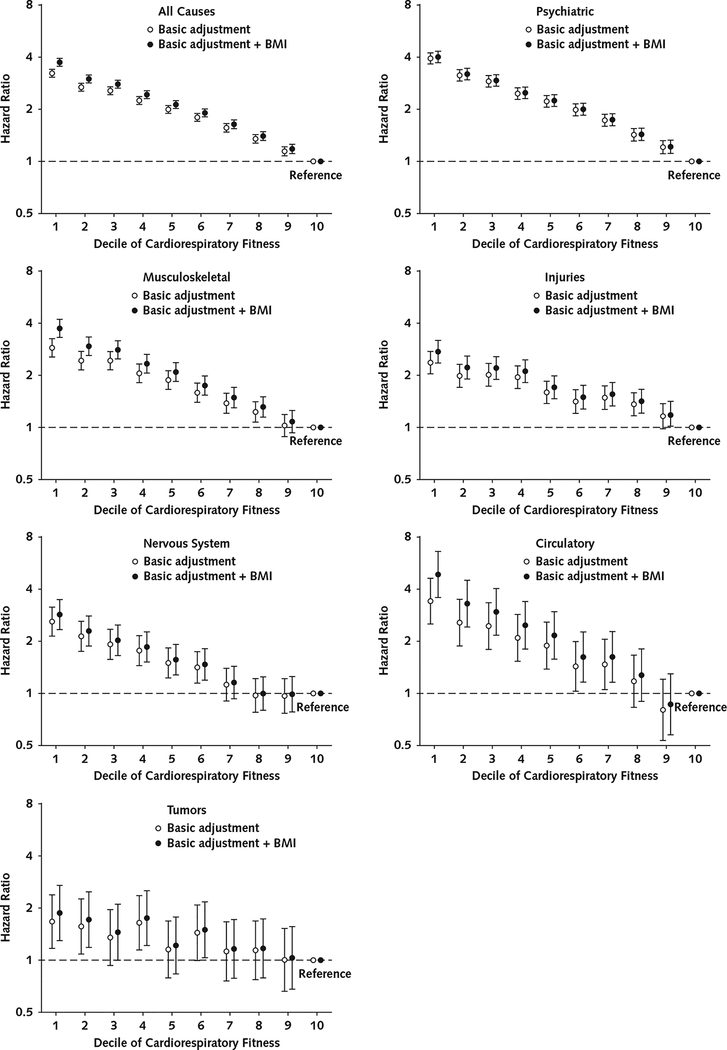
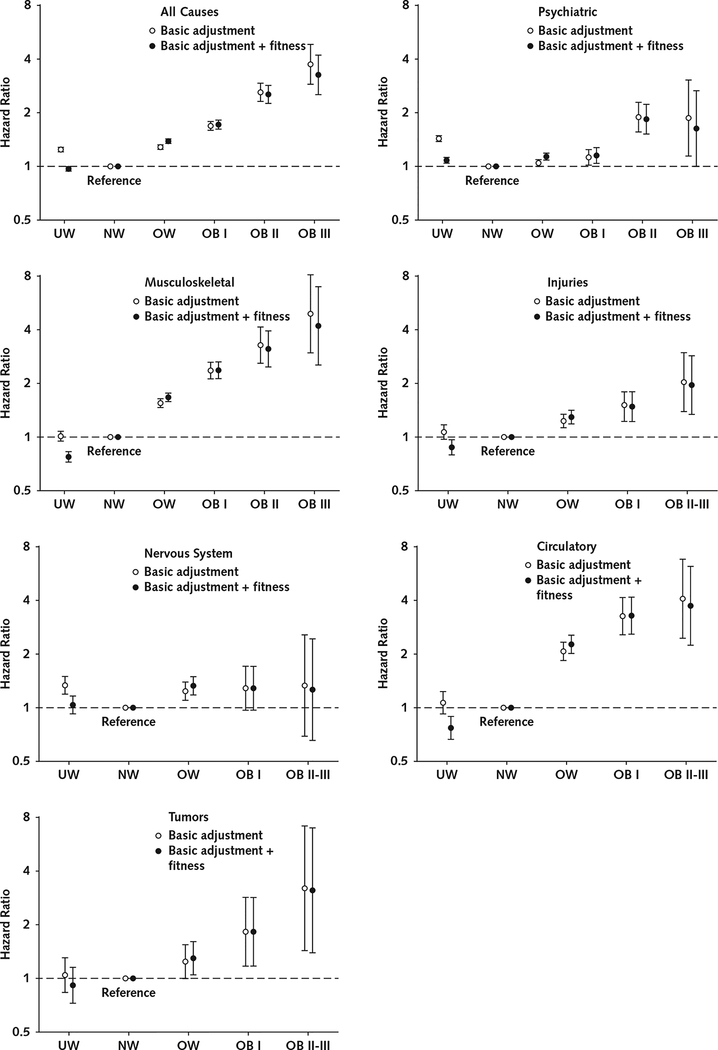
Over a median follow-up of 28.3 years, 54 304 men were granted a disability pension. Low cardiorespiratory fitness was strongly associated with later receipt of a disability pension due to all causes (hazard ratio, 3.74 [95% CI, 3.55 to 3.95] for lowest vs. highest fitness decile) and specific causes (psychiatric, musculoskeletal, injuries, nervous system, circulatory, and tumors). Obesity was associated with greater risk for receipt of a disability pension due to all and specific causes, with the greatest risks observed for class II and III obesity. Compared with being unfit, being moderately or highly fit was associated with attenuated risk for receipt of a disability pension across BMI categories.
The cohort did not include women, had data on smoking and alcohol intake only in a subsample, and lacked repeated measures of exposures and covariates.
Low cardiorespiratory fitness, obesity, and the combination of the two were strongly associated with later chronic disability due to a wide range of diseases and causes. Although additional well-designed studies are required, these findings support the importance of high cardiorespiratory fitness and healthy body weight during adolescence to prevent later chronic disease.
Karolinska Institutet.
青春期时体力活动水平低、肥胖以及两者的结合可能与成年后残疾风险相关,但这方面的研究较少。
探讨男性青少年心肺适能和肥胖的个体和联合作用与因各种和特定原因而获得残疾抚恤金的相关性。
基于人群的队列研究。
瑞典。
1079128 名年龄在 16 至 19 岁之间的瑞典应征入伍男性青少年,他们于 1972 年至 1994 年期间应征入伍。
在入伍时测量心肺适能和身体质量指数(BMI),并将其与从社会保险局获得的关于以后获得残疾抚恤金的信息相关联。
在中位随访 28.3 年后,有 54304 名男性获得了残疾抚恤金。低心肺适能与因各种原因(最低与最高适应度十分位数相比,危险比为 3.74 [95%CI,3.55 至 3.95])和特定原因(精神、肌肉骨骼、损伤、神经系统、循环和肿瘤)获得残疾抚恤金有很强的相关性。肥胖与因各种和特定原因获得残疾抚恤金的风险增加相关,其中 II 类和 III 类肥胖的风险最大。与不适应相比,适度或高度适应与 BMI 各分类中残疾抚恤金的风险降低相关。
该队列不包括女性,仅在亚组中具有关于吸烟和饮酒摄入的数据,并且缺乏暴露和协变量的重复测量。
低心肺适能、肥胖以及两者的结合与各种疾病和原因导致的以后的慢性残疾密切相关。尽管需要进一步的精心设计研究,但这些发现支持青少年时期高心肺适能和健康体重对预防以后的慢性疾病的重要性。
卡罗林斯卡学院。