Chai Ran-Ran, Chen Guo-Wu, Shi Hui-Juan, O Wai-Sum, Martin-DeLeon Patricia A, Chen Hong
Department of Anatomy, Histology & Embryology, Key Laboratory of Medical Imaging Computing and Computer Assisted Intervention of Shanghai, Institute of Reproduction and Development, Shanghai Medical College, Fudan University, Shanghai, China.
Shanghai Ji Ai Genetics and IVF Institute, Obstetrics and Gynecology Hospital, Institute of Reproduction and Development, Fudan University, Shanghai, China.
J Cell Mol Med. 2017 Jan;21(1):121-129. doi: 10.1111/jcmm.12945. Epub 2016 Aug 25.
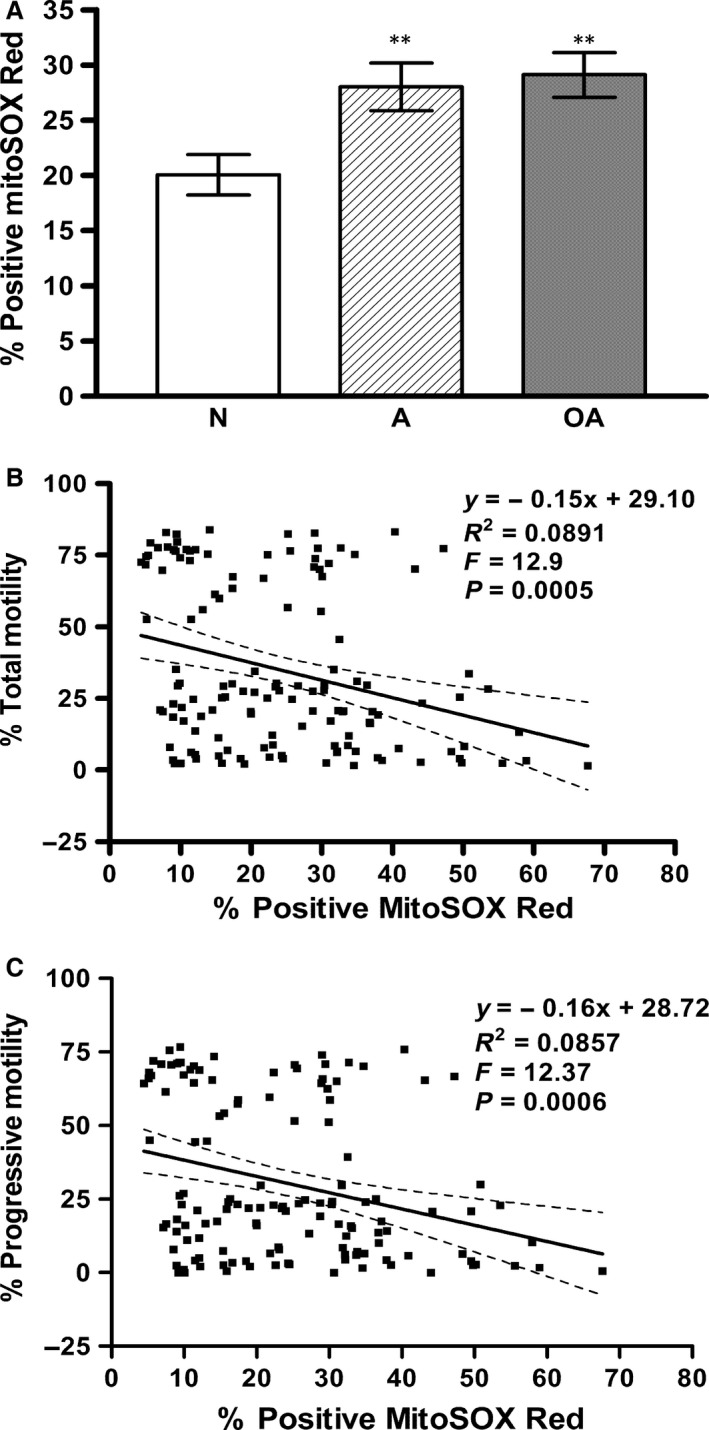
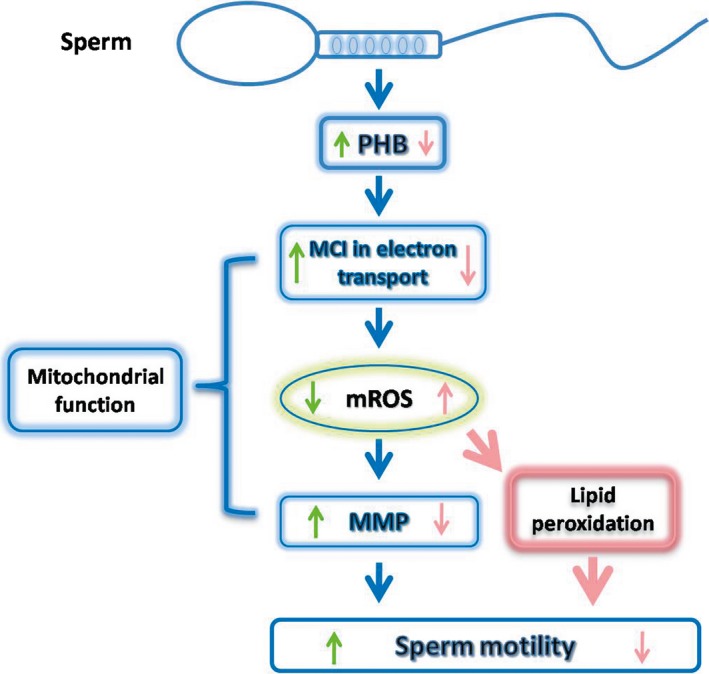
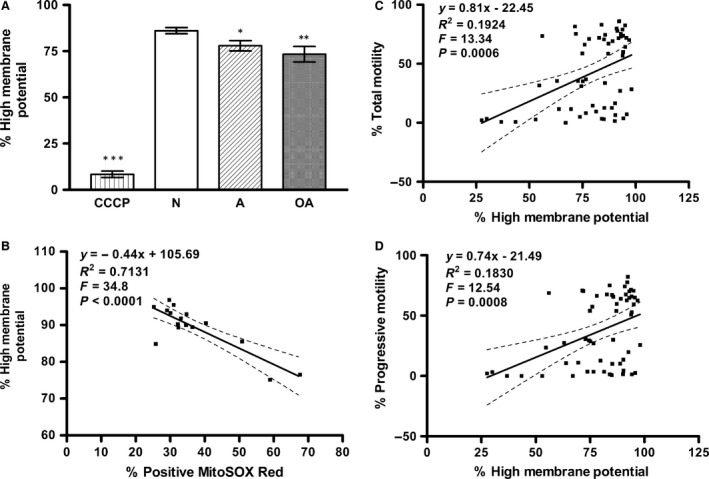
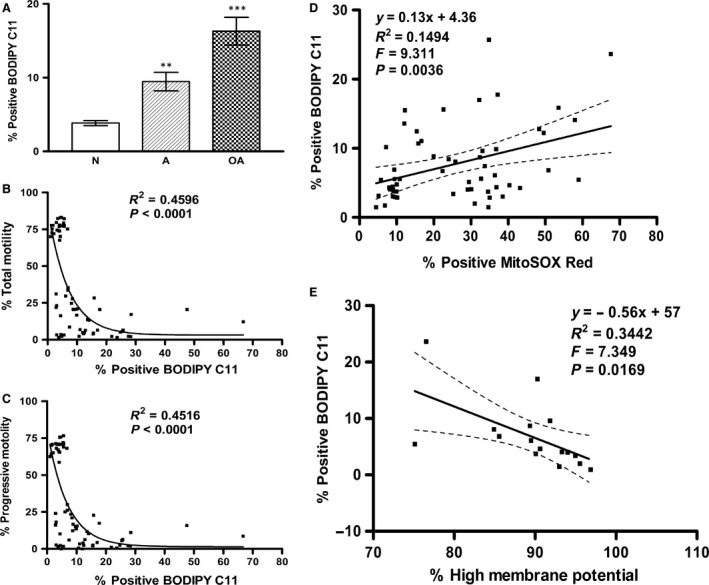
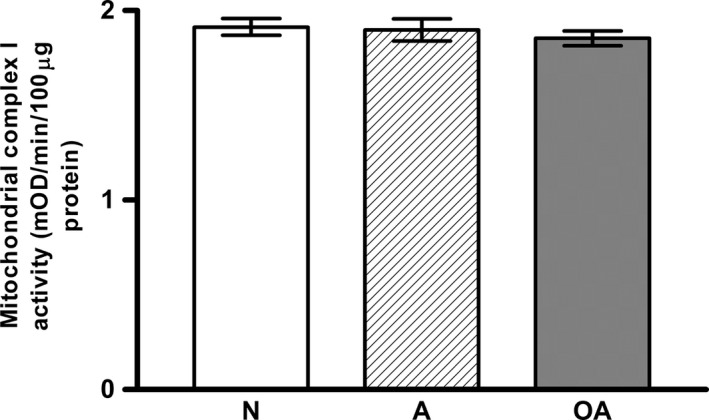
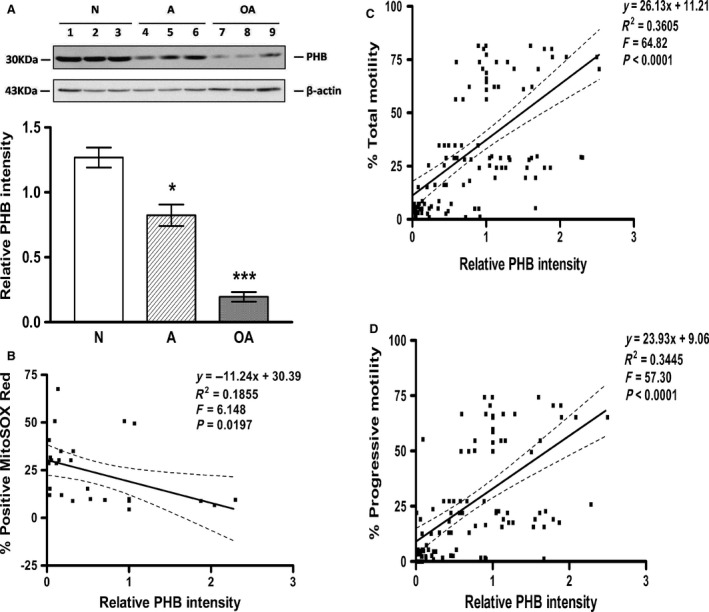
Prohibitin (PHB), a major mitochondrial membrane protein, has been shown earlier in our laboratoryto regulate sperm motility via an alteration in mitochondrial membrane potential (MMP) in infertile men with poor sperm quality. To test if PHB expression is associated with sperm mitochondrial superoxide (mROS) levels, here we examined sperm mROS levels, high MMP and lipid peroxidation in infertile men with poor sperm motility (asthenospermia, A) and/or low sperm concentrations (oligoasthenospermia, OA). The diaphorase-type activity of sperm mitochondrial complex I (MCI) and PHB expression were also determined. We demonstrate that mROS and lipid peroxidation levels are significantly higher in sperm from A and OA subjects than in normospermic subjects, whereas high MMP and PHB expression are significantly lower. A positive correlation between mROS and lipid peroxidation and a negative correlation of mROS with PHB expression, high MMP, and sperm motility were found in these subjects. The finding of similar diaphorase-type activity levels of sperm MCI in the three groups studied suggests that the catalytic subunits of MCI in the matrix arm may produce mROS on its own. There may be a dysfunction of electron transport at MCI associated with decreased expression of PHB in sperm with poor quality. We conclude that mROS level is increased and associated with decreased PHB expression, and it may regulate sperm motility via increases in low MMP and lipid peroxidation. This is the first report on the involvement of PHB in human sperm motility loss associated with increased generation of mROS at MCI.
抑制素(PHB)是一种主要的线粒体膜蛋白,我们实验室先前已表明,它可通过改变精子质量差的不育男性的线粒体膜电位(MMP)来调节精子活力。为了检测PHB表达是否与精子线粒体超氧化物(mROS)水平相关,我们在此检测了精子活力差(弱精子症,A)和/或精子浓度低(少弱精子症,OA)的不育男性的精子mROS水平、高MMP和脂质过氧化情况。还测定了精子线粒体复合物I(MCI)的黄递酶型活性和PHB表达。我们证明,A组和OA组受试者精子中的mROS和脂质过氧化水平显著高于正常精子受试者,而高MMP和PHB表达则显著降低。在这些受试者中,发现mROS与脂质过氧化呈正相关,mROS与PHB表达、高MMP和精子活力呈负相关。在所研究的三组中,精子MCI的黄递酶型活性水平相似,这一发现表明,基质臂中MCI的催化亚基可能自身产生mROS。在质量差的精子中,可能存在与PHB表达降低相关的MCI电子传递功能障碍。我们得出结论,mROS水平升高并与PHB表达降低相关,它可能通过低MMP和脂质过氧化的增加来调节精子活力。这是关于PHB参与与MCI处mROS生成增加相关的人类精子活力丧失的首次报道。