Division of Homeostatic Development, National Institute for Physiological Sciences, Okazaki 444-8585, Japan.
Core Research for Evolutional Science and Technology, Japan Agency for Medical Research and Development, Tokyo 100-0004, Japan.
Nat Commun. 2016 Aug 25;7:12540. doi: 10.1038/ncomms12540.
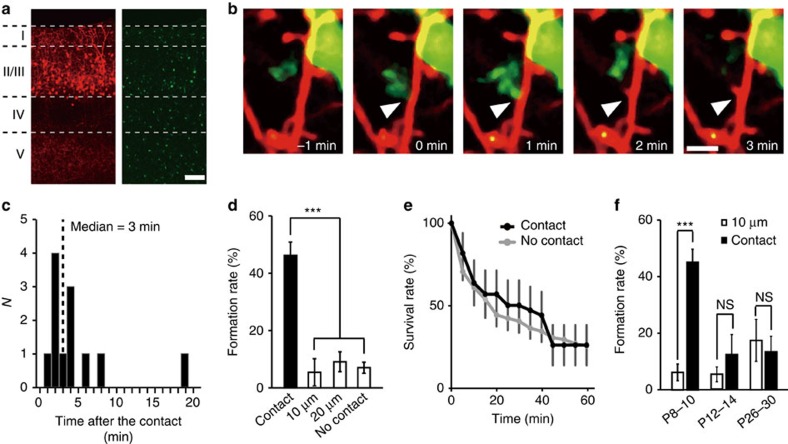
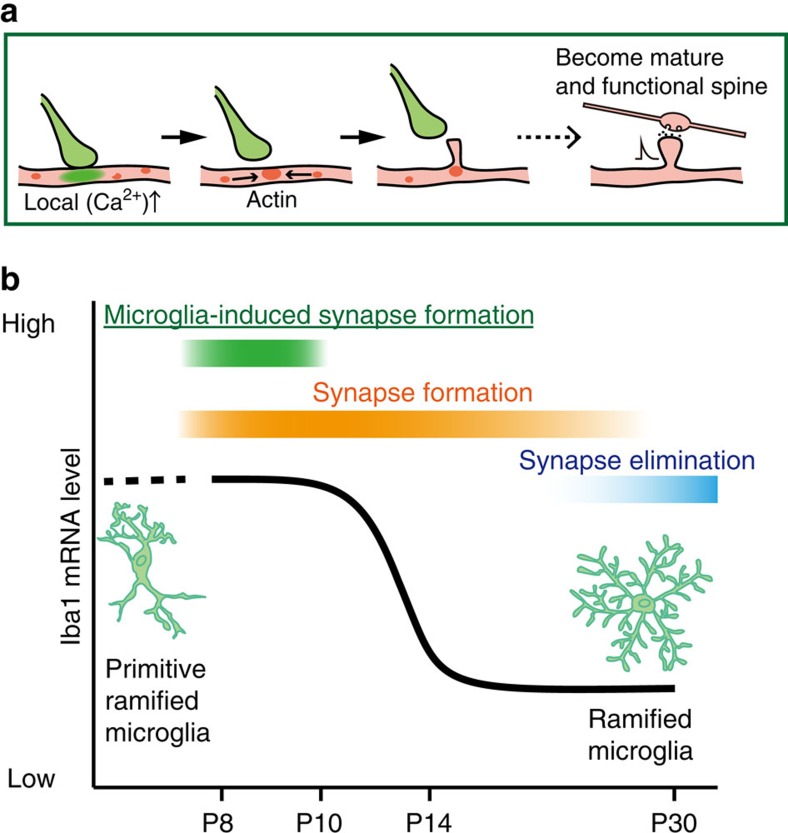
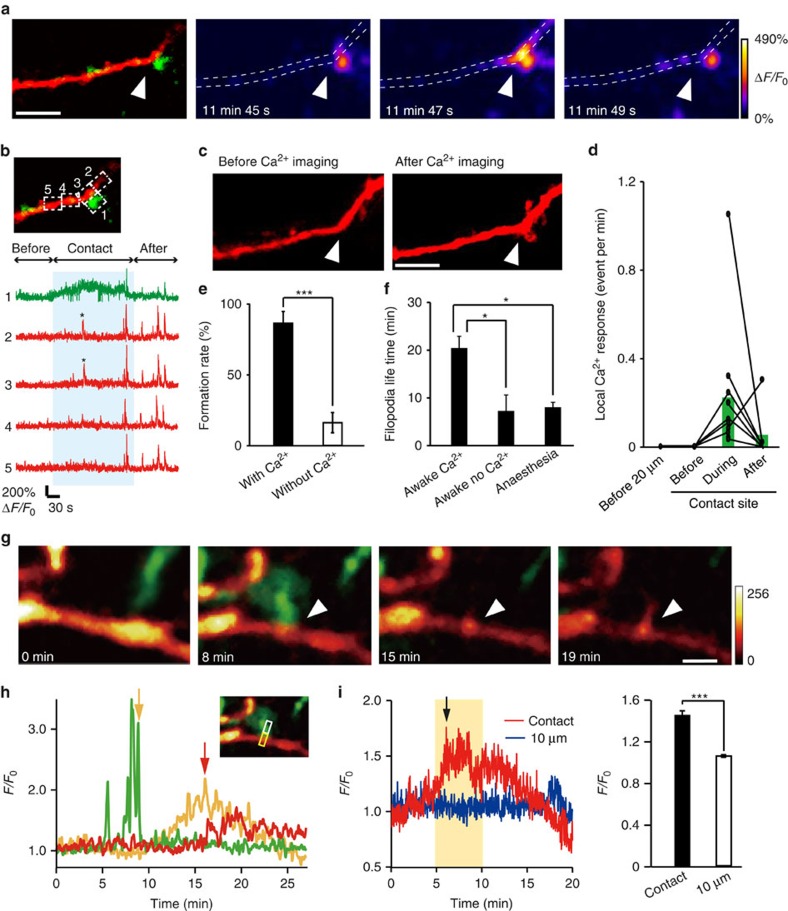
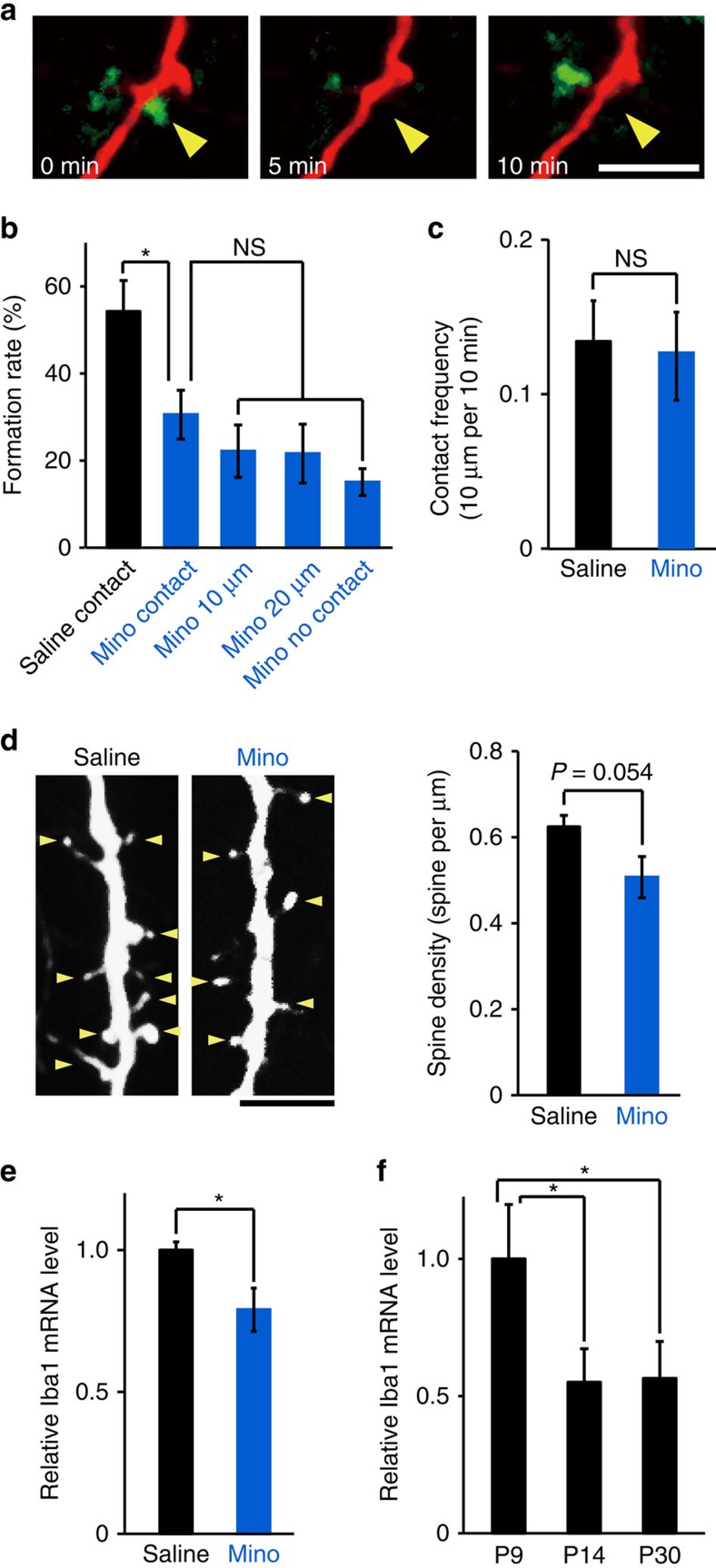
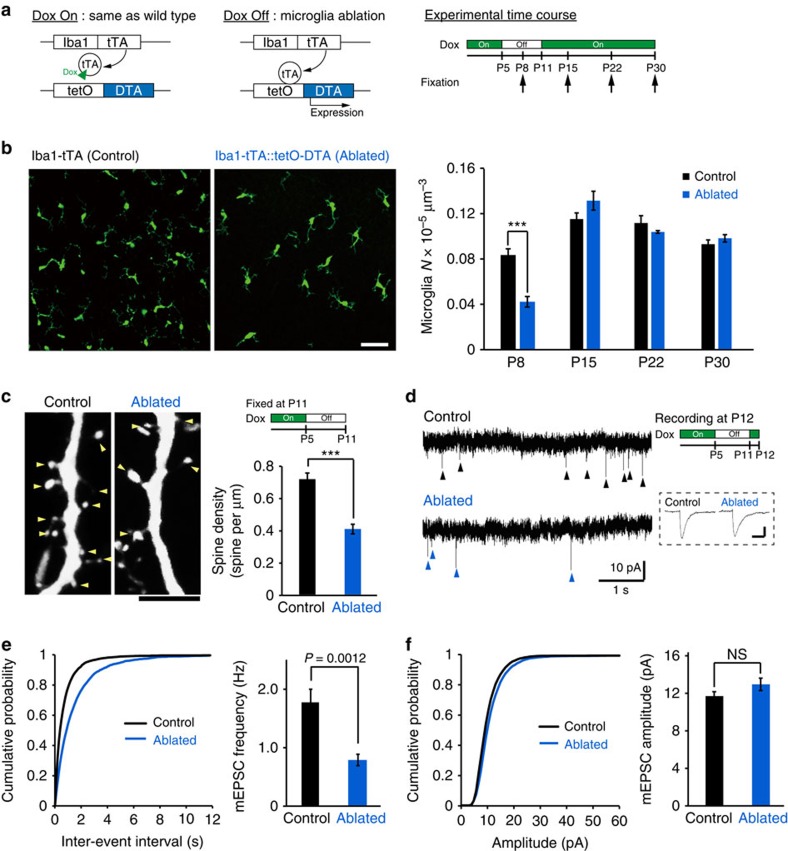
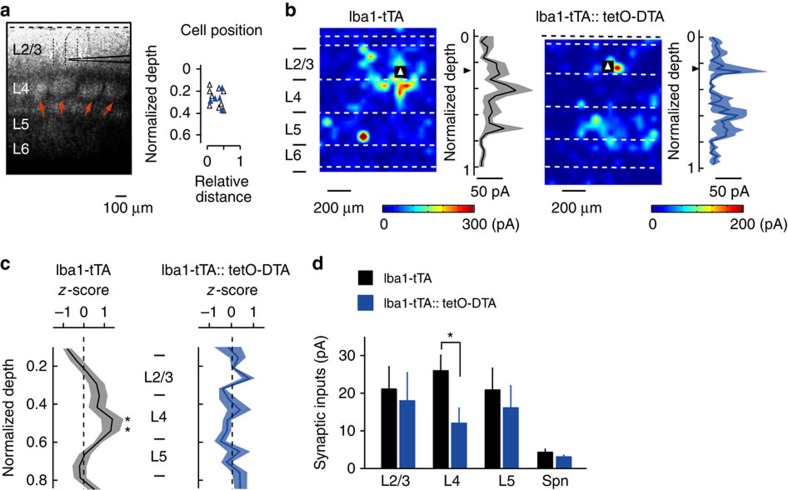
Microglia are the immune cells of the central nervous system that play important roles in brain pathologies. Microglia also help shape neuronal circuits during development, via phagocytosing weak synapses and regulating neurogenesis. Using in vivo multiphoton imaging of layer 2/3 pyramidal neurons in the developing somatosensory cortex, we demonstrate here that microglial contact with dendrites directly induces filopodia formation. This filopodia formation occurs only around postnatal day 8-10, a period of intense synaptogenesis and when microglia have an activated phenotype. Filopodia formation is preceded by contact-induced Ca(2+) transients and actin accumulation. Inhibition of microglia by genetic ablation decreases subsequent spine density, functional excitatory synapses and reduces the relative connectivity from layer 4 neurons. Our data provide the direct demonstration of microglial-induced spine formation and provide further insights into immune system regulation of neuronal circuit development, with potential implications for developmental disorders of immune and brain dysfunction.
小胶质细胞是中枢神经系统的免疫细胞,在脑病理学中发挥重要作用。小胶质细胞还通过吞噬弱突触和调节神经发生来帮助塑造发育中的神经元回路。通过对发育中的感觉皮层第 2/3 层锥体神经元进行体内多光子成像,我们在此证明小胶质细胞与树突的直接接触会直接诱导丝状伪足的形成。这种丝状伪足的形成仅发生在出生后第 8-10 天,此时是强烈的突触发生时期,也是小胶质细胞表现出激活表型的时期。丝状伪足的形成先于接触诱导的 Ca(2+)瞬变和肌动蛋白积累。通过基因消融抑制小胶质细胞会减少随后的棘突密度、功能性兴奋性突触,并降低来自第 4 层神经元的相对连接性。我们的数据提供了小胶质细胞诱导的棘突形成的直接证据,并进一步深入了解免疫系统对神经元回路发育的调节,这可能对免疫和大脑功能障碍的发育障碍有潜在影响。