Landgraf Kathrin, Scholz Markus, Kovacs Peter, Kiess Wieland, Körner Antje
Center for Pediatric Research Leipzig (CPL), University Hospital for Children & Adolescents, University of Leipzig, Leipzig, Germany.
Integrated Research and Treatment Center (IFB) Adiposity Diseases, University of Leipzig, Leipzig, Germany.
PLoS One. 2016 Aug 25;11(8):e0161739. doi: 10.1371/journal.pone.0161739. eCollection 2016.
Genome-wide association studies have identified variants within the FTO (fat mass and obesity associated) locus as the strongest predictors of obesity amongst all obesity-associated gene loci. Recent evidence suggests that variants in FTO directly affect human adipocyte function through targeting IRX3 and IRX5 and thermogenesis regulation.
We addressed the relevance of this proposed FTO-IRX pathway in adipose tissue (AT) of children.
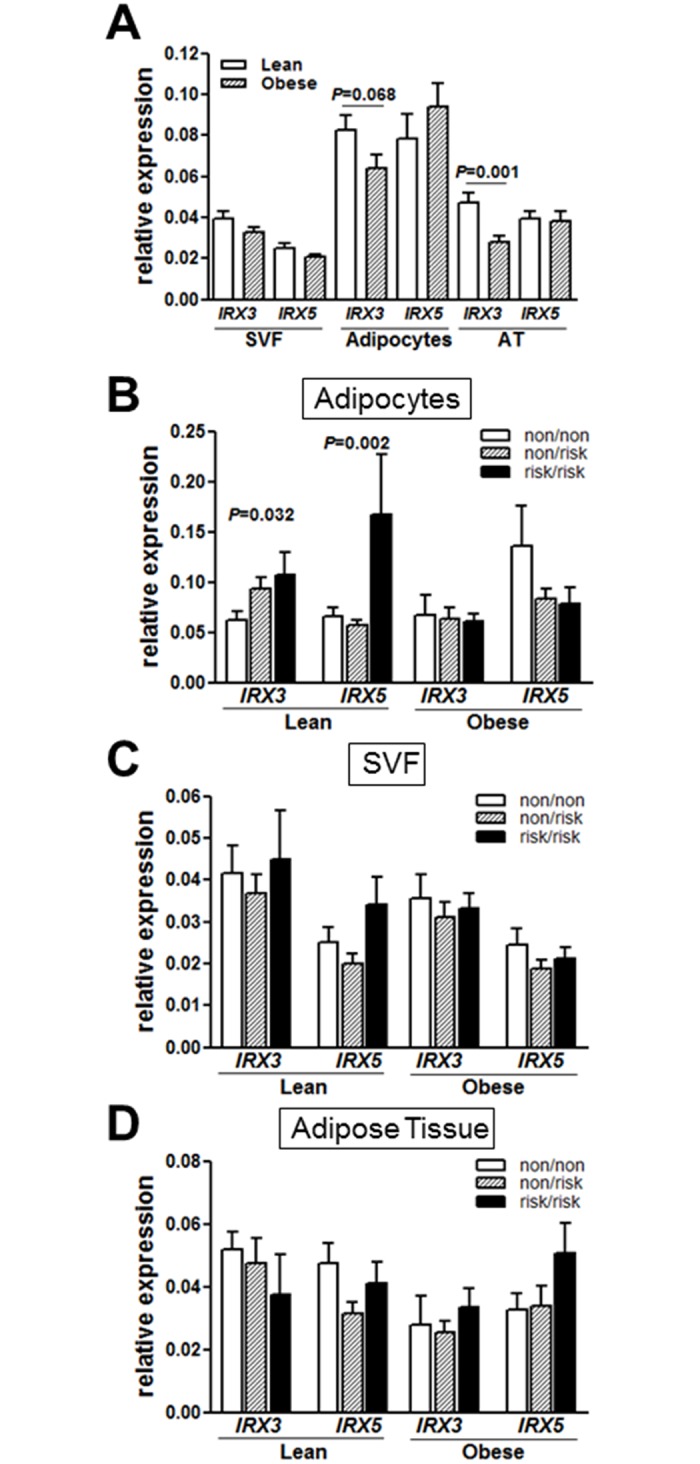
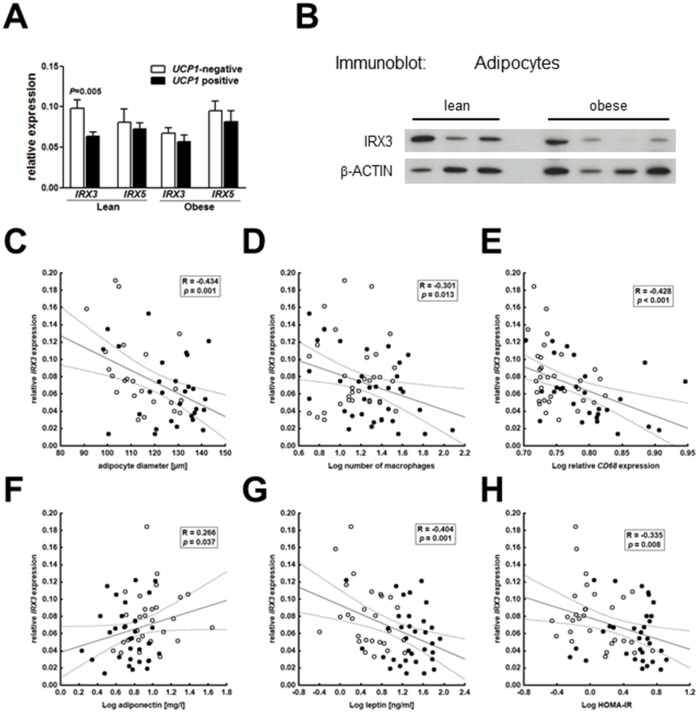
Expression of IRX3 was higher in adipocytes compared to SVF. We found increased adipocyte-specific expression of IRX3 and IRX5 with the presence of the FTO risk haplotype in lean children, whereas it was unaffected by risk variants in obese peers. We further show that IRX3 expression was elevated in isolated adipocytes and AT of lean compared to obese children, particularly in UCP1-negative adipocytes, and inversely correlated with BMI SDS. Independent of BMI, IRX3 expression in adipocytes was significantly related to adipocyte hypertrophy, and subsequent associations with AT inflammation and HOMA-IR in the children.
One interpretation of our observation of FTO risk variants linked to IRX3 expression and adipocyte size restricted to lean children, along with the decreased IRX3 expression in obese compared to lean peers, may reflect a defense mechanism for protecting body-weight, which is pertinent for lean children.
全基因组关联研究已确定FTO(与脂肪量和肥胖相关)基因座内的变异是所有肥胖相关基因座中肥胖最强的预测因子。最近的证据表明,FTO中的变异通过靶向IRX3和IRX5以及产热调节直接影响人类脂肪细胞功能。
我们探讨了这一提出的FTO-IRX途径在儿童脂肪组织(AT)中的相关性。
与基质血管成分(SVF)相比,IRX3在脂肪细胞中的表达更高。我们发现,在瘦儿童中,随着FTO风险单倍型的存在,IRX3和IRX5的脂肪细胞特异性表达增加,而在肥胖儿童中,其不受风险变异的影响。我们进一步表明,与肥胖儿童相比,瘦儿童分离的脂肪细胞和脂肪组织中IRX3表达升高,特别是在解偶联蛋白1(UCP1)阴性脂肪细胞中,并且与体重指数标准差(BMI SDS)呈负相关。独立于BMI,脂肪细胞中IRX3的表达与脂肪细胞肥大显著相关,并且随后与儿童的脂肪组织炎症和胰岛素抵抗指数(HOMA-IR)相关。
我们观察到FTO风险变异与IRX3表达和脂肪细胞大小的关联仅限于瘦儿童,并且与瘦儿童相比,肥胖儿童中IRX3表达降低,一种解释可能是这反映了一种保护体重的防御机制,这与瘦儿童相关。