Wang ZhePeng, Meng GuoHua, Li Na, Yu MingFen, Liang XiaoWei, Min YuNa, Liu FuZhu, Gao YuPeng
College of Animal Science and Technology, Northwest A&F University, Yangling, Shaanxi, China.
Genet Mol Biol. 2016 Jul-Sep;39(3):380-91. doi: 10.1590/1678-4685-GMB-2015-0206. Epub 2016 Jul 14.
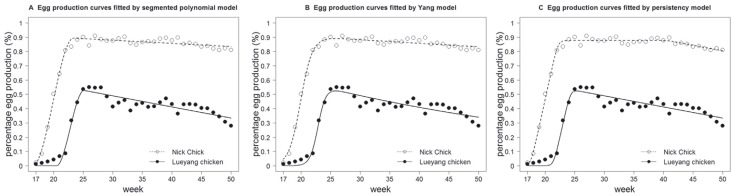
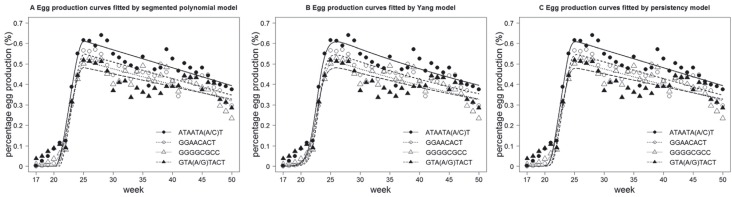
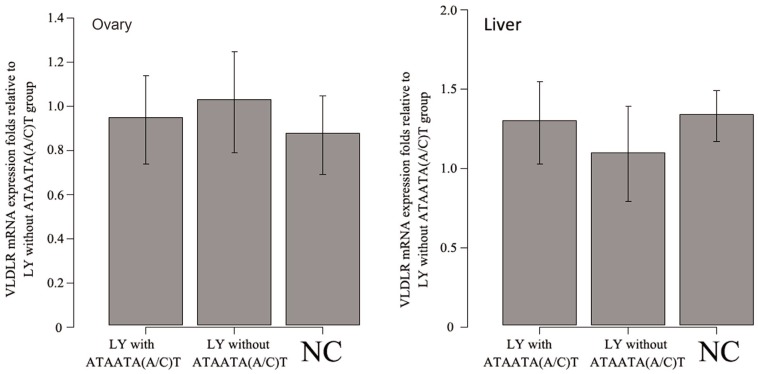
The very low-density lipoprotein receptor (VLDLR) transports egg yolk precursors into oocytes. However, our knowledge of the distribution patterns of VLDLR variants among breeds and their relationship to egg production is still incomplete. In this study, eight single nucleotide polymorphisms (SNPs) that account for 87% of all VLDLR variants were genotyped in Nick Chick (NC, n=91), Lohmann Brown (LohB, n=50) and Lueyang (LY, n=381) chickens, the latter being an Chinese indigenous breed. Egg production by NC and LY chickens was recorded from 17 to 50 weeks. Only four similar haplotypes were found in NC and LohB, of which two accounted for 100% of all NC haplotypes and 92.5% of LohB haplotypes. In contrast, there was considerable haplotypic diversity in LY. Comparison of egg production in LY showed that hens with NC-like haplotypes had a significantly higher production (p < 0.05) than those without the haplotypes. However, VLDLR expression was not significantly different between the haplotypes. These findings indicate a divergence in the distribution of VLDLR haplotypes between selected and non-selected breeds and suggest that the near fixation of VLDLR variants in NC and LohB is compatible with signature of selection. These data also support VLDLR as a candidate gene for modulating egg production.
极低密度脂蛋白受体(VLDLR)将蛋黄前体转运至卵母细胞中。然而,我们对于VLDLR变体在不同品种间的分布模式及其与产蛋量关系的了解仍不完整。在本研究中,对尼克鸡(NC,n = 91)、罗曼褐鸡(LohB,n = 50)和略阳鸡(LY,n = 381)这三个品种的鸡进行了基因分型,这8个单核苷酸多态性(SNP)占所有VLDLR变体的87%,其中略阳鸡是中国本土品种。记录了NC和LY鸡在17至50周龄期间的产蛋量。在NC和LohB中仅发现四种相似的单倍型,其中两种单倍型分别占NC所有单倍型的100%和LohB所有单倍型的92.5%。相比之下,LY具有相当大的单倍型多样性。LY产蛋量的比较表明,具有类似NC单倍型的母鸡产蛋量显著高于(p < 0.05)没有该单倍型的母鸡。然而,单倍型之间的VLDLR表达没有显著差异。这些发现表明在经过选育和未经选育的品种之间,VLDLR单倍型的分布存在差异,并表明NC和LohB中VLDLR变体的近乎固定与选择特征相符。这些数据也支持VLDLR作为调节产蛋量的候选基因。