Moyad Mark A, Newton Robert U, Tunn Ulf W, Gruca Damian
Department of Urology, University of Michigan Medical Center, Ann Arbor, MI, USA.
Exercise Medicine Research Institute, Edith Cowan University, Joondalup, WA, Australia.
Res Rep Urol. 2016 Aug 16;8:133-43. doi: 10.2147/RRU.S107852. eCollection 2016.
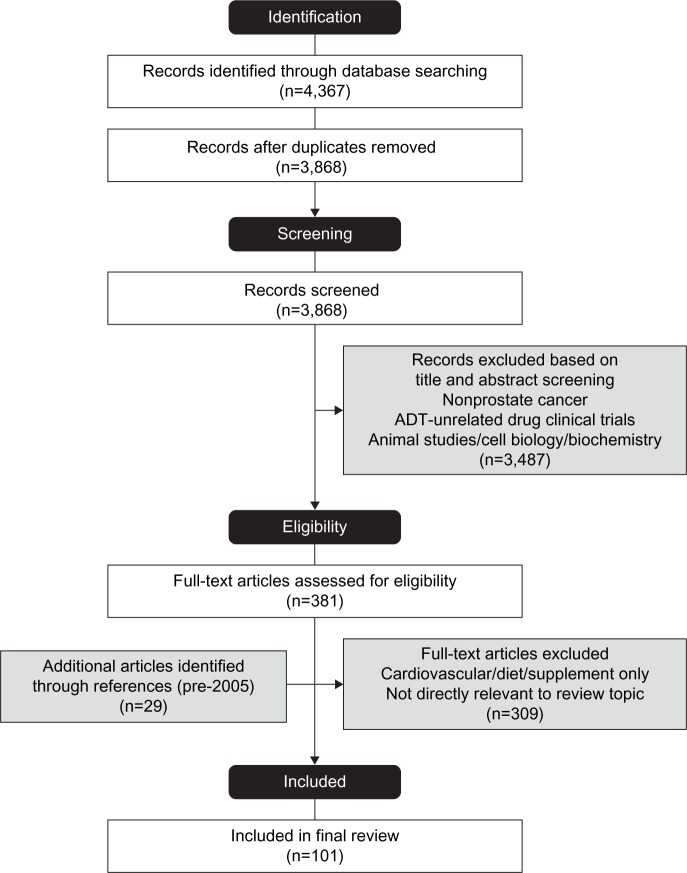
Improved diagnosis and treatment regimens have resulted in greater longevity for men with prostate cancer. This has led to an increase in both androgen deprivation therapy (ADT) use and duration of exposure, and therefore to its associated adverse effects, such as sexual dysfunction, osteoporosis, reduced muscle mass, increased fat mass, and increased incidence of cardiovascular disease and type 2 diabetes. Given that the adverse effects of ADT are systemic, often debilitating, and difficult to treat, efforts continue in the development of new strategies for long-term management of prostate cancer. The PubMed database was searched to select trials, reviews, and meta-analyses in English using such search terms as "prostate cancer" and "androgen deprivation therapy", "cardiovascular risk", "lean body mass", "exercise", and "diet". The initial searches produced 379 articles with dates 2005 or more recent. Articles published after 2004 were favored. This review utilizes the latest data to provide a status update on the effects of exercise and diet on patients with prostate cancer, focusing on ADT-associated side effects, and it discusses the evidence for such interventions. Since the evidence of large-scale trials in patients with prostate cancer is missing, and an extrapolation of supporting data to all patient subgroups cannot be provided, individualized risk assessments remain necessary before the initiation of exercise and diet programs. Exercise, diet, and nutritional supplementation interventions have the potential to provide effective, accessible, and relatively inexpensive strategies for mitigating ADT-associated toxicities without introducing additional adverse effects.
诊断和治疗方案的改进使得前列腺癌男性患者的寿命得以延长。这导致雄激素剥夺疗法(ADT)的使用增加且暴露时间延长,进而引发了其相关的不良反应,如性功能障碍、骨质疏松、肌肉量减少、脂肪量增加以及心血管疾病和2型糖尿病发病率上升。鉴于ADT的不良反应具有全身性、往往使人虚弱且难以治疗,因此仍在继续努力开发前列腺癌长期管理的新策略。通过在PubMed数据库中检索,使用“前列腺癌”、“雄激素剥夺疗法”、“心血管风险”、“瘦体重”、“运动”和“饮食”等检索词来筛选英文的试验、综述和荟萃分析。初步检索得到379篇日期为2005年或更晚的文章。优先选择2004年之后发表的文章。本综述利用最新数据,就运动和饮食对前列腺癌患者的影响提供最新情况,重点关注与ADT相关的副作用,并讨论此类干预措施的证据。由于缺乏前列腺癌患者大规模试验的证据,且无法将支持数据外推至所有患者亚组,因此在启动运动和饮食计划之前,仍有必要进行个体化风险评估。运动、饮食和营养补充干预措施有可能提供有效、可及且相对廉价的策略,以减轻与ADT相关的毒性,同时不会带来额外的不良反应。