Stem Cell Fate Laboratory, Institute of Genetics and Biophysics 'A. Buzzati-Traverso', CNR, Via Pietro Castellino 111, 80131 Naples, Italy.
Institute of Genetics and Biophysics 'A. Buzzati-Traverso', CNR, 80131 Naples, Italy.
Nat Commun. 2016 Sep 2;7:12589. doi: 10.1038/ncomms12589.
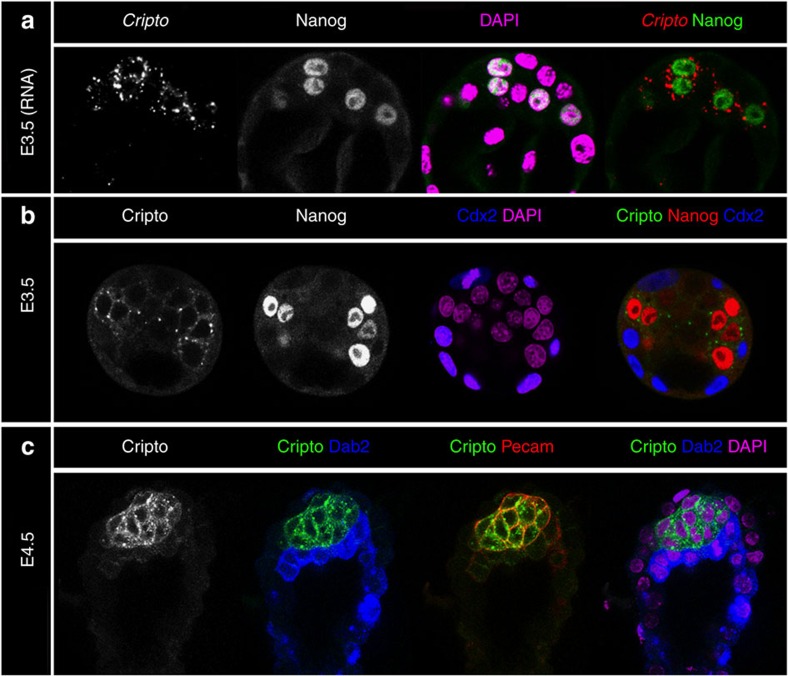
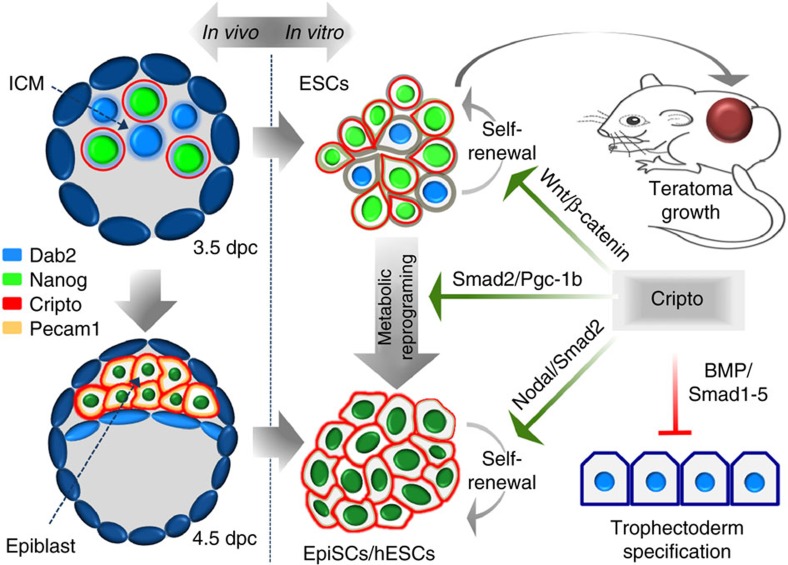
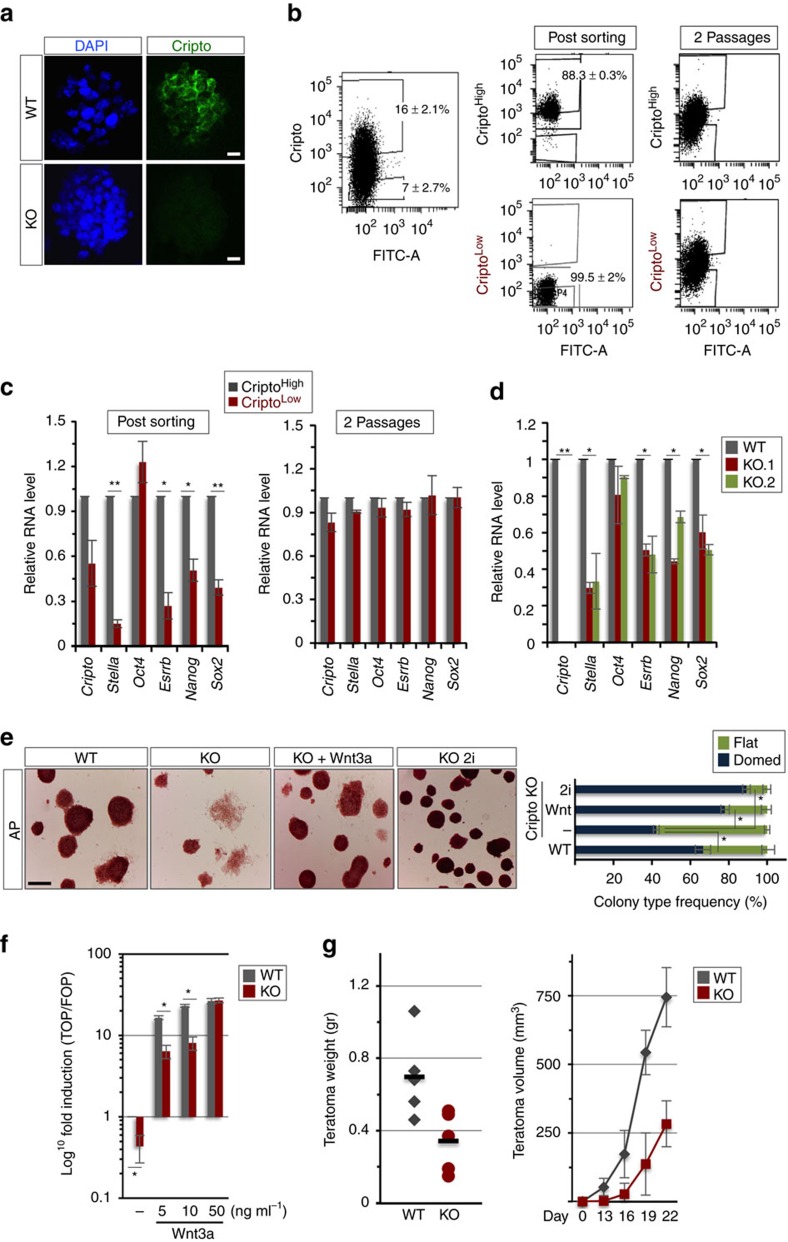
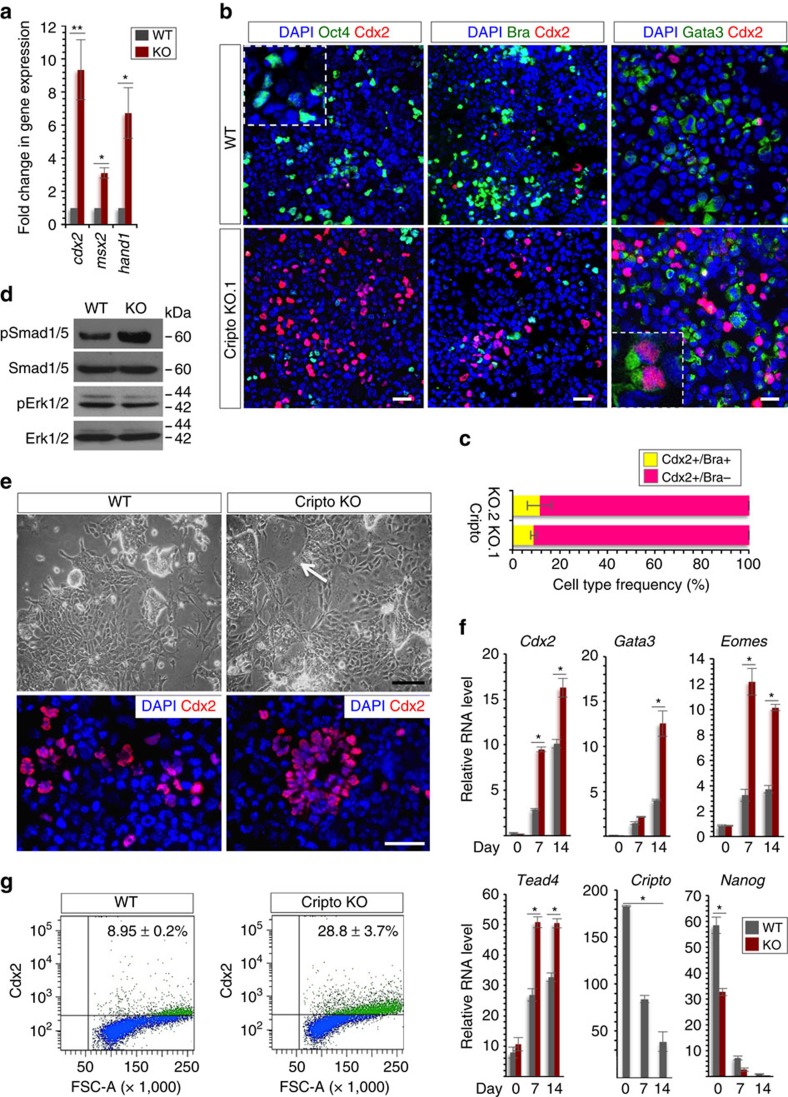
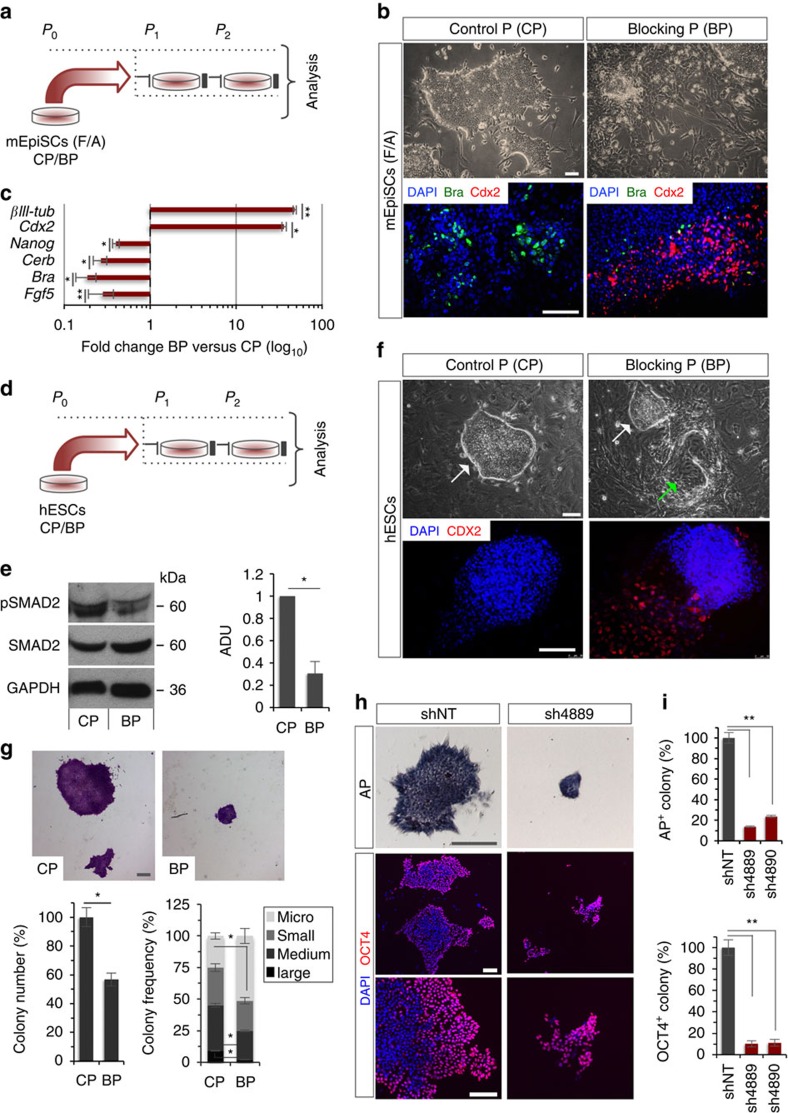
Known molecular determinants of developmental plasticity are mainly transcription factors, while the extrinsic regulation of this process has been largely unexplored. Here we identify Cripto as one of the earliest epiblast markers and a key extracellular determinant of the naive and primed pluripotent states. We demonstrate that Cripto sustains mouse embryonic stem cell (ESC) self-renewal by modulating Wnt/β-catenin, whereas it maintains mouse epiblast stem cell (EpiSC) and human ESC pluripotency through Nodal/Smad2. Moreover, we provide unprecedented evidence that Cripto controls the metabolic reprogramming in ESCs to EpiSC transition. Remarkably, Cripto deficiency attenuates ESC lineage restriction in vitro and in vivo, and permits ESC transdifferentiation into trophectoderm lineage, suggesting that Cripto has earlier functions than previously recognized. All together, our studies provide novel insights into the current model of mammalian pluripotency and contribute to the understanding of the extrinsic regulation of the first cell lineage decision in the embryo.
已知发育可塑性的分子决定因素主要是转录因子,而这一过程的外在调节在很大程度上尚未被探索。在这里,我们确定 Cripto 是最早的胚胎外胚层标记之一,也是原始和初始多能状态的关键细胞外决定因素。我们证明 Cripto 通过调节 Wnt/β-catenin 来维持小鼠胚胎干细胞(ESC)的自我更新,而通过 Nodal/Smad2 来维持小鼠胚胎干细胞(EpiSC)和人类 ESC 的多能性。此外,我们提供了前所未有的证据表明 Cripto 控制了 ESCs 向 EpiSC 转变过程中的代谢重编程。值得注意的是,Cripto 缺陷减弱了 ESC 谱系在体外和体内的限制,并允许 ESC 向滋养外胚层谱系的转分化,这表明 Cripto 具有比先前认识更早的功能。总的来说,我们的研究为哺乳动物多能性的现有模型提供了新的见解,并有助于理解胚胎中第一个细胞谱系决定的外在调节。