Song Tong, Tian Xia, Kai Fan, Ke Jiang, Wei Zhai, Jing-Song Li, Si-Hua Wang, Jian-Jun Wang
Department of Thoracic Surgery, Union Hospital, Tongji Medical College, Huazhong University of Science and Technology, Wuhan, China.
Oncotarget. 2016 Sep 27;7(39):64260-64273. doi: 10.18632/oncotarget.11728.
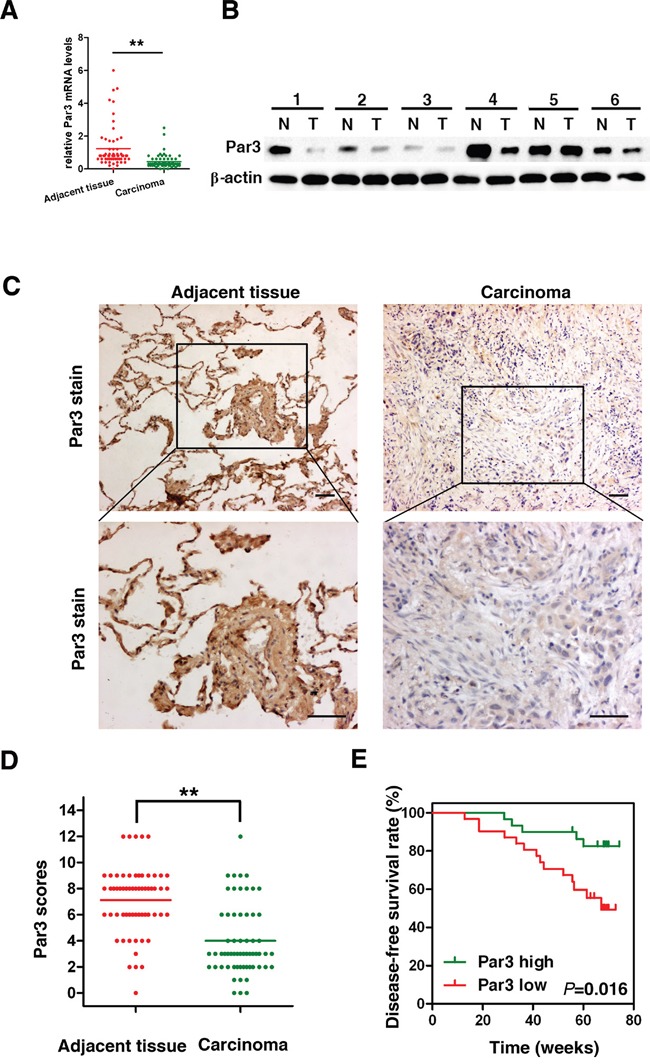
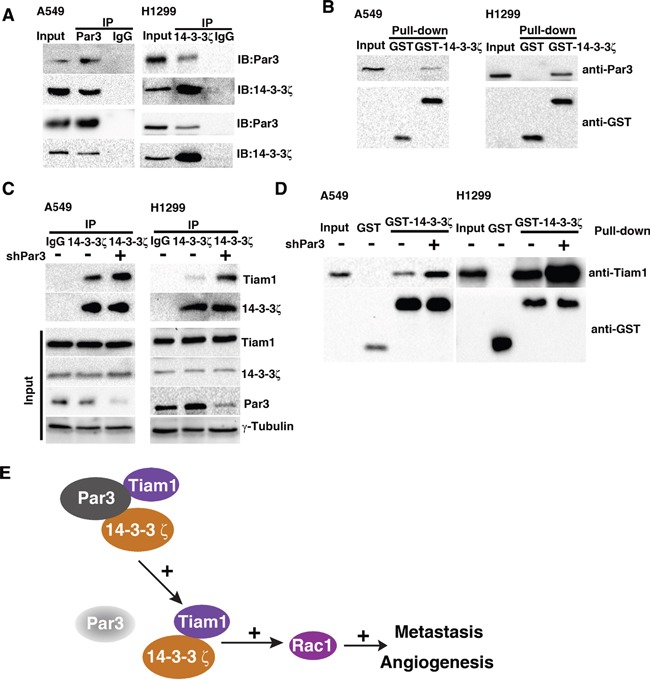
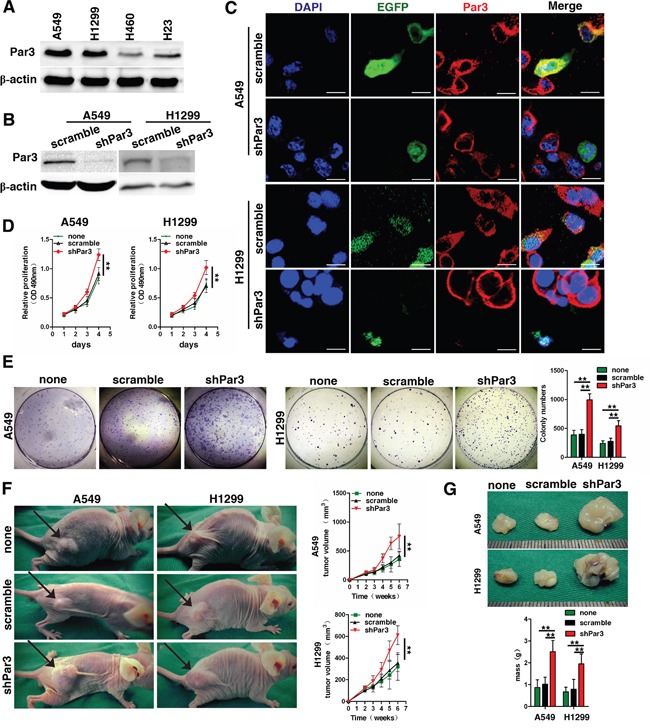
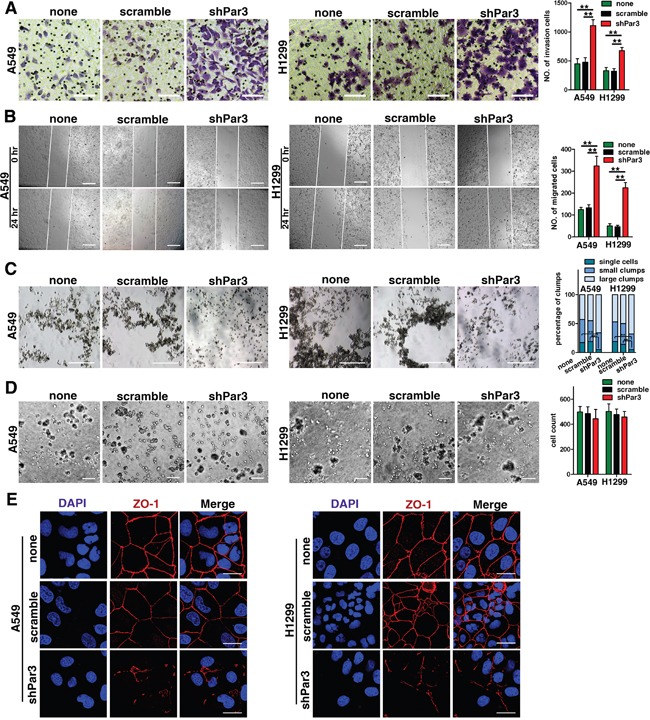
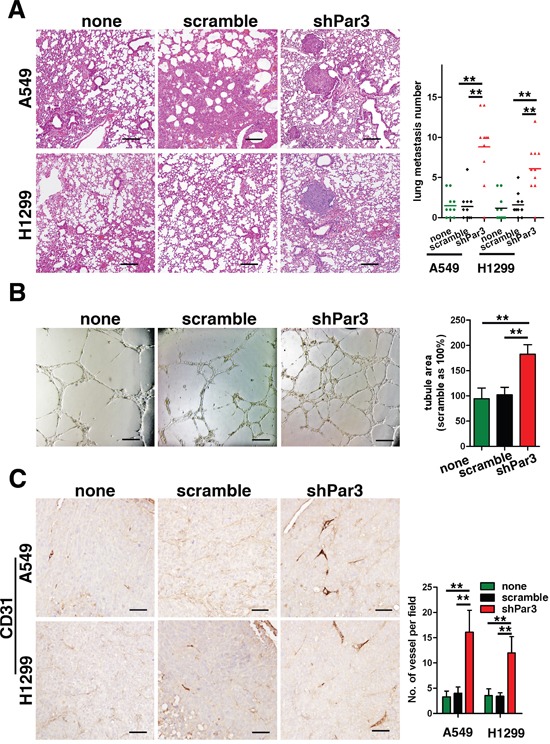
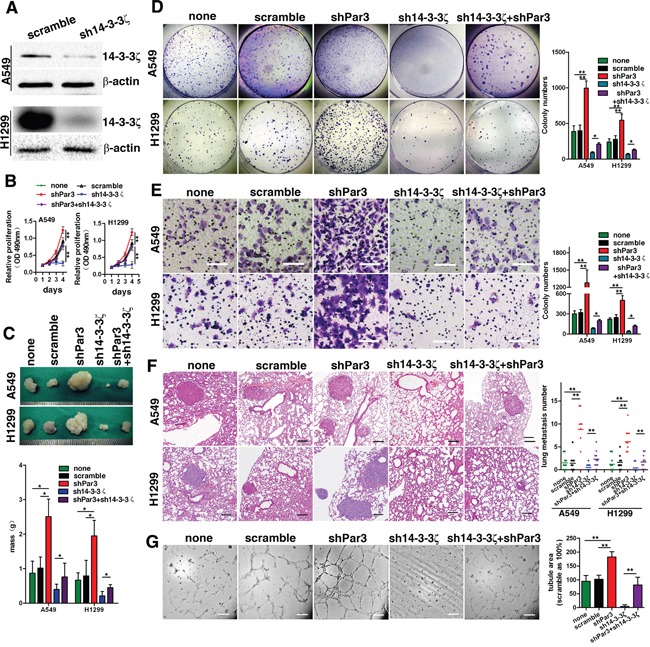
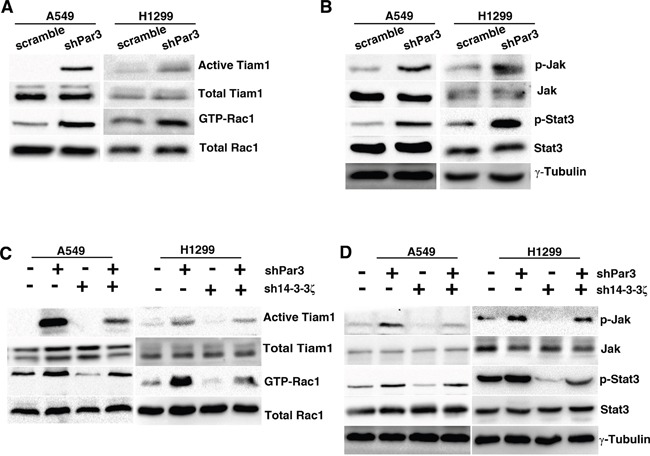
Partitioning defective protein 3 (Par3) can activate the Tiam1/Rac pathway to inhibit invasion and metastasis in many cancers; however, the role of Par3 in lung adenocarcinoma remains unknown. Here we show that Par3 is downregulated in lung adenocarcinoma tissues and is associated with higher rates of lymph node metastasis and recurrence. Our functional study demonstrated that knock-down of Par3 promoted lung adenocarcinoma cell growth, cell migration, tumor formation, and metastasis, all of which were effectively inhibited when 14-3-3ζ was silenced. We found that Par3 binded with 14-3-3ζ protein and also showed that Par3 abrogated the binding of 14-3-3ζ to Tiam1, which was responsible for Rac1 activation. Knock-down of 14-3-3ζ inhibited Tiam1/Rac-GTP activation and blocked the invasive behavior of cells lacking Par3. These data suggest that loss of Par3 promotes metastatic behavior in lung adenocarcinoma cells through 14-3-3ζ protein.
分区缺陷蛋白3(Par3)可激活Tiam1/Rac信号通路,从而抑制多种癌症的侵袭和转移;然而,Par3在肺腺癌中的作用尚不清楚。在此我们发现,Par3在肺腺癌组织中表达下调,且与较高的淋巴结转移率和复发率相关。我们的功能研究表明,敲低Par3可促进肺腺癌细胞生长、细胞迁移、肿瘤形成及转移,而当14-3-3ζ沉默时,所有这些均受到有效抑制。我们发现Par3与14-3-3ζ蛋白结合,并且还表明Par3消除了14-3-3ζ与Tiam1的结合,而Tiam1的结合负责Rac1的激活。敲低14-3-3ζ可抑制Tiam1/Rac-GTP激活,并阻断缺乏Par3的细胞的侵袭行为。这些数据表明,Par3的缺失通过14-3-3ζ蛋白促进肺腺癌细胞的转移行为。