Peng Cong, Jia Xiaoting, Xiong Yan, Yin Jiang, Li Nan, Deng Yingen, Luo Kai, Zhang Qiong, Wang Chengkun, Zhang Zhijie, Zheng Guopei, He Zhimin
Cancer Hospital and Cancer Research Institute of Guangzhou Medical University, Guangzhou 510095, Guangdong, China.
Department of Pharmacology, Guangzhou Institute of Snake Venom Research, School of Pharmaceutical Sciences, Guangzhou Medical University, Guangzhou 511436, Guangdong, China.
Oncotarget. 2015 Aug 21;6(24):20177-89. doi: 10.18632/oncotarget.3896.
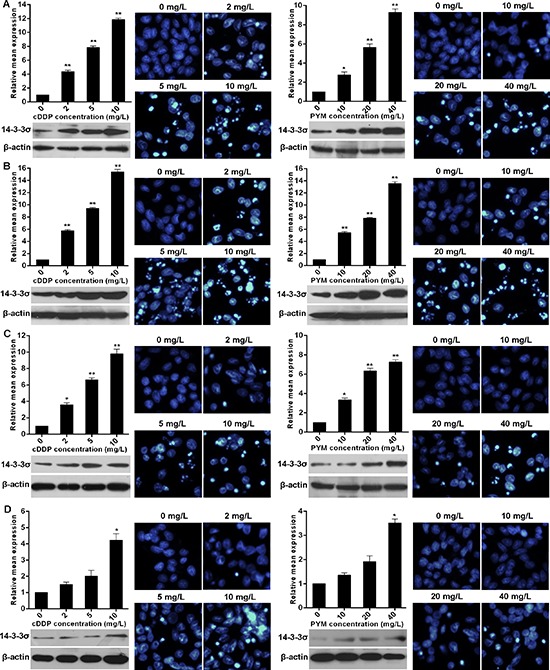
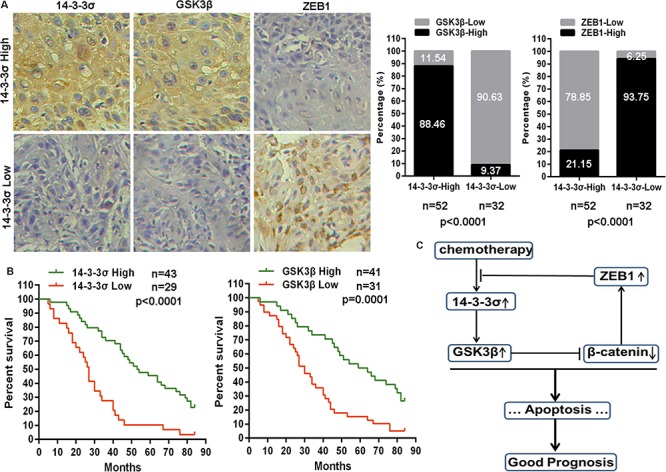
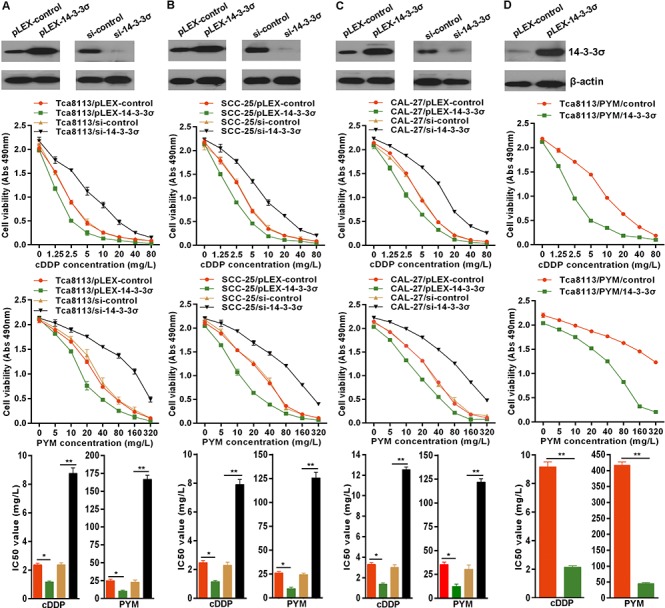
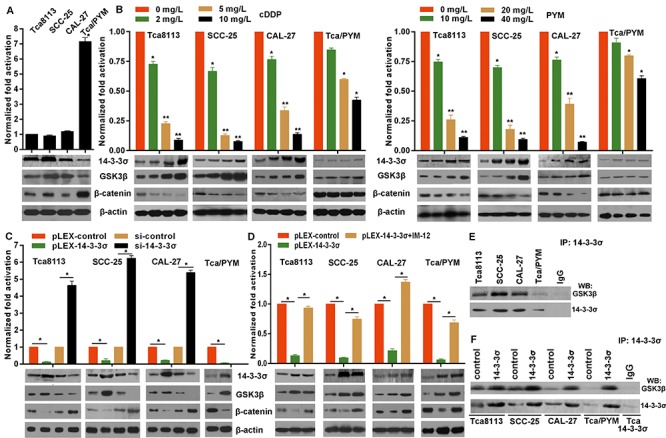
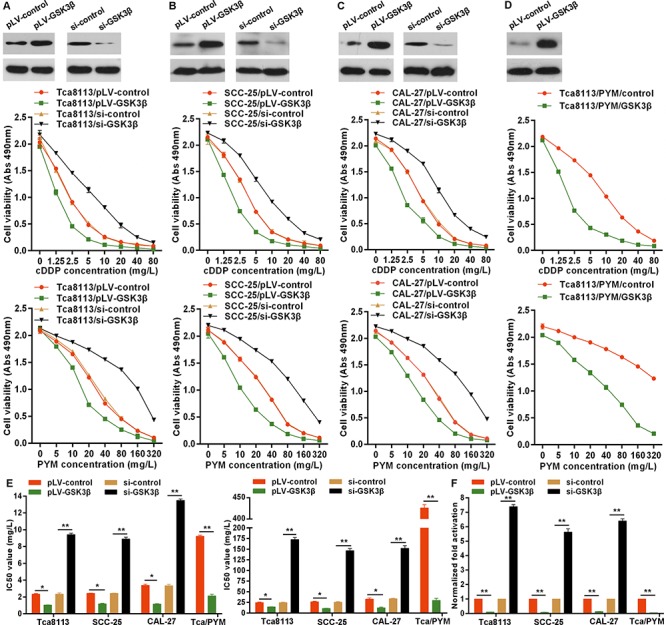
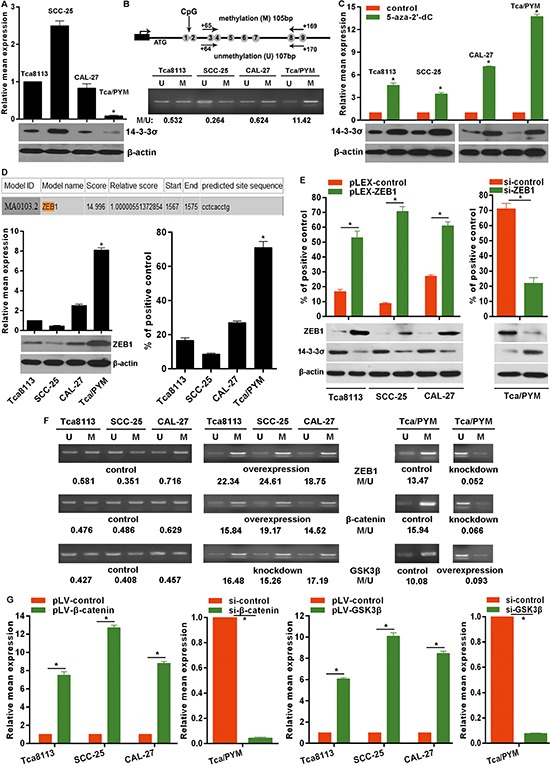
Here we demonstrated that chemotherapy induced 14-3-3σ expression in tongue cancer (TC) cells and overexpressed 14-3-3σ sensitized TC cells to chemotherapy especially in multidrug resistant TC (MDR-TC) cells. In agreement, 14-3-3σ knockdown enhanced resistance of TC cells to chemotherapy. Mechanically, we found 14-3-3σ physically bound to GSK3β in protein level and the binding inhibited β-catenin signaling. Coincidentally, chemotherapy as well as 14-3-3σ overexpression led to increase of GSK3β protein level. Increased GSK3β protein sensitized TC cells to chemotherapy. Moreover, deregulation of 14-3-3σ/GSK3β/β-catenin axis led to overexpressed ZEB1 in TC cells, especially in MDR-TC cells. As a negative feedback loop, ZEB1 bond to 14-3-3σ promoter to enhance promoter hypermethylation in TC cells. Promoter hypermethylation resulted into the decrease of 14-3-3σ expression. Importantly, a positive correlation was observed between 14-3-3σ and GSK3β protein expression in TC tissues from patients receiving chemotherapy. High levels of 14-3-3σ and GSK3β were associated with better prognosis in TC patients.
在此我们证明,化疗可诱导舌癌细胞(TC)中14-3-3σ的表达,而过表达的14-3-3σ可使TC细胞对化疗敏感,尤其是在多药耐药的TC(MDR-TC)细胞中。与此一致的是,敲低14-3-3σ可增强TC细胞对化疗的抗性。从机制上来说,我们发现14-3-3σ在蛋白水平上与GSK3β发生物理结合,且这种结合会抑制β-连环蛋白信号传导。巧合的是,化疗以及14-3-3σ的过表达都会导致GSK3β蛋白水平升高。GSK3β蛋白水平升高使TC细胞对化疗敏感。此外,14-3-3σ/GSK3β/β-连环蛋白轴的失调会导致TC细胞中ZEB1过表达,尤其是在MDR-TC细胞中。作为一个负反馈环,ZEB1与14-3-3σ启动子结合,以增强TC细胞中启动子的高甲基化。启动子高甲基化导致14-3-3σ表达降低。重要的是,在接受化疗的患者的TC组织中,观察到14-3-3σ与GSK3β蛋白表达之间呈正相关。高水平的14-3-3σ和GSK3β与TC患者的较好预后相关。