Department of Interventional Radiology, The Second Affiliated Hospital of Kunming Medical University, 374 Dianmian Avenue, Kunming, 650101, Yunnan, China.
Department of Pharmacy, The Second Affiliated Hospital of Kunming Medical University, 374 Dianmian Avenue, Kunming, 650101, Yunnan, China.
Sci Rep. 2021 May 26;11(1):11078. doi: 10.1038/s41598-021-90507-w.
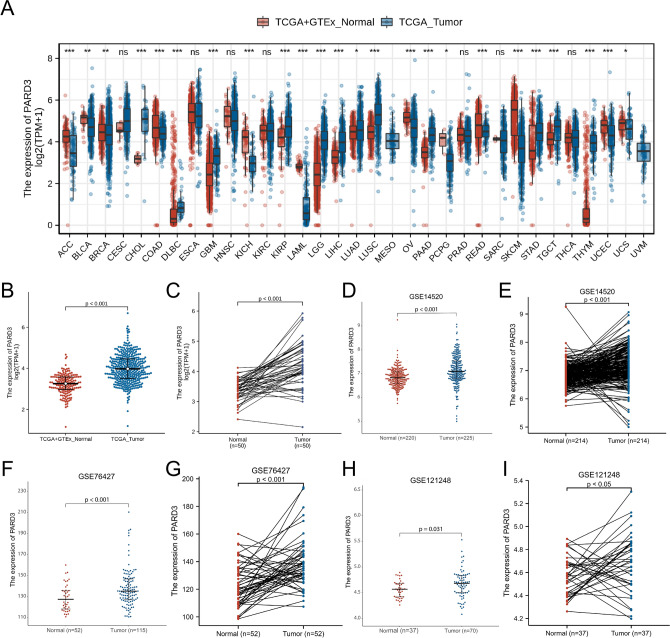
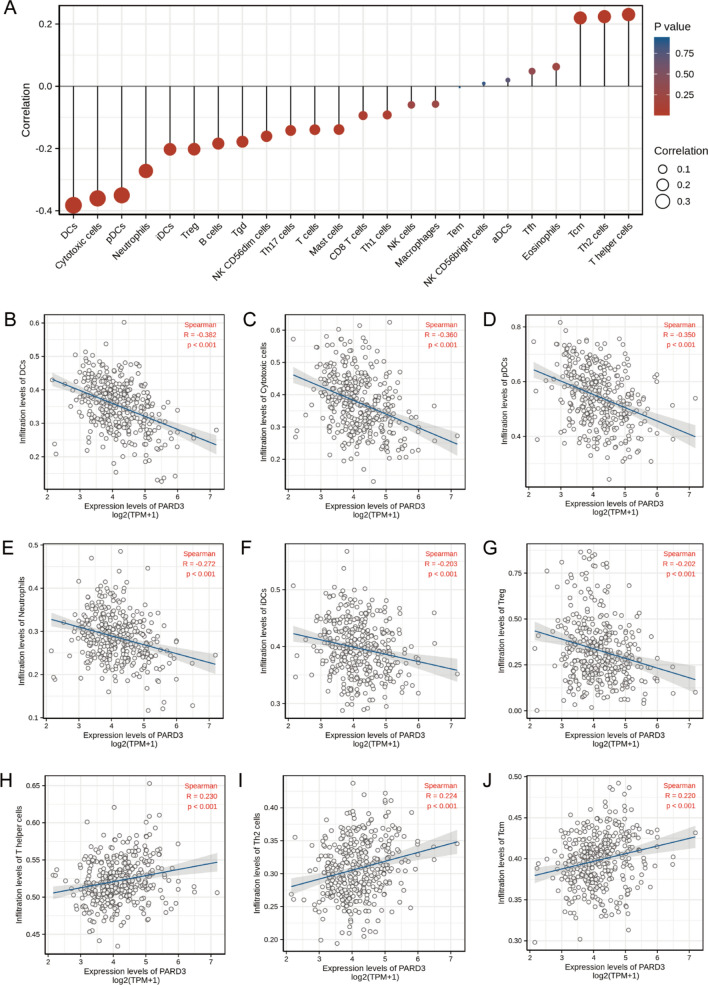
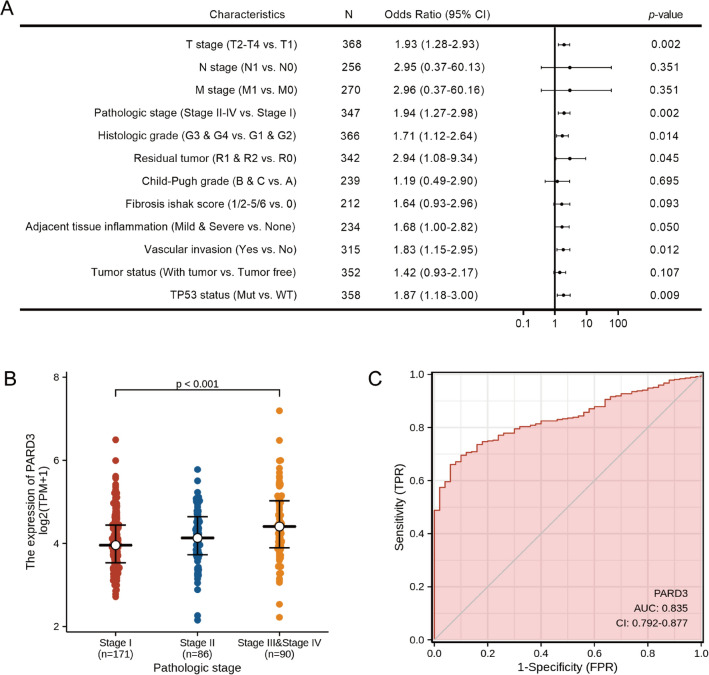
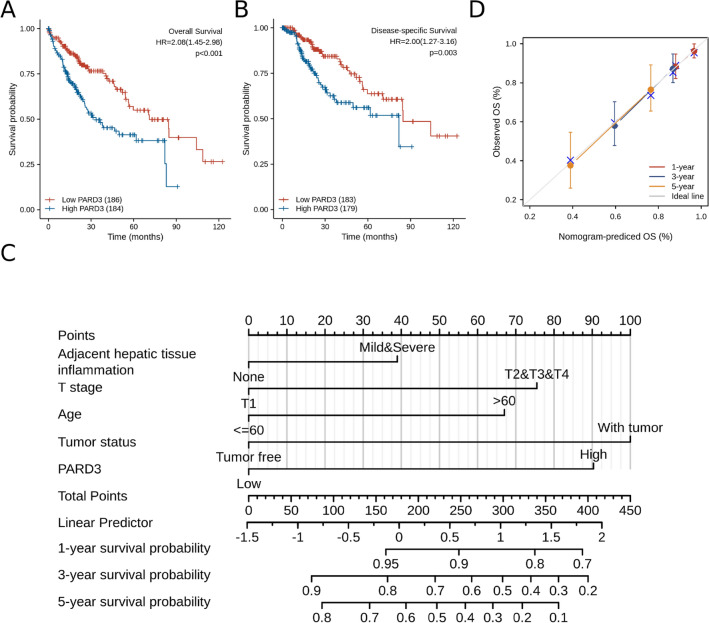
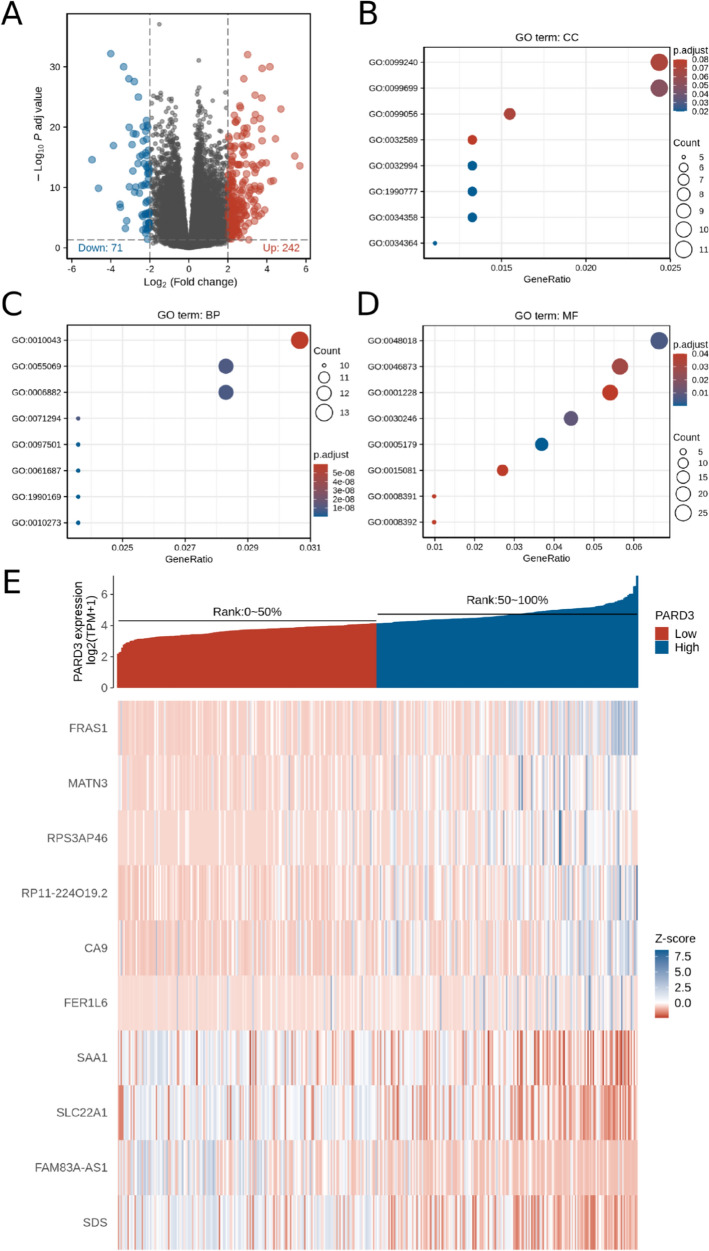
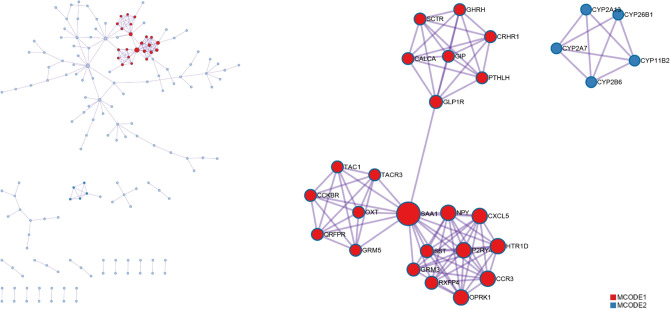
Hepatocellular carcinoma (HCC) is one of the most commonly cancers with poor prognosis and drug response. Identifying accurate therapeutic targets would facilitate precision treatment and prolong survival for HCC. In this study, we analyzed liver hepatocellular carcinoma (LIHC) RNA sequencing (RNA-seq) data from The Cancer Genome Atlas (TCGA), and identified PARD3 as one of the most significantly differentially expressed genes (DEGs). Then, we investigated the relationship between PARD3 and outcomes of HCC, and assessed predictive capacity. Moreover, we performed functional enrichment and immune infiltration analysis to evaluate functional networks related to PARD3 in HCC and explore its role in tumor immunity. PARD3 expression levels in 371 HCC tissues were dramatically higher than those in 50 paired adjacent liver tissues (p < 0.001). High PARD3 expression was associated with poor clinicopathologic feathers, such as advanced pathologic stage (p = 0.002), vascular invasion (p = 0.012) and TP53 mutation (p = 0.009). Elevated PARD3 expression also correlated with lower overall survival (OS, HR = 2.08, 95% CI = 1.45-2.98, p < 0.001) and disease-specific survival (DSS, HR = 2.00, 95% CI = 1.27-3.16, p = 0.003). 242 up-regulated and 71 down-regulated genes showed significant association with PARD3 expression, which were involved in genomic instability, response to metal ions, and metabolisms. PARD3 is involved in diverse immune infiltration levels in HCC, especially negatively related to dendritic cells (DCs), cytotoxic cells, and plasmacytoid dendritic cells (pDCs). Altogether, PARD3 could be a potential prognostic biomarker and therapeutic target of HCC.
肝细胞癌 (HCC) 是预后最差、药物反应最不理想的癌症之一。确定准确的治疗靶点将有助于 HCC 的精准治疗并延长患者的生存期。在本研究中,我们分析了来自癌症基因组图谱 (TCGA) 的肝肝细胞癌 (LIHC) RNA 测序 (RNA-seq) 数据,并鉴定了 PARD3 为差异表达最显著的基因 (DEGs) 之一。然后,我们研究了 PARD3 与 HCC 结局之间的关系,并评估了其预测能力。此外,我们进行了功能富集和免疫浸润分析,以评估与 HCC 中 PARD3 相关的功能网络,并探讨其在肿瘤免疫中的作用。在 371 例 HCC 组织中,PARD3 的表达水平明显高于 50 对配对的相邻肝组织 (p < 0.001)。高 PARD3 表达与不良的临床病理特征相关,如较晚的病理分期 (p = 0.002)、血管侵犯 (p = 0.012) 和 TP53 突变 (p = 0.009)。PARD3 表达水平升高也与总生存期 (OS,HR = 2.08,95%CI = 1.45-2.98,p < 0.001) 和疾病特异性生存期 (DSS,HR = 2.00,95%CI = 1.27-3.16,p = 0.003) 降低相关。与 PARD3 表达显著相关的 242 个上调基因和 71 个下调基因参与基因组不稳定性、金属离子反应和代谢过程。PARD3 参与 HCC 中不同的免疫浸润水平,特别是与树突状细胞 (DCs)、细胞毒性细胞和浆细胞样树突状细胞 (pDCs) 呈负相关。总之,PARD3 可能是 HCC 的一个潜在的预后生物标志物和治疗靶点。