Warrier Indu, Walter Mathias C, Frangoulidis Dimitrios, Raghavan Rahul, Hicks Linda D, Minnick Michael F
Program in Cellular, Molecular and Microbial Biology, Division of Biological Sciences, University of Montana Missoula, MT, USA.
Bundeswehr Institute of Microbiology Munich, Germany.
Front Cell Infect Microbiol. 2016 Aug 19;6:83. doi: 10.3389/fcimb.2016.00083. eCollection 2016.
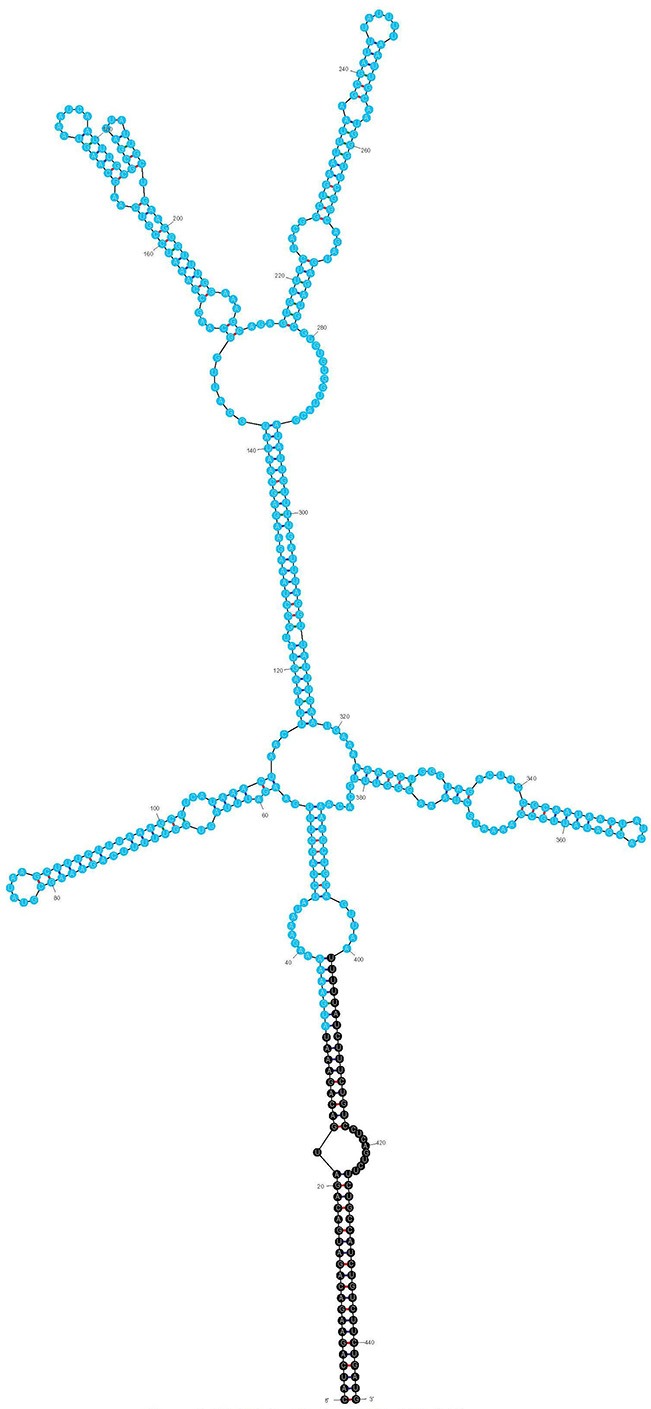
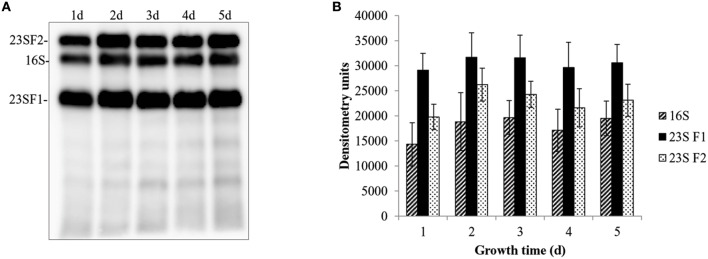
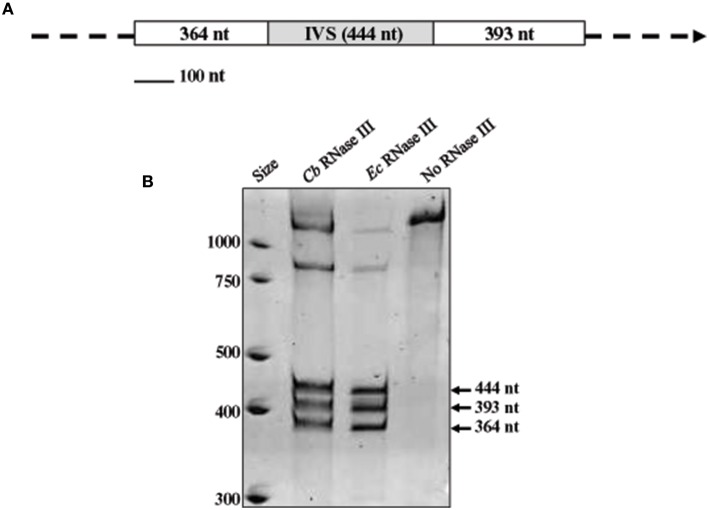
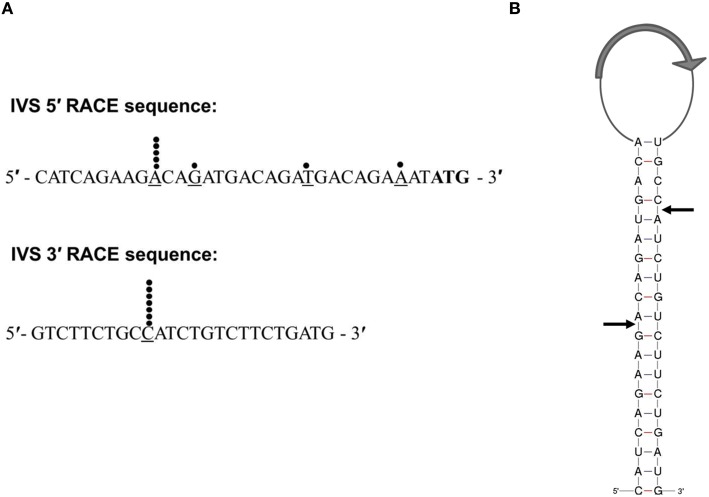
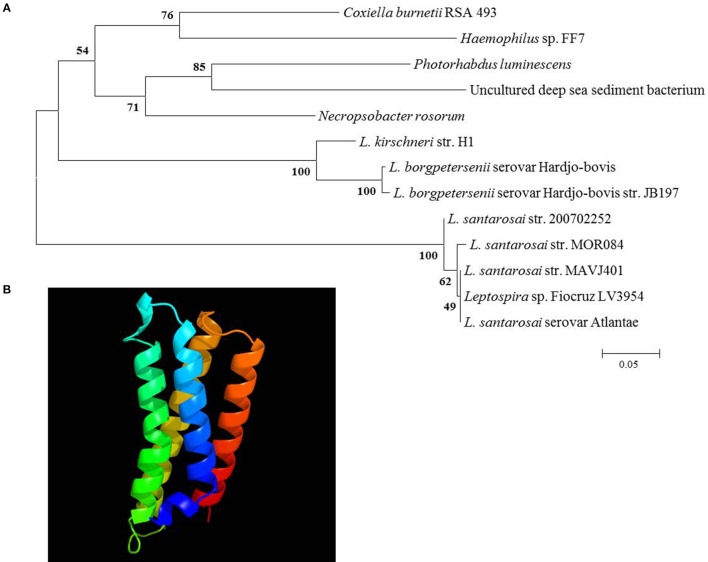
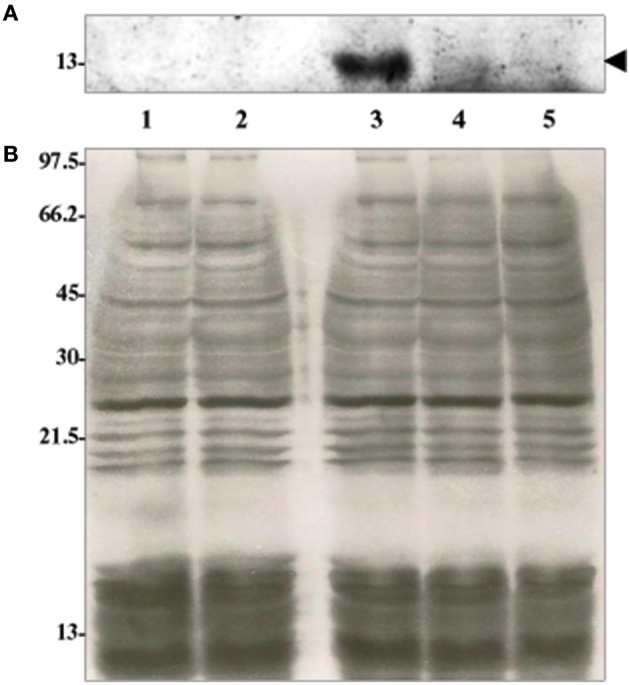
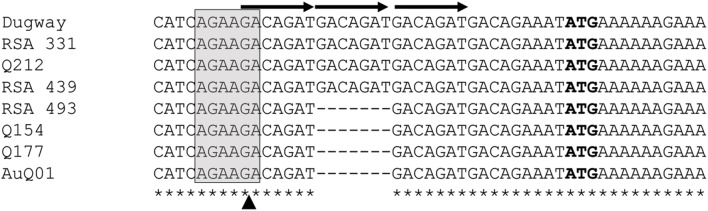
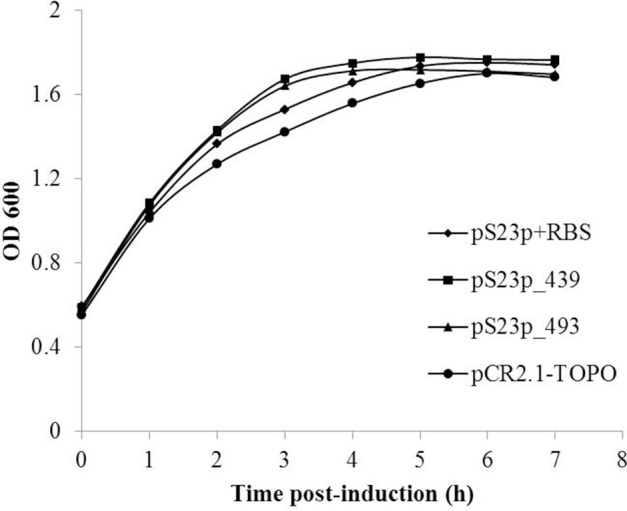
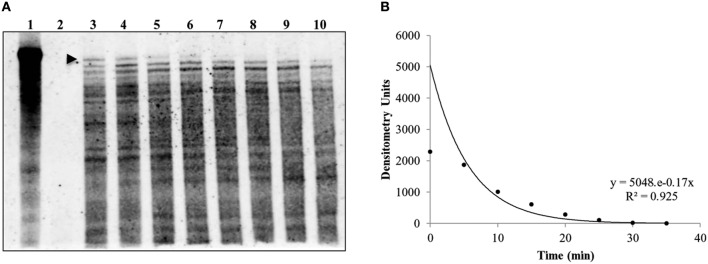
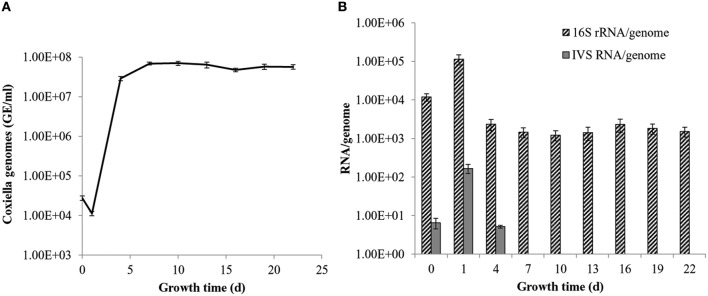
The intervening sequence (IVS) of Coxiella burnetii, the agent of Q fever, is a 428-nt selfish genetic element located in helix 45 of the precursor 23S rRNA. The IVS element, in turn, contains an ORF that encodes a hypothetical ribosomal S23 protein (S23p). Although S23p can be synthesized in vitro in the presence of an engineered E. coli promoter and ribosome binding site, results suggest that the protein is not synthesized in vivo. In spite of a high degree of IVS conservation among different strains of C. burnetii, the region immediately upstream of the S23p start codon is prone to change, and the S23p-encoding ORF is evidently undergoing reductive evolution. We determined that IVS excision from 23S rRNA was mediated by RNase III, and IVS RNA was rapidly degraded, thereafter. Levels of the resulting 23S rRNA fragments that flank the IVS, F1 (1.2 kb) and F2 (1.7 kb), were quantified over C. burnetii's logarithmic growth phase (1-5 d). Results showed that 23S F1 quantities were consistently higher than those of F2 and 16S rRNA. The disparity between levels of the two 23S rRNA fragments following excision of IVS is an interesting phenomenon of unknown significance. Based upon phylogenetic analyses, IVS was acquired through horizontal transfer after C. burnetii's divergence from an ancestral bacterium and has been subsequently maintained by vertical transfer. The widespread occurrence, maintenance and conservation of the IVS in C. burnetii imply that it plays an adaptive role or has a neutral effect on fitness.
Q热病原体贝氏柯克斯体的间隔序列(IVS)是一个428个核苷酸的自私遗传元件,位于前体23S rRNA的螺旋45中。IVS元件又包含一个开放阅读框,编码一种假定的核糖体S23蛋白(S23p)。尽管在工程化大肠杆菌启动子和核糖体结合位点存在的情况下,S23p可以在体外合成,但结果表明该蛋白在体内不合成。尽管不同贝氏柯克斯体菌株之间的IVS具有高度保守性,但S23p起始密码子上游紧邻区域易于发生变化,且编码S23p的开放阅读框显然正在经历简化进化。我们确定,23S rRNA的IVS切除由RNase III介导,此后IVS RNA迅速降解。在贝氏柯克斯体的对数生长期(1 - 5天)对IVS两侧产生的23S rRNA片段F1(约1.2 kb)和F2(约1.7 kb)的水平进行了定量。结果显示,23S F1的量始终高于F2和16S rRNA。IVS切除后两个23S rRNA片段水平的差异是一个具有未知意义的有趣现象。基于系统发育分析,IVS是在贝氏柯克斯体从祖先细菌分化后通过水平转移获得的,随后通过垂直转移得以维持。IVS在贝氏柯克斯体中的广泛存在、维持和保守性表明它对适应性起着适应性作用或具有中性影响。