Moses Abraham S, Millar Jess A, Bonazzi Matteo, Beare Paul A, Raghavan Rahul
Department of Biology and Center for Life in Extreme Environments, Portland State UniversityPortland, OR, USA.
Centre National de la Recherche Scientifique, Formation de Recherche en Évolution 3689, Centre d'Études d'Agents Pathogènes et Biotechnologies Pour la Santé, Université MontpellierMontpellier, France.
Front Cell Infect Microbiol. 2017 May 10;7:174. doi: 10.3389/fcimb.2017.00174. eCollection 2017.
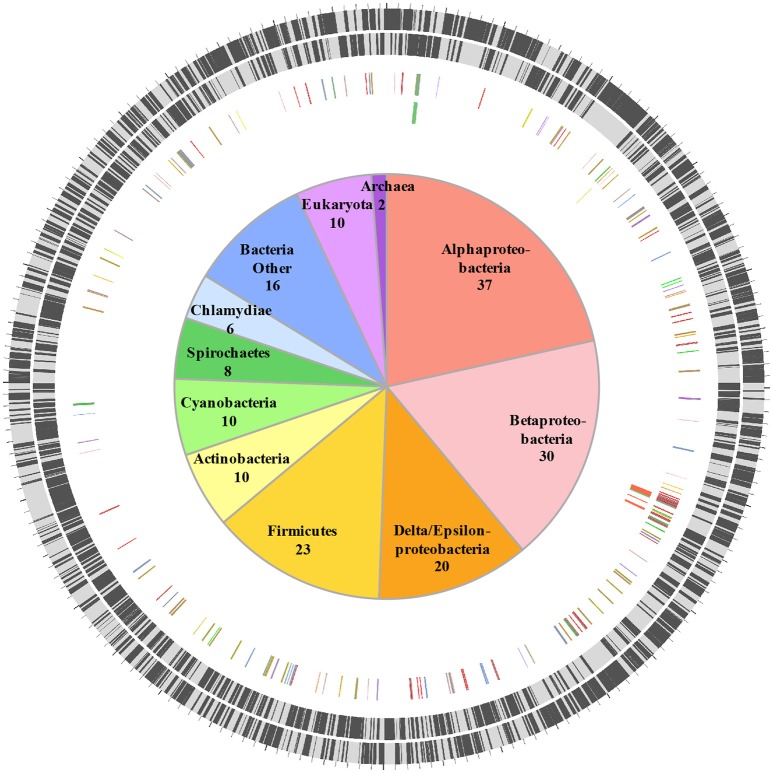
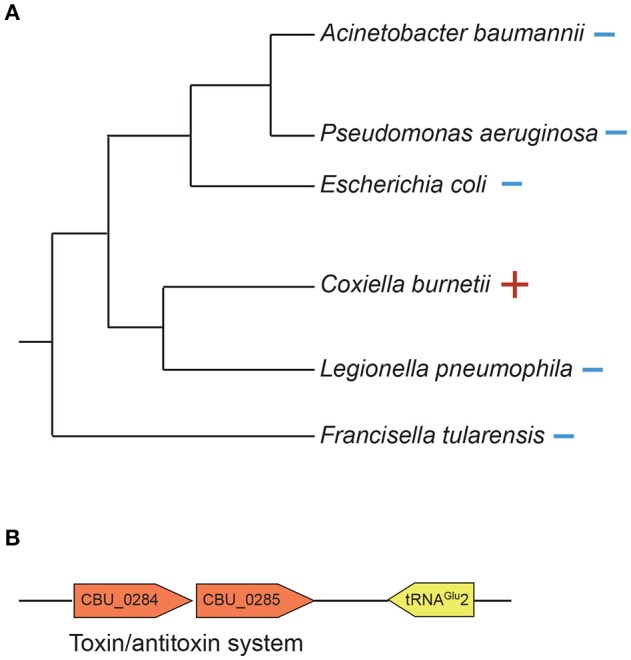
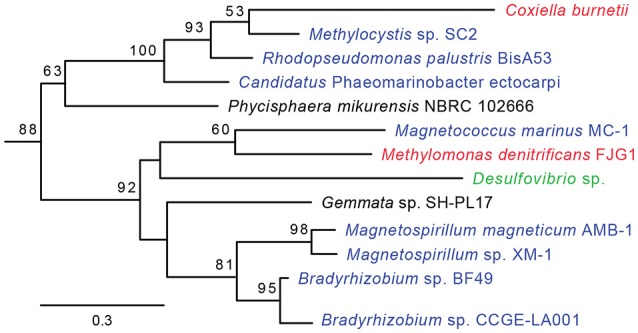
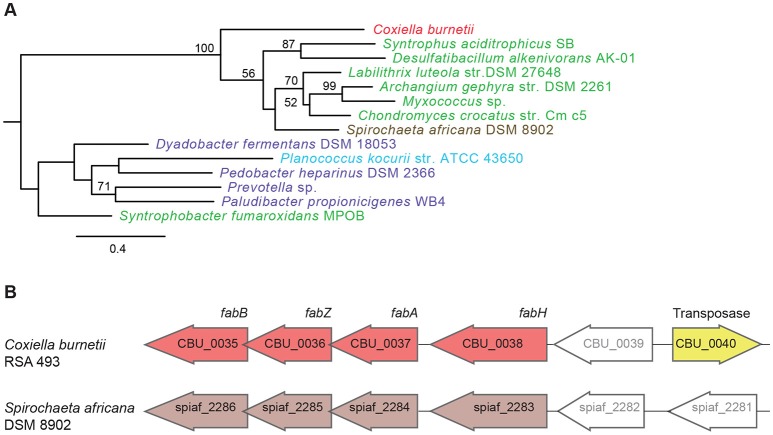
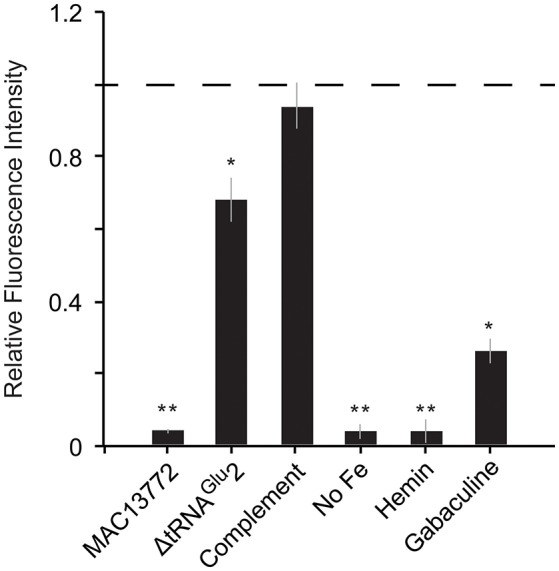
, the etiologic agent of acute Q fever and chronic endocarditis, has a unique biphasic life cycle, which includes a metabolically active intracellular form that occupies a large lysosome-derived acidic vacuole. is the only bacterium known to thrive within such an hostile intracellular niche, and this ability is fundamental to its pathogenicity; however, very little is known about genes that facilitate 's intracellular growth. Recent studies indicate that evolved from a tick-associated ancestor and that the metabolic capabilities of are different from that of -like bacteria found in ticks. Horizontally acquired genes that allow to infect and grow within mammalian cells likely facilitated the host shift; however, because of its obligate intracellular replication, would have lost most genes that have been rendered redundant due to the availability of metabolites within the host cell. Based on these observations, we reasoned that horizontally derived biosynthetic genes that have been retained in the reduced genome of are ideal candidates to begin to uncover its intracellular metabolic requirements. Our analyses identified a large number of putative foreign-origin genes in , including tRNA2 that is potentially required for heme biosynthesis, and genes involved in the production of lipopolysaccharide-a virulence factor, and of critical metabolites such as fatty acids and biotin. In comparison to wild-type , a strain that lacks tRNA2 exhibited reduced growth, indicating its importance to 's physiology. Additionally, by using chemical agents that block heme and biotin biosyntheses, we show that these pathways are promising targets for the development of new anti- therapies.
伯纳特立克次体,急性Q热和慢性心内膜炎的病原体,具有独特的双相生命周期,其中包括一种代谢活跃的细胞内形式,占据一个源自溶酶体的大型酸性液泡。伯纳特立克次体是已知唯一能在如此恶劣的细胞内生态位中茁壮成长的细菌,这种能力是其致病性的基础;然而,对于促进伯纳特立克次体在细胞内生长的基因却知之甚少。最近的研究表明,伯纳特立克次体从与蜱相关的祖先进化而来,其代谢能力与蜱中发现的类立克次体细菌不同。水平获得的使伯纳特立克次体能够在哺乳动物细胞内感染和生长的基因可能促进了宿主转移;然而,由于其严格的细胞内复制,伯纳特立克次体可能已经失去了大多数因宿主细胞内代谢物的可获得性而变得多余的基因。基于这些观察结果,我们推断,在伯纳特立克次体简化基因组中保留的水平衍生生物合成基因是开始揭示其细胞内代谢需求的理想候选基因。我们的分析在伯纳特立克次体中鉴定出大量推定的外源基因,包括血红素生物合成可能需要的tRNA2,以及参与脂多糖(一种毒力因子)以及脂肪酸和生物素等关键代谢物产生的基因。与野生型伯纳特立克次体相比,缺乏tRNA2的菌株生长减少,表明其对伯纳特立克次体生理学的重要性。此外,通过使用阻断血红素和生物素生物合成的化学试剂,我们表明这些途径是开发新的抗伯纳特立克次体疗法的有希望的靶点。