McGoldrick E L, Crawford T, Brown J A, Groom K M, Crowther C A
Liggins Institute, The University of Auckland, Auckland, New Zealand.
Department of Obstetrics and Gynaecology, The University of Auckland, Auckland, New Zealand.
BMC Pregnancy Childbirth. 2016 Sep 5;16(1):259. doi: 10.1186/s12884-016-1043-4.
Active participation of consumers in health care decision making, policy and clinical research is increasingly encouraged by governments, influential bodies and funders. Identifying the best way to achieve this is difficult due to the paucity of evidence. Consumers have mixed feelings towards clinical practice guidelines (CPG) demonstrating scepticism towards their purpose and applicability to their needs. There is no information pertaining to consumers' views and attitudes on the receipt of antenatal corticosteroids (ACS). The aim of this study was to examine the barriers and enablers to receiving ACS and use of CPG amongst consumers.
Consumers were recruited from neonatal units across three district health boards (DHBs) in Auckland, New Zealand. Participants completed a semi-structured interview or questionnaire. The questions posed and analyses were informed by the Theoretical Domains Framework (TDF). Barriers and enablers were identified by the presence of conflicting beliefs within a domain; the frequency of beliefs; and the likely strength of the impact of a belief on use of CPG and receipt of ACS.
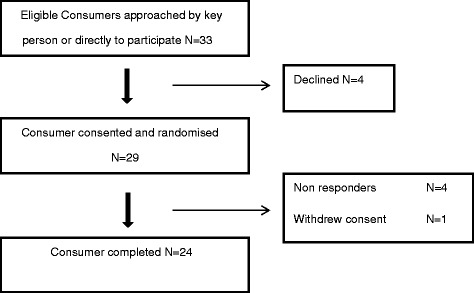
Twenty four consumers participated in the study. Six domains were identified as barriers to receipt of ACS and use of CPG. Key barriers to receipt of ACS included: difficulty retaining information conveyed, requiring further information in a variety of formats, and time constraints faced by consumers and health professionals in the provision and understanding of information to facilitate decision making. Barriers to use of CPG included: uncertainty about applicability of guideline use among consumers and scepticism about health professionals adhering too rigidly to guidelines. Enablers to receipt of ACS included: optimism toward ACS use, a strong knowledge of why ACS were administered, improved resilience in their pregnancy and confidence in their decision making following receipt of information about ACS. Enablers to use of CPG included: validation and standardisation of decision making among health professionals providing care and facilitating the best care for women and their babies.
Key barriers and enablers exist among consumers regarding receipt of ACS and use of CPG. These need to be addressed or modified in any intervention strategy to facilitate implementation of the ACS CPG.
政府、有影响力的机构和资助者越来越鼓励消费者积极参与医疗保健决策、政策制定和临床研究。由于证据匮乏,很难确定实现这一目标的最佳方式。消费者对临床实践指南(CPG)看法不一,对其目的以及是否适用于自身需求持怀疑态度。目前尚无关于消费者接受产前皮质类固醇(ACS)的观点和态度的相关信息。本研究旨在探讨消费者接受ACS以及使用CPG的障碍和促进因素。
从新西兰奥克兰三个地区卫生委员会(DHBs)的新生儿病房招募消费者。参与者完成了半结构化访谈或问卷调查。提出的问题和分析以理论领域框架(TDF)为依据。通过一个领域内相互冲突的信念的存在、信念的频率以及信念对CPG使用和ACS接受可能产生的影响强度来确定障碍和促进因素。
24名消费者参与了该研究。确定了六个领域为接受ACS和使用CPG 的障碍。接受ACS的主要障碍包括:难以记住所传达的信息、需要多种形式的更多信息,以及消费者和医疗专业人员在提供和理解信息以促进决策时面临的时间限制。使用CPG的障碍包括:消费者对指南使用的适用性存在不确定性,以及对医疗专业人员过于严格遵守指南表示怀疑。接受ACS的促进因素包括:对使用ACS持乐观态度、对使用ACS的原因有充分了解、孕期恢复力增强以及在收到有关ACS的信息后对决策有信心。使用CPG的促进因素包括:提供护理的医疗专业人员决策的有效性和标准化,以及为妇女及其婴儿提供最佳护理。
在消费者接受ACS和使用CPG方面存在关键障碍和促进因素。在任何干预策略中都需要解决或调整这些因素,以促进ACS CPG的实施。