Tian Yijun, Wu Kongming, Liu Qian, Han Na, Zhang Li, Chu Qian, Chen Yuan
Department of Oncology, Tongji Hospital of Tongji Medical College, Huazhong University of Science and Technology, 1095 Jiefang Avenue, Wuhan, 430030, China.
J Hematol Oncol. 2016 Sep 6;9(1):83. doi: 10.1186/s13045-016-0311-0.
The objective of this study was to evaluate the effect of platinum-based drugs on nuclear-factor erythroid2 like 2 (NRF2) signaling in non-small cell lung cancer cell lines with or without Kelch-like ECH-associated protein 1 (KEAP1) mutations and to determine the role of NRF2 and KEAP1 on platinum-based drug treatment.
We used real-time PCR to assess relative mRNA expression and used western blotting and immunofluorescence assays to assess protein expression. Small interfering RNA and shuttle plasmids were used to modulate the expression of NRF2, wild-type KEAP1, and mutant KEAP1. Drug sensitivity to platinum-based drugs was evaluated with Cell Count Kit-8.
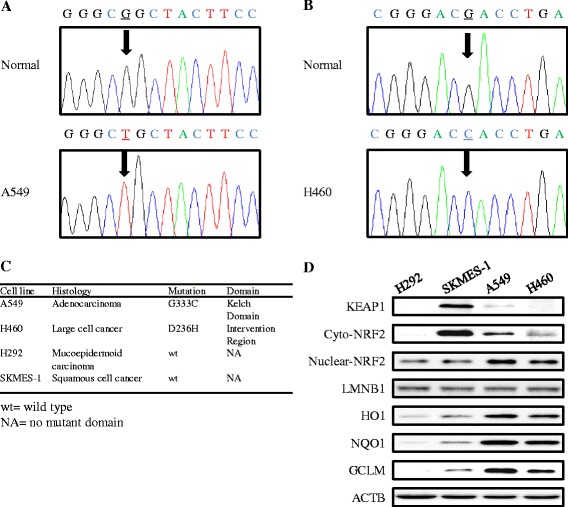
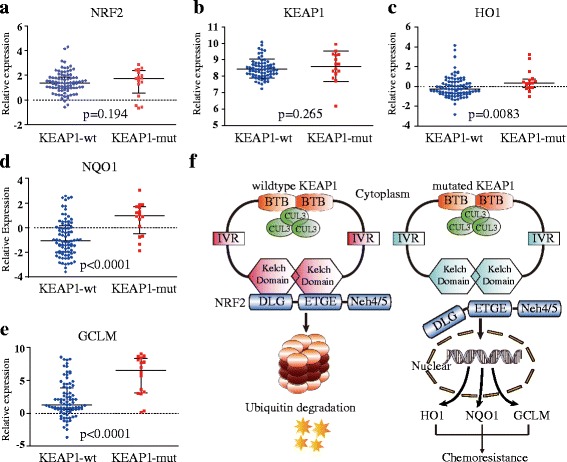
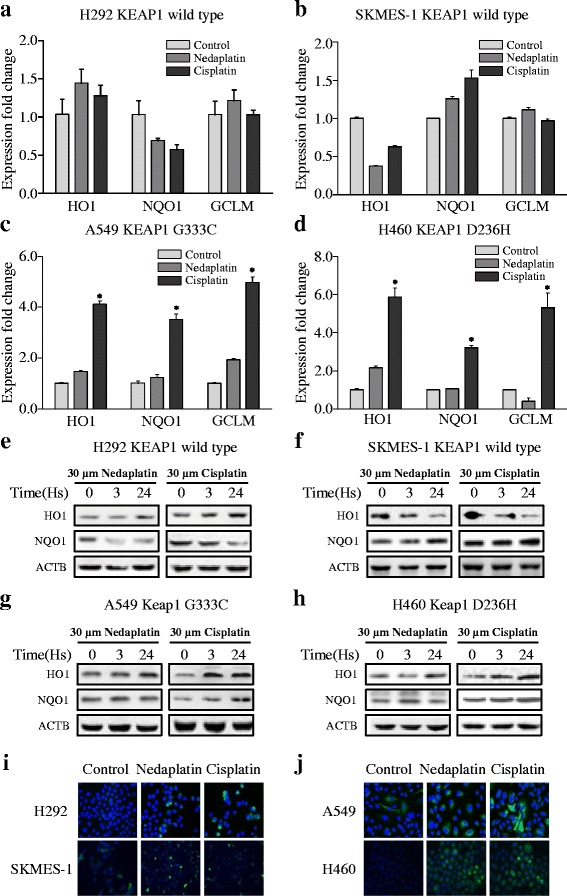
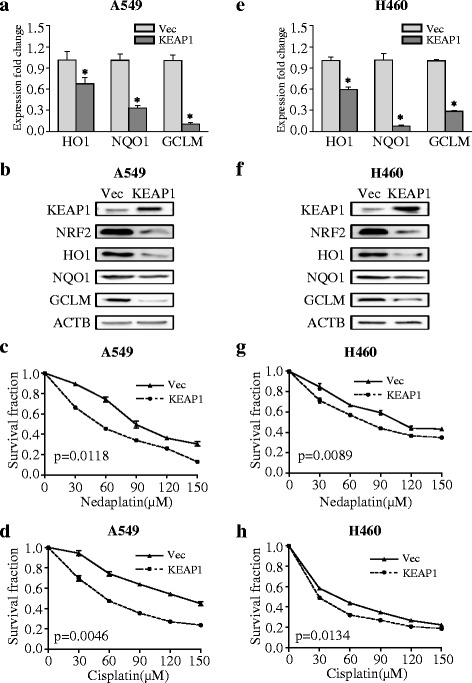
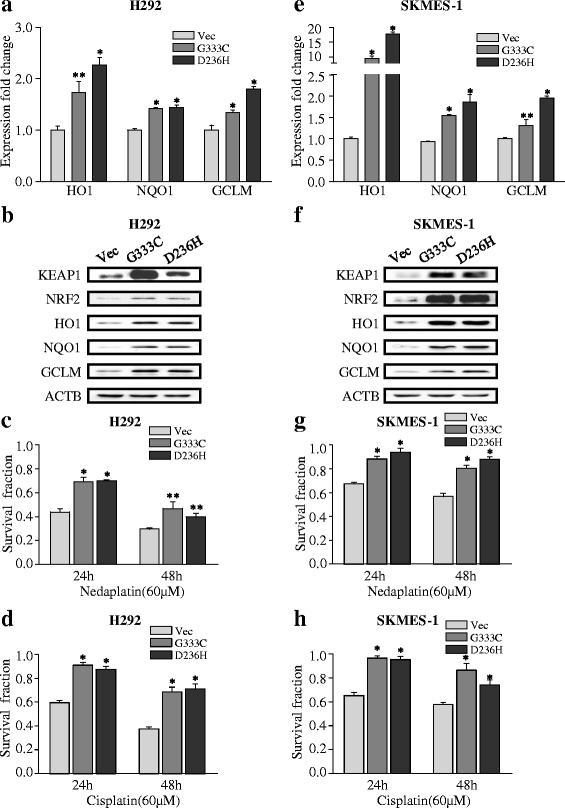
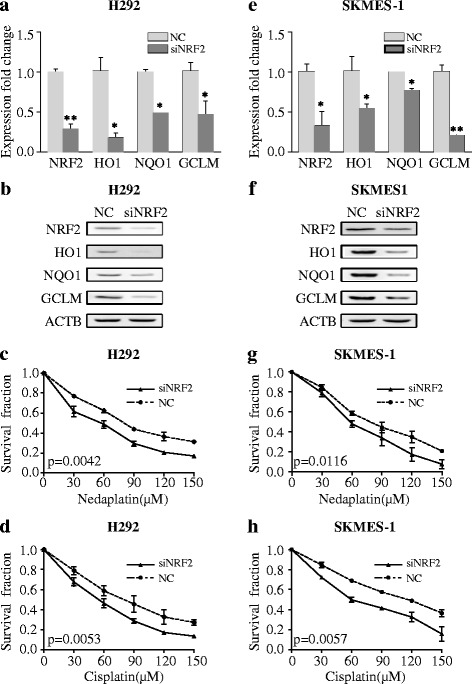
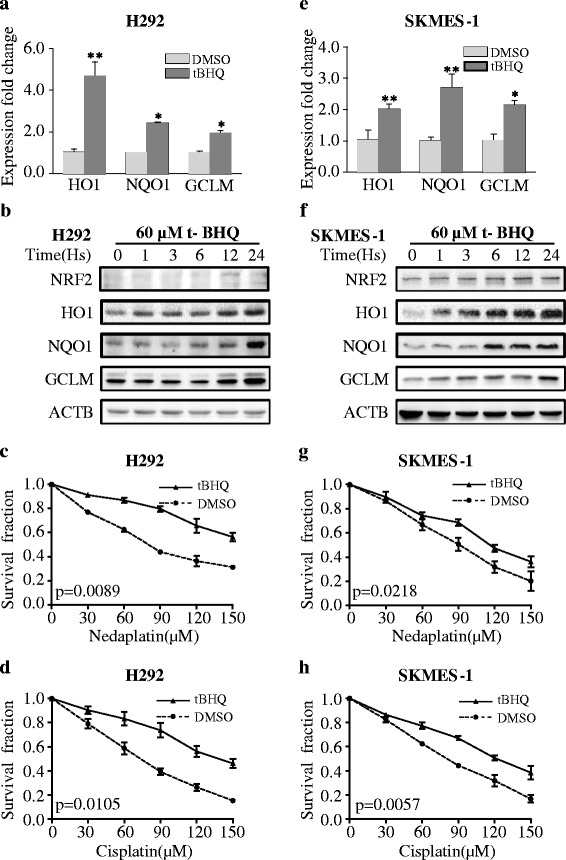
We found that platinum-based therapies modified the NRF2 signaling pathway differently in KEAP1-mutated non-small cell lung cancer (NSCLC) cell lines compared with wild-type KEAP1 cell lines. The reactive degree of NRF2 signaling also varies between nedaplatin and cisplatin. The modification of NRF2 or KEAP1 expression in NSCLC cell lines disrupted downstream gene expression and cell sensitivity to platinum-based drugs. Finally, gene expression data retrieved from The Cancer Genome Atlas (TCGA) consortium indicated that KEAP1 mutation significantly affects NRF2 signaling activity in patients with NSCLC.
Our findings suggest that NRF2 signaling plays an indispensable role in NSCLC cell sensitivity to platinum-based treatments and provides a rationale for using NRF2 as a specific biomarker for predicting which patients will be most likely to benefit from platinum-based treatment.
本研究的目的是评估铂类药物对具有或不具有 Kelch 样 ECH 相关蛋白 1(KEAP1)突变的非小细胞肺癌细胞系中核因子红细胞 2 样 2(NRF2)信号通路的影响,并确定 NRF2 和 KEAP1 在铂类药物治疗中的作用。
我们使用实时聚合酶链反应来评估相对信使核糖核酸(mRNA)表达,并使用蛋白质免疫印迹和免疫荧光测定法来评估蛋白质表达。小干扰核糖核酸和穿梭质粒用于调节 NRF2、野生型 KEAP1 和突变型 KEAP1 的表达。用细胞计数试剂盒-8 评估对铂类药物的药物敏感性。
我们发现,与野生型 KEAP1 细胞系相比,铂类疗法在 KEAP1 突变的非小细胞肺癌(NSCLC)细胞系中对 NRF2 信号通路的修饰不同。奈达铂和顺铂之间 NRF2 信号通路的反应程度也有所不同。NSCLC 细胞系中 NRF2 或 KEAP1 表达的改变破坏了下游基因表达和细胞对铂类药物的敏感性。最后,从癌症基因组图谱(TCGA)联盟检索到的基因表达数据表明,KEAP1 突变显著影响 NSCLC 患者的 NRF2 信号活性。
我们的研究结果表明,NRF2 信号通路在 NSCLC 细胞对铂类治疗的敏感性中起不可或缺的作用,并为将 NRF2 用作预测哪些患者最有可能从铂类治疗中获益的特异性生物标志物提供了理论依据。