Li Hongbin, Gumbiner Barry M
Department of Cell Biology, University of Virginia School of Medicine, Charlottesville, VA, 22908, USA.
Department of Pediatrics, Center for Developmental Biology and Regenerative Medicine, Seattle Children's Research Institute, University of Washington School of Medicine, 1900 9th Ave. Mailstop JMB-5, Seattle, WA, 98101, USA.
Mamm Genome. 2016 Dec;27(11-12):556-564. doi: 10.1007/s00335-016-9662-7. Epub 2016 Sep 6.
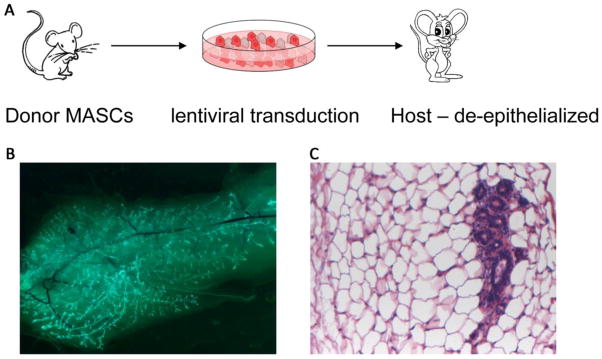
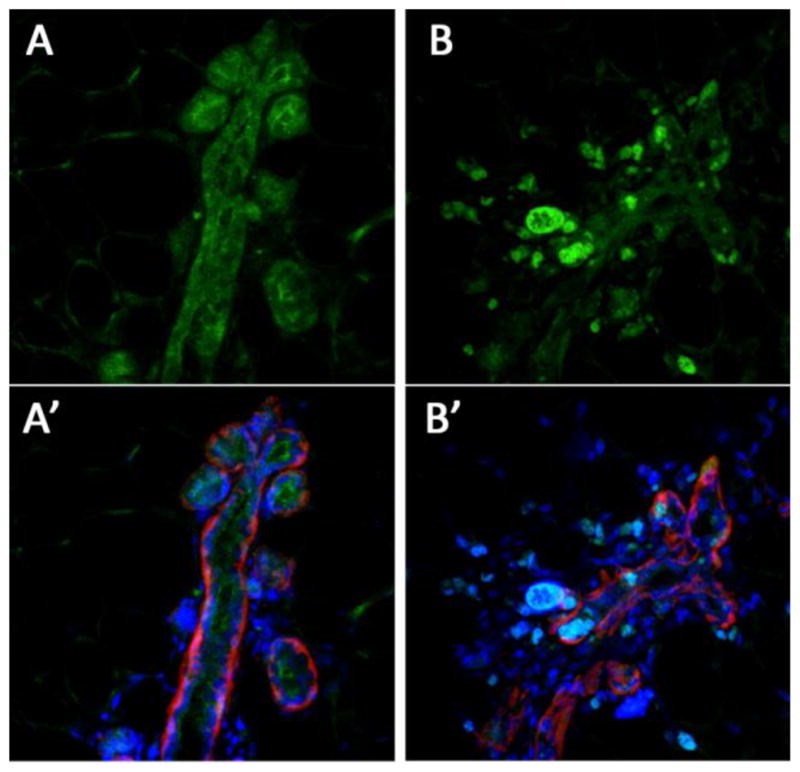
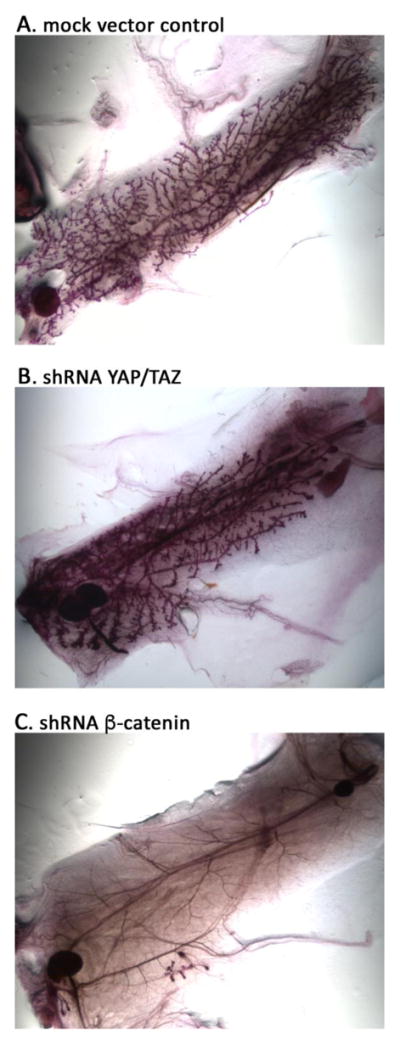
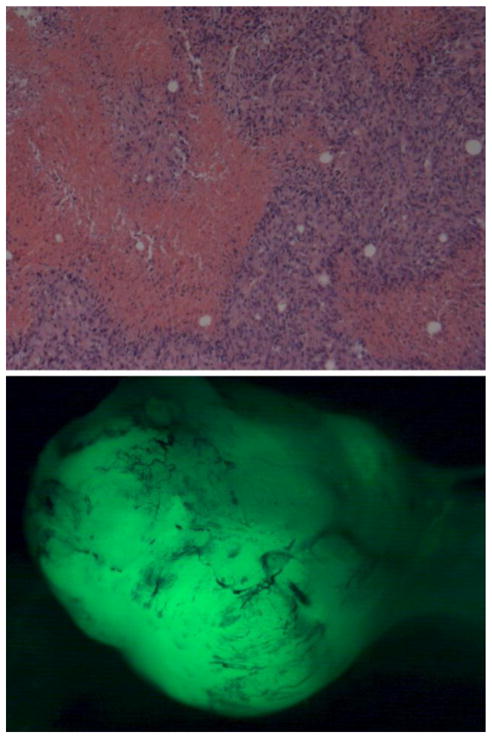
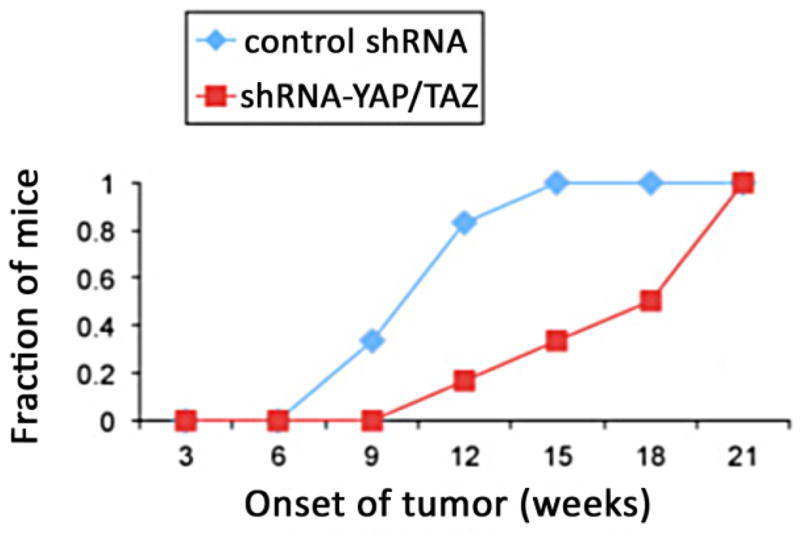
The Hippo-YAP pathway mediates organ size control, contact inhibition, and tumorigenesis. It is a kinase cascade that inhibits the nuclear localization and transcriptional activities of YAP and TAZ. E-cadherin, cell junctions, polarity proteins, and the merlin/NF2 tumor suppressor activate the pathway to inhibit YAP/TAZ activity, while growth factor signaling inhibits the pathway to activate YAP/TAZ in the nucleus. We examined its role in the development of mouse mammary glands and tumor formation using gland reconstitution by transplantation of genetically modified mammary stem cells (MaSCs). Knockdown of YAP and TAZ with shRNA in MaSCs did not inhibit gland reconstitution. In contrast, knockdown of β-catenin blocked gland reconstitution, consistent with the known role of Wnt signaling in mammary gland development. However, we find that Hippo signaling is involved in mammary tumor formation. Expression of a constitutively active form of YAP caused rapid formation of large tumors. Moreover, knockdown of YAP/TAZ slowed the development of tumors in polyoma middle T transgenic mice, a well-studied mammary tumor model involving activation of several signaling pathways. YAP accumulated in nuclei of mammary glands in ErbB2/EGFR-transgenic mice, suggesting that EGFR signaling affects YAP in vivo similar to cell culture. ErbB2/EGFR-transgenic mice develop mammary tumors in 7-8 months, but surprisingly, MaSCs from these mice did not form tumors when transplanted into host mice. Nonetheless, expression of dominant-negative Lats, which inhibits Hippo signaling, leads to tumor formation in ErbB2-transgenic mice, suggesting that Hippo signaling is involved in EGFR-induced mammary tumorigenesis.
Hippo-YAP信号通路介导器官大小控制、接触抑制和肿瘤发生。它是一个激酶级联反应,可抑制YAP和TAZ的核定位及转录活性。E-钙黏蛋白、细胞连接、极性蛋白以及默克基因(merlin)/神经纤维瘤2型(NF2)肿瘤抑制因子可激活该信号通路以抑制YAP/TAZ活性,而生长因子信号传导则抑制该信号通路,从而激活细胞核中的YAP/TAZ。我们通过移植基因改造的乳腺干细胞(MaSCs)进行腺体重建,研究了其在小鼠乳腺发育和肿瘤形成中的作用。在MaSCs中用短发夹RNA(shRNA)敲低YAP和TAZ并不抑制腺体重建。相反,敲低β-连环蛋白可阻断腺体重建,这与Wnt信号在乳腺发育中的已知作用一致。然而,我们发现Hippo信号传导参与乳腺肿瘤形成。组成型活性形式的YAP表达导致大肿瘤快速形成。此外,在多瘤病毒中间T转基因小鼠(一种对涉及多种信号通路激活的乳腺肿瘤模型进行了充分研究的小鼠)中,敲低YAP/TAZ减缓了肿瘤的发展。在ErbB2/表皮生长因子受体(EGFR)转基因小鼠的乳腺细胞核中YAP积累,这表明EGFR信号传导在体内对YAP的影响与细胞培养中相似。ErbB2/EGFR转基因小鼠在7 - 8个月时发生乳腺肿瘤,但令人惊讶的是,这些小鼠的MaSCs移植到宿主小鼠中时并未形成肿瘤。尽管如此,抑制Hippo信号传导的显性负性Lats表达导致ErbB2转基因小鼠发生肿瘤,这表明Hippo信号传导参与EGFR诱导的乳腺肿瘤发生。