Bayarsaikhan Enkhjargal, Bayarsaikhan Delger, Lee Jaesuk, Son Myeongjoo, Oh Seyeon, Moon Jeongsik, Park Hye-Jeong, Roshini Arivazhagan, Kim Seung U, Song Byoung-Joon, Jo Seung-Mook, Byun Kyunghee, Lee Bonghee
Center for Regenerative Medicine, Lee Gil Ya Cancer and Diabetes Institute, Gachon University, Incheon, Republic of Korea; Department of General Laboratory, National Cancer Center of Mongolia, Ulaanbaatar, Mongolia.
Center for Regenerative Medicine, Lee Gil Ya Cancer and Diabetes Institute, Gachon University, Incheon, Republic of Korea.
Int J Nanomedicine. 2016 Aug 23;10 Spec Iss(Spec Iss):281-92. doi: 10.2147/IJN.S95077. eCollection 2015.
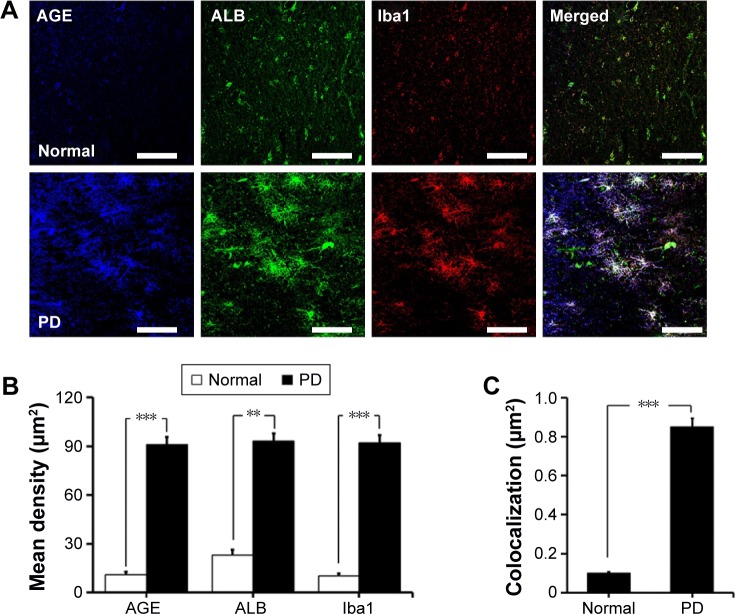
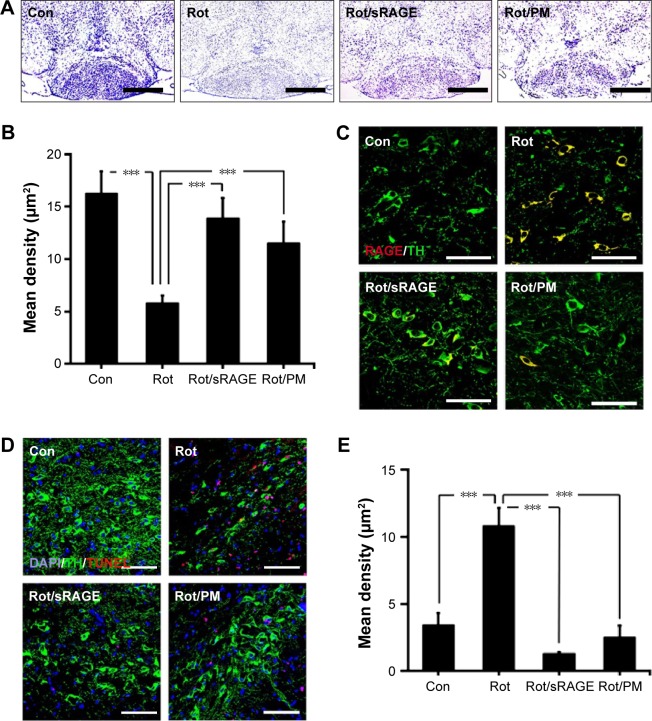
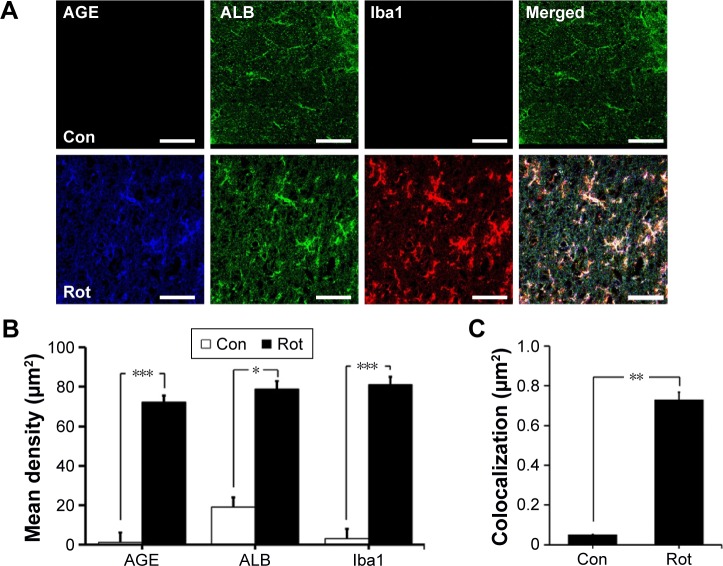
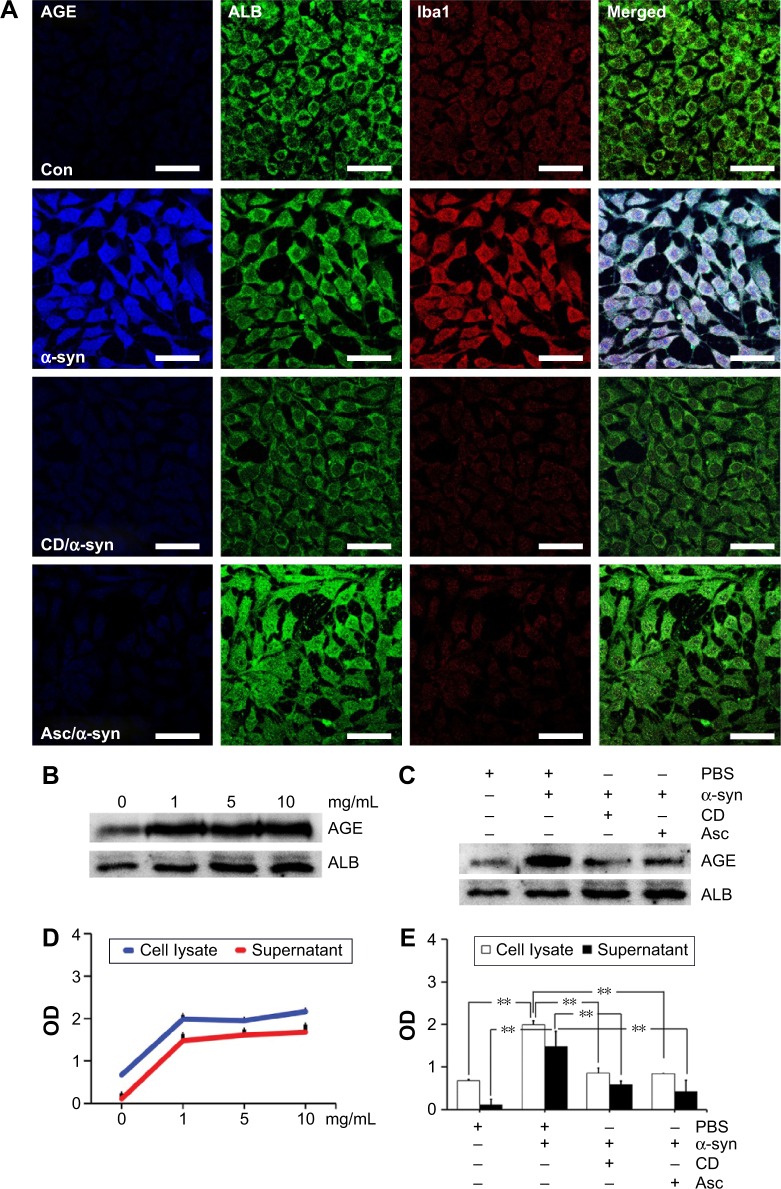
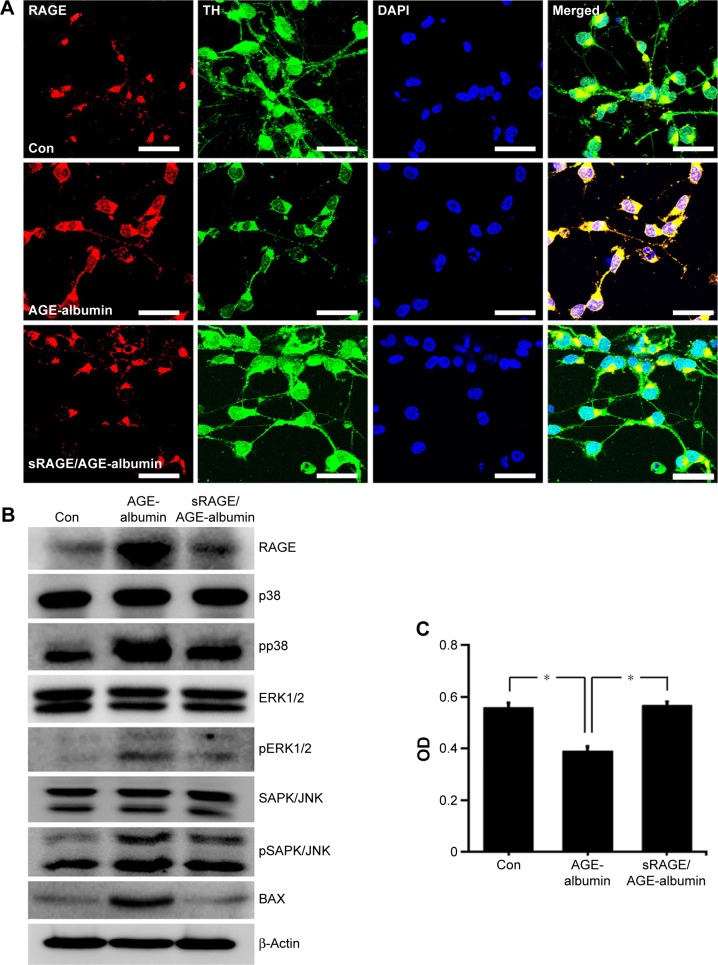
Advanced glycation end products (AGEs) are known to play an important role in the pathogenesis of neurodegenerative diseases, including Parkinson's disease (PD), by inducing protein aggregation and cross-link, formation of Lewy body, and neuronal death. In this study, we observed that AGE-albumin, the most abundant AGE product in the human PD brain, is synthesized in activated microglial cells and accumulates in the extracellular space. AGE-albumin synthesis in human-activated microglial cells is distinctly inhibited by ascorbic acid and cytochalasin treatment. Accumulated AGE-albumin upregulates the receptor to AGE, leading to apoptosis of human primary dopamine (DA) neurons. In animal experiments, we observed reduced DA neuronal cell death by treatment with soluble receptor to AGE. Our study provides evidence that activated microglial cells are one of the main contributors in AGE-albumin accumulation, deleterious to DA neurons in human and animal PD brains. Finally, activated microglial AGE-albumin could be used as a diagnostic and therapeutic biomarker with high sensitivity for neurodegenerative disorders, including PD.
晚期糖基化终末产物(AGEs)已知在神经退行性疾病(包括帕金森病(PD))的发病机制中发挥重要作用,其通过诱导蛋白质聚集和交联、路易小体形成以及神经元死亡来实现。在本研究中,我们观察到AGE-白蛋白(人类PD脑内最丰富的AGE产物)在活化的小胶质细胞中合成并积聚在细胞外空间。抗坏血酸和细胞松弛素处理可明显抑制人类活化小胶质细胞中AGE-白蛋白的合成。积聚的AGE-白蛋白上调AGE受体,导致人类原代多巴胺(DA)神经元凋亡。在动物实验中,我们观察到用可溶性AGE受体处理可减少DA神经元细胞死亡。我们的研究提供了证据,表明活化的小胶质细胞是AGE-白蛋白积聚的主要促成因素之一,对人类和动物PD脑内的DA神经元有害。最后,活化的小胶质细胞AGE-白蛋白可作为对包括PD在内的神经退行性疾病具有高敏感性的诊断和治疗生物标志物。