Hackett Jennifer L, Wang Xiaofei, Smith Brittny R, Macdonald Stuart J
Department of Molecular Biosciences, University of Kansas, 1200 Sunnyside Avenue, Lawrence, Kansas, 66045, United States of America.
Center for Computational Biology, University of Kansas, 2030 Becker Drive, Lawrence, Kansas, 66047, United States of America.
PLoS One. 2016 Sep 8;11(9):e0162573. doi: 10.1371/journal.pone.0162573. eCollection 2016.
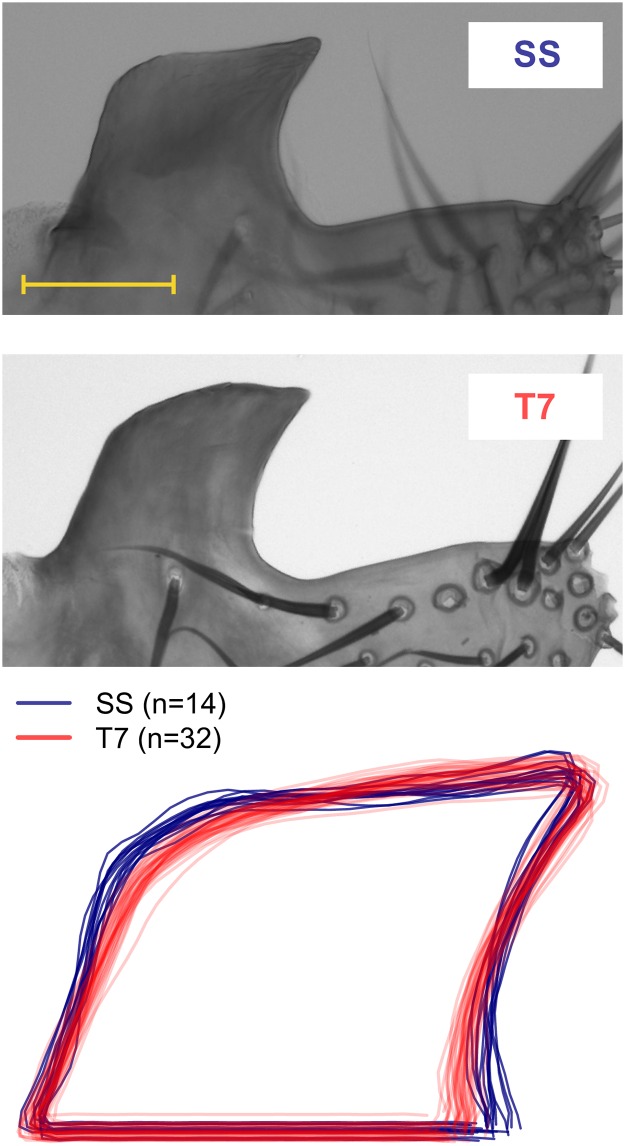
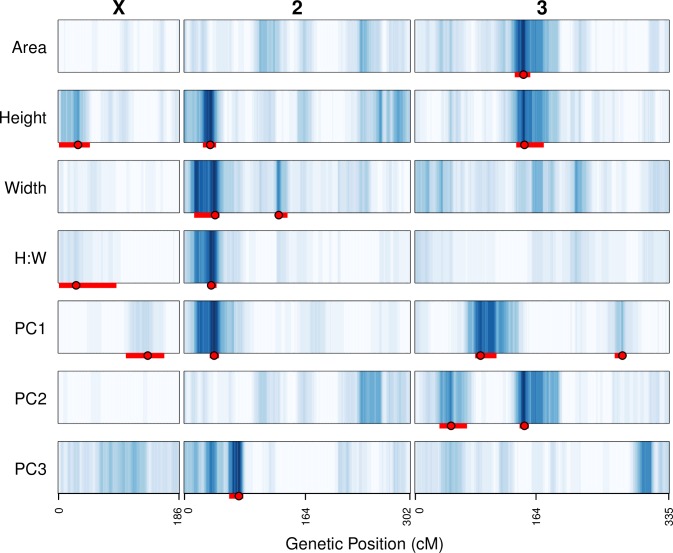
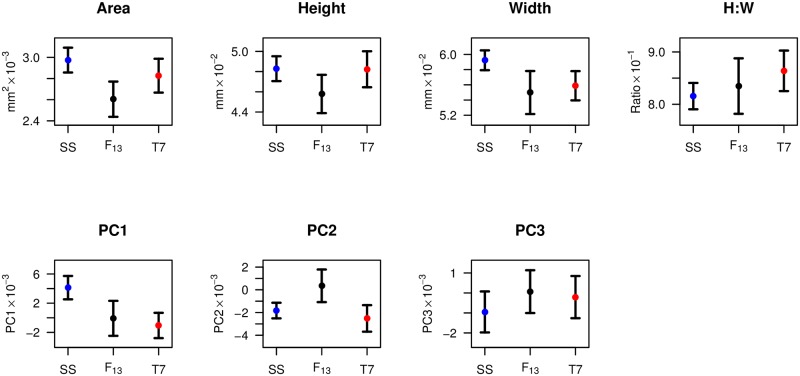
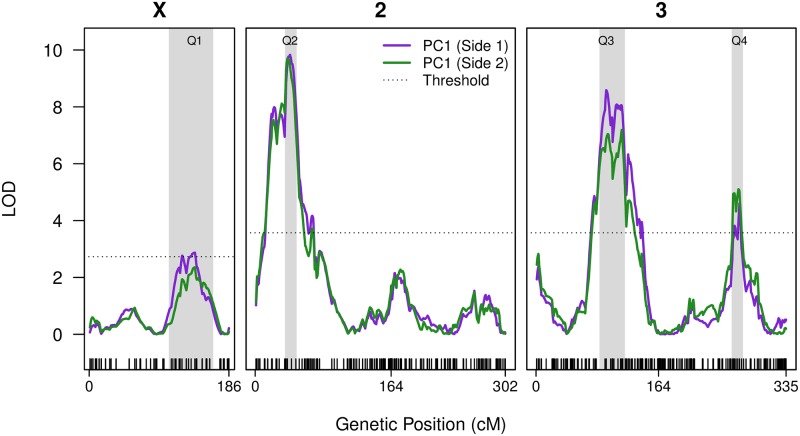
Closely-related, and otherwise morphologically similar insect species frequently show striking divergence in the shape and/or size of male genital structures, a phenomenon thought to be driven by sexual selection. Comparative interspecific studies can help elucidate the evolutionary forces acting on genital structures to drive this rapid differentiation. However, genetic dissection of sexual trait divergence between species is frequently hampered by the difficulty generating interspecific recombinants. Intraspecific variation can be leveraged to investigate the genetics of rapidly-evolving sexual traits, and here we carry out a genetic analysis of variation in the posterior lobe within D. melanogaster. The lobe is a male-specific process emerging from the genital arch of D. melanogaster and three closely-related species, is essential for copulation, and shows radical divergence in form across species. There is also abundant variation within species in the shape and size of the lobe, and while this variation is considerably more subtle than that seen among species, it nonetheless provides the raw material for QTL mapping. We created an advanced intercross population from a pair of phenotypically-different inbred strains, and after phenotyping and genotyping-by-sequencing the recombinants, mapped several QTL contributing to various measures of lobe morphology. The additional generations of crossing over in our mapping population led to QTL intervals that are smaller than is typical for an F2 mapping design. The intervals we map overlap with a pair of lobe QTL we previously identified in an independent mapping cross, potentially suggesting a level of shared genetic control of trait variation. Our QTL additionally implicate a suite of genes that have been shown to contribute to the development of the posterior lobe. These loci are strong candidates to harbor naturally-segregating sites contributing to phenotypic variation within D. melanogaster, and may also be those contributing to divergence in lobe morphology between species.
亲缘关系密切且形态上相似的昆虫物种,在雄性生殖器结构的形状和/或大小上常常表现出显著差异,这一现象被认为是由性选择驱动的。种间比较研究有助于阐明作用于生殖器结构以推动这种快速分化的进化力量。然而,物种间性状差异的遗传剖析常常因难以产生种间重组体而受阻。种内变异可用于研究快速进化的性状的遗传学,在此我们对黑腹果蝇后叶的变异进行了遗传分析。后叶是从黑腹果蝇及其三个亲缘关系密切的物种的生殖弓上长出的雄性特异性结构,对交配至关重要,且在不同物种间形态差异极大。在物种内部,后叶的形状和大小也存在丰富变异,虽然这种变异比物种间的变异要细微得多,但它仍为数量性状位点(QTL)定位提供了原材料。我们从一对表型不同的近交系中创建了一个高级杂交群体,在对重组体进行表型分析和测序基因分型后,定位了几个影响后叶形态各种指标的QTL。我们的定位群体中额外的几代杂交导致QTL区间比典型的F2定位设计更小。我们定位的区间与我们之前在一个独立的定位杂交中鉴定出的一对后叶QTL重叠,这可能表明性状变异存在一定程度的共享遗传控制。我们的QTL还涉及一组已被证明对后叶发育有贡献的基因。这些位点很可能包含导致黑腹果蝇内部表型变异的自然分离位点,也可能是导致不同物种间后叶形态差异的位点。