Collaborative Innovation Center of Chemistry for Energy Materials, State Key Laboratory for Physical Chemistry of Solid Surfaces, and Engineering Research Center for Nano-Preparation Technology of Fujian Province, College of Chemistry and Chemical Engineering, Xiamen University, 422 Siming South Road, Xiamen 361005, China.
Nanoscience Center, Department of Chemistry, University of Jyväskylä, Box 35, 40014 Jyväskylä, Finland.
Nat Commun. 2016 Sep 9;7:12809. doi: 10.1038/ncomms12809.
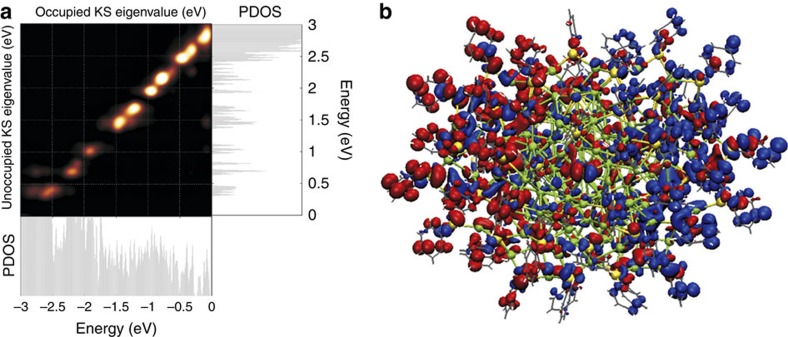
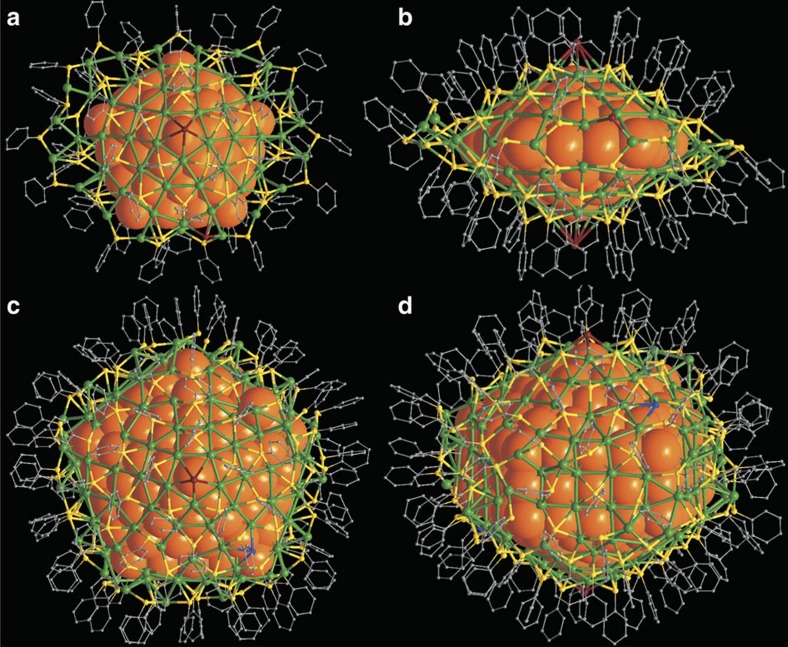
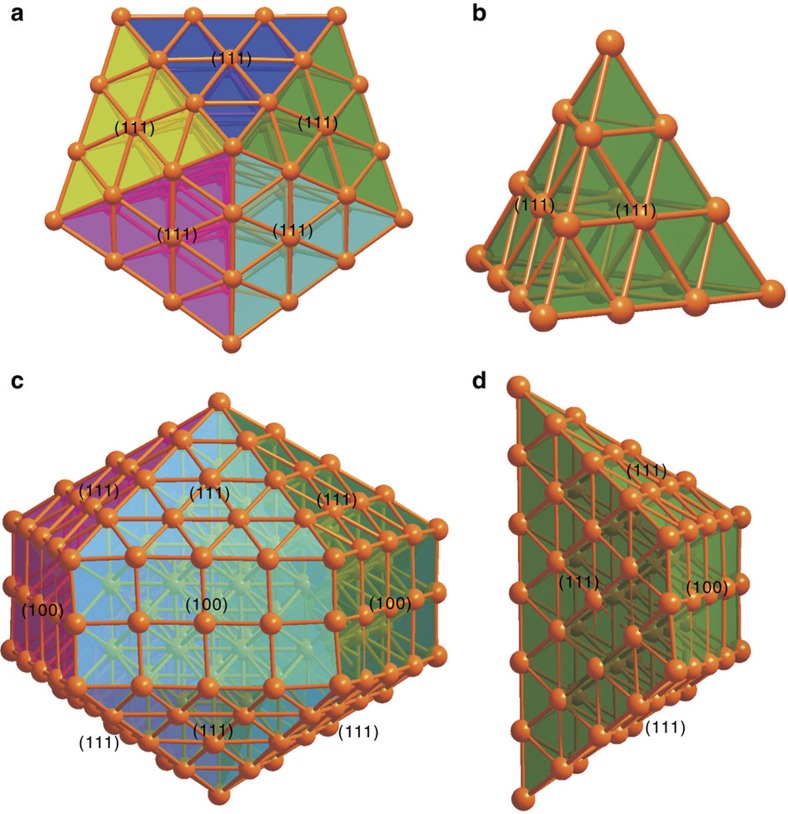
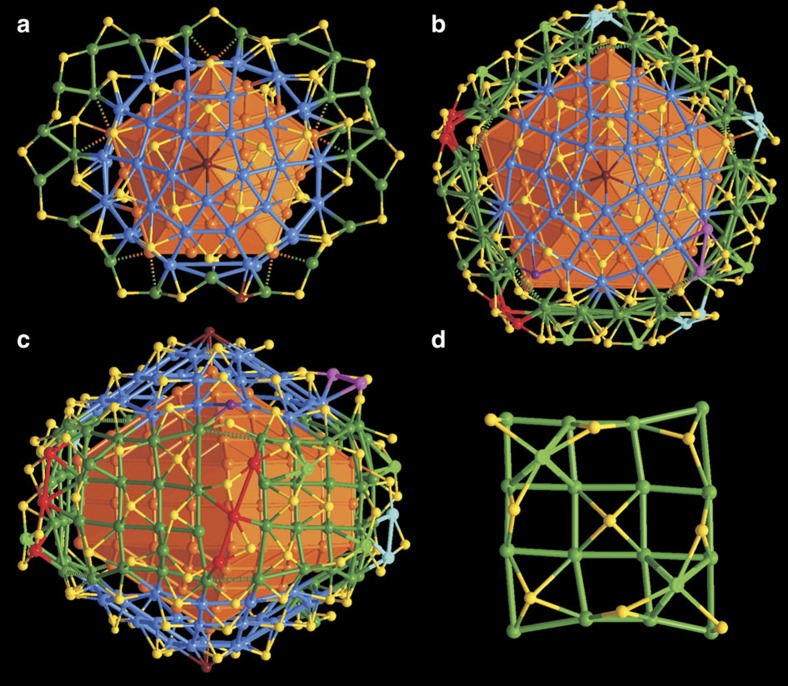
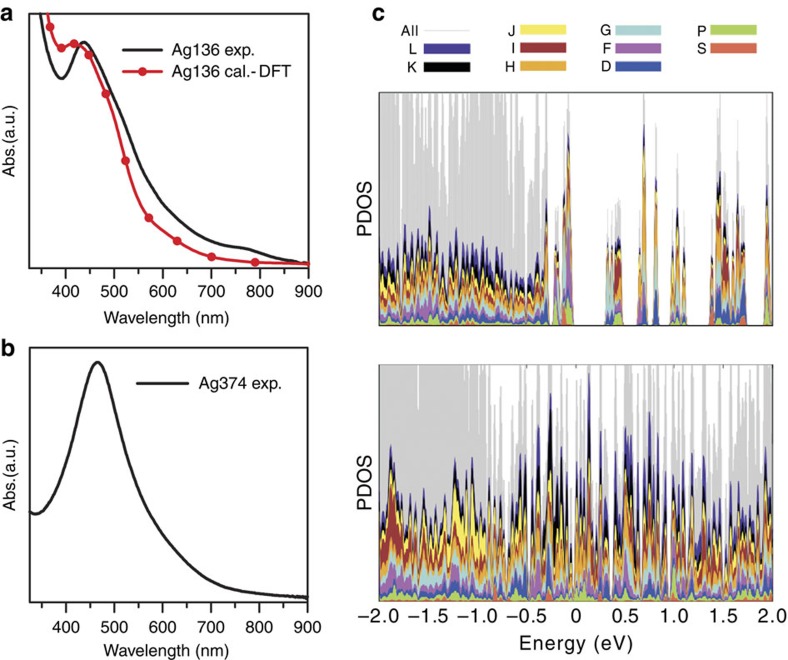
Determining the structures of nanoparticles at atomic resolution is vital to understand their structure-property correlations. Large metal nanoparticles with core diameter beyond 2 nm have, to date, eluded characterization by single-crystal X-ray analysis. Here we report the chemical syntheses and structures of two giant thiolated Ag nanoparticles containing 136 and 374 Ag atoms (that is, up to 3 nm core diameter). As the largest thiolated metal nanoparticles crystallographically determined so far, these Ag nanoparticles enter the truly metallic regime with the emergence of surface plasmon resonance. As miniatures of fivefold twinned nanostructures, these structures demonstrate a subtle distortion within fivefold twinned nanostructures of face-centred cubic metals. The Ag nanoparticles reported in this work serve as excellent models to understand the detailed structure distortion within twinned metal nanostructures and also how silver nanoparticles can span from the molecular to the metallic regime.
确定纳米粒子的原子分辨率结构对于理解其结构-性能相关性至关重要。迄今为止,核心直径超过 2nm 的大型金属纳米粒子一直无法通过单晶 X 射线分析进行表征。在这里,我们报告了两种含有 136 和 374 个银原子(即,高达 3nm 核心直径)的巨大硫醇化银纳米粒子的化学合成和结构。作为迄今为止晶体学确定的最大硫醇化金属纳米粒子,这些银纳米粒子随着表面等离子体共振的出现进入真正的金属状态。作为五重孪晶纳米结构的缩影,这些结构表现出面心立方金属的五重孪晶纳米结构内的微妙扭曲。本工作中报道的银纳米粒子可用作理解孪晶金属纳米结构内详细结构扭曲以及银纳米粒子如何从分子状态跨越到金属状态的优秀模型。