Park Hee-Soo, Chow Eve W L, Fu Ci, Soderblom Erik J, Moseley M Arthur, Heitman Joseph, Cardenas Maria E
Department of Molecular Genetics and Microbiology, Duke University Medical Center, Durham, North Carolina, United States of America.
Duke Proteomics and Metabolomics Core Facility, Center for Genomic and Computational Biology, Duke University, Durham, North Carolina, United States of America.
PLoS Pathog. 2016 Sep 9;12(9):e1005873. doi: 10.1371/journal.ppat.1005873. eCollection 2016 Sep.
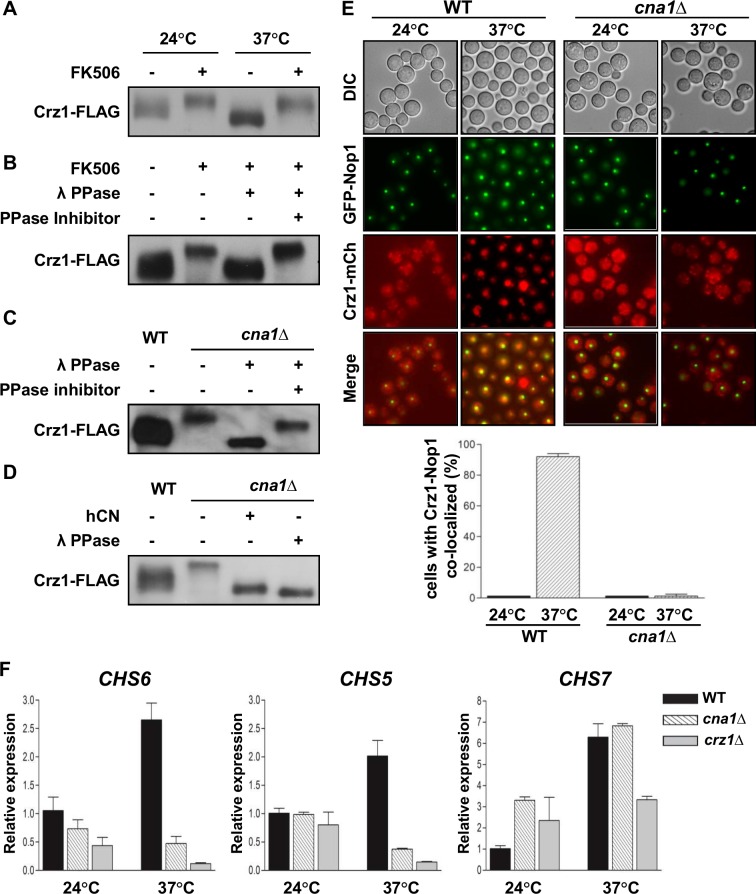
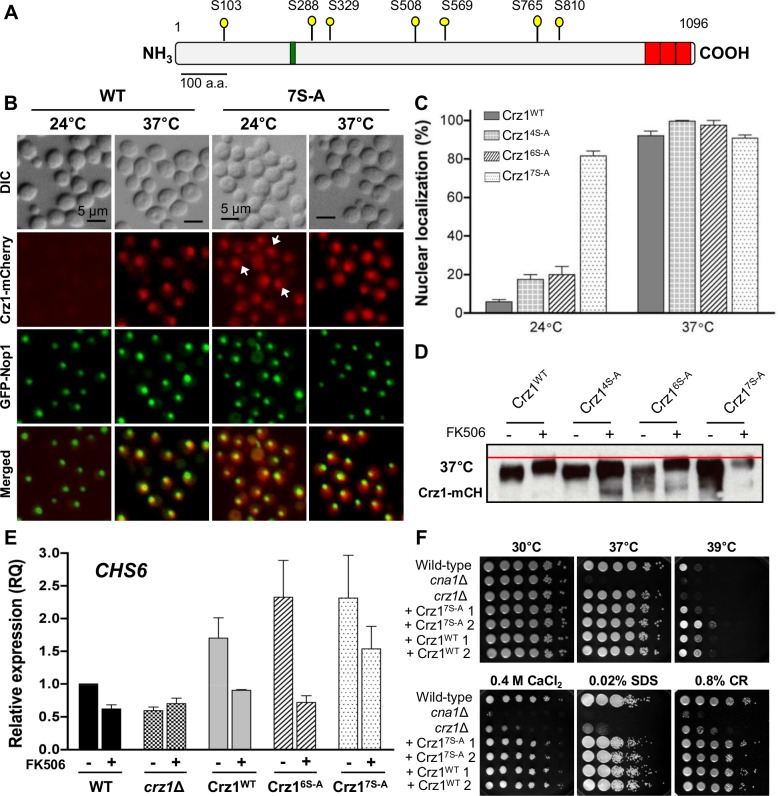
Calcineurin governs stress survival, sexual differentiation, and virulence of the human fungal pathogen Cryptococcus neoformans. Calcineurin is activated by increased Ca2+ levels caused by stress, and transduces signals by dephosphorylating protein substrates. Herein, we identified and characterized calcineurin substrates in C. neoformans by employing phosphoproteomic TiO2 enrichment and quantitative mass spectrometry. The identified targets include the transactivator Crz1 as well as novel substrates whose functions are linked to P-bodies/stress granules (PBs/SGs) and mRNA translation and decay, such as Pbp1 and Puf4. We show that Crz1 is a bona fide calcineurin substrate, and Crz1 localization and transcriptional activity are controlled by calcineurin. We previously demonstrated that thermal and other stresses trigger calcineurin localization to PBs/SGs. Several calcineurin targets localized to PBs/SGs, including Puf4 and Pbp1, contribute to stress resistance and virulence individually or in conjunction with Crz1. Moreover, Pbp1 is also required for sexual development. Genetic epistasis analysis revealed that Crz1 and the novel targets Lhp1, Puf4, and Pbp1 function in a branched calcineurin pathway that orchestrates stress survival and virulence. These findings support a model whereby calcineurin controls stress and virulence, at the transcriptional level via Crz1, and post-transcriptionally by localizing to PBs/SGs and acting on targets involved in mRNA metabolism. The calcineurin targets identified in this study share little overlap with known calcineurin substrates, with the exception of Crz1. In particular, the mRNA binding proteins and PBs/SGs residents comprise a cohort of novel calcineurin targets that have not been previously linked to calcineurin in mammals or in Saccharomyces cerevisiae. This study suggests either extensive evolutionary rewiring of the calcineurin pathway, or alternatively that these novel calcineurin targets have yet to be characterized as calcineurin targets in other organisms. These findings further highlight C. neoformans as an outstanding model to define calcineurin-responsive virulence networks as targets for antifungal therapy.
钙调神经磷酸酶调控人类真菌病原体新生隐球菌的应激存活、性别分化和毒力。钙调神经磷酸酶由应激引起的细胞内钙离子水平升高激活,并通过使蛋白质底物去磷酸化来转导信号。在此,我们通过磷酸化蛋白质组学二氧化钛富集和定量质谱法鉴定并表征了新生隐球菌中的钙调神经磷酸酶底物。鉴定出的靶点包括转录激活因子Crz1以及功能与P小体/应激颗粒(PBs/SGs)和mRNA翻译与降解相关的新底物,如Pbp1和Puf4。我们发现Crz1是真正的钙调神经磷酸酶底物,并且Crz1的定位和转录活性受钙调神经磷酸酶控制。我们之前证明热应激和其他应激会触发钙调神经磷酸酶定位到PBs/SGs。几个定位于PBs/SGs的钙调神经磷酸酶靶点,包括Puf4和Pbp1,单独或与Crz1协同作用,有助于抗逆性和毒力。此外,Pbp1也是有性发育所必需的。遗传上位性分析表明,Crz1和新靶点Lhp1、Puf4和Pbp1在一个分支的钙调神经磷酸酶途径中发挥作用,该途径协调应激存活和毒力。这些发现支持了一种模型,即钙调神经磷酸酶通过Crz1在转录水平上控制应激和毒力,并通过定位到PBs/SGs并作用于参与mRNA代谢的靶点在转录后发挥作用。本研究中鉴定出的钙调神经磷酸酶靶点与已知的钙调神经磷酸酶底物几乎没有重叠,Crz1除外。特别是,mRNA结合蛋白和PBs/SGs驻留蛋白构成了一组新的钙调神经磷酸酶靶点,这些靶点以前在哺乳动物或酿酒酵母中尚未与钙调神经磷酸酶联系起来。这项研究表明,要么是钙调神经磷酸酶途径发生了广泛的进化重排,要么是这些新的钙调神经磷酸酶靶点在其他生物体中尚未被鉴定为钙调神经磷酸酶靶点。这些发现进一步突出了新生隐球菌作为定义钙调神经磷酸酶反应性毒力网络以作为抗真菌治疗靶点的优秀模型。