Senís Elena, Mockenhaupt Stefan, Rupp Daniel, Bauer Tobias, Paramasivam Nagarajan, Knapp Bettina, Gronych Jan, Grosse Stefanie, Windisch Marc P, Schmidt Florian, Theis Fabian J, Eils Roland, Lichter Peter, Schlesner Matthias, Bartenschlager Ralf, Grimm Dirk
Department of Infectious Diseases, Virology, Heidelberg University Hospital, Cluster of Excellence CellNetworks, Heidelberg, 69120, Germany.
BioQuant Center, University of Heidelberg, Heidelberg, 69120, Germany.
Nucleic Acids Res. 2017 Jan 9;45(1):e3. doi: 10.1093/nar/gkw805. Epub 2016 Sep 9.
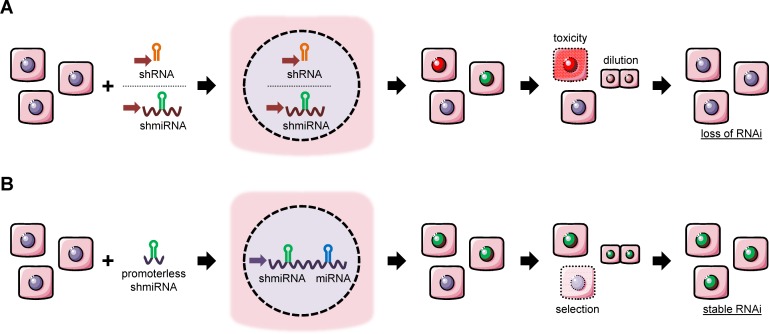
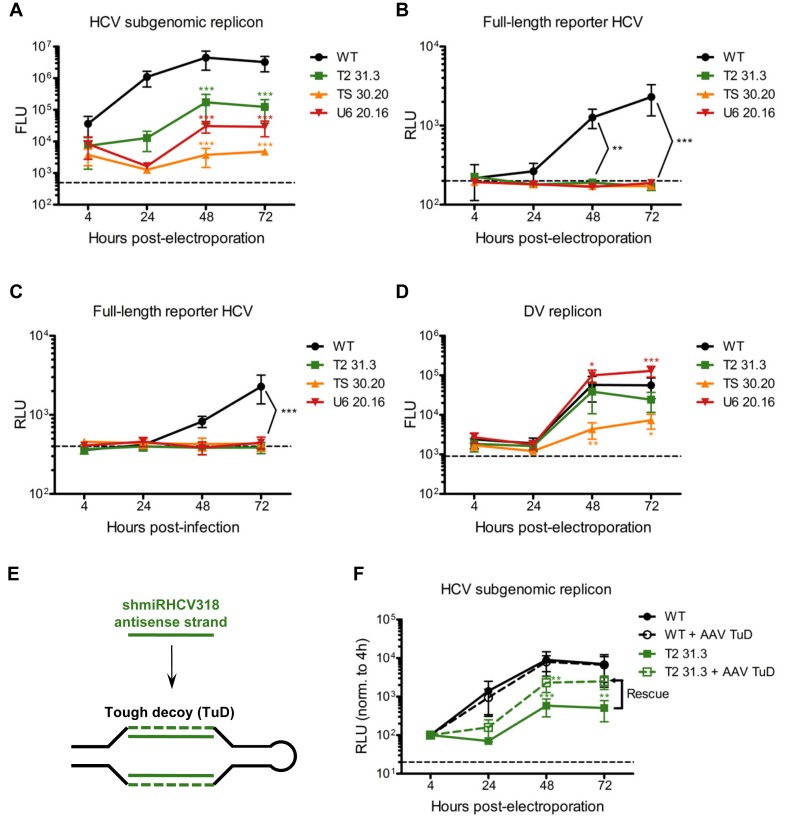
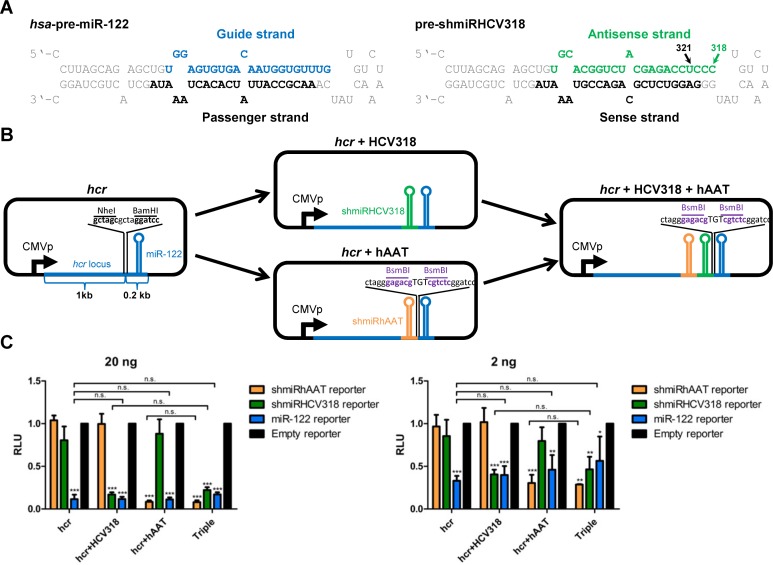
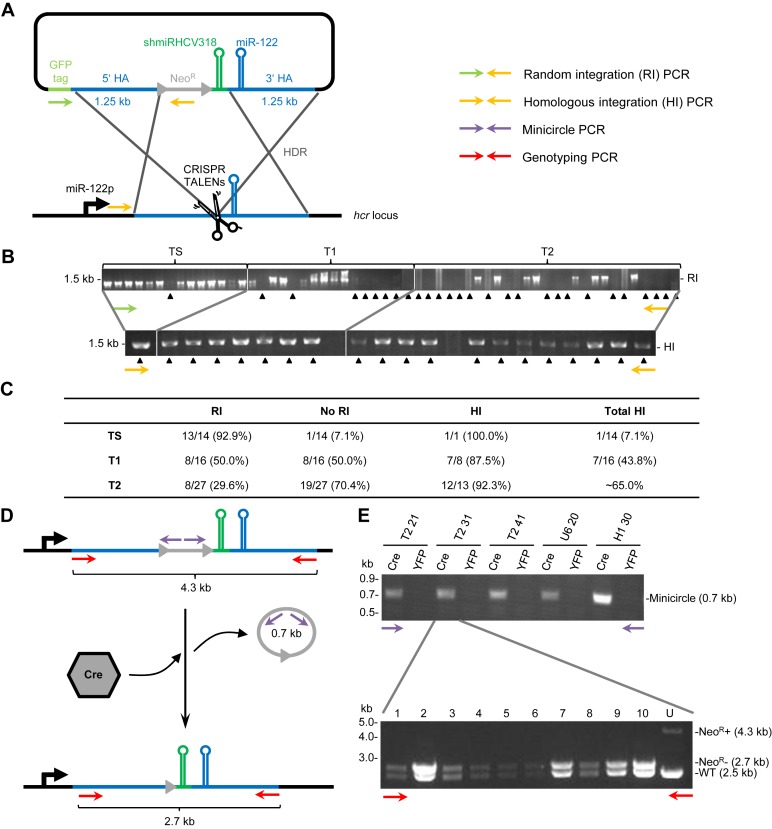
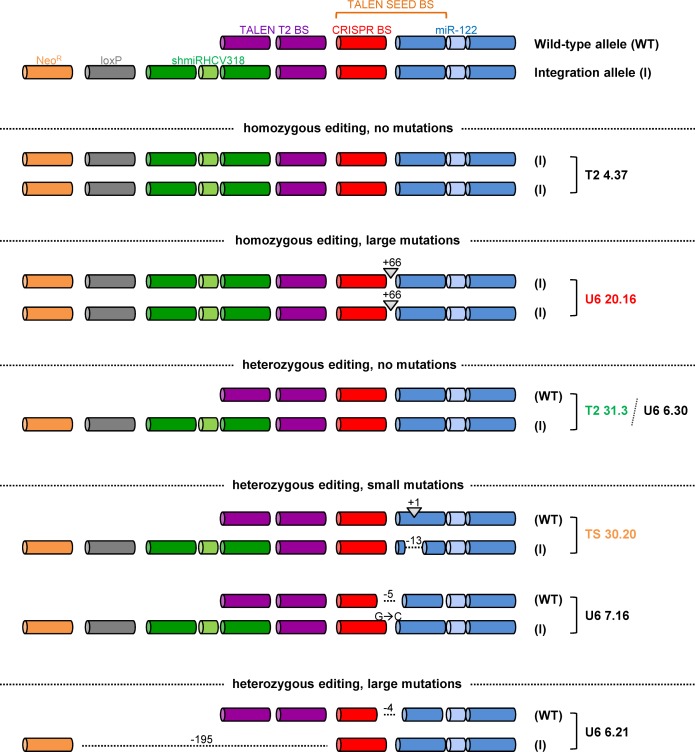
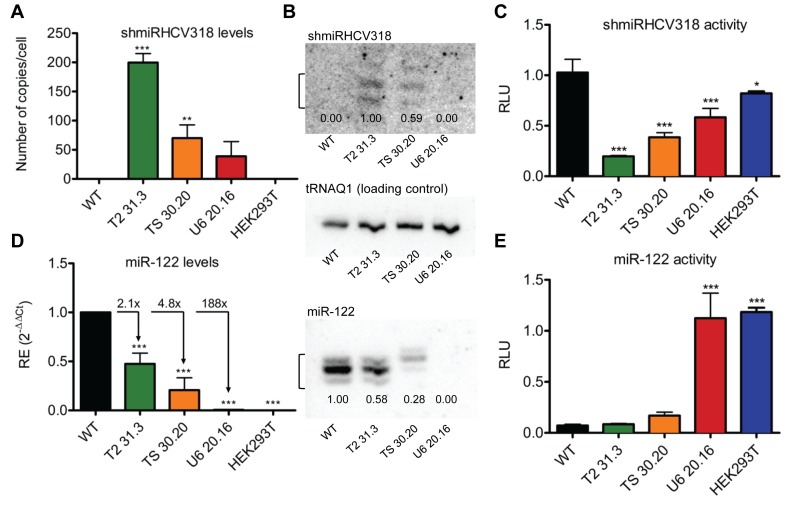
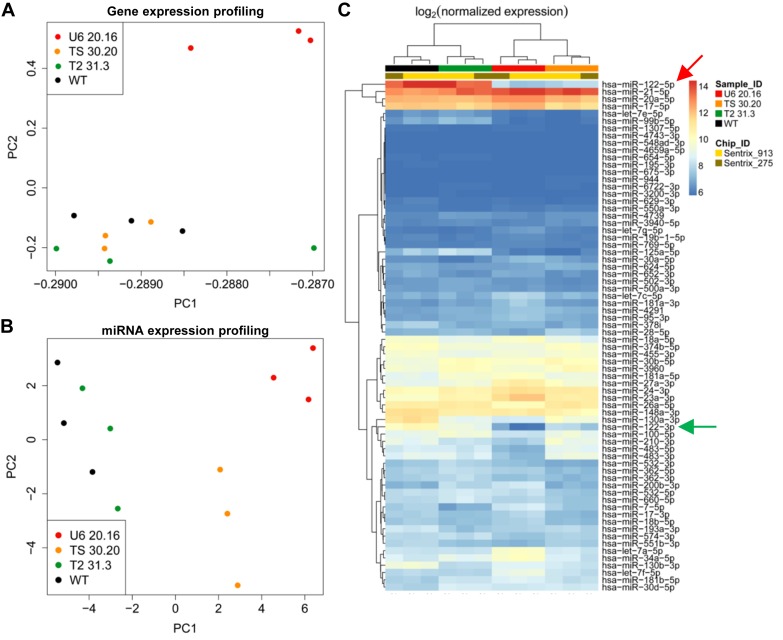
Successful RNAi applications depend on strategies allowing robust and persistent expression of minimal gene silencing triggers without perturbing endogenous gene expression. Here, we propose a novel avenue which is integration of a promoterless shmiRNA, i.e. a shRNA embedded in a micro-RNA (miRNA) scaffold, into an engineered genomic miRNA locus. For proof-of-concept, we used TALE or CRISPR/Cas9 nucleases to site-specifically integrate an anti-hepatitis C virus (HCV) shmiRNA into the liver-specific miR-122/hcr locus in hepatoma cells, with the aim to obtain cellular clones that are genetically protected against HCV infection. Using reporter assays, Northern blotting and qRT-PCR, we confirmed anti-HCV shmiRNA expression as well as miR-122 integrity and functionality in selected cellular progeny. Moreover, we employed a comprehensive battery of PCR, cDNA/miRNA profiling and whole genome sequencing analyses to validate targeted integration of a single shmiRNA molecule at the expected position, and to rule out deleterious effects on the genomes or transcriptomes of the engineered cells. Importantly, a subgenomic HCV replicon and a full-length reporter virus, but not a Dengue virus control, were significantly impaired in the modified cells. Our original combination of DNA engineering and RNAi expression technologies benefits numerous applications, from miRNA, genome and transgenesis research, to human gene therapy.
成功的RNA干扰应用依赖于能够在不干扰内源性基因表达的情况下,实现最小基因沉默触发因子的强劲且持续表达的策略。在此,我们提出了一条新途径,即将无启动子的短发夹微小RNA(shmiRNA,即嵌入微小RNA(miRNA)支架中的短发夹RNA)整合到工程化的基因组miRNA位点中。为了验证概念,我们使用转录激活样效应因子核酸酶(TALE)或CRISPR/Cas9核酸酶将抗丙型肝炎病毒(HCV)的shmiRNA位点特异性地整合到肝癌细胞中肝脏特异性的miR-122/hcr位点,目的是获得对HCV感染具有基因保护作用的细胞克隆。通过报告基因检测、Northern印迹和定量逆转录聚合酶链反应(qRT-PCR),我们在选定的细胞后代中证实了抗HCV shmiRNA的表达以及miR-122的完整性和功能。此外,我们采用了一系列综合的聚合酶链反应(PCR)、互补DNA/miRNA谱分析和全基因组测序分析,以验证单个shmiRNA分子在预期位置的靶向整合,并排除对工程细胞基因组或转录组的有害影响。重要的是,亚基因组HCV复制子和全长报告病毒,但登革热病毒对照则不然,在修饰细胞中受到显著抑制。我们将DNA工程和RNA干扰表达技术的原始组合有利于众多应用,从miRNA、基因组和转基因研究到人类基因治疗。