Ypma Rolf J F, Bullmore Edward T
Brain Mapping Unit, Department of Psychiatry, University of Cambridge, Cambridge, United Kingdom.
Hughes Hall, Cambridge, United Kingdom.
PLoS Comput Biol. 2016 Sep 12;12(9):e1005104. doi: 10.1371/journal.pcbi.1005104. eCollection 2016 Sep.
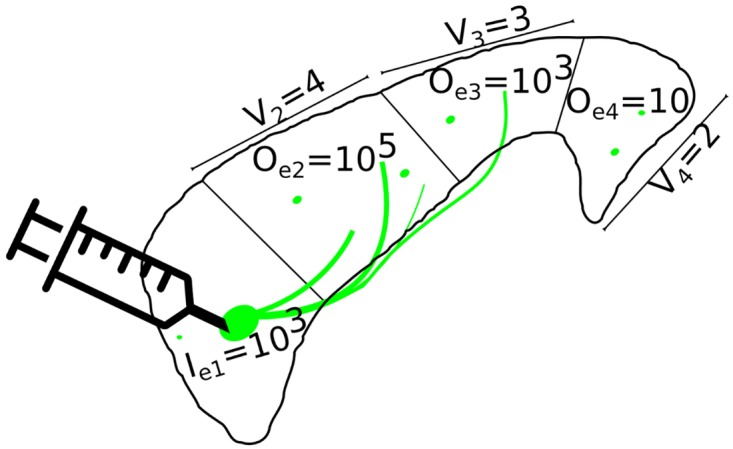
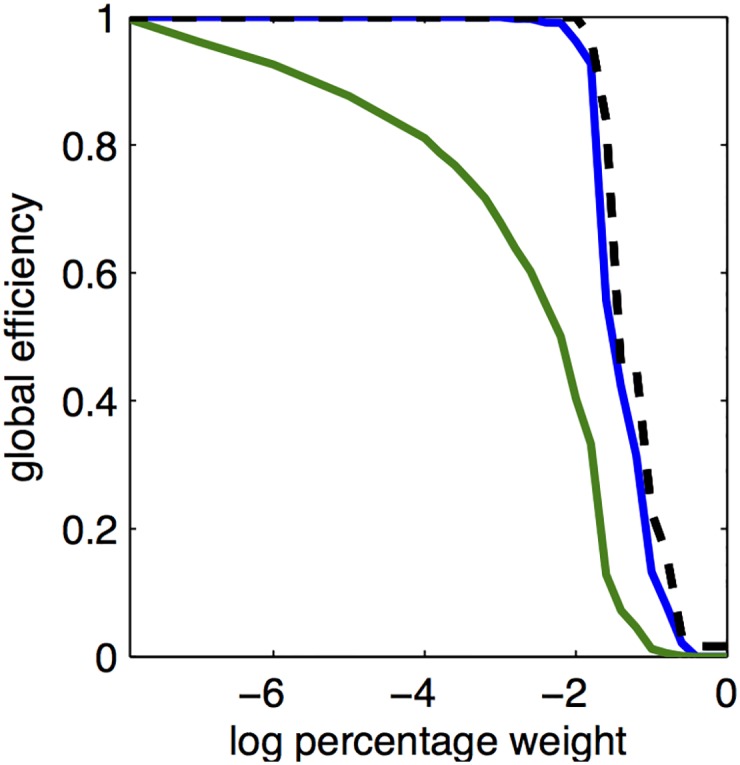
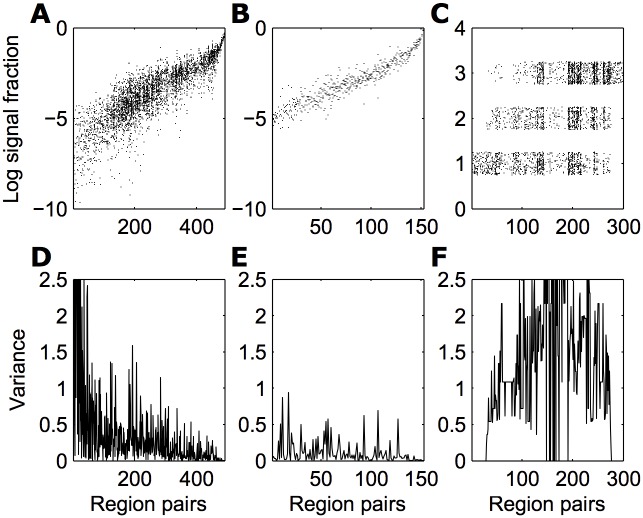
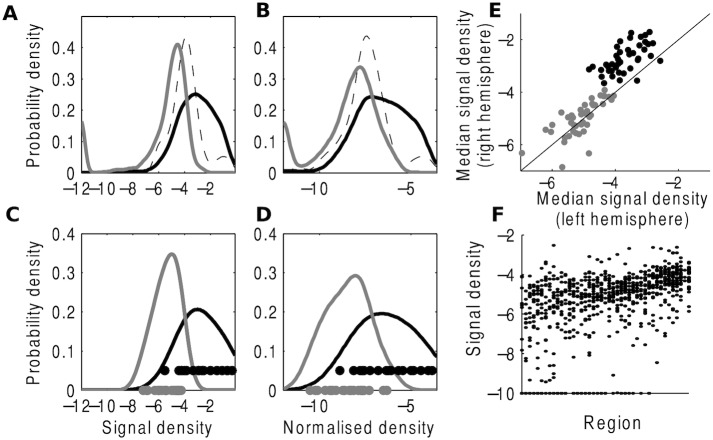
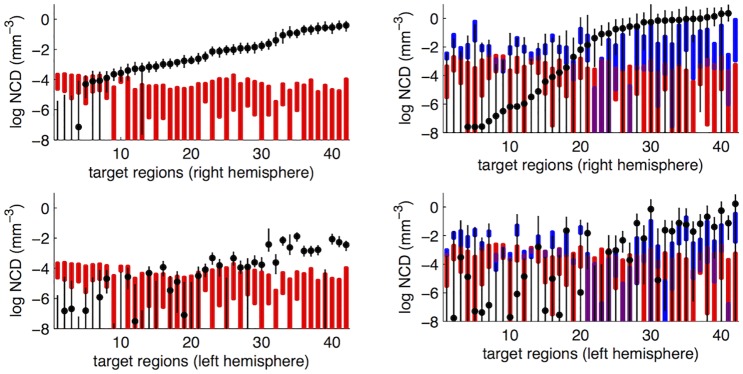
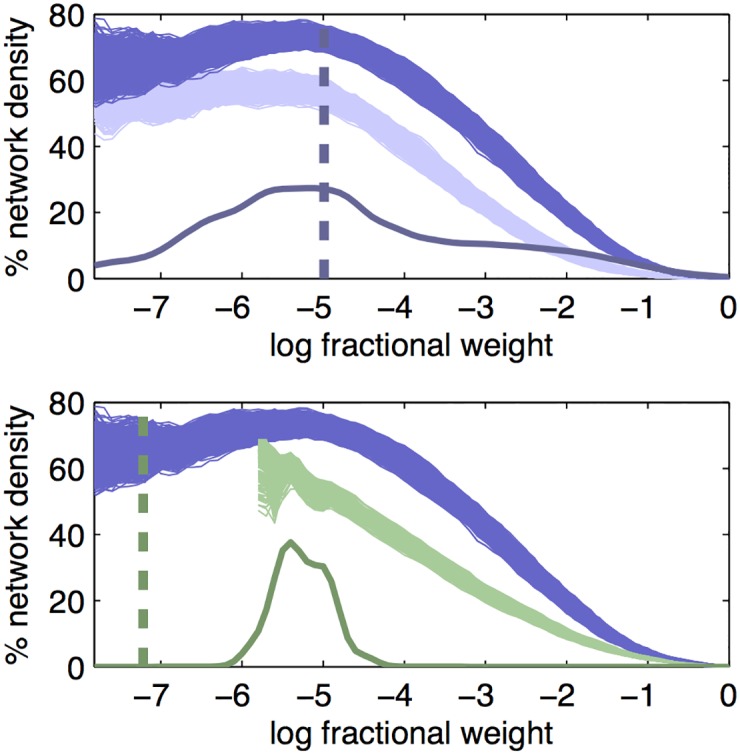
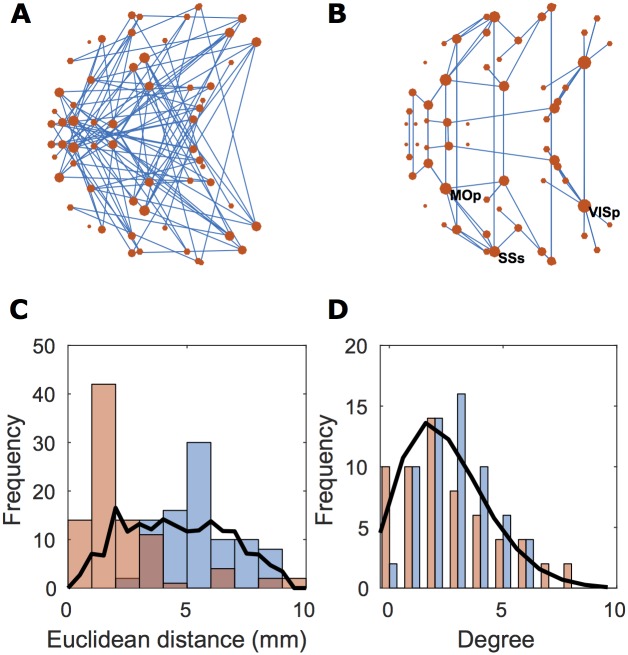
Anatomical tract tracing methods are the gold standard for estimating the weight of axonal connectivity between a pair of pre-defined brain regions. Large studies, comprising hundreds of experiments, have become feasible by automated methods. However, this comes at the cost of positive-mean noise making it difficult to detect weak connections, which are of particular interest as recent high resolution tract-tracing studies of the macaque have identified many more weak connections, adding up to greater connection density of cortical networks, than previously recognized. We propose a statistical framework that estimates connectivity weights and credibility intervals from multiple tract-tracing experiments. We model the observed signal as a log-normal distribution generated by a combination of tracer fluorescence and positive-mean noise, also accounting for injections into multiple regions. Using anterograde viral tract-tracing data provided by the Allen Institute for Brain Sciences, we estimate the connection density of the mouse intra-hemispheric cortical network to be 73% (95% credibility interval (CI): 71%, 75%); higher than previous estimates (40%). Inter-hemispheric density was estimated to be 59% (95% CI: 54%, 62%). The weakest estimable connections (about 6 orders of magnitude weaker than the strongest connections) are likely to represent only one or a few axons. These extremely weak connections are topologically more random and longer distance than the strongest connections, which are topologically more clustered and shorter distance (spatially clustered). Weak links do not substantially contribute to the global topology of a weighted brain graph, but incrementally increased topological integration of a binary graph. The topology of weak anatomical connections in the mouse brain, rigorously estimable down to the biological limit of a single axon between cortical areas in these data, suggests that they might confer functional advantages for integrative information processing and/or they might represent a stochastic factor in the development of the mouse connectome.
解剖学示踪方法是估计一对预定义脑区之间轴突连接权重的金标准。通过自动化方法,包含数百个实验的大型研究已变得可行。然而,这是以正均值噪声为代价的,使得难以检测到弱连接,而弱连接特别令人感兴趣,因为最近对猕猴的高分辨率示踪研究发现了比以前认识到的更多的弱连接,这些弱连接加起来构成了更高的皮质网络连接密度。我们提出了一个统计框架,该框架可从多个示踪实验中估计连接权重和可信度区间。我们将观察到的信号建模为示踪剂荧光和正均值噪声组合产生的对数正态分布,同时也考虑了向多个区域的注射情况。利用艾伦脑科学研究所提供的顺行病毒示踪数据,我们估计小鼠半球内皮质网络的连接密度为73%(95%可信度区间(CI):71%,75%);高于先前的估计值(40%)。半球间密度估计为59%(95%CI:54%,62%)。最弱的可估计连接(比最强连接弱约6个数量级)可能仅代表一条或几条轴突。这些极其微弱的连接在拓扑结构上比最强连接更随机、距离更长,而最强连接在拓扑结构上更聚集、距离更短(空间聚集)。弱连接对加权脑图的全局拓扑结构贡献不大,但会逐渐增加二元图的拓扑整合。小鼠脑中弱解剖连接的拓扑结构,在这些数据中严格可估计到皮质区域之间单个轴突的生物学极限,这表明它们可能为整合信息处理带来功能优势,和/或它们可能代表小鼠连接组发育中的一个随机因素。