Acquah Gifty E, Via Brian K, Billor Nedret, Fasina Oladiran O, Eckhardt Lori G
Forest Products Development Center, School of Forestry and Wildlife Sciences, Auburn University, 520 Devall Drive, Auburn, AL 36849, USA.
Department of Mathematics and Statistics, Auburn University, Auburn, AL 36849, USA.
Sensors (Basel). 2016 Aug 27;16(9):1375. doi: 10.3390/s16091375.
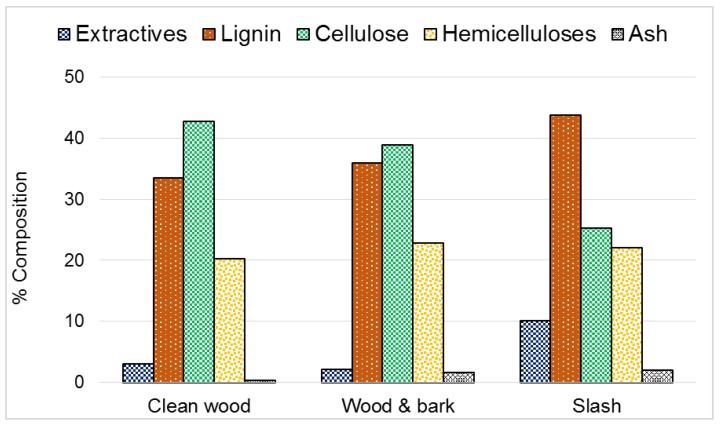
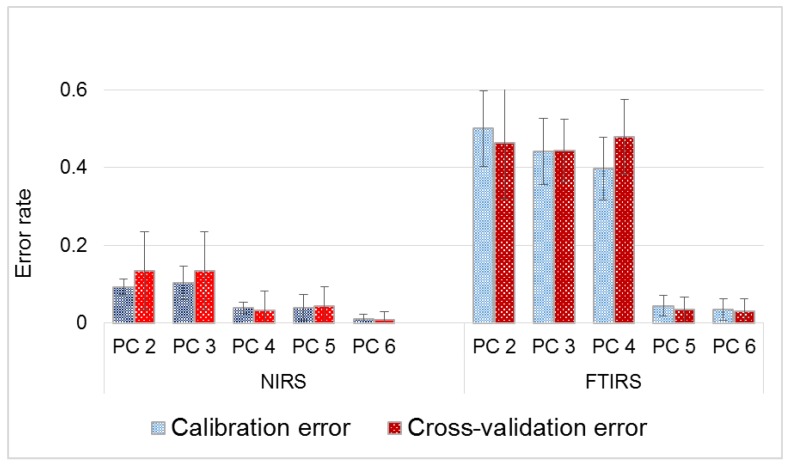
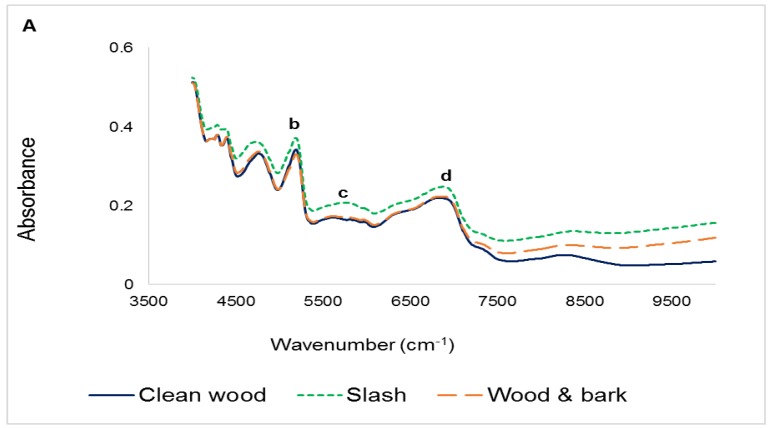
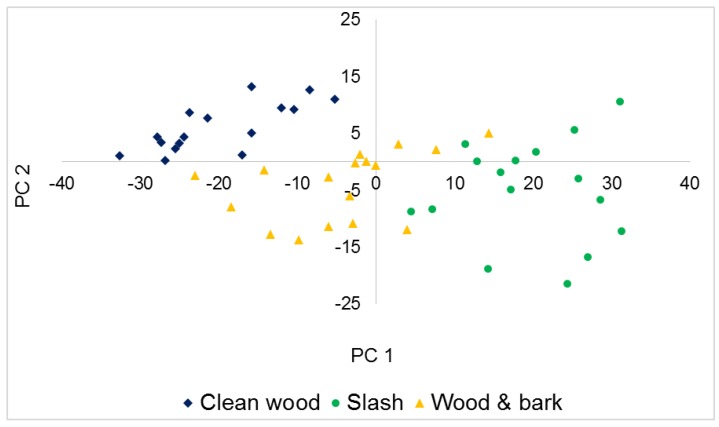
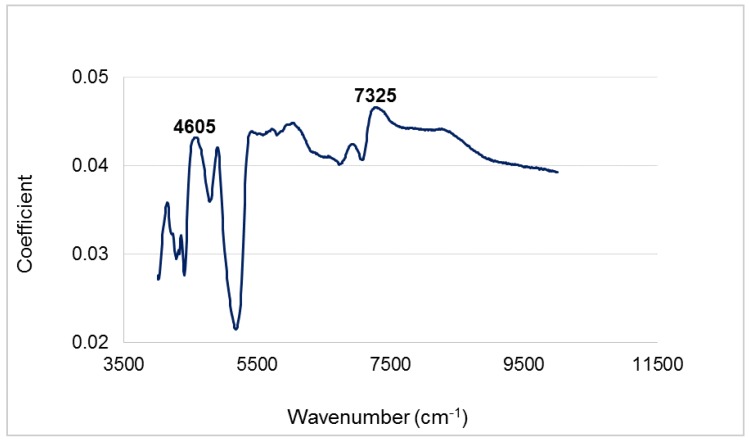
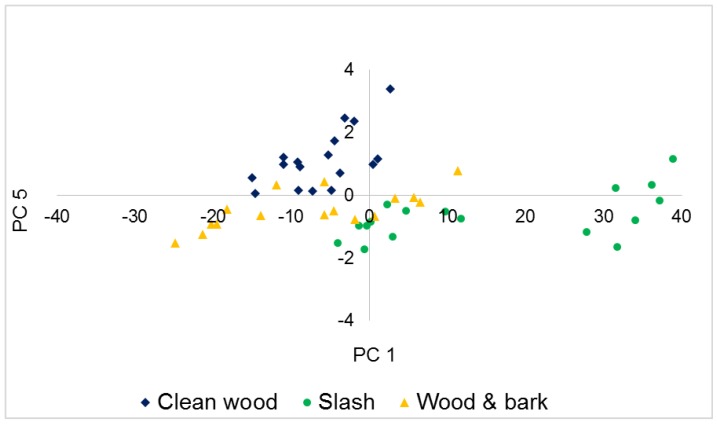
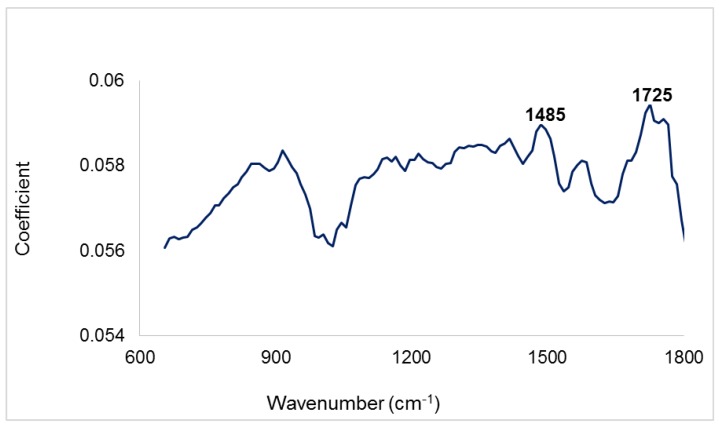
As new markets, technologies and economies evolve in the low carbon bioeconomy, forest logging residue, a largely untapped renewable resource will play a vital role. The feedstock can however be variable depending on plant species and plant part component. This heterogeneity can influence the physical, chemical and thermochemical properties of the material, and thus the final yield and quality of products. Although it is challenging to control compositional variability of a batch of feedstock, it is feasible to monitor this heterogeneity and make the necessary changes in process parameters. Such a system will be a first step towards optimization, quality assurance and cost-effectiveness of processes in the emerging biofuel/chemical industry. The objective of this study was therefore to qualitatively classify forest logging residue made up of different plant parts using both near infrared spectroscopy (NIRS) and Fourier transform infrared spectroscopy (FTIRS) together with linear discriminant analysis (LDA). Forest logging residue harvested from several Pinus taeda (loblolly pine) plantations in Alabama, USA, were classified into three plant part components: clean wood, wood and bark and slash (i.e., limbs and foliage). Five-fold cross-validated linear discriminant functions had classification accuracies of over 96% for both NIRS and FTIRS based models. An extra factor/principal component (PC) was however needed to achieve this in FTIRS modeling. Analysis of factor loadings of both NIR and FTIR spectra showed that, the statistically different amount of cellulose in the three plant part components of logging residue contributed to their initial separation. This study demonstrated that NIR or FTIR spectroscopy coupled with PCA and LDA has the potential to be used as a high throughput tool in classifying the plant part makeup of a batch of forest logging residue feedstock. Thus, NIR/FTIR could be employed as a tool to rapidly probe/monitor the variability of forest biomass so that the appropriate online adjustments to parameters can be made in time to ensure process optimization and product quality.
随着低碳生物经济中新兴市场、技术和经济的发展,森林采伐剩余物这一基本未被开发的可再生资源将发挥至关重要的作用。然而,原料会因植物种类和植物部分组成的不同而有所变化。这种异质性会影响材料的物理、化学和热化学性质,进而影响产品的最终产量和质量。尽管控制一批原料的成分变异性具有挑战性,但监测这种异质性并对工艺参数进行必要调整是可行的。这样一个系统将是朝着新兴生物燃料/化学工业中工艺的优化、质量保证和成本效益迈出的第一步。因此,本研究的目的是结合近红外光谱(NIRS)、傅里叶变换红外光谱(FTIRS)以及线性判别分析(LDA),对由不同植物部分组成的森林采伐剩余物进行定性分类。从美国阿拉巴马州的几个火炬松(湿地松)种植园采集的森林采伐剩余物被分为三个植物部分组成:净木、木和树皮以及枝条(即树枝和树叶)。对于基于NIRS和FTIRS的模型,五重交叉验证的线性判别函数的分类准确率均超过96%。然而,在FTIRS建模中需要一个额外的因子/主成分(PC)才能达到这一准确率。对NIR和FTIR光谱的因子载荷分析表明,采伐剩余物的三个植物部分组成中纤维素含量的统计学差异促成了它们的初步分离。本研究表明,NIR或FTIR光谱结合PCA和LDA有潜力作为一种高通量工具,用于对一批森林采伐剩余物原料的植物部分组成进行分类。因此,NIR/FTIR可作为一种工具,快速探测/监测森林生物质的变异性,以便及时对参数进行适当的在线调整,确保工艺优化和产品质量。