Amigo Ignacio, Menezes-Filho Sergio Luiz, Luévano-Martínez Luis Alberto, Chausse Bruno, Kowaltowski Alicia J
Departamento de Bioquímica, Instituto de Química, Universidade de São Paulo, São Paulo, Brazil.
Aging Cell. 2017 Feb;16(1):73-81. doi: 10.1111/acel.12527. Epub 2016 Sep 13.
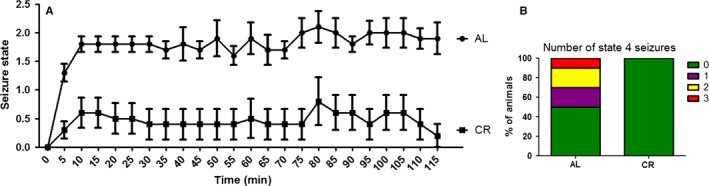
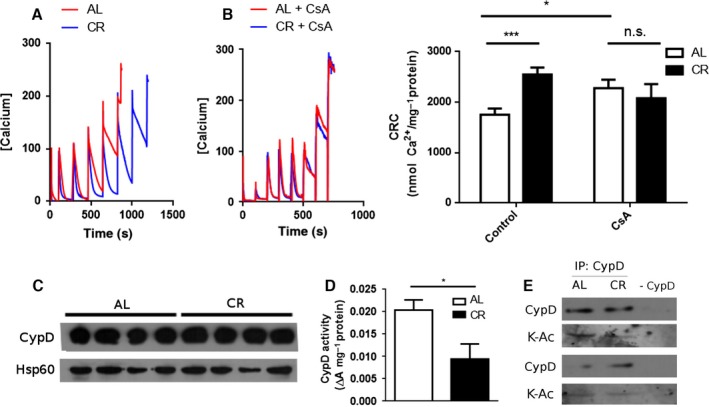
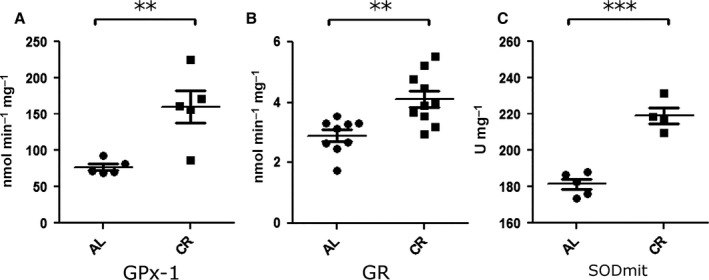
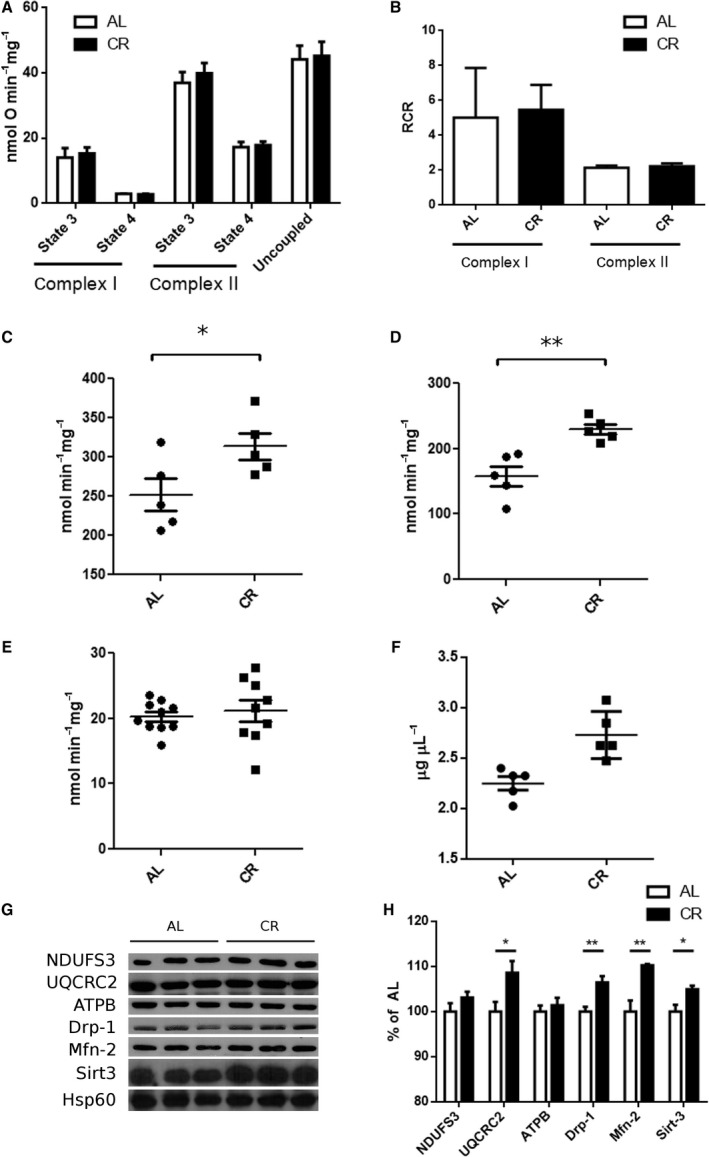
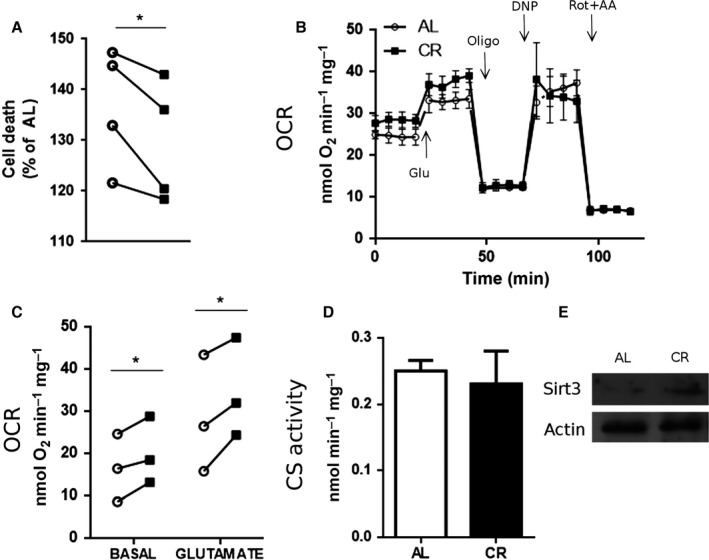
Caloric restriction (CR) protects against many cerebral pathological conditions that are associated with excitotoxic damage and calcium overload, although the mechanisms are still poorly understood. Here we show that CR strongly protects against excitotoxic insults in vitro and in vivo in a manner associated with significant changes in mitochondrial function. CR increases electron transport chain activity, enhances antioxidant defenses, and favors mitochondrial calcium retention capacity in the brain. These changes are accompanied by a decrease in cyclophilin D activity and acetylation and an increase in Sirt3 expression. This suggests that Sirt3-mediated deacetylation and inhibition of cyclophilin D in CR promote the inhibition of mitochondrial permeability transition, resulting in enhanced mitochondrial calcium retention. Altogether, our results indicate that enhanced mitochondrial calcium retention capacity underlies the beneficial effects of CR against excitotoxic conditions. This protection may explain the many beneficial effects of CR in the aging brain.
热量限制(CR)可预防许多与兴奋性毒性损伤和钙超载相关的脑部病理状况,尽管其机制仍知之甚少。在此我们表明,CR在体外和体内均能以与线粒体功能显著变化相关的方式强烈保护细胞免受兴奋性毒性损伤。CR可增加电子传递链活性,增强抗氧化防御能力,并有利于大脑中的线粒体钙保留能力。这些变化伴随着亲环蛋白D活性和乙酰化水平的降低以及Sirt3表达的增加。这表明CR中Sirt3介导的去乙酰化作用以及对亲环蛋白D的抑制促进了线粒体通透性转换的抑制,从而增强了线粒体钙保留能力。总之,我们的结果表明,增强的线粒体钙保留能力是CR对兴奋性毒性状况产生有益作用的基础。这种保护作用可能解释了CR在衰老大脑中的许多有益作用。