Ishii Takamasa, Takanashi Yumi, Sugita Koichi, Miyazawa Masaki, Yanagihara Rintaro, Yasuda Kayo, Onouchi Hiromi, Kawabe Noboru, Nakata Munehiro, Yamamoto Yorihiro, Hartman Phil S, Ishii Naoaki
Department of Molecular Life Science, Tokai University School of Medicine, 143 Shimokasuya, Isehara, Kanagawa, 259-1193, Japan.
Institute of Medical Sciences, Tokai University, 143 Shimokasuya, Isehara, Kanagawa, 259-1193, Japan.
Aging Cell. 2017 Feb;16(1):39-51. doi: 10.1111/acel.12523. Epub 2016 Sep 13.
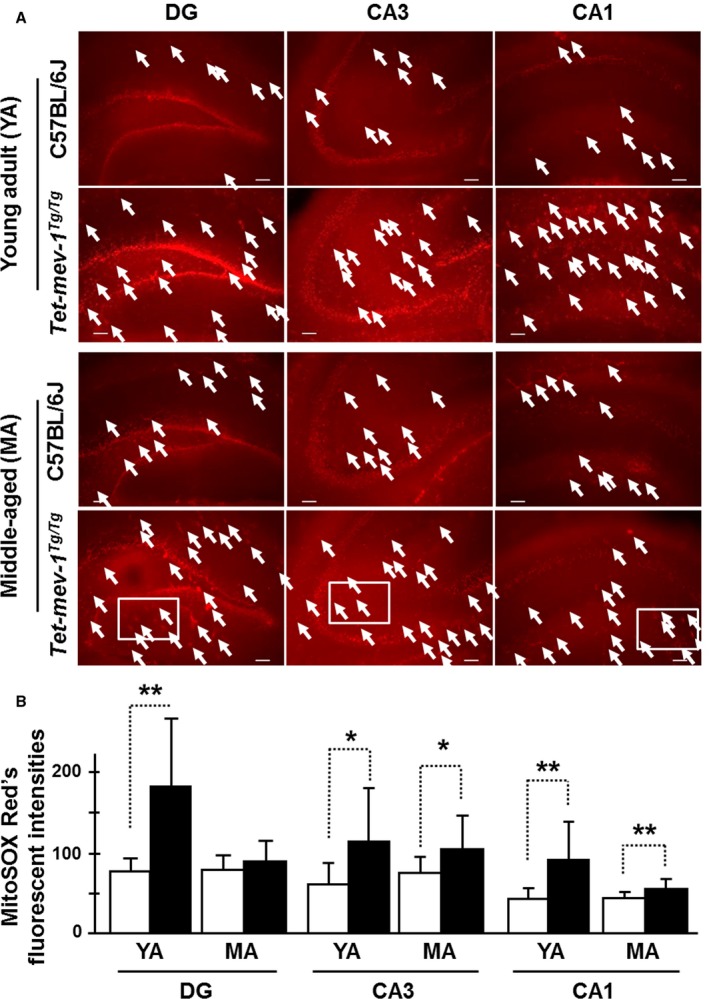
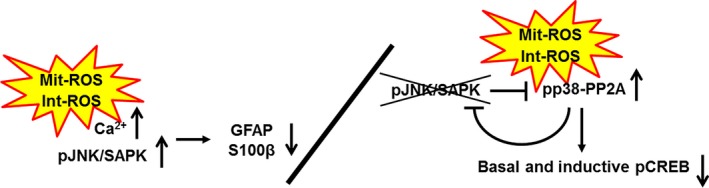
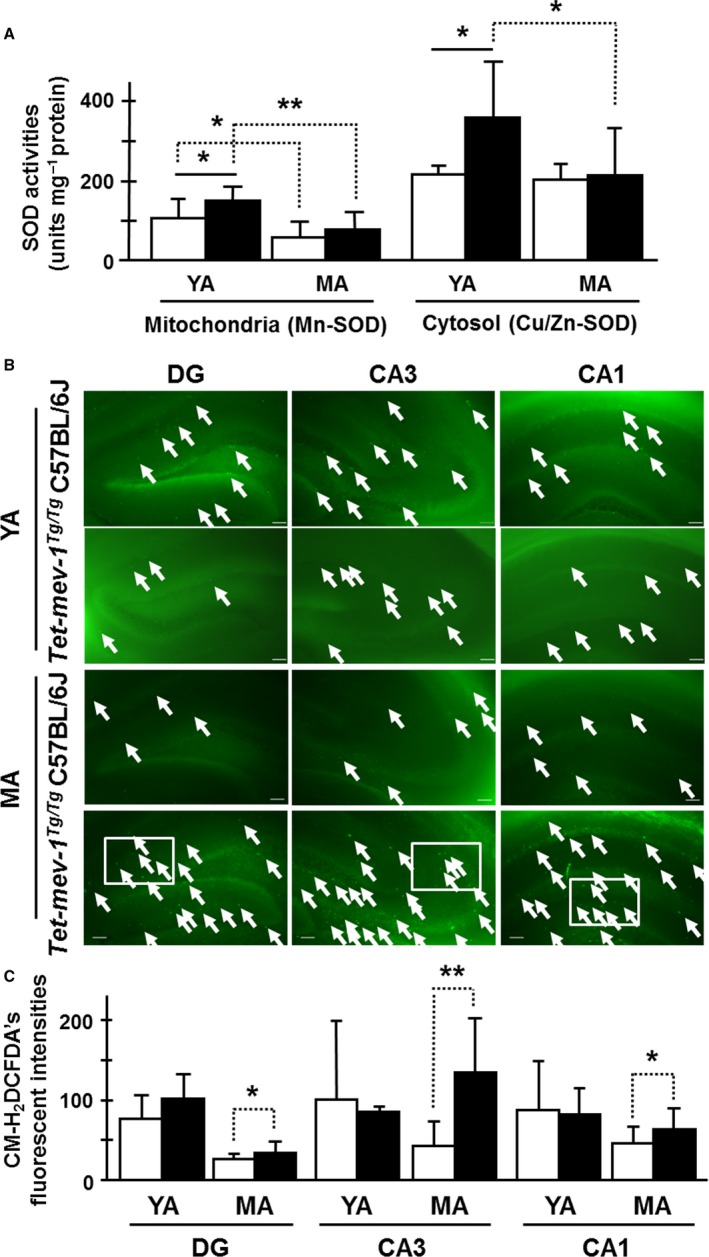
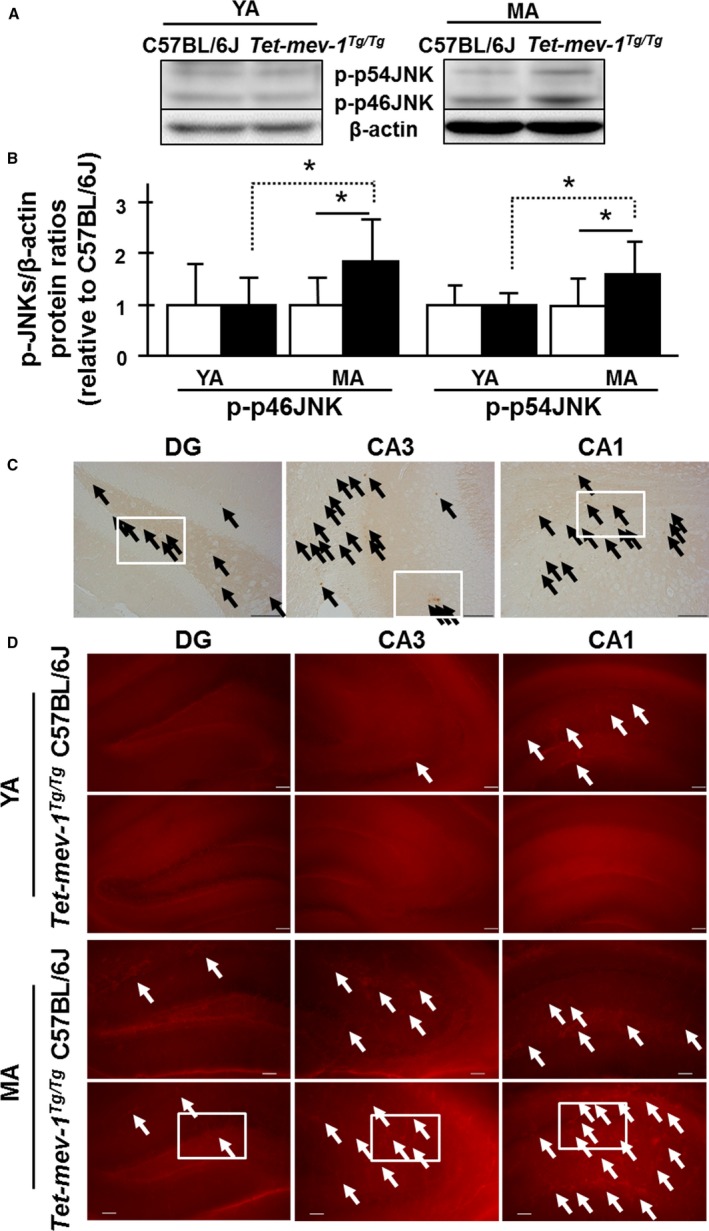
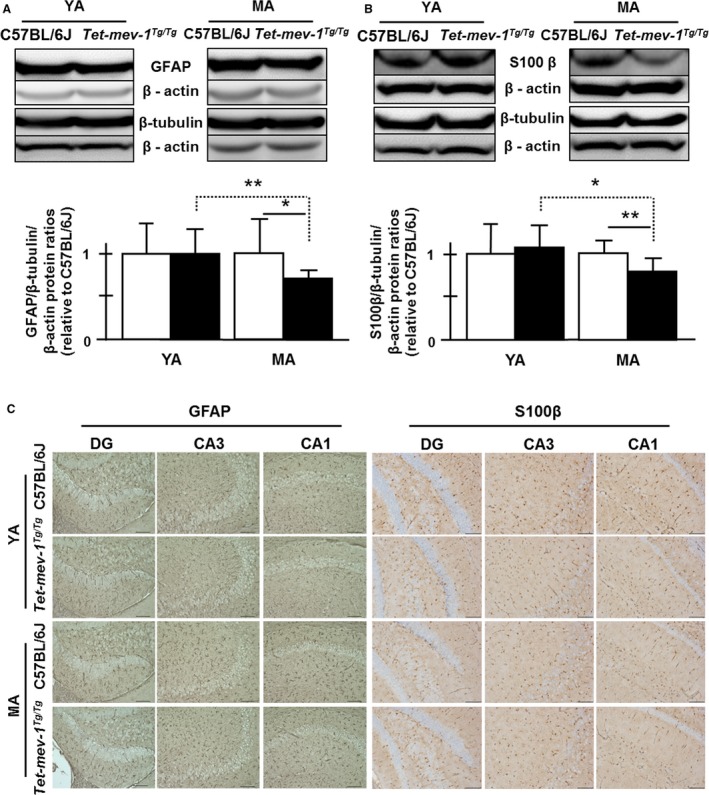
The etiology of astrocyte dysfunction is not well understood even though neuronal defects have been extensively studied in a variety of neuronal degenerative diseases. Astrocyte defects could be triggered by the oxidative stress that occurs during physiological aging. Here, we provide evidence that intracellular or mitochondrial reactive oxygen species (ROS) at physiological levels can cause hippocampal (neuronal) dysfunctions. Specifically, we demonstrate that astrocyte defects occur in the hippocampal area of middle-aged Tet-mev-1 mice with the SDHC mutation. These mice are characterized by chronic oxidative stress. Even though both young adult and middle-aged Tet-mev-1 mice overproduced MitoSOX Red-detectable mitochondrial ROS compared to age-matched wild-type C57BL/6J mice, only young adult Tet-mev-1 mice upregulated manganese and copper/zinc superoxide dismutase (Mn- and Cu/Zn-SODs) activities to eliminate the MitoSOX Red-detectable mitochondrial ROS. In contrast, middle-aged Tet-mev-1 mice accumulated both MitoSOX Red-detectable mitochondrial ROS and CM-H DCFDA-detectable intracellular ROS. These ROS levels appeared to be in the physiological range as shown by normal thiol and glutathione disulfide/glutathione concentrations in both young adult and middle-aged Tet-mev-1 mice relative to age-matched wild-type C57BL/6J mice. Furthermore, only middle-aged Tet-mev-1 mice showed JNK/SAPK activation and Ca overload, particularly in astrocytes. This led to decreasing levels of glial fibrillary acidic protein and S100β in the hippocampal area. Significantly, there were no pathological features such as apoptosis, amyloidosis, and lactic acidosis in neurons and astrocytes. Our findings suggest that the age-dependent physiologically relevant chronic oxidative stress caused astrocyte defects in mice with impaired mitochondrial electron transport chain functionality.
尽管在多种神经元退行性疾病中对神经元缺陷进行了广泛研究,但星形胶质细胞功能障碍的病因仍未得到很好的理解。星形胶质细胞缺陷可能由生理衰老过程中发生的氧化应激引发。在此,我们提供证据表明生理水平的细胞内或线粒体活性氧(ROS)可导致海马体(神经元)功能障碍。具体而言,我们证明在具有SDHC突变的中年Tet-mev-1小鼠的海马区出现了星形胶质细胞缺陷。这些小鼠的特征是慢性氧化应激。尽管与年龄匹配的野生型C57BL/6J小鼠相比,年轻成年和中年Tet-mev-1小鼠均产生了过量的可被MitoSOX Red检测到的线粒体ROS,但只有年轻成年Tet-mev-1小鼠上调了锰和铜/锌超氧化物歧化酶(Mn-和Cu/Zn-SODs)的活性以消除可被MitoSOX Red检测到的线粒体ROS。相比之下,中年Tet-mev-1小鼠积累了可被MitoSOX Red检测到的线粒体ROS和可被CM-H DCFDA检测到的细胞内ROS。相对于年龄匹配的野生型C57BL/6J小鼠,年轻成年和中年Tet-mev-1小鼠的硫醇以及谷胱甘肽二硫化物/谷胱甘肽浓度正常,这表明这些ROS水平似乎处于生理范围内。此外,只有中年Tet-mev-1小鼠表现出JNK/SAPK激活和钙超载,特别是在星形胶质细胞中。这导致海马区胶质纤维酸性蛋白和S100β水平降低。值得注意的是,神经元和星形胶质细胞中没有凋亡、淀粉样变性和乳酸性酸中毒等病理特征。我们的研究结果表明,年龄依赖性的生理相关慢性氧化应激导致线粒体电子传递链功能受损的小鼠出现星形胶质细胞缺陷。