Guilhaume-Correa Fernanda, Pickrell Alicia M, VandeVord Pamela J
Translational Biology, Medicine, and Health Graduate Program, Virginia Polytechnic Institute and State University, Roanoke, VA 24016, USA.
School of Neuroscience, Virginia Polytechnic Institute and State University, Blacksburg, VA 24061, USA.
Biomedicines. 2023 Jan 24;11(2):329. doi: 10.3390/biomedicines11020329.
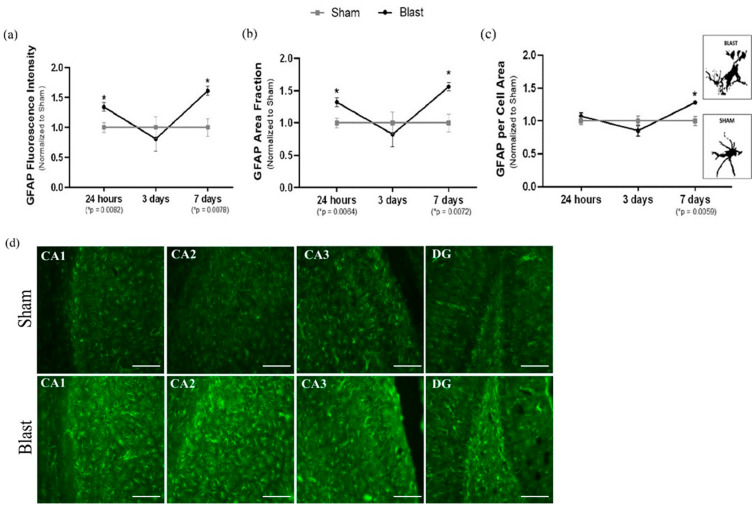
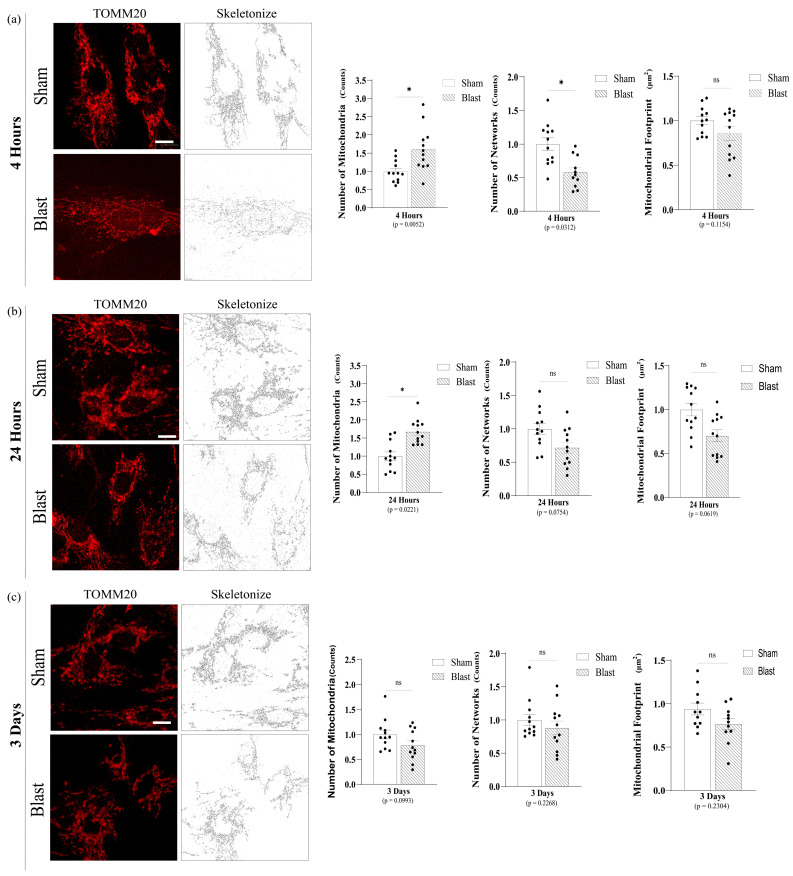
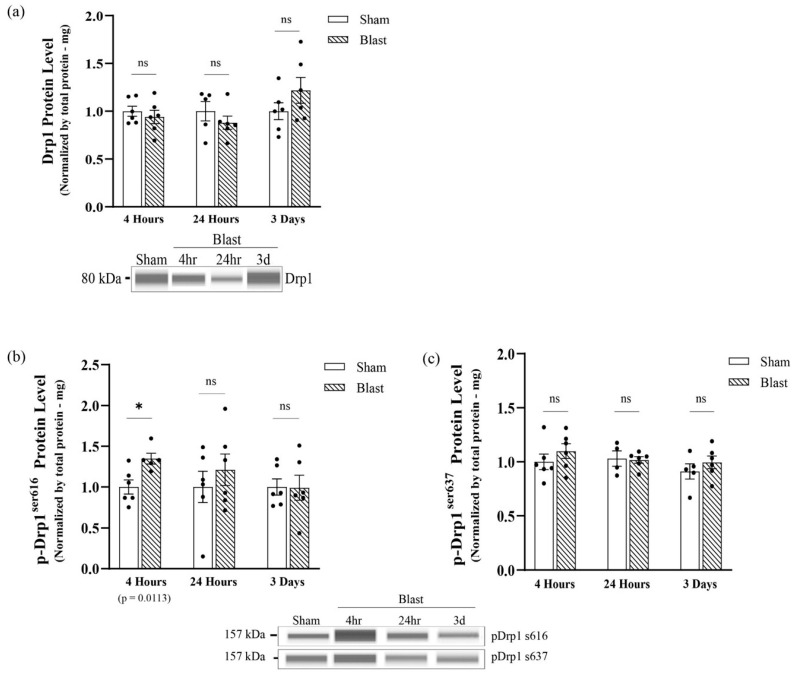
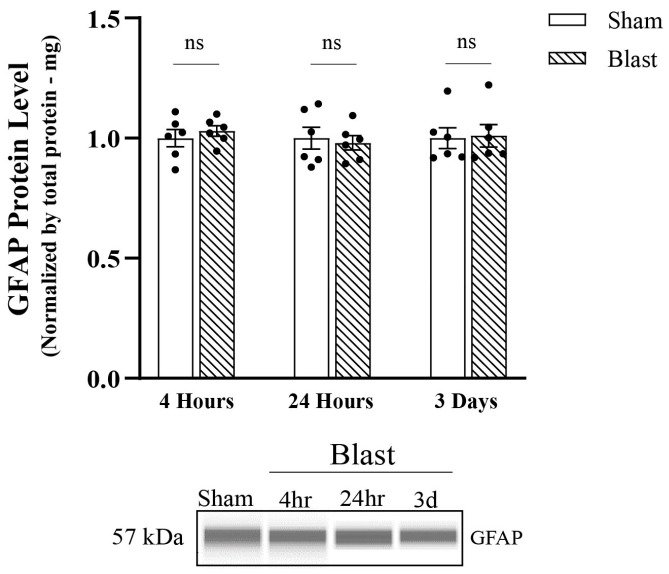
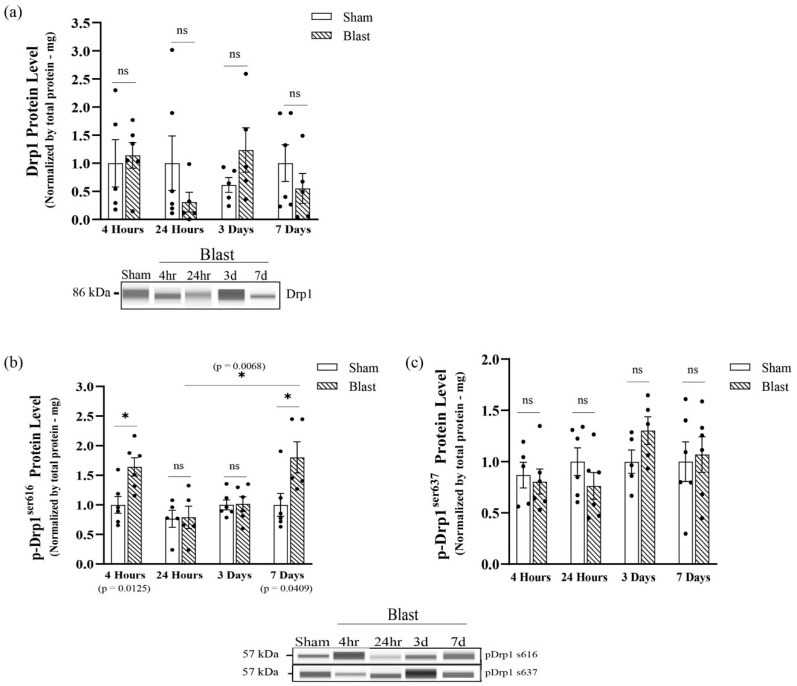
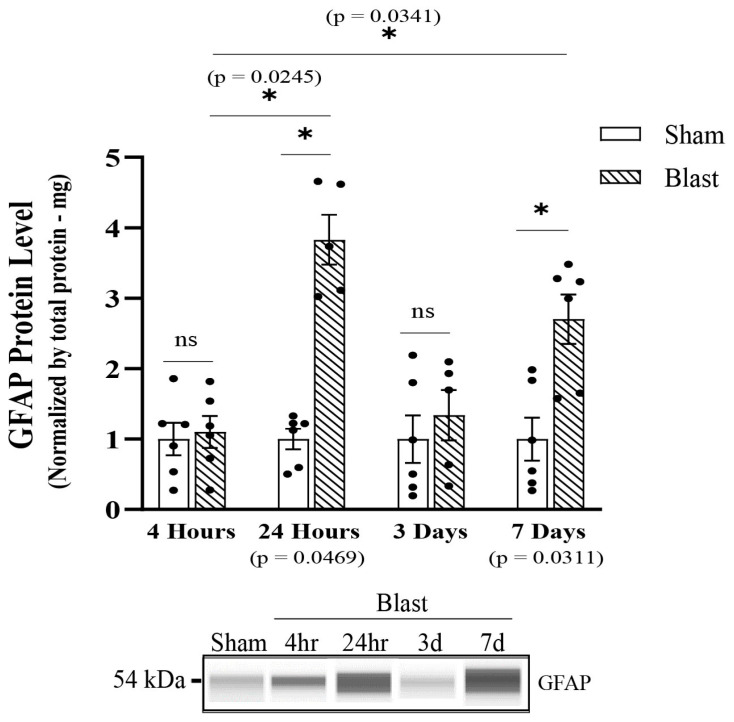
Mild blast-induced traumatic brain injury (bTBI) is a modality of injury that has been of major concern considering a large number of military personnel exposed to explosive blast waves. bTBI results from the propagation of high-pressure static blast forces and their subsequent energy transmission within brain tissue. Exposure to this overpressure energy causes a diffuse injury that leads to acute cell damage and, if chronic, leads to detrimental long-term cognitive deficits. The literature presents a neuro-centric approach to the role of mitochondria dynamics dysfunction in bTBI, and changes in astrocyte-specific mitochondrial dynamics have not been characterized. The balance between fission and fusion events is known as mitochondrial dynamics. As a result of fission and fusion, the mitochondrial structure is constantly altering its shape to respond to physiological stimuli or stress, which in turn affects mitochondrial function. Astrocytic mitochondria are recognized to play an essential role in overall brain metabolism, synaptic transmission, and neuron protection. Mitochondria are vulnerable to injury insults, leading to the increase in mitochondrial fission, a mechanism controlled by the GTPase dynamin-related protein (Drp1) and the phosphorylation of Drp1 at serine 616 (p-Drp1). This site is critical to mediate the Drp1 translocation to mitochondria to promote fission events and consequently leads to fragmentation. An increase in mitochondrial fragmentation could have negative consequences, such as promoting an excessive generation of reactive oxygen species or triggering cytochrome c release. The aim of the present study was to characterize the unique pattern of astrocytic mitochondrial dynamics by exploring the role of DRP1 with a combination of in vitro and in vivo bTBI models. Differential remodeling of the astrocytic mitochondrial network was observed, corresponding with increases in p-Drp1 four hours and seven days post-injury. Further, results showed a time-dependent reactive astrocyte phenotype transition in the rat hippocampus. This discovery can lead to innovative therapeutics targets to help prevent the secondary injury cascade after blast injury that involves mitochondria dysfunction.
轻度爆炸所致创伤性脑损伤(bTBI)是一种损伤形式,鉴于大量军事人员暴露于爆炸冲击波中,它一直备受关注。bTBI是由高压静态爆炸力的传播及其随后在脑组织内的能量传递所致。暴露于这种超压能量会导致弥漫性损伤,进而引起急性细胞损伤,若为慢性损伤,则会导致有害的长期认知缺陷。文献中呈现了一种以神经为中心的方法来探讨线粒体动力学功能障碍在bTBI中的作用,而星形胶质细胞特异性线粒体动力学的变化尚未得到描述。裂变和融合事件之间的平衡被称为线粒体动力学。由于裂变和融合,线粒体结构不断改变其形状以响应生理刺激或应激,这反过来又会影响线粒体功能。星形胶质细胞线粒体在整体脑代谢、突触传递和神经元保护中起着至关重要的作用。线粒体易受损伤刺激,导致线粒体裂变增加,这是一种由GTPase动力蛋白相关蛋白(Drp1)以及Drp1丝氨酸616位点的磷酸化(p-Drp1)所控制的机制。该位点对于介导Drp1转位至线粒体以促进裂变事件并进而导致碎片化至关重要。线粒体碎片化增加可能会产生负面后果,例如促进活性氧的过度生成或触发细胞色素c释放。本研究的目的是通过结合体外和体内bTBI模型探索Drp1的作用,来描述星形胶质细胞线粒体动力学的独特模式。观察到星形胶质细胞线粒体网络的差异性重塑,与损伤后4小时和7天p-Drp1的增加相对应。此外,结果显示大鼠海马中存在时间依赖性的反应性星形胶质细胞表型转变。这一发现可带来创新性的治疗靶点,以帮助预防爆炸伤后涉及线粒体功能障碍的继发性损伤级联反应。