Boex-Fontvieille Edouard, Rustgi Sachin, von Wettstein Diter, Pollmann Stephan, Reinbothe Steffen, Reinbothe Christiane
Laboratoire de Génétique Moléculaire des Plantes and Biologie Environnementale et Systémique, Université Grenoble-Alpes - Laboratoire de Bioénergétique Fondamentale et Appliquée Grenoble, France.
Department of Agricultural and Environmental Sciences-Pee Dee Research and Education Center, Clemson University, FlorenceSC, USA; Department of Crop and Soil Sciences - Center for Reproductive Biology, School of Molecular Biosciences, Washington State University, PullmanWA, USA.
Front Plant Sci. 2016 Aug 30;7:1246. doi: 10.3389/fpls.2016.01246. eCollection 2016.
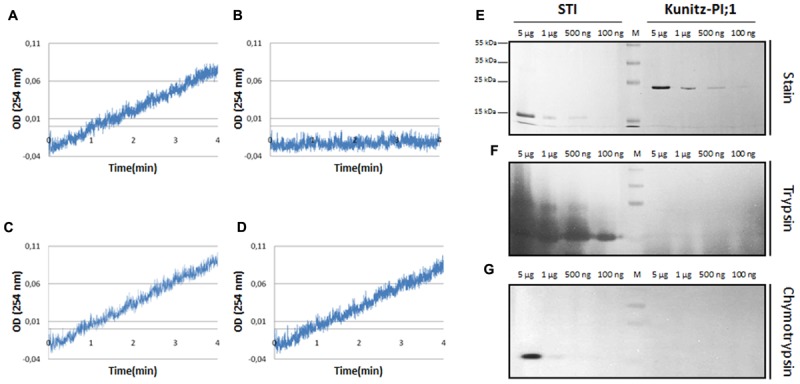
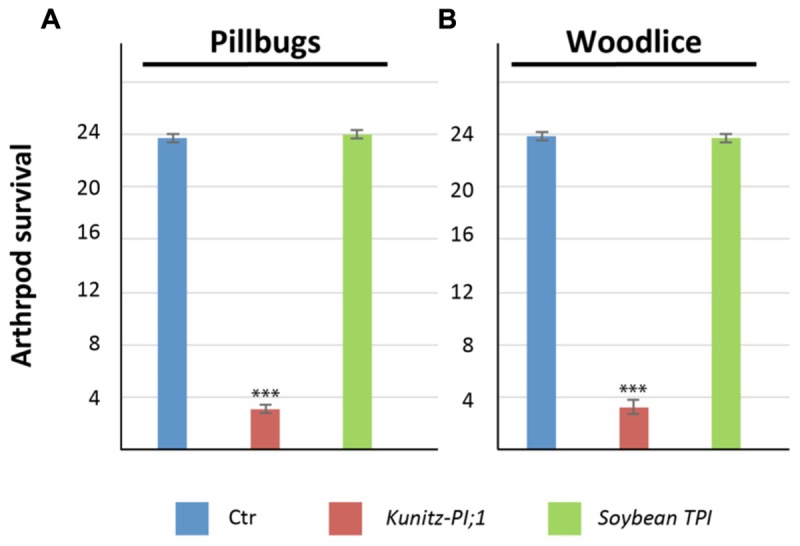
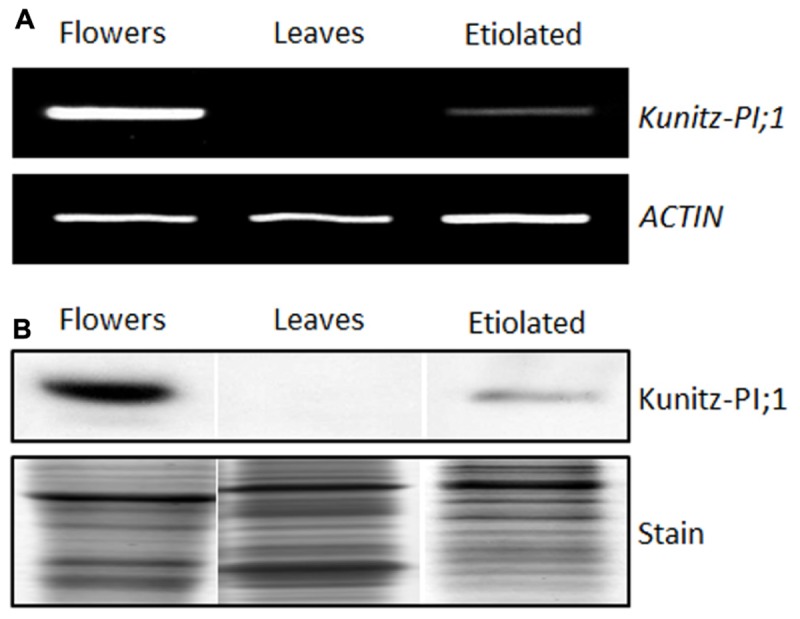
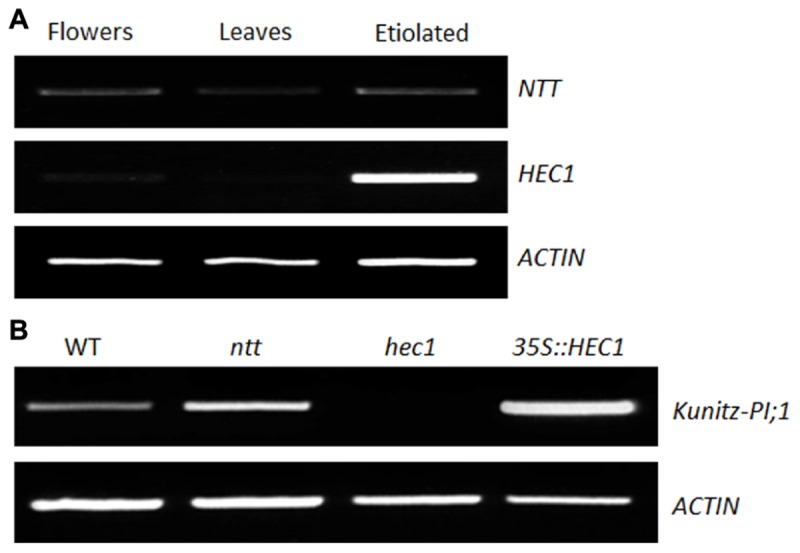
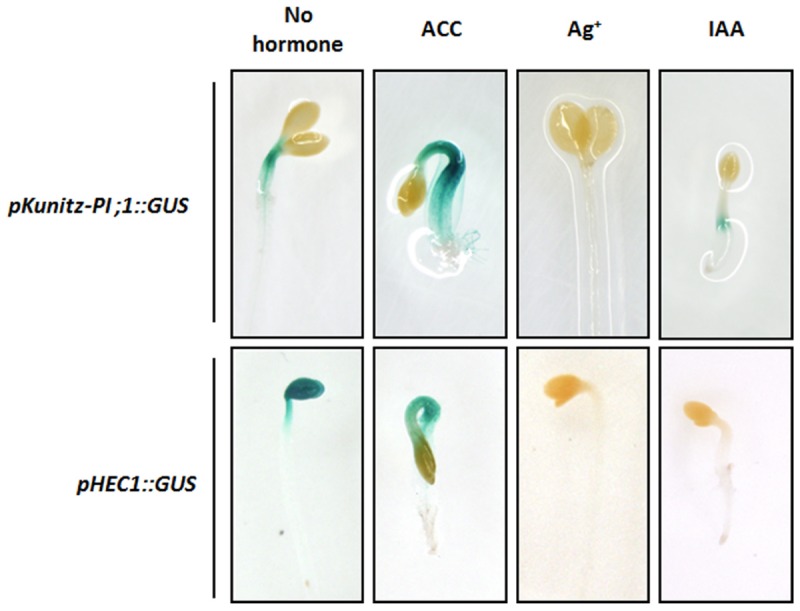
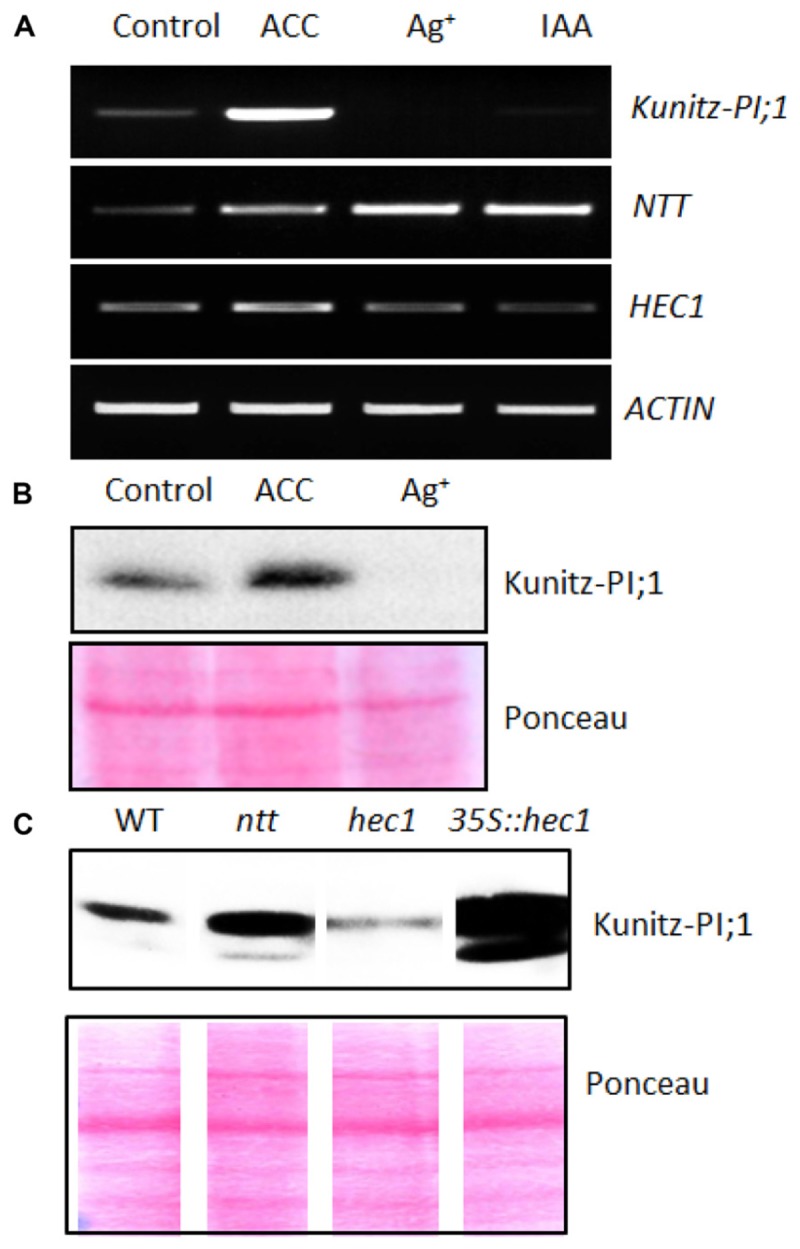
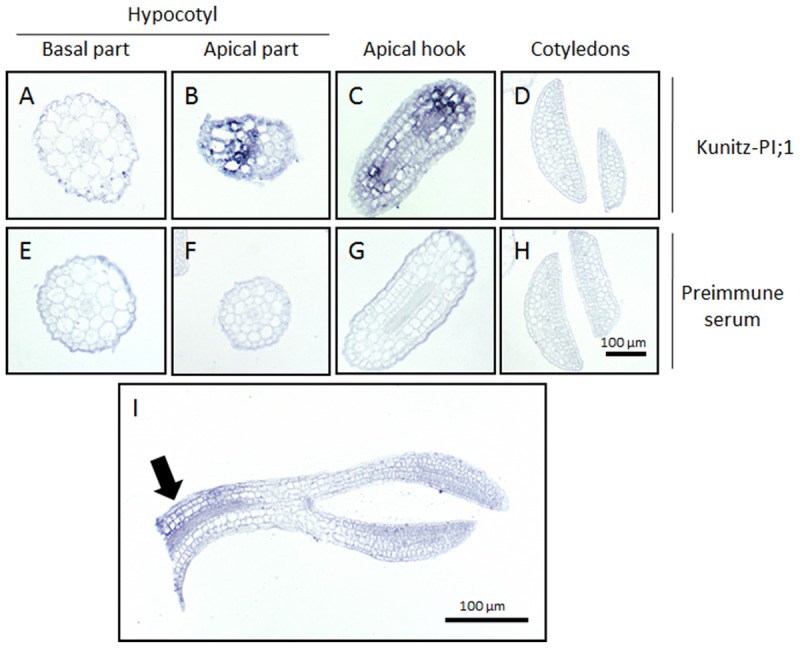
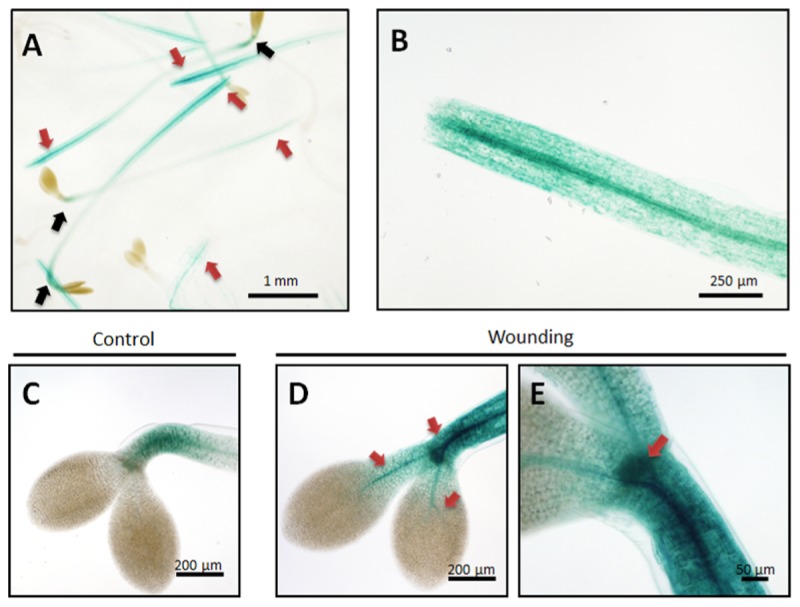
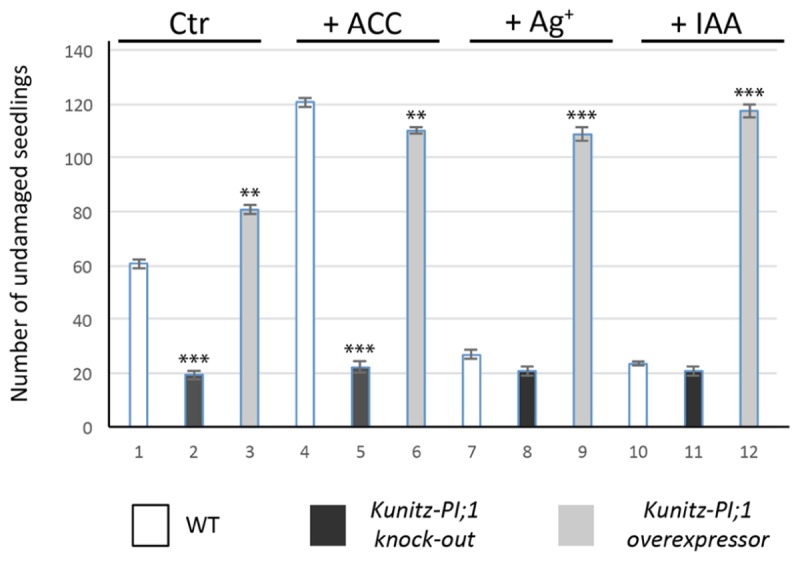
A small family of Kunitz protease inhibitors exists in Arabidopsis thaliana, a member of which (encoded by At1g72290) accomplishes highly specific roles during plant development. Arabidopsis Kunitz-protease inhibitor 1 (Kunitz-PI;1), as we dubbed this protein here, is operative as cysteine PI. Activity measurements revealed that despite the presence of the conserved Kunitz-motif the bacterially expressed Kunitz-PI;1 was unable to inhibit serine proteases such as trypsin and chymotrypsin, but very efficiently inhibited the cysteine protease RESPONSIVE TO DESICCATION 21. Western blotting and cytolocalization studies using mono-specific antibodies recalled Kunitz-PI;1 protein expression in flowers, young siliques and etiolated seedlings. In dark-grown seedlings, maximum Kunitz-PI;1 promoter activity was detected in the apical hook region and apical parts of the hypocotyls. Immunolocalization confirmed Kunitz-PI;1 expression in these organs and tissues. No transmitting tract (NTT) and HECATE 1 (HEC1), two transcription factors previously implicated in the formation of the female reproductive tract in flowers of Arabidopsis, were identified to regulate Kunitz-PI;1 expression in the dark and during greening, with NTT acting negatively and HEC1 acting positively. Laboratory feeding experiments with isopod crustaceans such as Porcellio scaber (woodlouse) and Armadillidium vulgare (pillbug) pinpointed the apical hook as ethylene-protected Achilles' heel of etiolated seedlings. Because exogenous application of the ethylene precursor 1-aminocyclopropane-1-carboxylic acid (ACC) and mechanical stress (wounding) strongly up-regulated HEC1-dependent Kunitz-PI;1 gene expression, our results identify a new circuit controlling herbivore deterrence of etiolated plants in which Kunitz-PI;1 is involved.
拟南芥中存在一个小的库尼茨蛋白酶抑制剂家族,其中一个成员(由At1g72290编码)在植物发育过程中发挥高度特异性作用。我们在此将这种蛋白质称为拟南芥库尼茨蛋白酶抑制剂1(Kunitz-PI;1),它作为半胱氨酸蛋白酶抑制剂发挥作用。活性测量表明,尽管存在保守的库尼茨基序,但细菌表达的Kunitz-PI;1无法抑制丝氨酸蛋白酶,如胰蛋白酶和胰凝乳蛋白酶,但能非常有效地抑制对半胱氨酸蛋白酶21(RESPONSIVE TO DESICCATION 21)。使用单特异性抗体进行的蛋白质印迹和细胞定位研究表明,Kunitz-PI;1蛋白在花、幼嫩角果和黄化幼苗中表达。在黑暗生长的幼苗中,在顶端弯钩区域和下胚轴顶端部分检测到最大的Kunitz-PI;1启动子活性。免疫定位证实了Kunitz-PI;1在这些器官和组织中的表达。无输导组织(NTT)和HECATE 1(HEC1)这两个先前与拟南芥花中雌蕊生殖道形成有关的转录因子,被确定在黑暗和绿化过程中调节Kunitz-PI;1的表达,NTT起负作用,HEC1起正作用。对球鼠妇(Porcellio scaber)和普通鼠妇(Armadillidium vulgare)等等足类甲壳动物进行的实验室喂食实验表明,顶端弯钩是黄化幼苗中受乙烯保护的致命弱点。由于外源施加乙烯前体1-氨基环丙烷-1-羧酸(ACC)和机械胁迫(创伤)强烈上调了HEC1依赖的Kunitz-PI;1基因表达,我们的结果确定了一个新的控制黄化植物对草食动物防御的途径,其中Kunitz-PI;1参与其中。