Dipartimento di Biologia Ambientale, Sapienza Università di Roma, P.le Aldo Moro 5, I-00185, Rome, Italy.
Leibniz Institute of Plant Biochemistry, Department of Cell and Metabolic Biology, Weinberg 3, D06120, Halle (Saale), Germany.
BMC Plant Biol. 2018 Sep 6;18(1):182. doi: 10.1186/s12870-018-1392-4.
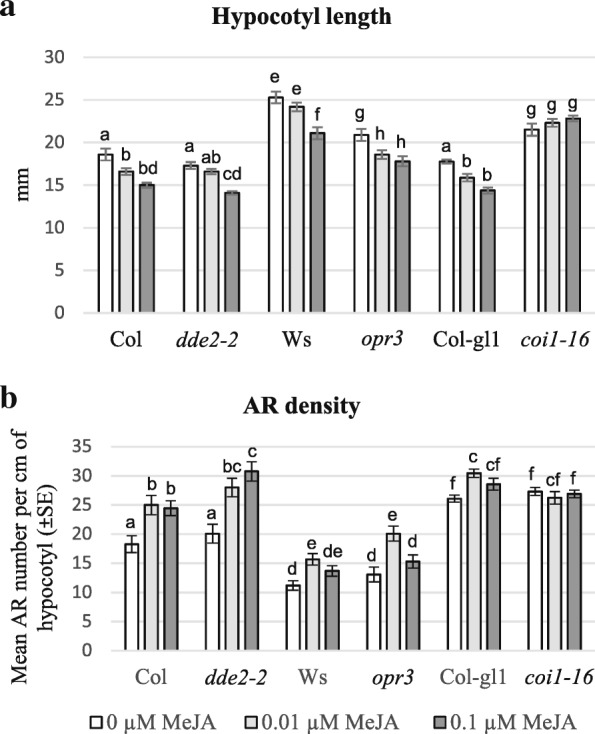
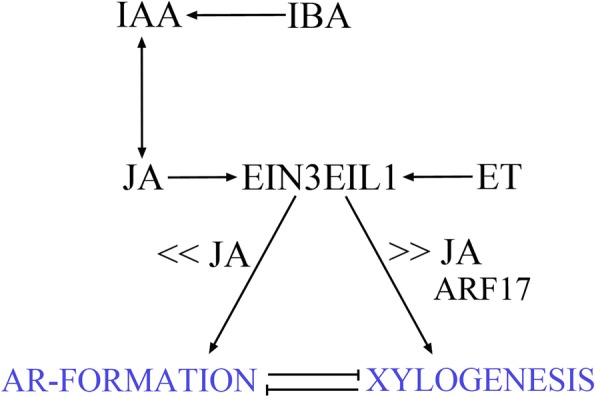
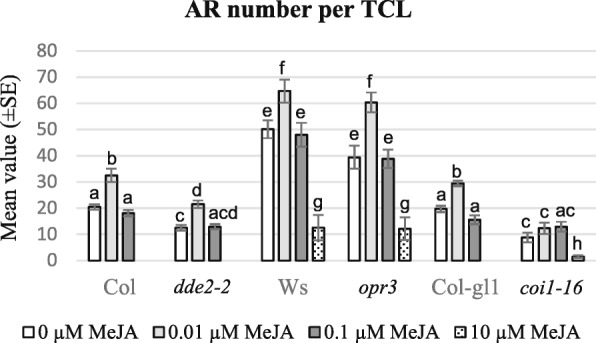
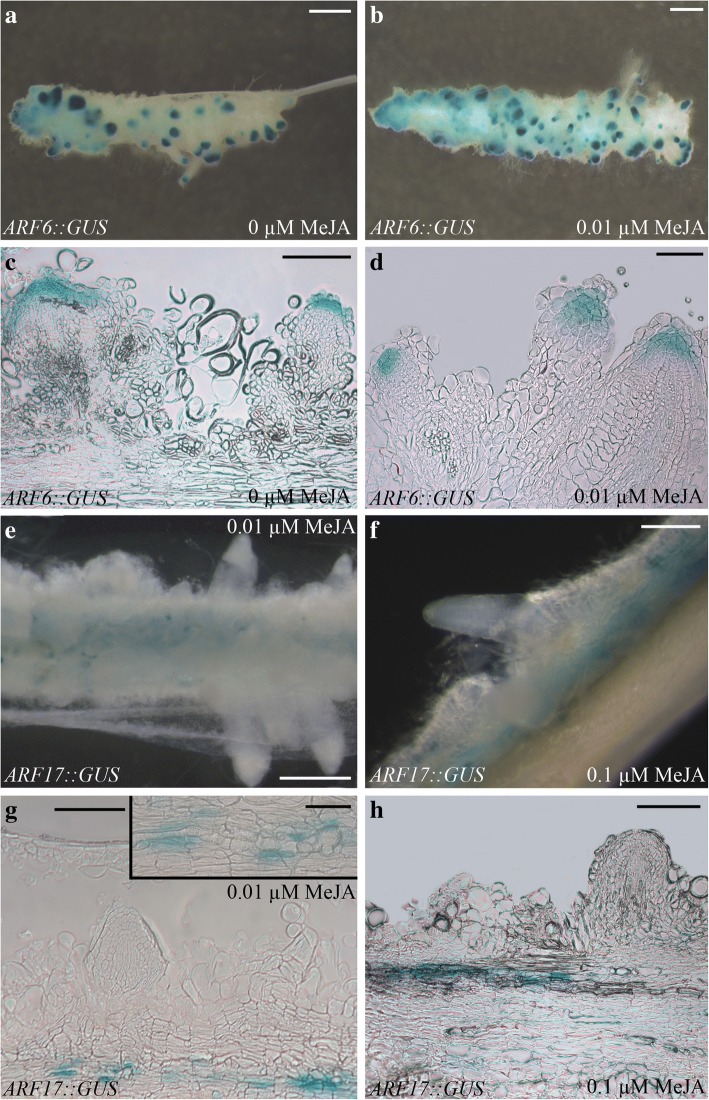
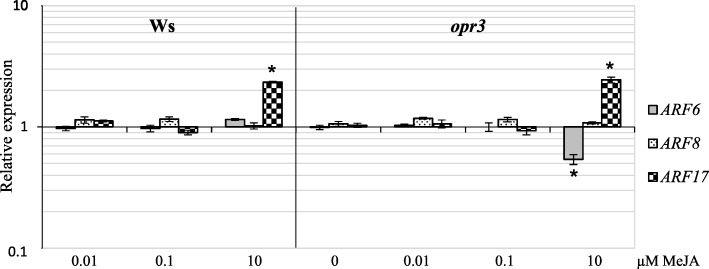
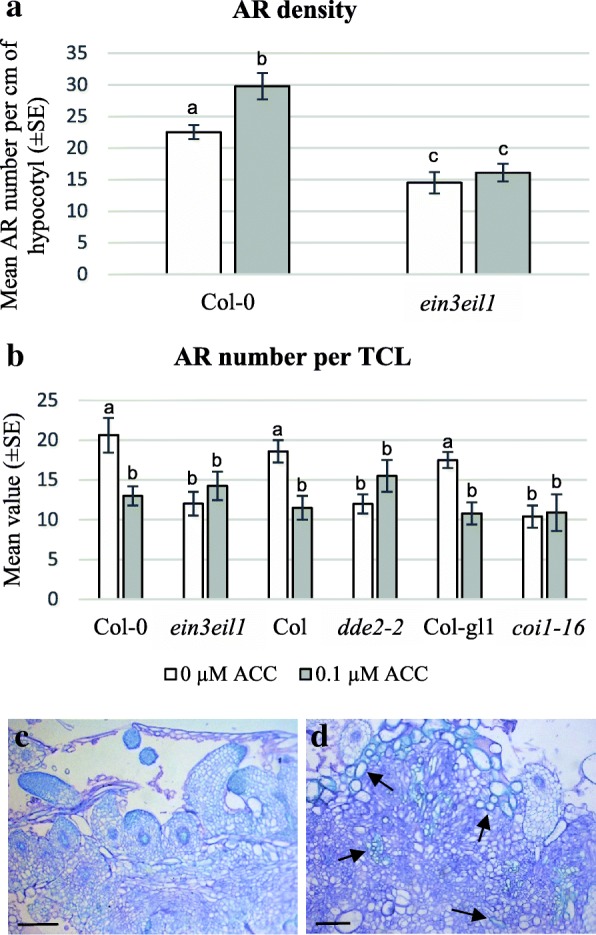
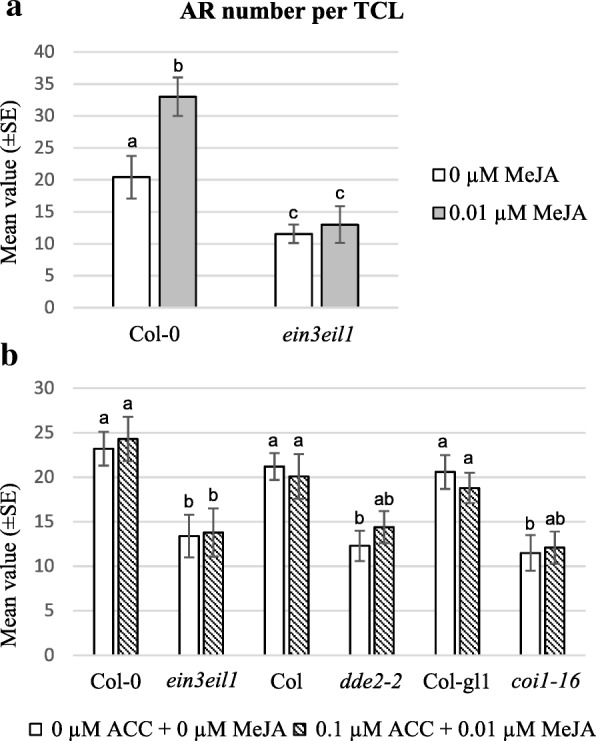
Adventitious roots (ARs) are often necessary for plant survival, and essential for successful micropropagation. In Arabidopsis thaliana dark-grown seedlings AR-formation occurs from the hypocotyl and is enhanced by application of indole-3-butyric acid (IBA) combined with kinetin (Kin). The same IBA + Kin-treatment induces AR-formation in thin cell layers (TCLs). Auxin is the main inducer of AR-formation and xylogenesis in numerous species and experimental systems. Xylogenesis is competitive to AR-formation in Arabidopsis hypocotyls and TCLs. Jasmonates (JAs) negatively affect AR-formation in de-etiolated Arabidopsis seedlings, but positively affect both AR-formation and xylogenesis in tobacco dark-grown IBA + Kin TCLs. In Arabidopsis the interplay between JAs and auxin in AR-formation vs xylogenesis needs investigation. In de-etiolated Arabidopsis seedlings, the Auxin Response Factors ARF6 and ARF8 positively regulate AR-formation and ARF17 negatively affects the process, but their role in xylogenesis is unknown. The cross-talk between auxin and ethylene (ET) is also important for AR-formation and xylogenesis, occurring through EIN3/EIL1 signalling pathway. EIN3/EIL1 is the direct link for JA and ET-signalling. The research investigated JA role on AR-formation and xylogenesis in Arabidopsis dark-grown seedlings and TCLs, and the relationship with ET and auxin. The JA-donor methyl-jasmonate (MeJA), and/or the ET precursor 1-aminocyclopropane-1-carboxylic acid were applied, and the response of mutants in JA-synthesis and -signalling, and ET-signalling investigated. Endogenous levels of auxin, JA and JA-related compounds, and ARF6, ARF8 and ARF17 expression were monitored.
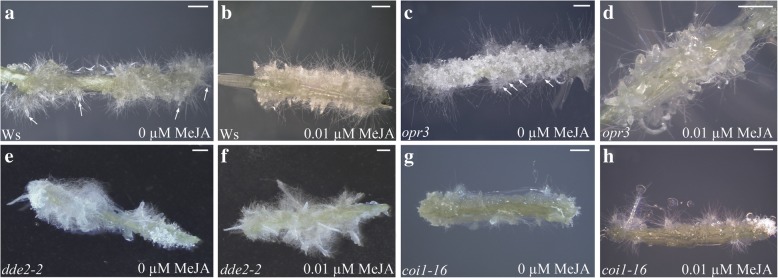
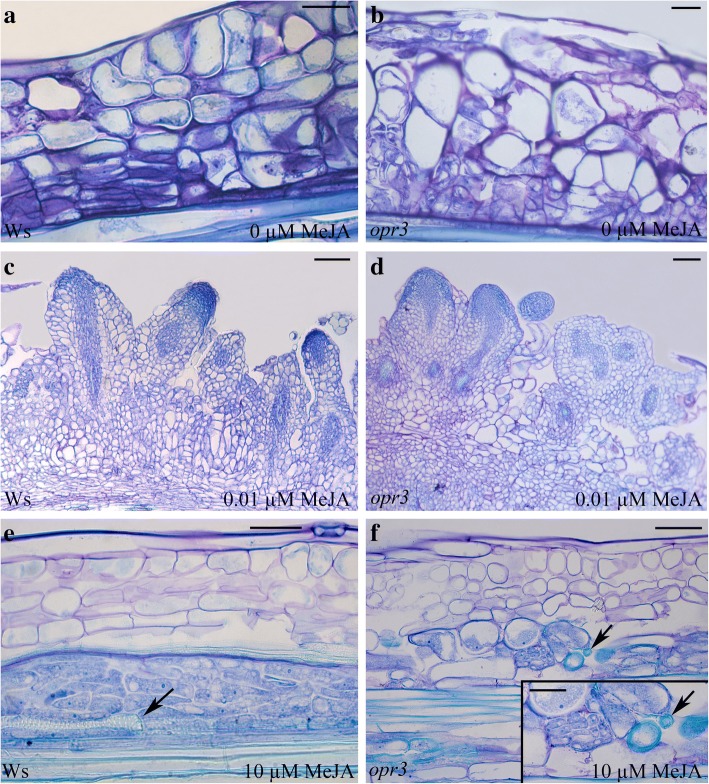
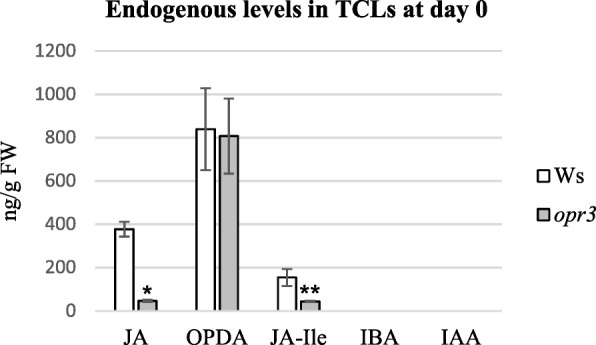
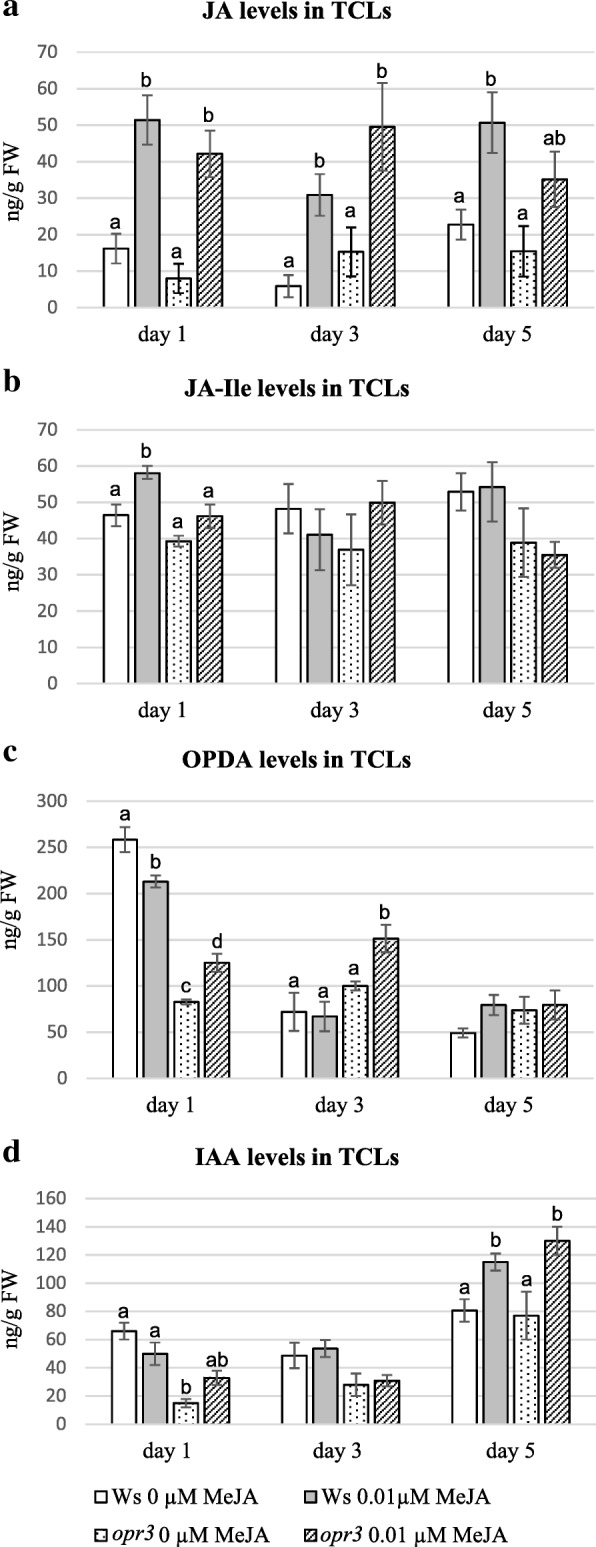
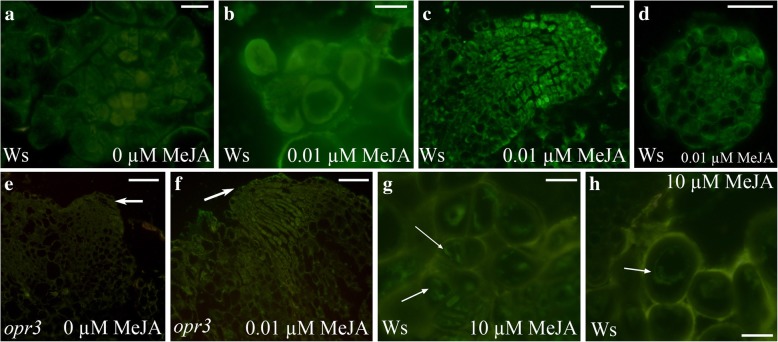
MeJA, at 0.01 μM, enhances AR-formation, when combined with IBA + Kin, and the response of the early-JA-biosynthesis mutant dde2-2 and the JA-signalling mutant coi1-16 confirmed this result. JA levels early change during TCL-culture, and JA/JA-Ile is immunolocalized in AR-tips and xylogenic cells. The high AR-response of the late JA-biosynthesis mutant opr3 suggests a positive action also of 12-oxophytodienoic acid on AR-formation. The crosstalk between JA and ET-signalling by EIN3/EIL1 is critical for AR-formation, and involves a competitive modulation of xylogenesis. Xylogenesis is enhanced by a MeJA concentration repressing AR-formation, and is positively related to ARF17 expression.
The JA concentration-dependent role on AR-formation and xylogenesis, and the interaction with ET opens the way to applications in the micropropagation of recalcitrant species.
不定根(ARs)通常是植物生存所必需的,也是成功微繁殖的关键。在黑暗中生长的拟南芥幼苗中,AR 从下胚轴形成,并通过吲哚丁酸(IBA)与激动素(Kin)联合应用得到增强。相同的 IBA+Kin 处理诱导薄细胞层(TCL)中 AR 的形成。生长素是众多物种和实验系统中 AR 形成和木质部形成的主要诱导剂。在拟南芥下胚轴和 TCL 中,木质部形成与 AR 形成竞争。茉莉酸(JAs)负调控脱黄化拟南芥幼苗中的 AR 形成,但正调控烟草黑暗生长 IBA+Kin TCL 中的 AR 形成和木质部形成。在拟南芥中,JAs 与生长素在 AR 形成与木质部形成之间的相互作用需要研究。在脱黄化的拟南芥幼苗中,生长素反应因子 ARF6 和 ARF8 正向调节 AR 形成,而 ARF17 负影响该过程,但它们在木质部形成中的作用尚不清楚。生长素和乙烯(ET)之间的交叉对话对 AR 形成和木质部形成也很重要,通过 EIN3/EIL1 信号通路发生。EIN3/EIL1 是 JA 和 ET 信号的直接联系。该研究调查了 JA 在拟南芥黑暗生长幼苗和 TCL 中的 AR 形成和木质部形成中的作用,以及与 ET 和生长素的关系。应用茉莉酸供体甲基茉莉酸(MeJA)和/或 ET 前体 1-氨基环丙烷-1-羧酸,研究 JA 合成和信号转导以及 ET 信号转导突变体的反应。监测内源生长素、JA 和 JA 相关化合物以及 ARF6、ARF8 和 ARF17 的表达。
0.01 μM 的 MeJA 与 IBA+Kin 联合增强 AR 形成,早期 JA 生物合成突变体 dde2-2 和 JA 信号突变体 coi1-16 的反应证实了这一结果。在 TCL 培养过程中,JA 水平早期发生变化,JA/JA-Ile 免疫定位在 AR 尖端和木质部细胞中。晚期 JA 生物合成突变体 opr3 的高 AR 反应表明 12-氧代-植物二烯酸对 AR 形成也有积极作用。EIN3/EIL1 介导的 JA 和 ET 信号转导的串扰对 AR 形成至关重要,涉及木质部形成的竞争调节。MeJA 浓度抑制 AR 形成,增强了木质部形成,与 ARF17 表达呈正相关。
JA 浓度对 AR 形成和木质部形成的依赖性作用以及与 ET 的相互作用为在难以繁殖的物种的微繁殖中应用开辟了道路。