Romero-Guzmán Ana K, Menchaca-Tapia Víctor M, Contreras-Yáñez Irazú, Pascual-Ramos Virginia
Immunology and Rheumatology Department, Instituto Nacional de Ciencias Médicas y Nutrición Salvador Zubirán, Avenida Vasco de Quiroga 15, Colonia Belisario Domínguez Sección XVI, Tlalpan, 14080, México City, DF, México.
BMC Musculoskelet Disord. 2016 Sep 15;17:392. doi: 10.1186/s12891-016-1246-x.
In 2004, we initiated an inception cohort of patients with recent-onset rheumatoid arthritis (RA). Hand function was incorporated into evaluations from 2014 onward. The objectives were to examine hand function in our cohort, compare hand function with function in healthy controls and determine the factors associated with impaired function.
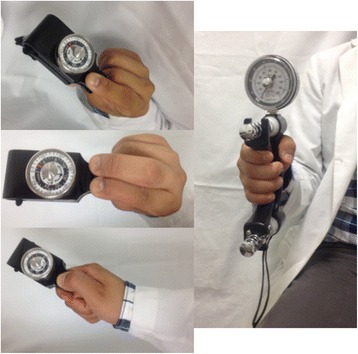
From February 2014 to June 2015, 139 patients (97.2 % of the cohort) had disease activity scored (28 joints, [DAS28]); the Michigan Hand Outcome Questionnaire (MHQ) and Disabilities of the Arm, Shoulder and Hand Outcome Measure (DASH) were completed, and the tip-, key- and palmar-pinch and grip strengths were measured. Sixty-nine healthy controls underwent the same evaluations. Ninety-nine patients underwent a second evaluation one year after their baseline. Descriptive statistics and linear regression models were used. Patients and controls signed informed consent.
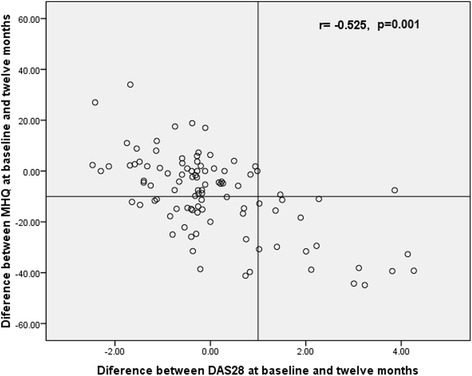
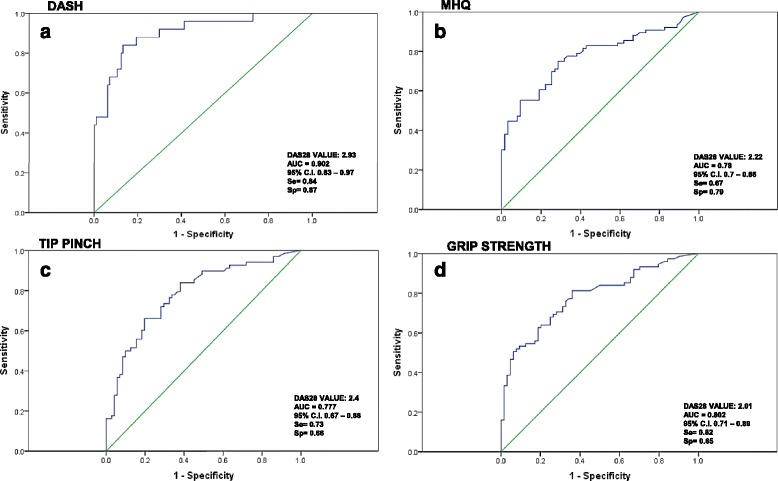
Patients were primarily middle-aged females with a median disease duration of 7 years; 91 patients had DAS28-remission, and 16, 23, and 9 patients had low, moderate and high disease activity, respectively. Controls scored better than did patients with (any) disease activity level; remission patients had similar DASH and key pinch function as did controls with poorer MHQ and both tip and palmar pinch and grip strength. DAS28 was consistently associated with impaired hand function. Among the patients with a one-year re-assessment, changes in DAS28 correlated (rho = 0.34 to 0.63) with changes in hand function (p ≤ 0.01 for all comparisons), but there was no correlation with palmar pinch strength.
Disease activity was associated with hand function impairment in RA patients with variable follow-up. MHQ discriminated poorer hand function in remission patients who otherwise had similar DASH scores as the controls did.
2004年,我们启动了一项针对近期发病的类风湿关节炎(RA)患者的初始队列研究。从2014年起,手部功能被纳入评估内容。目的是检查我们队列中的手部功能,将手部功能与健康对照者的功能进行比较,并确定与功能受损相关的因素。
2014年2月至2015年6月,139名患者(占队列的97.2%)接受了疾病活动评分(28个关节,[DAS28]);完成了密歇根手部结果问卷(MHQ)和手臂、肩部和手部功能障碍结果测量(DASH),并测量了指尖捏力、钥匙捏力、掌侧捏力和握力。69名健康对照者接受了相同的评估。99名患者在基线后一年进行了第二次评估。使用描述性统计和线性回归模型。患者和对照者签署了知情同意书。
患者主要为中年女性,疾病持续时间中位数为7年;91名患者达到DAS28缓解,16名、23名和9名患者分别具有低、中、高疾病活动度。对照者的得分优于任何疾病活动水平的患者;缓解患者的DASH和钥匙捏力功能与对照者相似,但MHQ以及指尖捏力、掌侧捏力和握力较差。DAS28始终与手部功能受损相关。在进行一年重新评估的患者中,DAS28的变化与手部功能的变化相关(rho = 0.34至0.63)(所有比较的p≤0.01),但与掌侧捏力无关。
在随访情况各异的RA患者中,疾病活动度与手部功能受损相关。MHQ区分出缓解患者中较差的手部功能,而这些患者的DASH评分在其他方面与对照者相似。