Simpson Kevin, Quiroz Luis F, Rodriguez-Concepción Manuel, Stange Claudia R
Plant Molecular Biology Laboratory, Department of Biology, Faculty of Sciences, University of Chile Santiago, Chile.
Centre for Research in Agricultural Genomics, Consejo Superior de Investigaciones Científicas-Institut de Recerca i Tecnologia Agroalimentàries-Universitat Autònoma de Barcelona-Universitat de Barcelon Barcelona, Spain.
Front Plant Sci. 2016 Aug 31;7:1344. doi: 10.3389/fpls.2016.01344. eCollection 2016.
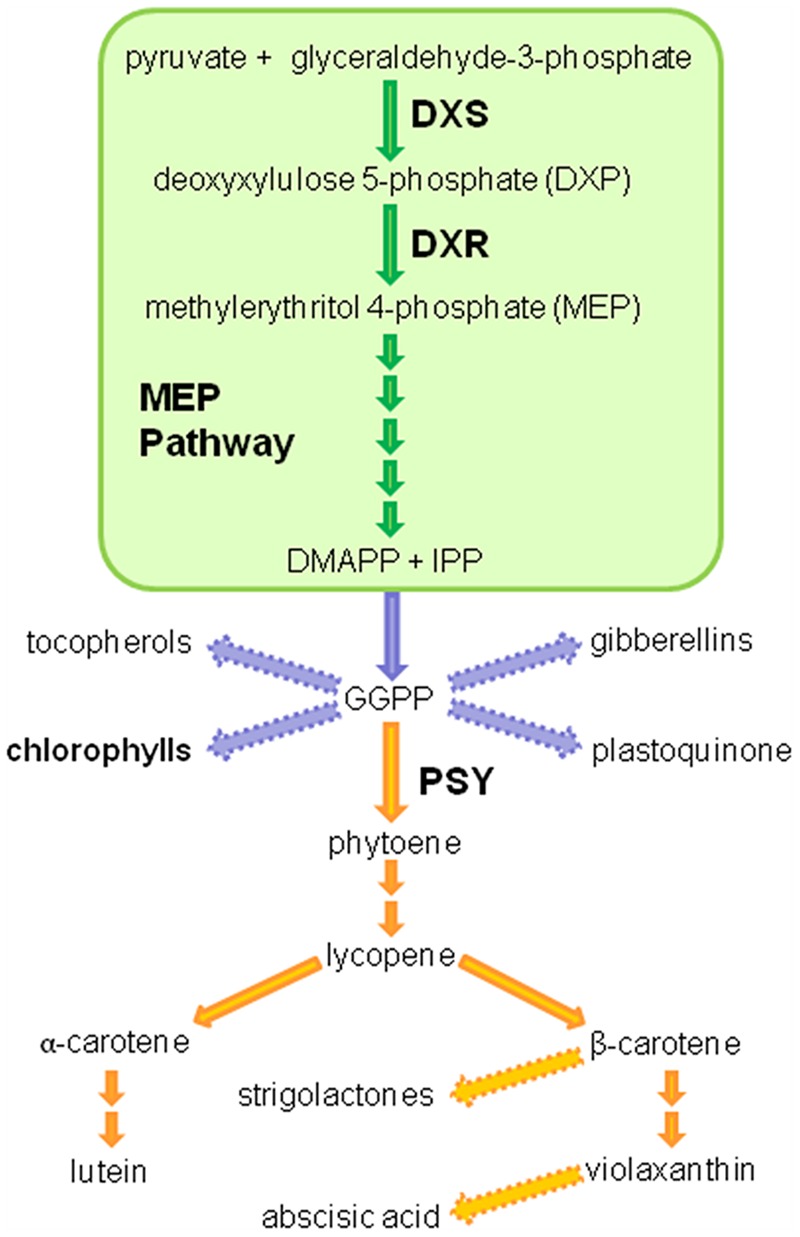
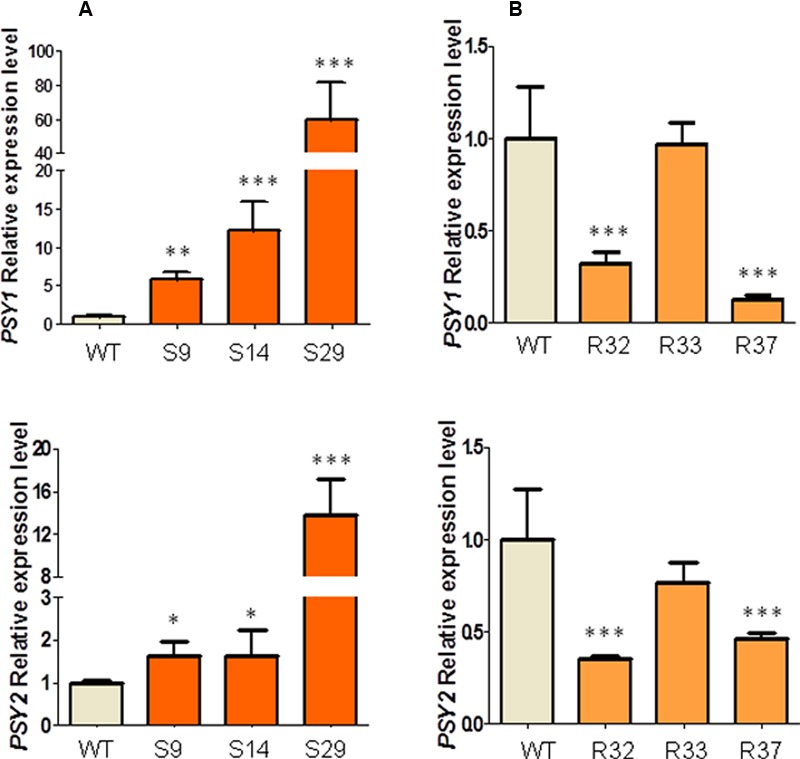
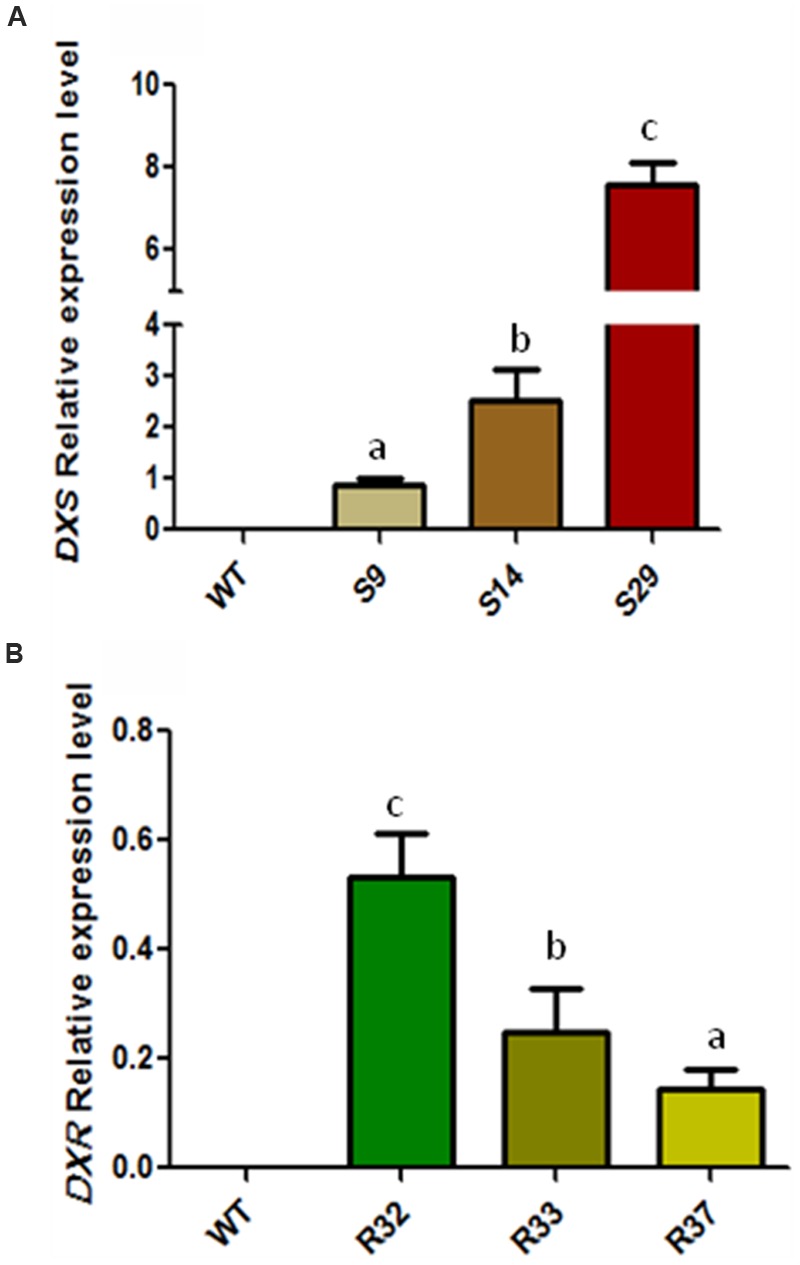
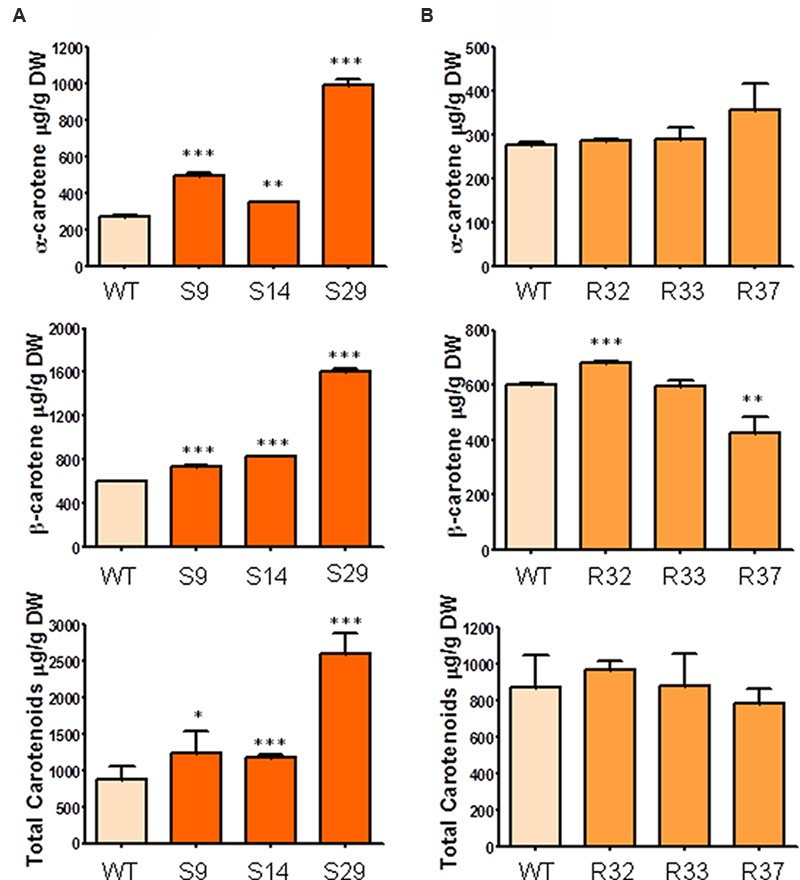
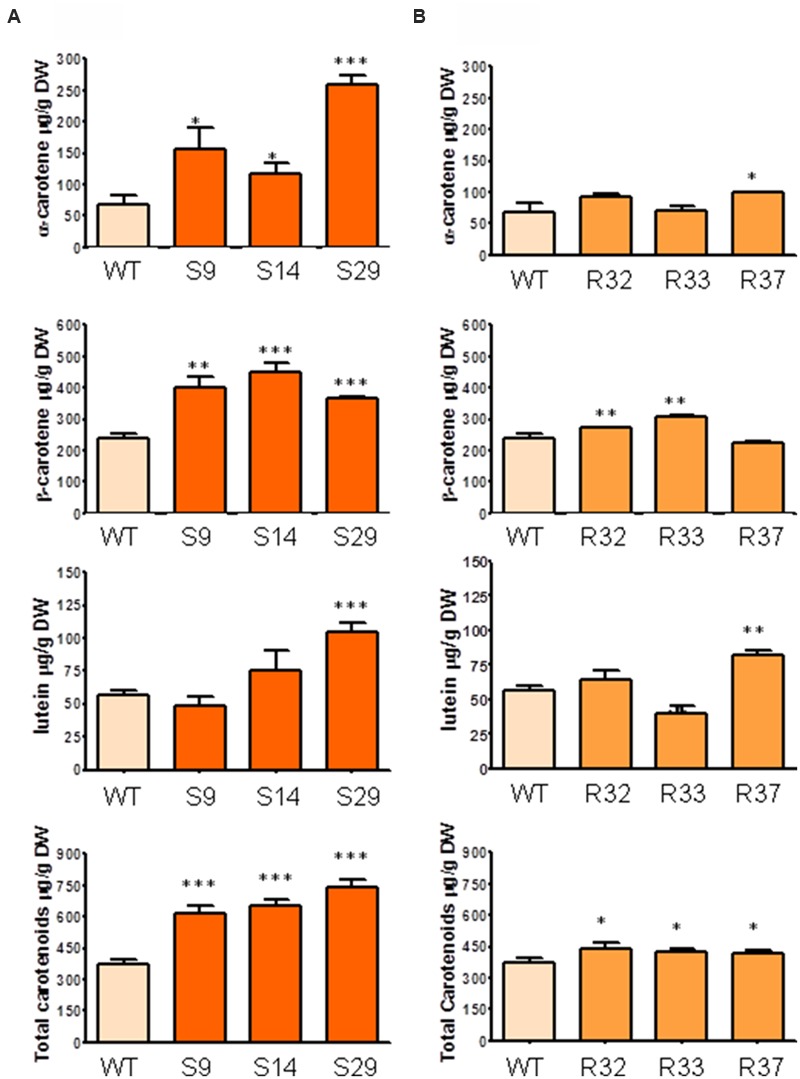
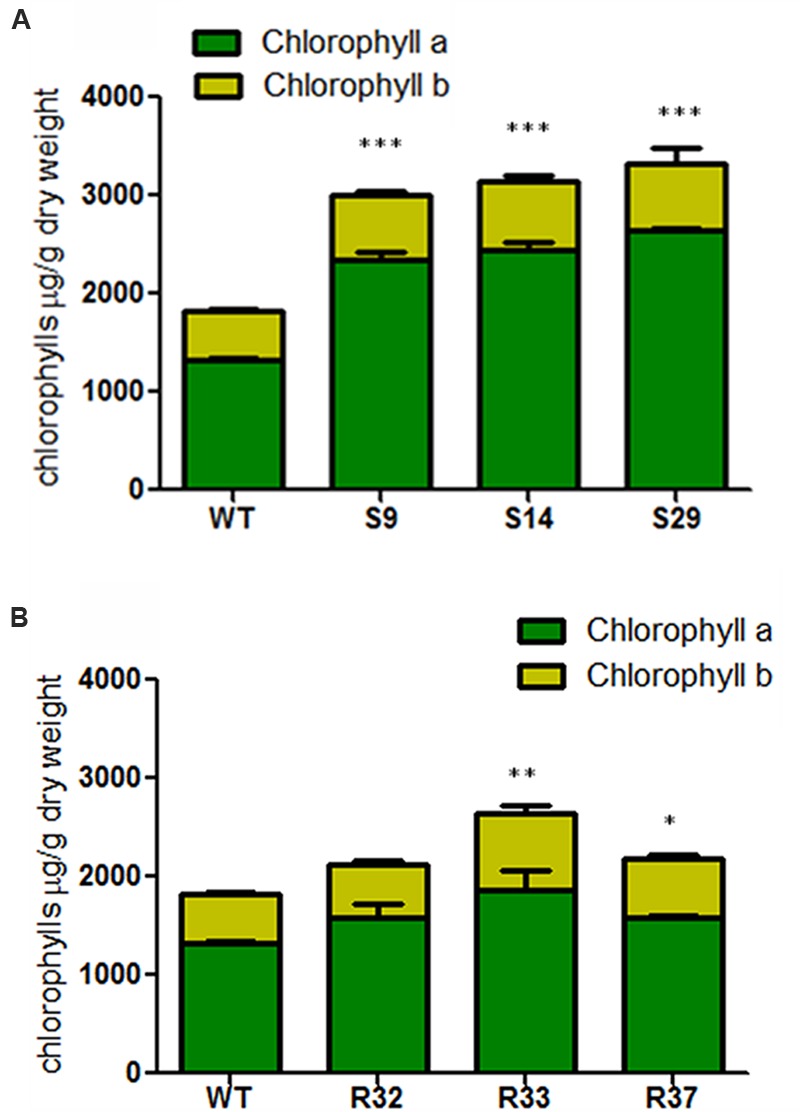
Carotenoids and chlorophylls are photosynthetic pigments synthesized in plastids from metabolic precursors provided by the methylerythritol 4-phosphate (MEP) pathway. The first two steps in the MEP pathway are catalyzed by the deoxyxylulose 5-phosphate synthase (DXS) and reductoisomerase (DXR) enzymes. While DXS has been recently shown to be the main flux-controlling step of the MEP pathway, both DXS and DXR enzymes have been proven to be able to promote an increase in MEP-derived products when overproduced in diverse plant systems. Carrot (Daucus carota) produces photosynthetic pigments (carotenoids and chlorophylls) in leaves and in light-exposed roots, whereas only carotenoids (mainly α- and β-carotene) accumulate in the storage root in darkness. To evaluate whether DXS and DXR activities influence the production of carotenoids and chlorophylls in carrot leaves and roots, the corresponding Arabidopsis thaliana genes were constitutively expressed in transgenic carrot plants. Our results suggest that DXS is limiting for the production of both carotenoids and chlorophylls in roots and leaves, whereas the regulatory role of DXR appeared to be minor. Interestingly, increased levels of DXS (but not of DXR) resulted in higher transcript abundance of endogenous carrot genes encoding phytoene synthase, the main rate-determining enzyme of the carotenoid pathway. These results support a central role for DXS on modulating the production of MEP-derived precursors to synthesize carotenoids and chlorophylls in carrot, confirming the pivotal relevance of this enzyme to engineer healthier, carotenoid-enriched products.
类胡萝卜素和叶绿素是在质体中由甲基赤藓糖醇4-磷酸(MEP)途径提供的代谢前体合成的光合色素。MEP途径的前两个步骤由1-脱氧-D-木酮糖-5-磷酸合酶(DXS)和还原异构酶(DXR)催化。虽然最近已表明DXS是MEP途径的主要通量控制步骤,但已证明当在多种植物系统中过量表达时,DXS和DXR酶都能够促进MEP衍生产物的增加。胡萝卜(Daucus carota)在叶片和暴露于光的根中产生光合色素(类胡萝卜素和叶绿素),而在黑暗中只有类胡萝卜素(主要是α-和β-胡萝卜素)在贮藏根中积累。为了评估DXS和DXR活性是否影响胡萝卜叶和根中类胡萝卜素和叶绿素的产生,在转基因胡萝卜植株中组成型表达了相应的拟南芥基因。我们的结果表明,DXS限制了根和叶中类胡萝卜素和叶绿素的产生,而DXR的调节作用似乎较小。有趣的是,DXS(而非DXR)水平的增加导致编码八氢番茄红素合酶的胡萝卜内源基因的转录丰度更高,八氢番茄红素合酶是类胡萝卜素途径的主要限速酶。这些结果支持了DXS在调节MEP衍生前体的产生以合成胡萝卜中的类胡萝卜素和叶绿素方面的核心作用,证实了该酶对于设计更健康、富含类胡萝卜素的产品的关键相关性。