College of Agronomy, Shanxi Agricultural University, Taigu, 030801, Shanxi, China.
College of Forestry, Shanxi Agricultural University, Taigu, 030801, Shanxi, China.
Sci Rep. 2023 Mar 8;13(1):3902. doi: 10.1038/s41598-023-30797-4.
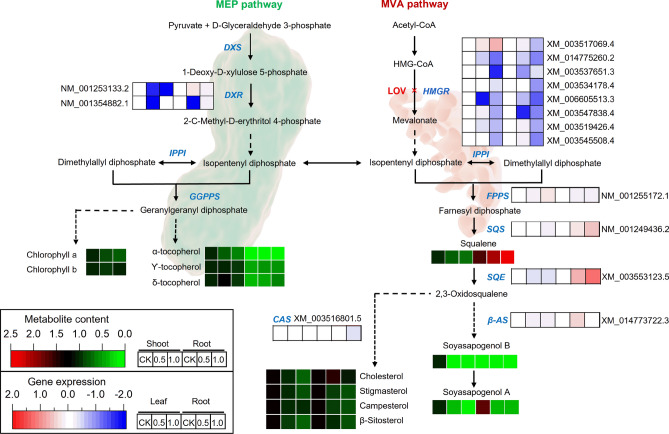
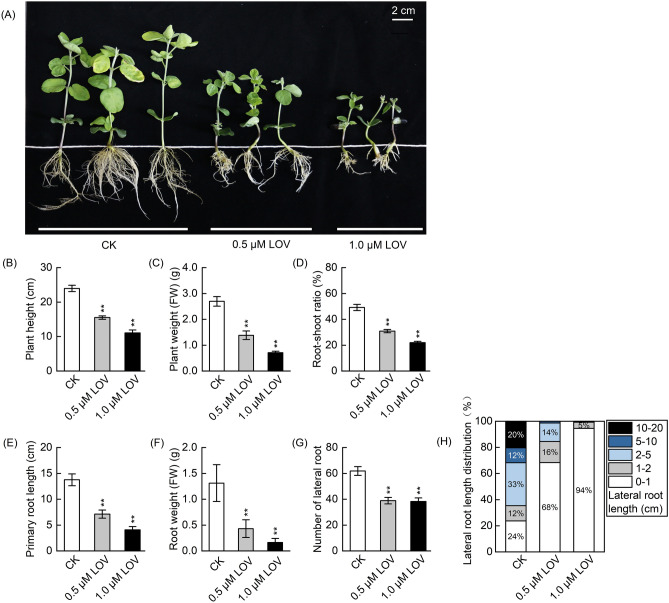
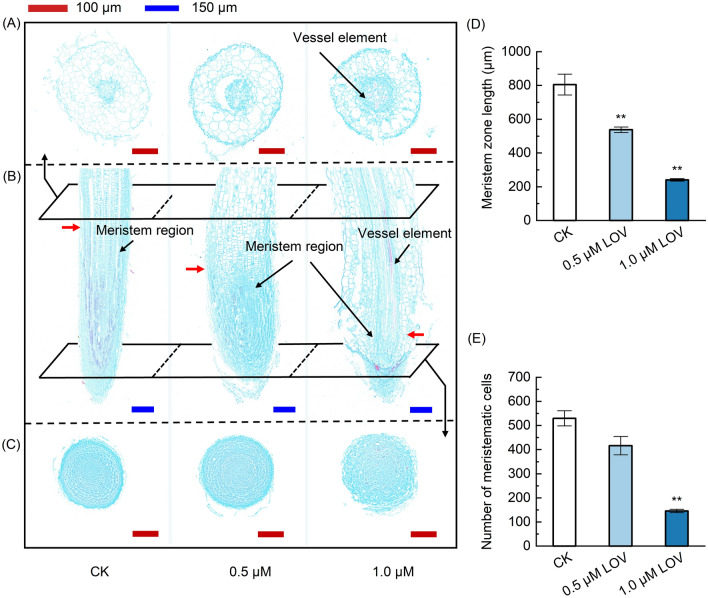
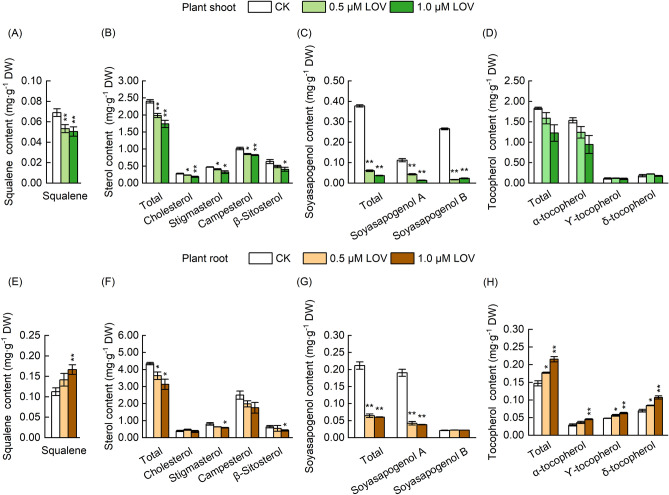
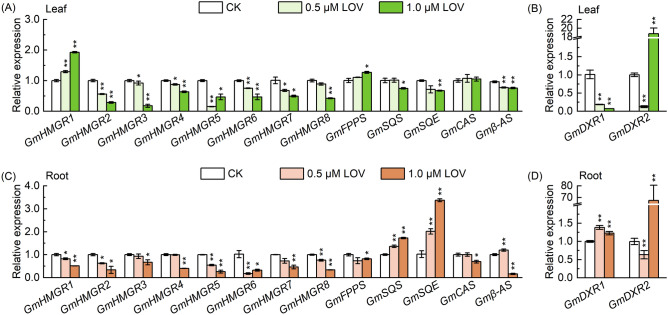
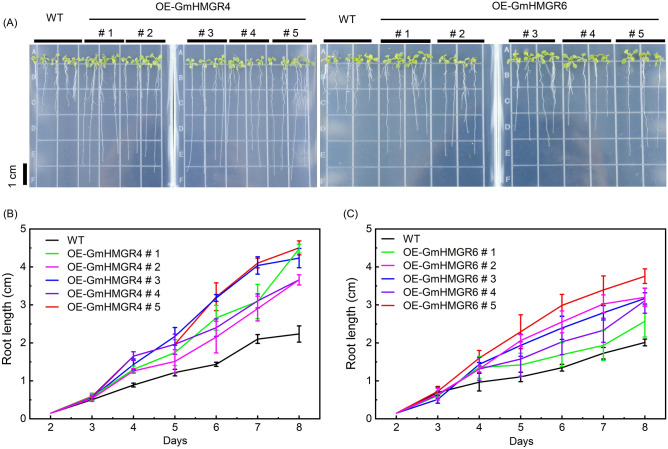
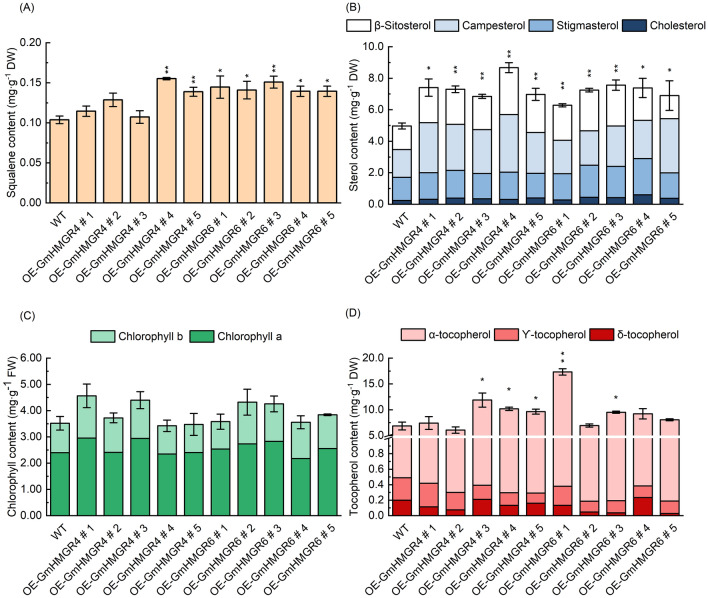
Isoprenoids, a large kind of plant natural products, are synthesized by the mevalonate (MVA) pathway in the cytoplasm and the 2-C-methyl-D-erythritol 4-phosphate (MEP) pathway in plastids. As one of the rate-limiting enzymes in the MVA pathway of soybean (Glycine max), 3-hydroxy-3-methylglutaryl coenzyme A reductase (HMGR) is encoded by eight isogenes (GmHMGR1-GmHMGR8). To begin, we used lovastatin (LOV), a specific inhibitor of GmHMGR, to investigate their role in soybean development. To further investigate, we overexpressed the GmHMGR4 and GmHMGR6 genes in Arabidopsis thaliana. The growth of soybean seedlings, especially the development of lateral roots, was inhibited after LOV treatment, accompanied by a decrease in sterols content and GmHMGR gene expression. After the overexpression of GmHMGR4 and GmHMGR6 in A. thaliana, the primary root length was higher than the wild type, and total sterol and squalene contents were significantly increased. In addition, we detected a significant increase in the product tocopherol from the MEP pathway. These results further support the fact that GmHMGR1-GmHMGR8 play a key role in soybean development and isoprenoid biosynthesis.
类异戊二烯是一大类植物天然产物,它们在细胞质中通过甲羟戊酸(MVA)途径和质体中的 2-C-甲基-D-赤藓醇 4-磷酸(MEP)途径合成。作为大豆(Glycine max)MVA 途径中的一种限速酶,3-羟-3-甲基戊二酰辅酶 A 还原酶(HMGR)由八个同工基因(GmHMGR1-GmHMGR8)编码。首先,我们使用洛伐他汀(LOV),一种 GmHMGR 的特异性抑制剂,来研究它们在大豆发育中的作用。为了进一步研究,我们在拟南芥中过表达了 GmHMGR4 和 GmHMGR6 基因。LOV 处理后,大豆幼苗的生长,特别是侧根的发育受到抑制,同时固醇含量和 GmHMGR 基因表达降低。在拟南芥中过表达 GmHMGR4 和 GmHMGR6 后,主根长度高于野生型,总固醇和角鲨烯含量显著增加。此外,我们检测到 MEP 途径产物生育酚的含量显著增加。这些结果进一步证实了 GmHMGR1-GmHMGR8 在大豆发育和类异戊二烯生物合成中起着关键作用。