Zhou Peipei, Wu Geng, Zhang Ping, Xu Rongyao, Ge Jie, Fu Yu, Zhang Yuchao, Du Yifei, Ye Jinhai, Cheng Jie, Jiang Hongbing
Jiangsu Key Laboratory of Oral Diseases, Nanjing Medical University, 210029 Nanjing, China.
Department of Oral and Maxillofacial Surgery, Affiliated Hospital of Stomatology, Nanjing Medical University, 210029 Nanjing, China.
Aging (Albany NY). 2016 Sep 14;8(9):2006-2011. doi: 10.18632/aging.101041.
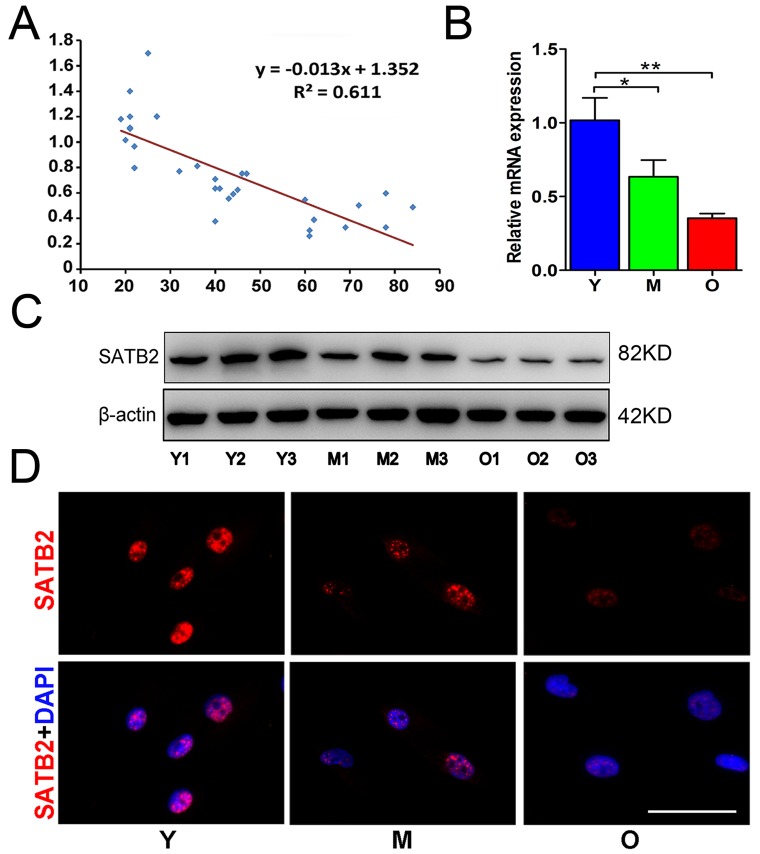
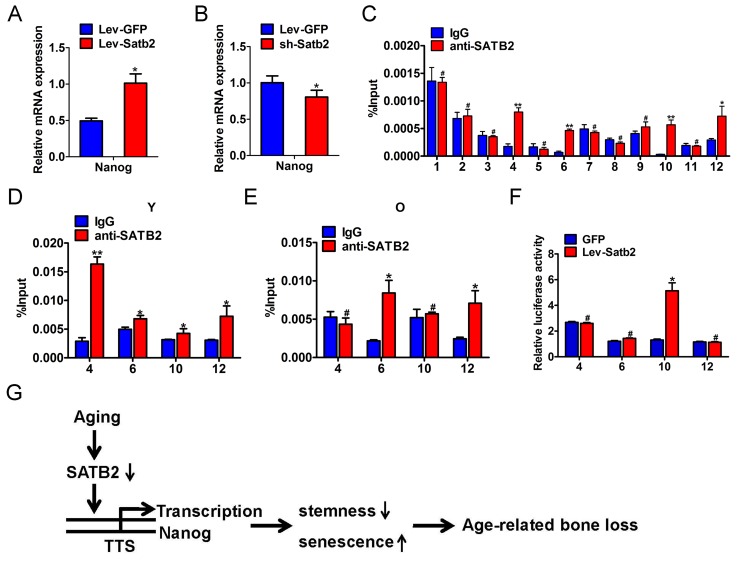
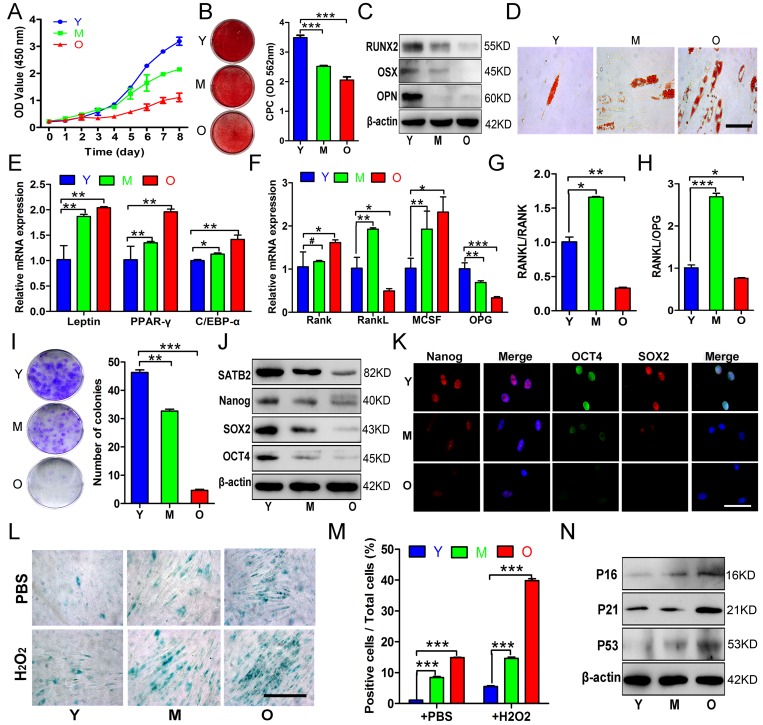
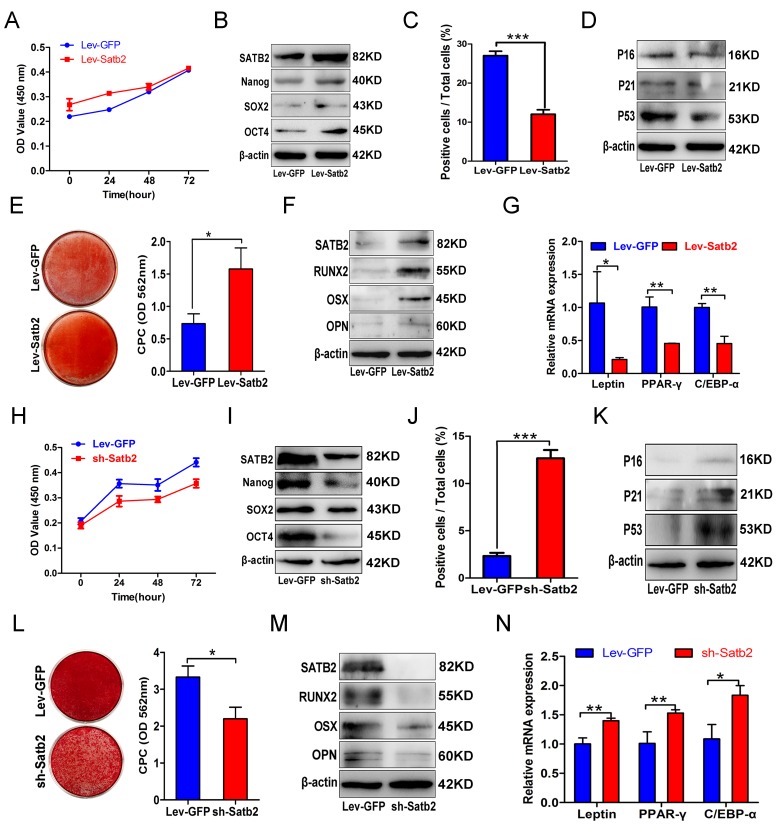
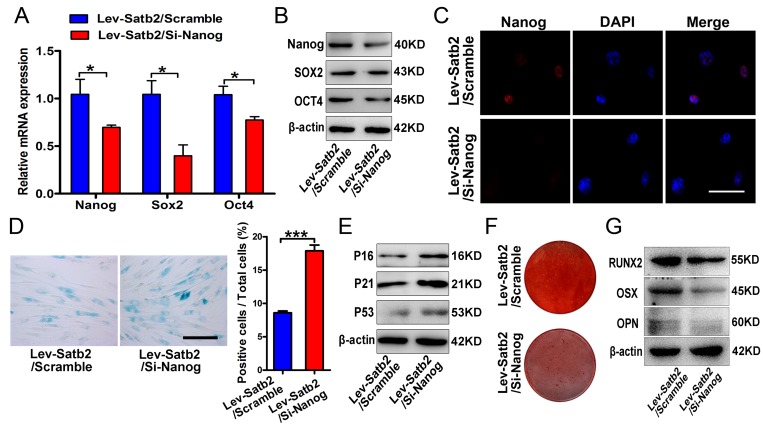
Bone mesenchymal stem cells (BMSCs) senescence contributes to age-related bone loss. The alveolar bone in jaws originates from neural crest cells and possesses significant site- and age-related properties. However, such intrinsic characteristics of BMSCs from alveolar bone (AB-BMSCs) and the underlying regulatory mechanisms still remain unknown. Here, we found that the expression of special AT-rich binding protein 2 (SATB2) in human AB-BMSCs significantly decreased with aging. SATB2 knockdown on AB-BMSCs from young donors displayed these aging-related phenotypes in vitro. Meanwhile, enforced SATB2 overexpression could rejuvenate AB-BMSCs from older donors. Importantly, satb2 gene- modified BMSCs therapy could prevent the alveolar bone loss during the aging of rats. Mechanistically, the stemness regulator Nanog was identified as the direct transcriptional target of SATB2 in BMSCs and functioned as a downstream mediator of SATB2. Collectively, our data reveal that SATB2 in AB-BMSCs associates with their age-related properties, and prevents AB-BMSCs senescence via maintaining Nanog expression. These findings highlight the translational potential of transcriptional factor-based cellular reprogramming for anti-aging therapy.
骨髓间充质干细胞(BMSCs)衰老导致与年龄相关的骨质流失。颌骨中的牙槽骨起源于神经嵴细胞,并具有显著的部位和年龄相关特性。然而,牙槽骨来源的BMSCs(AB-BMSCs)的这种内在特征及其潜在的调控机制仍不清楚。在此,我们发现人AB-BMSCs中特殊的富含AT序列结合蛋白2(SATB2)的表达随衰老而显著降低。对年轻供体的AB-BMSCs进行SATB2基因敲低在体外表现出这些与衰老相关的表型。同时,强制过表达SATB2可使老年供体的AB-BMSCs恢复活力。重要的是,satb2基因修饰的BMSCs治疗可预防大鼠衰老过程中的牙槽骨流失。机制上,干性调节因子Nanog被确定为BMSCs中SATB2的直接转录靶点,并作为SATB2的下游介质发挥作用。总体而言,我们的数据表明AB-BMSCs中的SATB2与其年龄相关特性相关,并通过维持Nanog表达来防止AB-BMSCs衰老。这些发现突出了基于转录因子的细胞重编程在抗衰老治疗中的转化潜力。