Guilliams Martin, Dutertre Charles-Antoine, Scott Charlotte L, McGovern Naomi, Sichien Dorine, Chakarov Svetoslav, Van Gassen Sofie, Chen Jinmiao, Poidinger Michael, De Prijck Sofie, Tavernier Simon J, Low Ivy, Irac Sergio Erdal, Mattar Citra Nurfarah, Sumatoh Hermi Rizal, Low Gillian Hui Ling, Chung Tam John Kit, Chan Dedrick Kok Hong, Tan Ker Kan, Hon Tony Lim Kiat, Fossum Even, Bogen Bjarne, Choolani Mahesh, Chan Jerry Kok Yen, Larbi Anis, Luche Hervé, Henri Sandrine, Saeys Yvan, Newell Evan William, Lambrecht Bart N, Malissen Bernard, Ginhoux Florent
Unit of Immunoregulation and Mucosal Immunology, VIB Inflammation Research Center, Ghent 9052, Belgium; Department of Biomedical Molecular Biology, Ghent University, Ghent 9000, Belgium; Centre d'Immunologie de Marseille-Luminy, Aix-Marseille Université, Inserm, CNRS, 13288 Marseille, France.
Singapore Immunology Network (SIgN), Agency for Science, Technology and Research (A(∗)STAR), 8A Biomedical Grove, IMMUNOS Building #3-4, BIOPOLIS, Singapore 138648, Singapore; Program in Emerging Infectious Disease, Duke-NUS Medical School, 8 College Road, Singapore 169857, Singapore.
Immunity. 2016 Sep 20;45(3):669-684. doi: 10.1016/j.immuni.2016.08.015. Epub 2016 Sep 13.
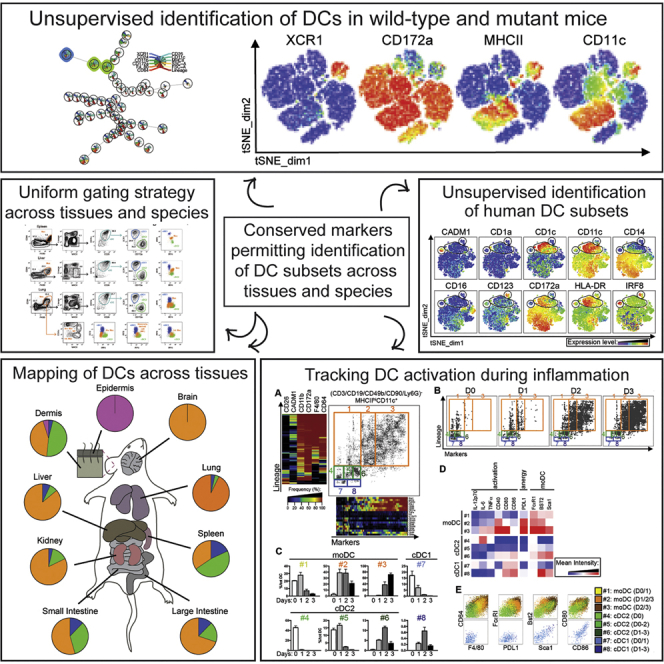
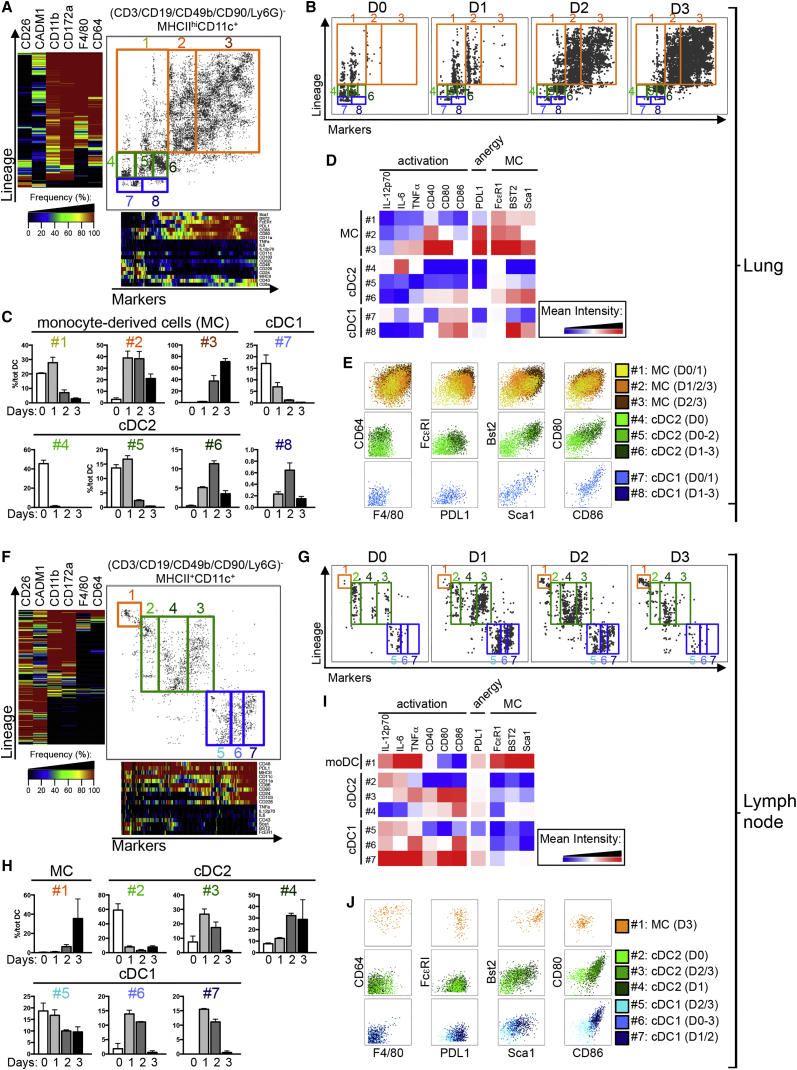
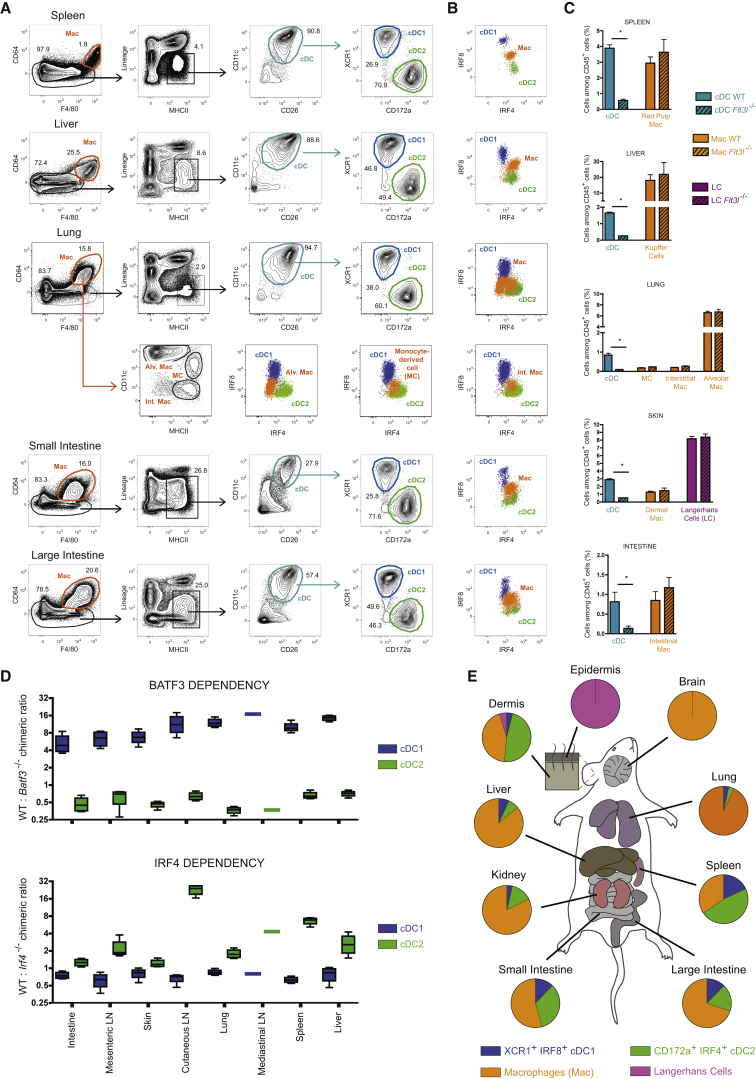
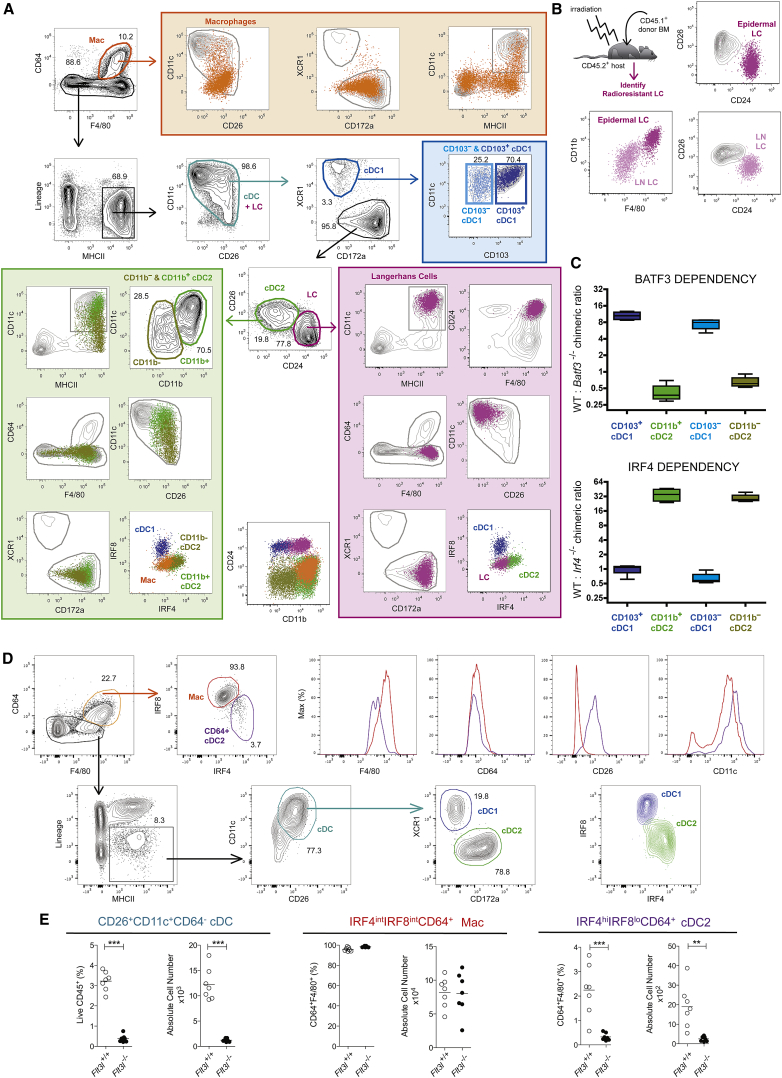
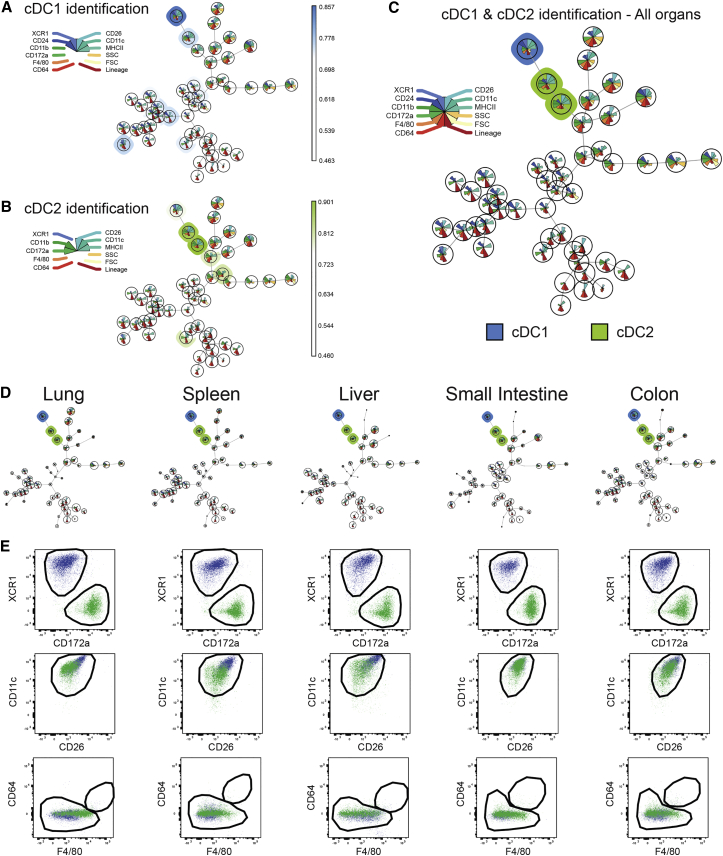
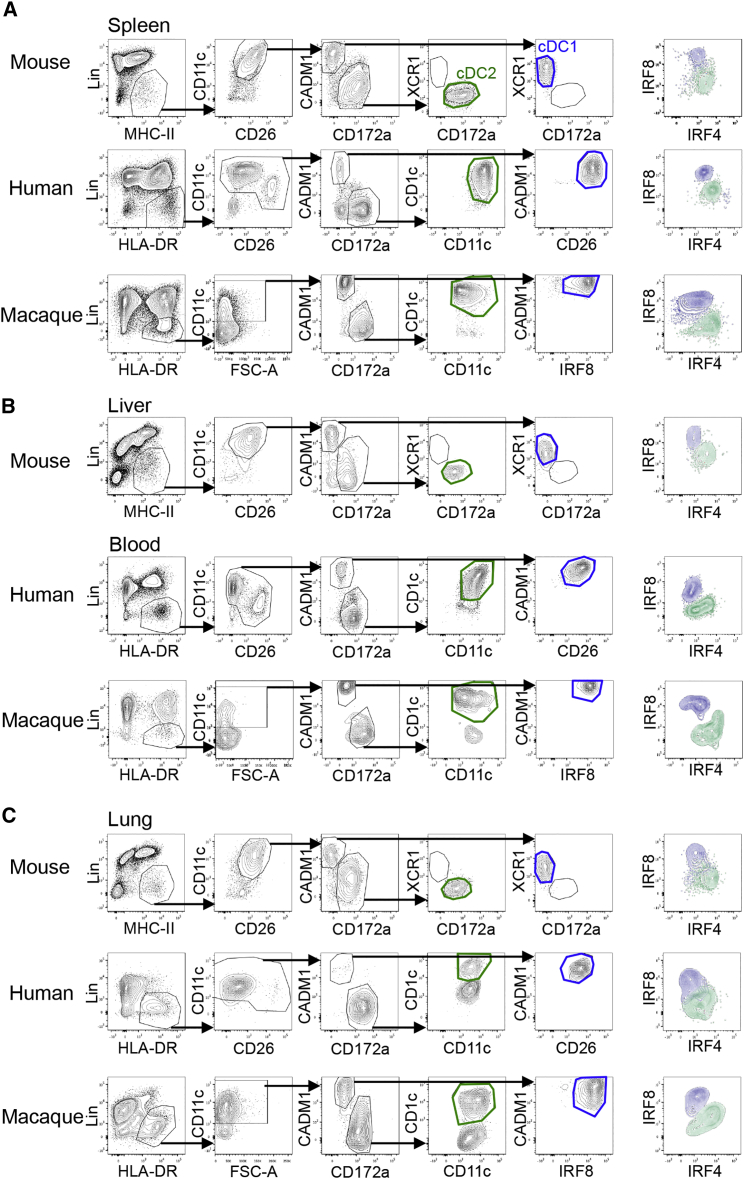
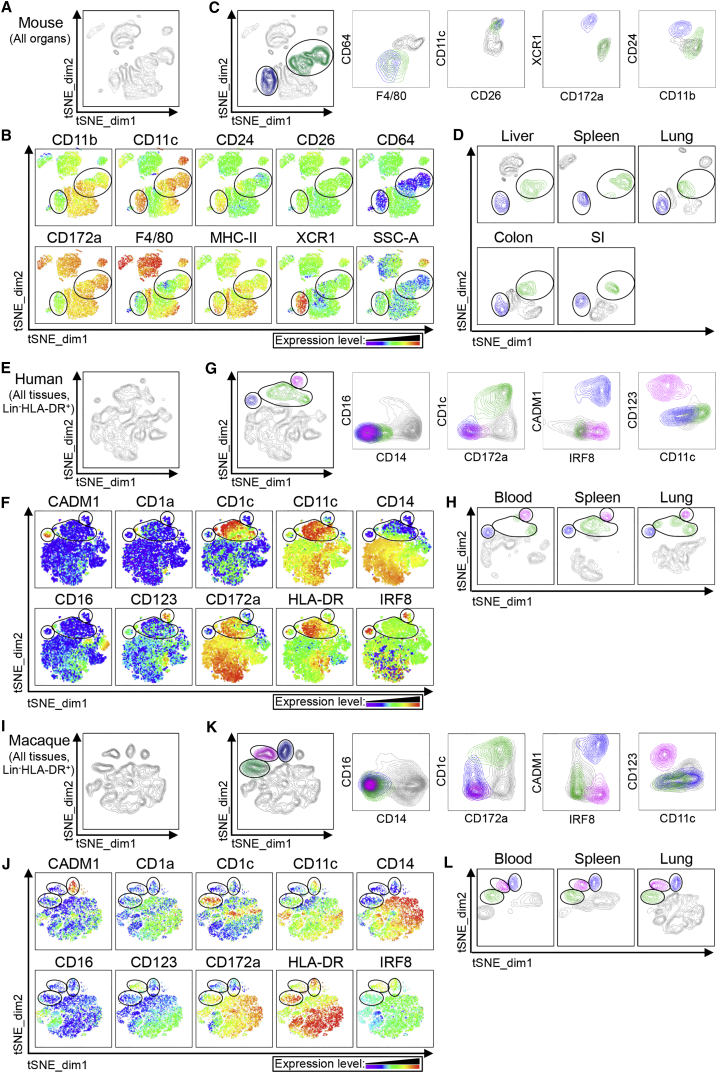
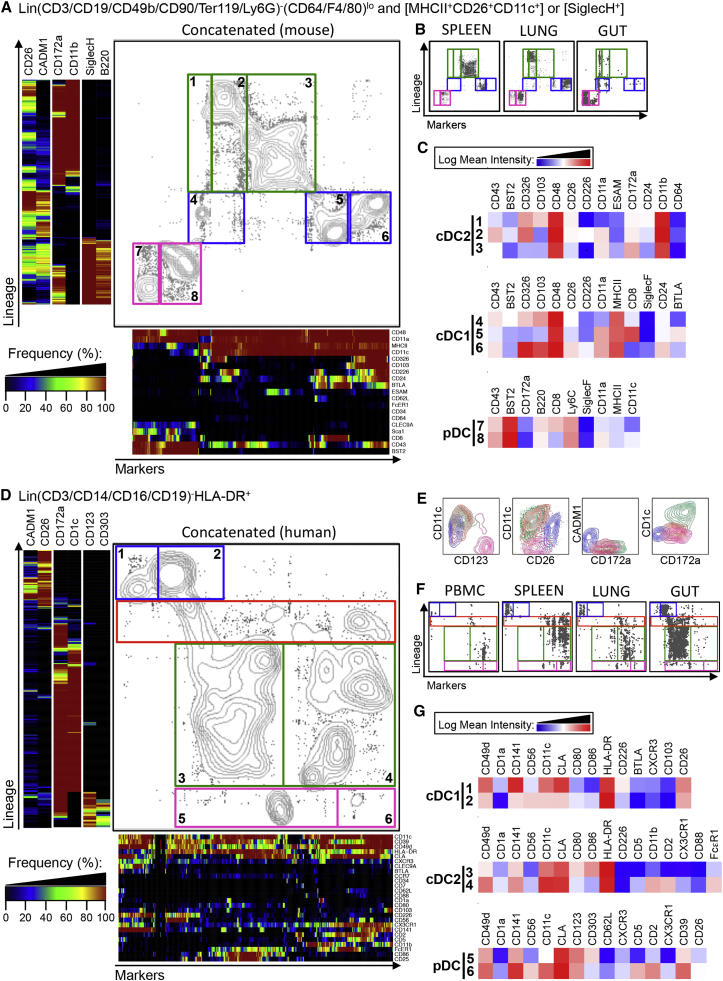
Dendritic cells (DCs) are professional antigen-presenting cells that hold great therapeutic potential. Multiple DC subsets have been described, and it remains challenging to align them across tissues and species to analyze their function in the absence of macrophage contamination. Here, we provide and validate a universal toolbox for the automated identification of DCs through unsupervised analysis of conventional flow cytometry and mass cytometry data obtained from multiple mouse, macaque, and human tissues. The use of a minimal set of lineage-imprinted markers was sufficient to subdivide DCs into conventional type 1 (cDC1s), conventional type 2 (cDC2s), and plasmacytoid DCs (pDCs) across tissues and species. This way, a large number of additional markers can still be used to further characterize the heterogeneity of DCs across tissues and during inflammation. This framework represents the way forward to a universal, high-throughput, and standardized analysis of DC populations from mutant mice and human patients.
树突状细胞(DCs)是具有巨大治疗潜力的专职抗原呈递细胞。已描述了多个DC亚群,在没有巨噬细胞污染的情况下,将它们在不同组织和物种之间进行比对以分析其功能仍然具有挑战性。在此,我们提供并验证了一个通用工具箱,用于通过对从多种小鼠、猕猴和人类组织获得的传统流式细胞术和质谱细胞术数据进行无监督分析来自动识别DCs。使用一组最少的谱系印记标记就足以将DCs细分为传统1型(cDC1s)、传统2型(cDC2s)和浆细胞样DCs(pDCs),跨越不同组织和物种。通过这种方式,大量额外的标记仍可用于进一步表征DCs在不同组织以及炎症过程中的异质性。该框架代表了对来自突变小鼠和人类患者的DC群体进行通用、高通量和标准化分析的前进方向。