Marquand Andre F, Wolfers Thomas, Mennes Maarten, Buitelaar Jan, Beckmann Christian F
Donders Centre for Cognitive Neuroimaging, Donders Institute for Brain, Cognition and Behaviour, Radboud University, Nijmegen; Department of Cognitive Neuroscience , Radboud University Medical Centre, Nijmegen; Department of Neuroimaging (AFM), Centre for Neuroimaging Sciences, Institute of Psychiatry, King's College London, London.
Donders Centre for Cognitive Neuroimaging, Donders Institute for Brain, Cognition and Behaviour, Radboud University, Nijmegen.
Biol Psychiatry Cogn Neurosci Neuroimaging. 2016 Sep;1(5):433-447. doi: 10.1016/j.bpsc.2016.04.002.
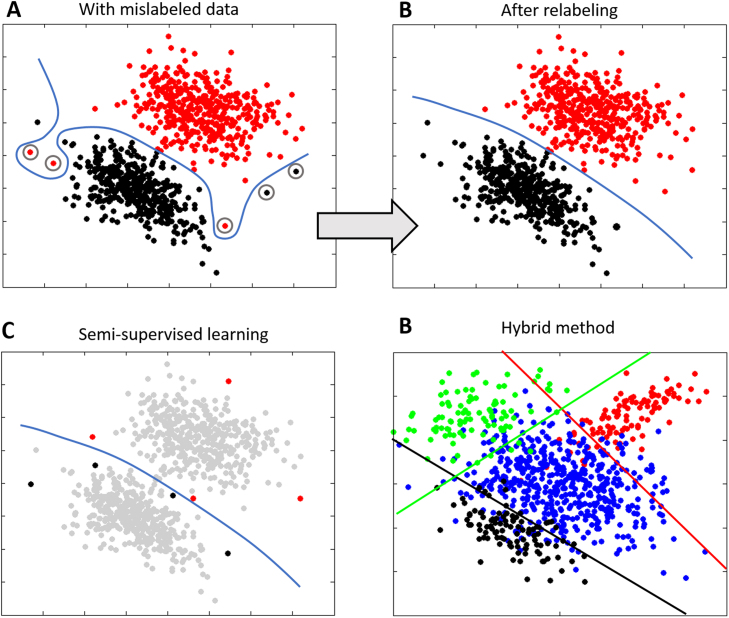
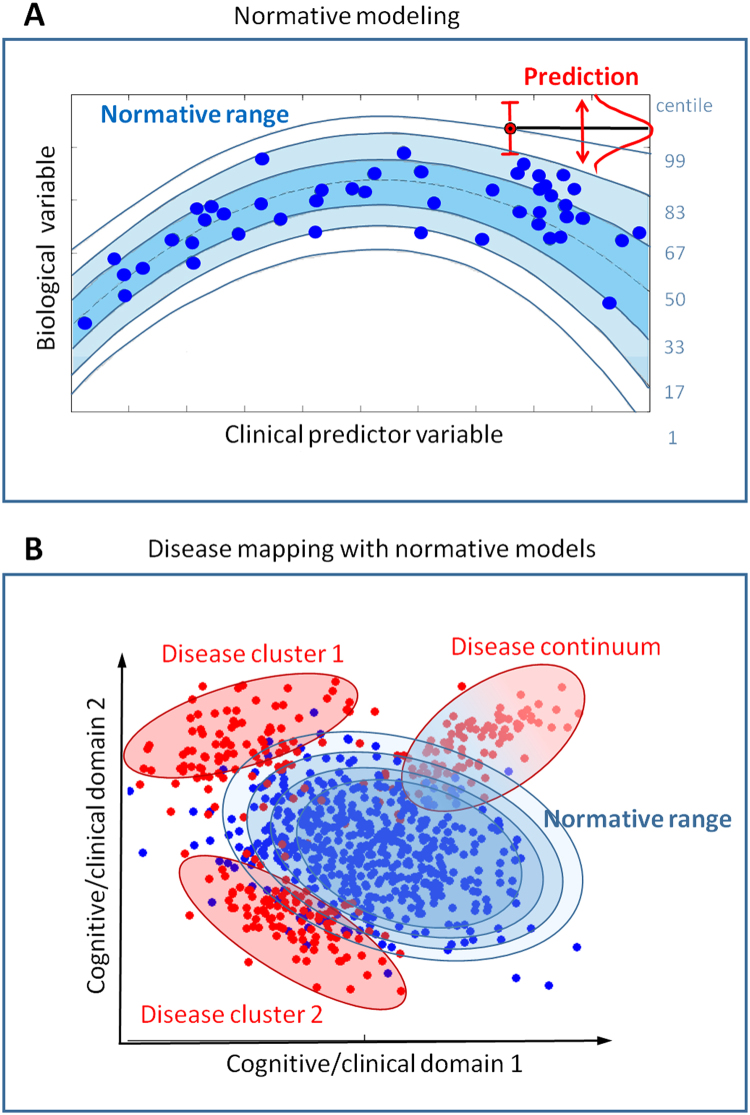
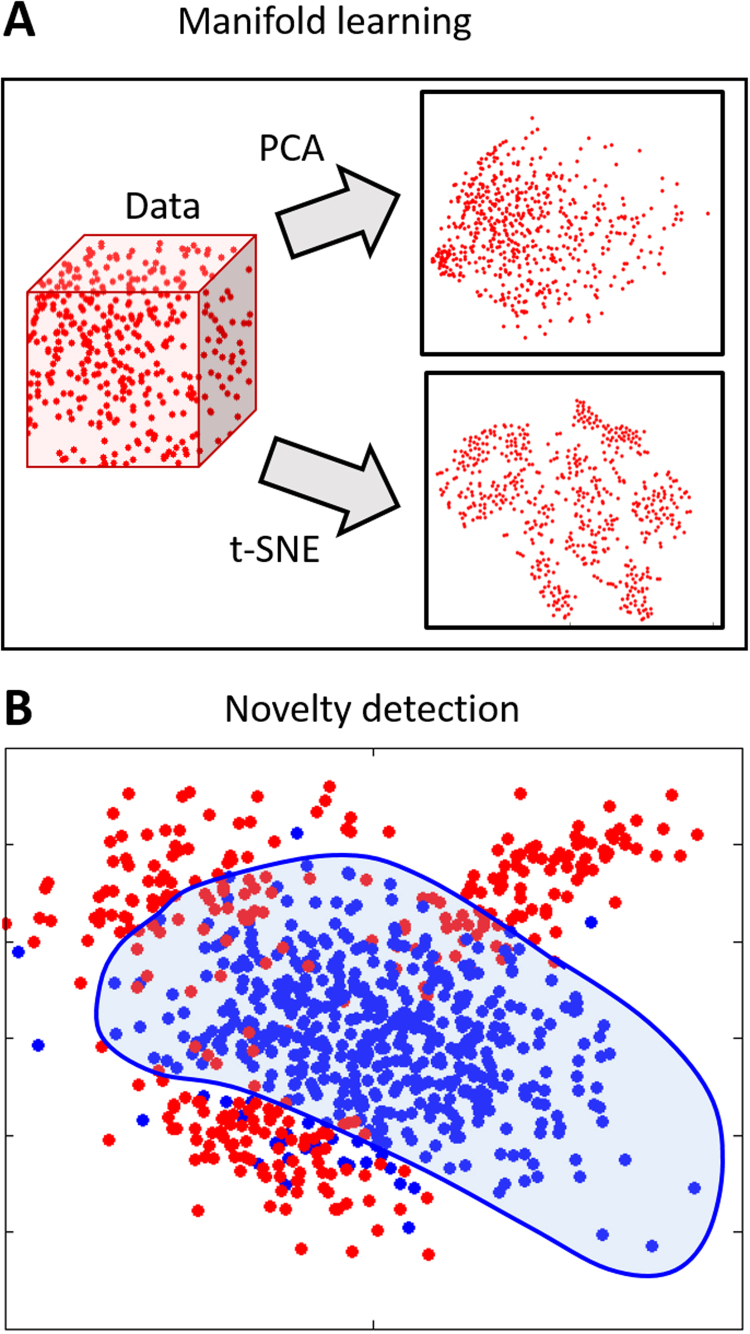
Heterogeneity is a key feature of all psychiatric disorders that manifests on many levels, including symptoms, disease course, and biological underpinnings. These form a substantial barrier to understanding disease mechanisms and developing effective, personalized treatments. In response, many studies have aimed to stratify psychiatric disorders, aiming to find more consistent subgroups on the basis of many types of data. Such approaches have received renewed interest after recent research initiatives, such as the National Institute of Mental Health Research Domain Criteria and the European Roadmap for Mental Health Research, both of which emphasize finding stratifications that are based on biological systems and that cut across current classifications. We first introduce the basic concepts for stratifying psychiatric disorders and then provide a methodologically oriented and critical review of the existing literature. This shows that the predominant clustering approach that aims to subdivide clinical populations into more coherent subgroups has made a useful contribution but is heavily dependent on the type of data used; it has produced many different ways to subgroup the disorders we review, but for most disorders it has not converged on a consistent set of subgroups. We highlight problems with current approaches that are not widely recognized and discuss the importance of validation to ensure that the derived subgroups index clinically relevant variation. Finally, we review emerging techniques-such as those that estimate normative models for mappings between biology and behavior-that provide new ways to parse the heterogeneity underlying psychiatric disorders and evaluate all methods to meeting the objectives of such as the National Institute of Mental Health Research Domain Criteria and Roadmap for Mental Health Research.
异质性是所有精神障碍的一个关键特征,体现在多个层面,包括症状、病程和生物学基础。这些构成了理解疾病机制和开发有效、个性化治疗方法的重大障碍。作为回应,许多研究旨在对精神障碍进行分层,目的是基于多种类型的数据找到更一致的亚组。在最近的研究倡议之后,这些方法重新受到关注,例如美国国立精神卫生研究所的研究领域标准和欧洲精神卫生研究路线图,这两者都强调找到基于生物系统且跨越当前分类的分层方法。我们首先介绍精神障碍分层的基本概念,然后对现有文献进行方法导向的批判性综述。这表明,旨在将临床人群细分为更连贯亚组的主要聚类方法做出了有益贡献,但严重依赖于所使用的数据类型;它产生了许多不同的方式对我们所综述的疾病进行亚组划分,但对于大多数疾病,尚未汇聚到一组一致的亚组上。我们强调当前方法中未被广泛认识的问题,并讨论验证的重要性,以确保所衍生的亚组能够指示临床相关的变异。最后,我们综述新兴技术,例如那些估计生物学与行为之间映射的规范模型的技术,这些技术为剖析精神障碍背后的异质性提供了新方法,并评估所有方法是否符合美国国立精神卫生研究所研究领域标准和精神卫生研究路线图等目标。